
Elizabeth George Speare (1908–1994)
Author of The Witch of Blackbird Pond
About the Author
Image credit: (c) Houghton Mifflin Books
Works by Elizabeth George Speare
Island of the Blue Dolphins / The Indian School / Soft Rain / The Sign of the Beaver (1996) 12 copies
Bronze Bow 8 6 copies
Calico Captive 2 copies
Uma inglesa no cativeiro 1 copy
Kit från Västindien 1 copy
המכשפה מאגם הקיכלים 1 copy
Associated Works
Tagged
Common Knowledge
- Birthdate
- 1908-11-21
- Date of death
- 1994-11-15
- Gender
- female
- Education
- Smith College (BA | 1930)
Boston University (MA | English) - Occupations
- teacher
writer - Awards and honors
- Laura Ingalls Wilder Medal (1989)
- Nationality
- USA
- Birthplace
- Melrose, Massachusetts, USA
- Places of residence
- Melrose, Massachusetts, USA (birth)
Wethersfield, Connecticut, USA
Tucson, Arizona, USA (death) - Place of death
- Tucson, Arizona, USA
- Burial location
- Union Cemetery, Easton, Connecticut, USA
- Associated Place (for map)
- USA
Members
Discussions
Y/A fiction, 18th century Massachusetts in Name that Book (May 2013)
fiction set during Jesus' time in Name that Book (December 2010)
The Bronze Bow and bias in Read YA Lit (November 2009)
Reviews
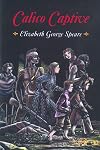
It's hard to describe what about this book so beautifully captures the feel of the places and interactions it describes. It took me back to my days of tramping through forests and gave me the opportunity to vicariously experience frontier life in such a memorable way.
The main character starts out somewhat shallow and self-focused, but her character arc is what holds the story together and what kept me glued to the pages as I read the book cover to cover in a morning. It's that show more transformation, how the main character dealt with loss and loneliness, how her attitude toward people changed, how she put her skills to use for those she cared about that made the book what it is. She starts out drawn to shiny things, but the author makes sure the redeemable aspects of her character perk through the immaturity.
As with nearly every book, however, there are things to sift through. I wouldn't give this to a younger reader unless they are old enough to discern what should not be emulated and if the content issues mentioned later aren't an issue.
There's a shift away from materialism here, but to me it seems the mc goes from one extreme to another, from finding happiness in things to finding happiness in people. For one, it's a lot of pressure on the other person to be someone else's happiness, and it's just not lasting. Also, there were some things with relationships and religion that might not be suitable for younger readers as well. But since this book is geared towards younger readers, the author glossed over the scenes with childbirth, innuendo, and such. And the theme of valuing people above "shiny things" is laudable.
I can't say, however, that this is an accurate representation of the people the author used for inspiration. It seemed she took parts and changed people to fit her story, so it should be read as fiction, not as the story of the people whose names she borrowed.
And finally, here's a quote that portrays Miriam's character quite well:
"There is something you can do," she said soberly. "If you really want to help me. No one will listen. Can you get me into the jail to visit my sister?"
Pierre stared at her. Then suddenly he threw back his head and laughed so loudly that a passing Frenchman paused in the street and peered in through the doorway.
"What a girl!" He exclaimed. "Offer her a dress, invite her to a party, and what does she want instead - to go to jail." show less
The main character starts out somewhat shallow and self-focused, but her character arc is what holds the story together and what kept me glued to the pages as I read the book cover to cover in a morning. It's that show more transformation, how the main character dealt with loss and loneliness, how her attitude toward people changed, how she put her skills to use for those she cared about that made the book what it is. She starts out drawn to shiny things, but the author makes sure the redeemable aspects of her character perk through the immaturity.
As with nearly every book, however, there are things to sift through. I wouldn't give this to a younger reader unless they are old enough to discern what should not be emulated and if the content issues mentioned later aren't an issue.
There's a shift away from materialism here, but to me it seems the mc goes from one extreme to another, from finding happiness in things to finding happiness in people. For one, it's a lot of pressure on the other person to be someone else's happiness, and it's just not lasting. Also, there were some things with relationships and religion that might not be suitable for younger readers as well. But since this book is geared towards younger readers, the author glossed over the scenes with childbirth, innuendo, and such. And the theme of valuing people above "shiny things" is laudable.
I can't say, however, that this is an accurate representation of the people the author used for inspiration. It seemed she took parts and changed people to fit her story, so it should be read as fiction, not as the story of the people whose names she borrowed.
And finally, here's a quote that portrays Miriam's character quite well:
"There is something you can do," she said soberly. "If you really want to help me. No one will listen. Can you get me into the jail to visit my sister?"
Pierre stared at her. Then suddenly he threw back his head and laughed so loudly that a passing Frenchman paused in the street and peered in through the doorway.
"What a girl!" He exclaimed. "Offer her a dress, invite her to a party, and what does she want instead - to go to jail." show less
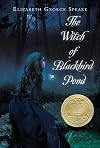
review for 9th read
reasons you should read this book:
1) this book has Nat Eaton.
2) if you have any heart at all, the final chapter will probably make you squeal like a giddy schoolgirl.
3) this book has a very pretty, head-strong sailor boy.
4) this book has John Holbrook (particularly in the context of the second-cutest romance ever).
5) this book has a handsome, roguish love interest who regularly puts himself at risk for the sake of others.
6) this book has Hannah Tupper.
7) BONUS: this book show more has Nat Eaton.
18,000,000/5 stars.
review for 6th, 7th, & 8th reads (yes, really)
All my life, my dad has decorated his bedroom with It's a Wonderful Life posters, decorations, etc. We have a whole-ass display case in our living room filled with a porcelain snow village from the movie, as well as books, magazines, ornaments, mugs, and just about anything else you can think of that fits with the theme. We had the same kind of thing in our game room growing up, but instead of It's a Wonderful Life, that room was Muppet themed.
My dad and I are a lot alike. And while I don't hyper-fixate on It's a Wonderful Life or the Muppets, I have my own special interests. One of them is the band Flyleaf. The other, this book.
When it comes to this book, I am a weak, weak woman.
Every time I open this book it feels like home. From the characters to the romance to Hannah's cottage, this book is absolute perfection. (And that's a huge claim coming from me.) If you don't believe me, just look at my "Dates Read."
I have not read any other book more than maybe three times. Eight times is just ridiculous. My friends think I have a problem. My family has been forced to accept my obsession just as they accepted my dads'. That alone should be enough to make you want to read this book. But if you're still somehow deciding, let me break it down for you:
Katherine ("Kit") Tyler is a sixteen-year-old girl from Barbados. After her wealthy grandfather's death, she flees to the only family she has—a family of four in Puritan Connecticut. When Kit arrives in Connecticut, she quickly discovers that she is completely out of place in the solemn Puritan colony.
One day, as she laments this (yes, I use dramatic words like "lament" for dramatic effect because it is, in fact, dramatic), she meets Hannah, an old Quaker woman on the edge of town, who has been repeatedly accused of witchcraft and thus shunned by the community. As she grows closer to Hannah, Kit also grows closer to Nat Eaton, a (sexy) sea-faring friend of Hannah's and crew member on the very ship Kit took to arrive in Connecticut.
Finally, Kit begins teaching Prudence, a neglected and, dare I say, abused little girl, to read and write. Kit introduces Prudence to the others, and pretty soon, the four outcasts develop close friendships with one another.
You could go on and on about the social commentary, the romance, blah-blah-blah. But at its core, this book is about four misfits who find each other and become, as Anne Shirley would put it, "bosom friends." It's heartfelt, and every time I finish it, I want to cry. Not because it's sad, but because it's just precious. If that sounds like something you'd like, I implore you to please read this book.
review for 3rd & 4th reads
Ok, y’all, I’ve read this book four times and it’s still so absolutely FANTASTIC. I take back my previous rating of 4.5. This is a five-star book. I would give it 6 if I could like it’s THAT GOOD.
It’s so good, in fact, that after finishing my third read through it (about a week and a half ago), I immediately went back and read it AGAIN because I couldn’t get the darned book out of my head.
I totally get why some people don’t like this book... it’s not a genre that’s for everyone. But I love every moment of it. As long as you like classics, historical fiction, and romance, you’ll probably love this. And I will never fail to recommend it to people who like those genres.
Please, please, please, if you like sweet, comforting classics/romances and historical fiction, read this. It’s THAT GOOD.
———————————————————————-
review for 2nd read
4.5 | OK so I read this in like 5th grade but I didn’t remember anything.
Now, I don’t usually like historical fiction but reading this again, I was amazed. The characters, romances, and friendships in this were just precious. Gosh, it was good. I just wish we’d gotten an epilogue. But otherwise, I adored it. I’ll definitely be reading this again. show less
reasons you should read this book:
1) this book has Nat Eaton.
2) if you have any heart at all, the final chapter will probably make you squeal like a giddy schoolgirl.
3) this book has a very pretty, head-strong sailor boy.
4) this book has John Holbrook (particularly in the context of the second-cutest romance ever).
5) this book has a handsome, roguish love interest who regularly puts himself at risk for the sake of others.
6) this book has Hannah Tupper.
7) BONUS: this book show more has Nat Eaton.
18,000,000/5 stars.
review for 6th, 7th, & 8th reads (yes, really)
All my life, my dad has decorated his bedroom with It's a Wonderful Life posters, decorations, etc. We have a whole-ass display case in our living room filled with a porcelain snow village from the movie, as well as books, magazines, ornaments, mugs, and just about anything else you can think of that fits with the theme. We had the same kind of thing in our game room growing up, but instead of It's a Wonderful Life, that room was Muppet themed.
My dad and I are a lot alike. And while I don't hyper-fixate on It's a Wonderful Life or the Muppets, I have my own special interests. One of them is the band Flyleaf. The other, this book.
When it comes to this book, I am a weak, weak woman.
Every time I open this book it feels like home. From the characters to the romance to Hannah's cottage, this book is absolute perfection. (And that's a huge claim coming from me.) If you don't believe me, just look at my "Dates Read."
I have not read any other book more than maybe three times. Eight times is just ridiculous. My friends think I have a problem. My family has been forced to accept my obsession just as they accepted my dads'. That alone should be enough to make you want to read this book. But if you're still somehow deciding, let me break it down for you:
Katherine ("Kit") Tyler is a sixteen-year-old girl from Barbados. After her wealthy grandfather's death, she flees to the only family she has—a family of four in Puritan Connecticut. When Kit arrives in Connecticut, she quickly discovers that she is completely out of place in the solemn Puritan colony.
One day, as she laments this (yes, I use dramatic words like "lament" for dramatic effect because it is, in fact, dramatic), she meets Hannah, an old Quaker woman on the edge of town, who has been repeatedly accused of witchcraft and thus shunned by the community. As she grows closer to Hannah, Kit also grows closer to Nat Eaton, a (sexy) sea-faring friend of Hannah's and crew member on the very ship Kit took to arrive in Connecticut.
Finally, Kit begins teaching Prudence, a neglected and, dare I say, abused little girl, to read and write. Kit introduces Prudence to the others, and pretty soon, the four outcasts develop close friendships with one another.
You could go on and on about the social commentary, the romance, blah-blah-blah. But at its core, this book is about four misfits who find each other and become, as Anne Shirley would put it, "bosom friends." It's heartfelt, and every time I finish it, I want to cry. Not because it's sad, but because it's just precious. If that sounds like something you'd like, I implore you to please read this book.
review for 3rd & 4th reads
Ok, y’all, I’ve read this book four times and it’s still so absolutely FANTASTIC. I take back my previous rating of 4.5. This is a five-star book. I would give it 6 if I could like it’s THAT GOOD.
It’s so good, in fact, that after finishing my third read through it (about a week and a half ago), I immediately went back and read it AGAIN because I couldn’t get the darned book out of my head.
I totally get why some people don’t like this book... it’s not a genre that’s for everyone. But I love every moment of it. As long as you like classics, historical fiction, and romance, you’ll probably love this. And I will never fail to recommend it to people who like those genres.
Please, please, please, if you like sweet, comforting classics/romances and historical fiction, read this. It’s THAT GOOD.
———————————————————————-
review for 2nd read
4.5 | OK so I read this in like 5th grade but I didn’t remember anything.
Now, I don’t usually like historical fiction but reading this again, I was amazed. The characters, romances, and friendships in this were just precious. Gosh, it was good. I just wish we’d gotten an epilogue. But otherwise, I adored it. I’ll definitely be reading this again. show less

Excellent book, OK story. It's oddly split in my head. What actually happens is minor - boy stays alone on the new family homestead in early Maine, runs into trouble, is helped by local Indians, happy ending. What makes the book amazingly good is what it _doesn't_ do - it treats the natives (OK, it does call them Indians) neither as savages to be taught white-man's ways, nor as Noble Savages who are magically in tune with Nature etc. They're people; they know how to live in that place (the show more white boy is shown a lot of food, tools, and methods of hunting he doesn't know), but it's not some magical thing inherent in their race, it's just, well, they live there. The white boy (I've forgotten all the names already) is teaching the native boy to read, at his grandfather's request/order; in return, he's getting a lot of help surviving alone. By the end of the book they've earned each other's respect - again, not magical best friends forever, but "this is a person I respect and admire for who they are". When I finished the book, my first thought was "this is the way it's supposed to be written". I'm not certain I'll want to reread - again, the story itself is slight - but I don't want to lose track of it. show less

Daniel has nothing but hatred for the Romans. They occupy his native land, with soldiers everywhere, and Daniel feels that they are to blame for his parents' death. Though he is only 15, Daniel considers himself a zealot, has taken a vow to avenge his parents, and has run away from his apprenticeship to a cruel blacksmith. He now makes his home in the mountain caves with a band of thieves led by Rosh, a hard but charismatic man who promises to lead the fight against the Roman oppressors. show more When word comes to Daniel that his grandmother is dying, he returns to the village where he grew up. He finds his grandmother at death's door, and his sister Leah, who is mentally ill and refuses to leave the house, in a pitiable state. Daniel longs to return to the mountain, but when his grandmother dies, he is the only person who can care for Leah. The old smith has died, and the new smith Simon, a friend of Daniel's, has left his forge to follow a new teacher named Jesus whose words are inspiring many in the area. Daniel occasionally goes to hear this Jesus but finds his teachings confusing. Daniel is determined to continue working for Rosh from his position in the village, and even recruits Joel, a friend from the nearby city of Capernaum. Daniel also gathers together a group of village boys who feel the same way he does about the Romans. But when one of Rosh's plans results in Joel being captured and Rosh does nothing to help, Daniel's faith in his leader is shaken. And when Daniel's sister is taken ill with a fever, there is only one person Daniel can turn to -- but will Jesus demand that Daniel give up the one thing he's always clung to: his hatred of the Romans?
I found the pacing and characterization in this book very good, though it is a product of its time and contains a few historical inaccuracies. This book will be best appreciated by readers who approach it from a Christian worldview, as it dovetails neatly with Biblical accounts of Jesus' teachings in Galilee during the early part of his ministry. This book is not without bias, and has been criticized for portraying some aspects of Judaism harshly, so that's something some readers may want to keep in mind. As inspirational historical fiction, this book works pretty well -- and since I believe the author originally wrote it for her Sunday School class, that makes perfect sense. I doubt that it will appeal to a broader audience, though. show less
I found the pacing and characterization in this book very good, though it is a product of its time and contains a few historical inaccuracies. This book will be best appreciated by readers who approach it from a Christian worldview, as it dovetails neatly with Biblical accounts of Jesus' teachings in Galilee during the early part of his ministry. This book is not without bias, and has been criticized for portraying some aspects of Judaism harshly, so that's something some readers may want to keep in mind. As inspirational historical fiction, this book works pretty well -- and since I believe the author originally wrote it for her Sunday School class, that makes perfect sense. I doubt that it will appeal to a broader audience, though. show less
Lists
Precious People (1)
Witch Hunts (1)
Books About Boys (1)
Must-Read Maine (1)
Ryan's Books (1)
Best Young Adult (1)
Quakers (1)
1970s (2)
Christianity (2)
Elevenses (2)
Sonlight Books (3)
Ambleside Books (2)
Newbery Adjacent (2)
Witchy Fiction (1)
My Wishlist - YA (1)
4th Grade Books (1)
Awards


You May Also Like


Associated Authors
Statistics
- Works
- 21
- Also by
- 3
- Members
- 30,773
- Popularity
- #645
- Rating
- 4.0
- Reviews
- 402
- ISBNs
- 211
- Languages
- 9
- Favorited
- 20