

Carol Ryrie Brink (1895–1981)
Author of Caddie Woodlawn
About the Author
Carol Ryrie Brink is the author of many books for young readers, including Magical Melons, the companion volume to Caddie Woodlawn.
Image credit: Author Brink. Publisher photo.
Series
Works by Carol Ryrie Brink
Associated Works
Reader's Digest Condensed Books 1960 v02: The Final Diagnosis / Mrs 'Arris Goes to New York / Strangers in the Forest / The Haunting of Hill House / Wolfpack (1960) — Author — 23 copies
Friends to Man: The Wonderful World of Animals — Contributor — 2 copies
Tagged
Common Knowledge
- Birthdate
- 1895-12-28
- Date of death
- 1981-08-15
- Gender
- female
- Education
- University of Idaho
University of California, Berkeley - Occupations
- short story writer
children's book author
novelist
playwright - Relationships
- Brink, Raymond W. (husband)
Eiden, Andrew (great-grandson)
Eiden, Emily (great-granddaughter) - Short biography
- Caroline Ryrie, called Carol, was born in Idaho and orphaned at a young age. She was raised by her maternal grandmother and two aunts who were all gifted storytellers. Her grandmother's tales of growing up in the Wisconsin woods became the basis of several of Carol's books and short stories, including the Newbery Award winner Caddie Woodlawn (1935). Carol attended the University of Idaho and then the University of California, Berkeley, from which she graduated in 1918. Shortly afterwards she married Raymond Brink, with whom she lived in Europe for a time before settling in St. Paul, Minnesota. While raising their two children, Mrs. Brink began writing articles and short stories that were accepted by local and then national publications. She started writing fiction and nonfiction books for adults and children and eventually published nearly 30 novels during her career. Her first novel, Anything Can Happen on the River, was published in 1934. She was also the author of three plays, including one based on Caddie Woodlawn. She received a number of literary awards in her lifetime, including the Friends of American Writers Award 1955, the National League of American Pen Women’s Prize in 1966, and the Kerlan Award from the University of Minnesota in 1978.
- Cause of death
- heart failure
- Nationality
- USA
- Birthplace
- Moscow, Idaho, USA
- Places of residence
- Moscow, Idaho, USA
Minnesota, USA
France
Scotland - Place of death
- La Jolla, California, USA
- Associated Place (for map)
- USA
Members
Discussions
Middle reader: A robot named Campbell in Name that Book (June 2011)
Reviews

When a letter and package arrive for Mrs. Chrystal Banks (nee Reese) one Christmas season, containing a treasured memento from days past, the elderly lady is reminded of her childhood in Warsaw, Idaho, and the good times she had with her best friend and honorary twin (or "tween"), Cordelia Lark. Although outwardly very different - Cordy, one of a large and boisterous family, was a tall brunette; while Chrys, a petite blond, was an orphaned only child who lived with her aunt and grandmother - show more the two girls were as alike as two peas in a pod, when it came to their interests and activities. Still playing with dolls, despite being almost thirteen, the friends were more interested in the "romantical" adventure novel they were writing, featuring the magical pocket dolls Lester and Lynette, than in any actual romance with boys. Whether dressing up as rag dolls for the Sunday School party, rather than as elegant "Martha Washingtons" like the other girls, or taking the state board examinations in order to get into high school a year early, Chrys and Cordy live out their maxim that "two are better than one."
Only the second book I have read from Carol Ryrie Brink - the other being the Newbery Medal winner Caddie Woodlawn, which I recall enjoying in my own childhood - this charming coming-of-age story is enough to convince me that I have been missing out! I enjoyed everything about Two Are Better Than One, from the many humorous moments - Chrys and Cordy walking each other back and forth one night, because neither wants to pass the jailhouse alone! The contretemps at the Lark household, when the great romantical novel is discovered by Cordy's brothers and Mr. Crump! - to the sensitive depiction of two girls who, although in no rush to grow up, discover that it is happening regardless. I particularly liked the episode involving the girls' rather grumpy teacher, Miss Hickenlooper, in which they discover that she is a human being after all, one for whom they slowly develop an appreciation; as well as the one in which they learn that beautiful new hats are not the most important aspect of Easter. Although no mention is made of it in the text, it is clear from their eventual married names that Cordy and Chrys eventually marry the young men boarding in their homes (Mr. Crump and Mr. Banks). I liked the fact that this knowledge is available in the background, but not commented upon in the story itself, as it gives the book an added sense of depth - one gets the sense that the author had so much more she could have told, if she wanted to.
All in all, this was an outstanding little book, one that reminded me, with its tale of two inseparable girl friends, and their doings in turn-of-the-century small-town America, of the more famous Betsy-Tacy books. I wish someone would bring it back into print! show less
Only the second book I have read from Carol Ryrie Brink - the other being the Newbery Medal winner Caddie Woodlawn, which I recall enjoying in my own childhood - this charming coming-of-age story is enough to convince me that I have been missing out! I enjoyed everything about Two Are Better Than One, from the many humorous moments - Chrys and Cordy walking each other back and forth one night, because neither wants to pass the jailhouse alone! The contretemps at the Lark household, when the great romantical novel is discovered by Cordy's brothers and Mr. Crump! - to the sensitive depiction of two girls who, although in no rush to grow up, discover that it is happening regardless. I particularly liked the episode involving the girls' rather grumpy teacher, Miss Hickenlooper, in which they discover that she is a human being after all, one for whom they slowly develop an appreciation; as well as the one in which they learn that beautiful new hats are not the most important aspect of Easter. Although no mention is made of it in the text, it is clear from their eventual married names that Cordy and Chrys eventually marry the young men boarding in their homes (Mr. Crump and Mr. Banks). I liked the fact that this knowledge is available in the background, but not commented upon in the story itself, as it gives the book an added sense of depth - one gets the sense that the author had so much more she could have told, if she wanted to.
All in all, this was an outstanding little book, one that reminded me, with its tale of two inseparable girl friends, and their doings in turn-of-the-century small-town America, of the more famous Betsy-Tacy books. I wish someone would bring it back into print! show less
Too problematic for today's children... there are newer family stories that are a better use of library's budgets. The racism in the Thanksgiving pageant in particular is awful. Also history is not all about castles and dungeons, and mice don't particularly like cheese, and milk doesn't agree with most adult cats.
Read it for nostalgia's sake if you must, but if you share it with your children, at least tell them it was *never* ok to think of "Indians" as exotic primitives with generic show more names.
I admit I do understand why Pearl thought it worth bringing back. Lots of bits & aspects are great. And I'm glad she didn't bowdlerize or modernize. But still. Most of you can skip this. show less
Read it for nostalgia's sake if you must, but if you share it with your children, at least tell them it was *never* ok to think of "Indians" as exotic primitives with generic show more names.
I admit I do understand why Pearl thought it worth bringing back. Lots of bits & aspects are great. And I'm glad she didn't bowdlerize or modernize. But still. Most of you can skip this. show less

Carol Ryrie Brink returns to the world of Warsaw, Idaho - a setting that was no doubt based upon her own birth-place of Moscow, Idaho - in this sequel to Two Are Better Than One. The heroines of that earlier book, Chrystal Reese and Cordelia Lark, are major characters here, but the focus has shifted from their intimate friendship with one another to their involvement with Chrys' neighbor Louisa Lee Tucker, known to all as Louly. When Mr. and Mrs. Tucker go "Back East" to visit relatives in show more Michigan, the three Tucker children - almost-fifteen-year-old Louly, sixteen-year-old Ko-Ko (Konrad), and ten-year-old Poo-Bah (Paula Belle) - are left mostly to their own devices, with responsible adults to look in on them if need be. So begins a summer of play, with games of make-believe and camping out in the back yard. Louly, with one foot still in the world of childhood - the world of Cordy, Chrys and Poo-Bah - and one foot just inching into young womanhood, was a master at organizing imaginative fun - "the ideas popped out all over her" - and an important figure in her siblings' and young neighbors' lives.
Although I didn't rate it quite as highly as its predecessor, I greatly enjoyed Louly, which featured the same kind of small-town fun that made Two Are Better Than One such a pleasure to read. It didn't make me laugh quite as much as Chrys and Cordy's story first story, but it did make me smile, and I found all the characters immensely engaging. Chrys - who seems to be a stand-in for the author - features more prominently here than Cordy, and I thought Brink handled her prickly feelings about being different with sensitivity. I also liked the depictions offered of the various boys, from Ko-Ko and the Lark brothers, who outwardly scorn their girly sisters and their friends, but still manage to be supportive and concerned in their own way, to the two young sophomores that Chrys and Cordy meet at the dance in Springdale, who turn out to be as inexperienced as they are. Louly herself is an appealing heroine, with believable flaws - a tendency to forget to be "responsible" amongst them - but a loving heart and a unique way of being in the world that cannot fail to charm.
In sum: this entertaining sequel is well worth reading, and is particularly recommended to anyone who enjoyed Brink's first exploration of child life in Warsaw, Idaho! show less
Although I didn't rate it quite as highly as its predecessor, I greatly enjoyed Louly, which featured the same kind of small-town fun that made Two Are Better Than One such a pleasure to read. It didn't make me laugh quite as much as Chrys and Cordy's story first story, but it did make me smile, and I found all the characters immensely engaging. Chrys - who seems to be a stand-in for the author - features more prominently here than Cordy, and I thought Brink handled her prickly feelings about being different with sensitivity. I also liked the depictions offered of the various boys, from Ko-Ko and the Lark brothers, who outwardly scorn their girly sisters and their friends, but still manage to be supportive and concerned in their own way, to the two young sophomores that Chrys and Cordy meet at the dance in Springdale, who turn out to be as inexperienced as they are. Louly herself is an appealing heroine, with believable flaws - a tendency to forget to be "responsible" amongst them - but a loving heart and a unique way of being in the world that cannot fail to charm.
In sum: this entertaining sequel is well worth reading, and is particularly recommended to anyone who enjoyed Brink's first exploration of child life in Warsaw, Idaho! show less

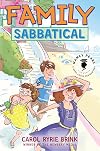
The first of two chidren's novels chronicling the adventures of the Ridgeway family - the second, Family Sabbatical, has been enthusiastically recommended to me by a number of friends, on more than one occasion - Family Grandstand is a charming tale, one with an appealing cast of characters and a fairly gentle but engaging set of happenings. Set in the 1950s (possibly the late 1940s?), it follows the story of the three Ridgeway children - twelve-year-old Susan, who was sensible and firm, but show more never bossy; middle child and boy-of-the-family George, who was going on ten, and loved animals of any and every variety; and six-year-old Dumpling (real name: Irene), whose interesting pronouncements and bespectacled appearance had her family convinced that she was a uniquely thoughtful and intelligent baby - who live on College Avenue, in a lovely old-fashioned house with a tower. Their father, who is a professor at Midwest University, and their mother, a mystery writer, complete the family; while serious student Dorothy Sturm, earning her way by helping out in the Ridgeway home, football star Tommy Tucker (AKA Tommy Tokarynski), and the local neighborhood children round out the cast of characters.
Published in 1952, this is a sweet, rather old-fashioned family story, with a little bit of football and college interest thrown in. I enjoyed pretty much everything about it, from the many incidents involving the children's animals - the adoption of Torible Terence, the happy freeing of the turtles, the unhappy freeing of Dickie the canary - to the sub-plot involving Dorothy and Tommy. The latter is resolved fairly predictably - I knew Dorothy would give in andtutor Tommy, helping him to catch up in chemistry - but I was interested to see it play out all the same. As someone who finds the current state of athletics at many universities - the way it has been turned into a big business, and allowed to supersede the true purpose of higher education (ie: academics) - very disturbing, I was pleased that it was simply understood that, without prospering in his studies, Tommy would not be allowed to play. I have difficulty imagining that being insisted upon today, at some of our schools.
In any case, this was just an immensely engaging read, and although I wouldn't say that anything particularly momentous occurred in the course of the story, I was completely involved with the characters. I can't wait to see what the Ridgeways make of France, in Family Sabbatical! show less
Published in 1952, this is a sweet, rather old-fashioned family story, with a little bit of football and college interest thrown in. I enjoyed pretty much everything about it, from the many incidents involving the children's animals - the adoption of Torible Terence, the happy freeing of the turtles, the unhappy freeing of Dickie the canary - to the sub-plot involving Dorothy and Tommy. The latter is resolved fairly predictably - I knew Dorothy would give in and
In any case, this was just an immensely engaging read, and although I wouldn't say that anything particularly momentous occurred in the course of the story, I was completely involved with the characters. I can't wait to see what the Ridgeways make of France, in Family Sabbatical! show less
Lists
4th Grade Books (1)
1930s (1)
Ambleside Books (1)
Elevenses (1)
Ambleside Year 3 (1)
Awards


You May Also Like


Associated Authors
Statistics
- Works
- 39
- Also by
- 12
- Members
- 12,783
- Popularity
- #1,834
- Rating
- 3.9
- Reviews
- 137
- ISBNs
- 113
- Languages
- 4
- Favorited
- 11