
Maud Hart Lovelace (1892–1980)
Author of Betsy-Tacy
About the Author
Image credit: Minnesota Historical Society
Series
Works by Maud Hart Lovelace
various Betsy-Tacy 5 copies
The Charming Sally 4 copies
Associated Works
Tagged
Common Knowledge
- Canonical name
- Lovelace, Maud Hart
- Legal name
- Hart, Maud Palmer
- Birthdate
- 1892-04-25
- Date of death
- 1980-03-11
- Gender
- female
- Education
- University of Minnesota
- Occupations
- author
children's book author
short story writer
journalist
historical novelist - Awards and honors
- Minnesota 150
- Relationships
- Lovelace, Delos W. (husband)
- Short biography
- Maud Hart Lovelace was born in Mankato, Minnesota. Her parents were Tom Hart, a shoestore owner, and his wife, Stella. She began writing at a very early age, reportedly as soon as she could hold a pencil. Around age 10, she adopted her mother's maiden name and called herself Maud Palmer Hart. Her father privately published a collection of her poetry around this time. After graduating from Mankato High School, she attended the University of Minnesota but took a leave of absence to go to California to recover from an operation. There she sold her first short story, "Number Eight," to the Los Angeles Times Sunday Magazine in 1911. She returned to Minnesota and worked for the Minnesota Daily. In 1917, at age 25, she married Delos Lovelace, a military officer in training, with whom she would have two children. He served in World War I, and afterwards they moved to New York, living in the city as well as in Yonkers and Mount Vernon, writing journalism and books. She published her first book, The Black Angels, an historical novel set in Minnesota, in 1926. Her next book, Early Candlelight, published in 1929, was her biggest success in this genre. However, she's best known today for her books for children. The enduringly popular Betsy-Tacy series was inspired by stories about her childhood that she told her own daughter. The first Betsy-Tacy book appeared in 1940, and the last book, Betsy's Wedding, was published in 1955.
- Nationality
- USA
- Birthplace
- Mankato, Minnesota, USA
- Places of residence
- Mankato, Minnesota, USA
New York, New York, USA
Claremont, California, USA
Minneapolis, Minnesota, USA
Yonkers, New York, USA
Mount Vernon, New York, USA - Place of death
- Claremont, California, USA
- Burial location
- Glenwood Cemetery, Mankato, Minnesota, USA
- Associated Place (for map)
- USA
Members
Reviews

The second of Maud Hart Lovelace's Deep Valley books - tangentially related to her immensely popular ten-installment Betsy~Tacy series, which is centered upon the same fictional Minnesota town - Emily of Deep Valley was originally published in 1950, and depicts a year in the life of a young woman of 1912/13. Unlike Carney's House Party, another of the Deep Valley books, its heroine plays no part in the storyline of the main series, and - although Betsy Ray and Winona Root do make very brief show more appearances - the story is the most independent of any of Lovelace's books that I have read thus far (only Winona's Pony Cart left!).
A quiet, reserved girl, Emily Webster always felt a little "out of things," particularly when it came to boys. Included in all of her cousin Annette's parties, she was well-liked, but not popular. When the Class of 1912 graduated from Deep Valley High School, and almost all of her peers headed off to college - whether at the state university in Minneapolis, West Point Military Academy, or Vassar College in the east - Emily was a little lost. She loved her Grandpa Webster, the kindly old Civil War veteran who had raised her, and was happy to take care of him, but also longed to continue her education, and to follow in the footsteps of her hero, social reformer Jane Addams.
But as the saying goes, "When God closes a door, somewhere he opens a window," and Emily soon found herself continuing her education less formally, right in Deep Valley. Learning about Abraham Lincoln, while reading with her grandfather, studying the poetry of Robert Browning, in a small group set up with Miss Fowler, and becoming involved in social reform, through her friendship with the Syrian immigrants living in Deep Valley, Emily was soon as active as she could have hoped. Despite the absence of so many of her friends, her social also life began to improve, as she attended some dances with Cab Edwards (another Betsy-Tacy favorite!), and formed a friendship with the new Deep Valley High School teacher, southerner Jed Wakeman.
Emily of Deep Valley offers an immensely engaging story, in a setting I have come to love! I found myself wondering, as I read it, whether it too was based on Maud Hart Lovelace's life (I know most of the Betsy~Tacy books were), or if Emily was a completely "original" creation. In any case, I loved the story, I loved the characters, and I appreciated some of the social observations, from Grandpa's Webster's Civil War reminisces, to the depiction of the mistrust and prejudice with which the Syrians had to contend. If everything was wrapped up a little too easily, thanks to Emily's immense debating talent, I was nevertheless willing to go along... show less
A quiet, reserved girl, Emily Webster always felt a little "out of things," particularly when it came to boys. Included in all of her cousin Annette's parties, she was well-liked, but not popular. When the Class of 1912 graduated from Deep Valley High School, and almost all of her peers headed off to college - whether at the state university in Minneapolis, West Point Military Academy, or Vassar College in the east - Emily was a little lost. She loved her Grandpa Webster, the kindly old Civil War veteran who had raised her, and was happy to take care of him, but also longed to continue her education, and to follow in the footsteps of her hero, social reformer Jane Addams.
But as the saying goes, "When God closes a door, somewhere he opens a window," and Emily soon found herself continuing her education less formally, right in Deep Valley. Learning about Abraham Lincoln, while reading with her grandfather, studying the poetry of Robert Browning, in a small group set up with Miss Fowler, and becoming involved in social reform, through her friendship with the Syrian immigrants living in Deep Valley, Emily was soon as active as she could have hoped. Despite the absence of so many of her friends, her social also life began to improve, as she attended some dances with Cab Edwards (another Betsy-Tacy favorite!), and formed a friendship with the new Deep Valley High School teacher, southerner Jed Wakeman.
Emily of Deep Valley offers an immensely engaging story, in a setting I have come to love! I found myself wondering, as I read it, whether it too was based on Maud Hart Lovelace's life (I know most of the Betsy~Tacy books were), or if Emily was a completely "original" creation. In any case, I loved the story, I loved the characters, and I appreciated some of the social observations, from Grandpa's Webster's Civil War reminisces, to the depiction of the mistrust and prejudice with which the Syrians had to contend. If everything was wrapped up a little too easily, thanks to Emily's immense debating talent, I was nevertheless willing to go along... show less
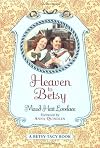
Heaven to Betsy introduces us to Betsy just before she begins her freshman year of high school, and takes us through the ups and downs of that first year. This is one of my two favorites of the entire series (the other being Betsy and the Great World). If I start listing everything I love about this book you’re going to get something like “Miss Mix creates stylish new outfits and Mr Ray makes onion sandwiches and there are picnics and the Crowd and Halloween and Carney and Tony and show more JOE!” and then I will collapse in a pile of swoony fangirlishness. So instead I’m going to focus my discussion on two things that make this book stand out.
First is a general quality of the entire series, which I find particularly noticeable starting with the high school books. When I read these books, I feel a basic underlying optimism about life, that loved ones will support you, that there is always beauty and hope in the world. Some people might say that these are “nice” books. But I am not sure that word captures what I’m talking about. Perhaps this is because of early exposure to the musical Into the Woods, which leaves me silently singing the witch’s song anytime I hear the word “nice”: You’re not good, you’re not bad, you’re just nice.
The Betsy books are “nice”, but that doesn’t mean they don’t contain the good and the bad as well. Betsy has a loving family, but it’s all (to me, at least) entirely real and believable. These aren’t cardboard Mom and Dad cut-outs with smiles painted on. They are real people complete with faults and virtues. Betsy gets her heart broken, she makes mistakes, she hurts other people. And yet I never feel a lasting bitterness. Pain and regret, yes, but there’s a peace to it. A feeling that Betsy (or perhaps Maud, since these are semi-autobiographical) can look back and come to terms with her life. It’s a different feeling than what I get reading the Little House Books, where I do perceive a bitterness, a self-censoring by the author that makes the books more distant. It’s also a different feeling than what I get reading the Anne books, which have an almost fairy-tale like quality to me — they describe a golden-hued beautiful world I love visiting, but it’s not quite as down-to-earth as Betsy’s world. There’s a place for all these types of books, of course. But if you are looking for a book that is old-timey and sweet and nice, but also very grounded and real, you might find it here.
The second thing about Heaven to Betsy in particular that I think makes it worth reading, especially for anyone who is a writer or dreams of being one, is the depiction of Betsy as a budding writer. On the brink of high-school, and having just moved in to a new house, Betsy begins the book feeling that there isn’t a place for writing in her new life. In earlier books, Betsy uses a beloved old trunk as her desk to write poems, but it somehow doesn’t belong in the new room, and Betsy herself suggests it be moved to the attic. And yet:
Sometimes she climbed into the attic and stuffed smudged, scribbled papers furtively into the trunk, standing forlorn in a dark corner. On such occasions she often cried a little, never much, for it always occurred to her how romantic it was to be crying about her trunk, and then she stopped, and couldn’t start again.
Betsy quickly gets whisked away by all sorts of other diversions: meeting new high school chums, making fudge, picnics, singalongs, parties, and falling hard for the new boy Tony. It is exhilarating and breathless and FUN but yet there’s something more. By winter time we find:
The snow which all day long had sparkled in the sunshine looked pale. Walking homeward, looking up at the sky, and around her at the wan landscape, she felt an inexplicable yearning. It was mixed up with Tony, but it was more than Tony. It was growing up; it was leaving Hill Street and having someone else light a lamp in the beloved yellow cottage. She felt like crying, and yet there was nothing to cry about.
That passage in particular still really hits me — capturing a feeling I have experienced many times myself, especially as a teen. And like me, Betsy seeks refuge in her writing. Yet she still hides it away. The other girls don’t write, and the boys tease her about being a Little Poetess. She recognizes that she wants to be a writer some day, and even that her older sister Julia (who wants to be an opera singer and “never cared what people thought”) would never have put that trunk in the attic and “buried her poems in a handkerchief box”.
But while Betsy recognizes this, she doesn’t change her ways. When she’s chosen to participate in the annual school essay contest (competing against handsome but perplexing Joe Willard) she is thrilled, yet still doesn’t manage to handle it the way she might wish. But she does learn from the experience:
She looked back over the crowded winter. She did not regret it. But she should not have let its fun, its troubles, its excitements squeeze her writing out.
“If I treat my writing like that,” she told herself, “it may go away entirely.”
The thought appalled her. What would life be like without her writing? Writing filled her life with beauty and mystery, gave it purpose… and promise.
When Betsy finally acts on that realization I am cheering for her! And even now, it never fails to remind me, as a writer, that I have to make room for writing in my life.
There’s so much more I could talk about: the thoughtful portrayal of religion, the way Lovelace captures the exquisite ache of a first (unrequited) crush, all the wonderful period details, Betsy’s steadfast friendship with Tacy. But I’ll leave you all to find out about that if you read this book for yourself. show less
First is a general quality of the entire series, which I find particularly noticeable starting with the high school books. When I read these books, I feel a basic underlying optimism about life, that loved ones will support you, that there is always beauty and hope in the world. Some people might say that these are “nice” books. But I am not sure that word captures what I’m talking about. Perhaps this is because of early exposure to the musical Into the Woods, which leaves me silently singing the witch’s song anytime I hear the word “nice”: You’re not good, you’re not bad, you’re just nice.
The Betsy books are “nice”, but that doesn’t mean they don’t contain the good and the bad as well. Betsy has a loving family, but it’s all (to me, at least) entirely real and believable. These aren’t cardboard Mom and Dad cut-outs with smiles painted on. They are real people complete with faults and virtues. Betsy gets her heart broken, she makes mistakes, she hurts other people. And yet I never feel a lasting bitterness. Pain and regret, yes, but there’s a peace to it. A feeling that Betsy (or perhaps Maud, since these are semi-autobiographical) can look back and come to terms with her life. It’s a different feeling than what I get reading the Little House Books, where I do perceive a bitterness, a self-censoring by the author that makes the books more distant. It’s also a different feeling than what I get reading the Anne books, which have an almost fairy-tale like quality to me — they describe a golden-hued beautiful world I love visiting, but it’s not quite as down-to-earth as Betsy’s world. There’s a place for all these types of books, of course. But if you are looking for a book that is old-timey and sweet and nice, but also very grounded and real, you might find it here.
The second thing about Heaven to Betsy in particular that I think makes it worth reading, especially for anyone who is a writer or dreams of being one, is the depiction of Betsy as a budding writer. On the brink of high-school, and having just moved in to a new house, Betsy begins the book feeling that there isn’t a place for writing in her new life. In earlier books, Betsy uses a beloved old trunk as her desk to write poems, but it somehow doesn’t belong in the new room, and Betsy herself suggests it be moved to the attic. And yet:
Sometimes she climbed into the attic and stuffed smudged, scribbled papers furtively into the trunk, standing forlorn in a dark corner. On such occasions she often cried a little, never much, for it always occurred to her how romantic it was to be crying about her trunk, and then she stopped, and couldn’t start again.
Betsy quickly gets whisked away by all sorts of other diversions: meeting new high school chums, making fudge, picnics, singalongs, parties, and falling hard for the new boy Tony. It is exhilarating and breathless and FUN but yet there’s something more. By winter time we find:
The snow which all day long had sparkled in the sunshine looked pale. Walking homeward, looking up at the sky, and around her at the wan landscape, she felt an inexplicable yearning. It was mixed up with Tony, but it was more than Tony. It was growing up; it was leaving Hill Street and having someone else light a lamp in the beloved yellow cottage. She felt like crying, and yet there was nothing to cry about.
That passage in particular still really hits me — capturing a feeling I have experienced many times myself, especially as a teen. And like me, Betsy seeks refuge in her writing. Yet she still hides it away. The other girls don’t write, and the boys tease her about being a Little Poetess. She recognizes that she wants to be a writer some day, and even that her older sister Julia (who wants to be an opera singer and “never cared what people thought”) would never have put that trunk in the attic and “buried her poems in a handkerchief box”.
But while Betsy recognizes this, she doesn’t change her ways. When she’s chosen to participate in the annual school essay contest (competing against handsome but perplexing Joe Willard) she is thrilled, yet still doesn’t manage to handle it the way she might wish. But she does learn from the experience:
She looked back over the crowded winter. She did not regret it. But she should not have let its fun, its troubles, its excitements squeeze her writing out.
“If I treat my writing like that,” she told herself, “it may go away entirely.”
The thought appalled her. What would life be like without her writing? Writing filled her life with beauty and mystery, gave it purpose… and promise.
When Betsy finally acts on that realization I am cheering for her! And even now, it never fails to remind me, as a writer, that I have to make room for writing in my life.
There’s so much more I could talk about: the thoughtful portrayal of religion, the way Lovelace captures the exquisite ache of a first (unrequited) crush, all the wonderful period details, Betsy’s steadfast friendship with Tacy. But I’ll leave you all to find out about that if you read this book for yourself. show less
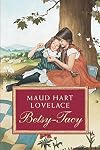
First sentence: It was difficult, later, to think of a time when Betsy and Tacy had not been friends.
Premise/plot: Betsy meets Tacy, her new neighbor, at her fifth birthday party. The two girls become instant best friends, near sisters. These two are inseparable. They want to do everything together--always together. This book focuses on their time together--at home, at school, etc. The book concludes with the two meeting another little girl near their own age, Tb.
My thoughts: I have no show more memory of reading Betsy-Tacy growing up. I'd heard of the book series certainly. But if I'm honest, I thought it was literally about ONE girl named Betsy-Tacy. These books are set around the turn of the twentieth century. Yes, it was published originally in 1940...but Betsy and company would have been born in the 1890s.
The book is interesting in that it feels TIMELESS and time-specific. The two things shouldn't both be true. The book feels timeless because it captures childhood realistically--family life, friendship, thoughts and feelings about school. Some things never change. It feels time-specific because of the descriptions and illustrations. It feels delightfully historic. I like that about it. show less
Premise/plot: Betsy meets Tacy, her new neighbor, at her fifth birthday party. The two girls become instant best friends, near sisters. These two are inseparable. They want to do everything together--always together. This book focuses on their time together--at home, at school, etc. The book concludes with the two meeting another little girl near their own age, Tb.
My thoughts: I have no show more memory of reading Betsy-Tacy growing up. I'd heard of the book series certainly. But if I'm honest, I thought it was literally about ONE girl named Betsy-Tacy. These books are set around the turn of the twentieth century. Yes, it was published originally in 1940...but Betsy and company would have been born in the 1890s.
The book is interesting in that it feels TIMELESS and time-specific. The two things shouldn't both be true. The book feels timeless because it captures childhood realistically--family life, friendship, thoughts and feelings about school. Some things never change. It feels time-specific because of the descriptions and illustrations. It feels delightfully historic. I like that about it. show less

The seventh book in Maud Hart Lovelace's Betsy~Tacy series - in which the youthful trials and tribulations of three Minnesota girls growing up in the early years of the twentieth century are detailed - Betsy Was a Junior (as the name would suggest) follows Betsy, Tacy and Tib through their third year of high school. There are changes aplenty, from Tib's return to Deep Valley and Julia's departure for University, to Betsy's creation of the Okto Delta sorority. Despite her list of plans, and show more her determination to make this her best school year ever, Betsy bungles it, neglecting her academic work, alienating much of the school, and even missing out on her third chance at the famed Philomathian/Zetamathian Essay Contest.
But although the story reads, in part, like a string of disasters (however entertaining), through all the ups and downs, some things remain constant. The strong ties of love, and warm sense of home, that characterize the Ray family, whether together or apart; the loyalty and camaraderie of Betsy's circle of friends, and their irrepressible sense of fun; and the essential goodheartedness of Betsy herself, who, though she does not always see the right way forward, is always on the lookout for it; are all here.
It is that, I think - that sense of the underlying goodness of people, even when their actions are less-than-kind, and not-so-admirable - that gives Betsy Was a Junior such emotional power. As someone with an interest in human rights, and an awareness of the ubiquity of their violation, I'm not sure I always believe in that goodness. As someone moreover, with few happy high school memories - yes, dissatisfaction with the high school experience seems to have become such a commomplace, that its expression feels almost redundant, but as with everything, there are degrees. I am, after all, a high school dropout - there is little in Betsy's school experience with which I can identify.
And yet... Lovelace makes me believe in the goodness of humanity. She makes me feel with Betsy, makes me see how easy it is, without ever intending it, to fall into the wrong way. Given who I am, that is an astonishing achievement. show less
But although the story reads, in part, like a string of disasters (however entertaining), through all the ups and downs, some things remain constant. The strong ties of love, and warm sense of home, that characterize the Ray family, whether together or apart; the loyalty and camaraderie of Betsy's circle of friends, and their irrepressible sense of fun; and the essential goodheartedness of Betsy herself, who, though she does not always see the right way forward, is always on the lookout for it; are all here.
It is that, I think - that sense of the underlying goodness of people, even when their actions are less-than-kind, and not-so-admirable - that gives Betsy Was a Junior such emotional power. As someone with an interest in human rights, and an awareness of the ubiquity of their violation, I'm not sure I always believe in that goodness. As someone moreover, with few happy high school memories - yes, dissatisfaction with the high school experience seems to have become such a commomplace, that its expression feels almost redundant, but as with everything, there are degrees. I am, after all, a high school dropout - there is little in Betsy's school experience with which I can identify.
And yet... Lovelace makes me believe in the goodness of humanity. She makes me feel with Betsy, makes me see how easy it is, without ever intending it, to fall into the wrong way. Given who I am, that is an astonishing achievement. show less
Lists
Awards


You May Also Like


Associated Authors
Statistics
- Works
- 40
- Also by
- 5
- Members
- 14,134
- Popularity
- #1,629
- Rating
- 4.2
- Reviews
- 250
- ISBNs
- 132
- Favorited
- 31