
Meindert DeJong (1) (1906–1991)
Author of The Wheel on the School
For other authors named Meindert DeJong, see the disambiguation page.
About the Author
Meindert DeJong is the award-winning author of many classic books for children. Among Mr. Sendak's other popular books is his Caldecott Medal-winning Where the Wild Things Are
Image credit: Meindert De Jong, sometimes spelled de Jong or Dejong (4 March 1906 – 16 July 1991), Dutch-American author of children's books By Source, Fair use, https://en.wikipedia.org/w/index.php?curid=36713558
Works by Meindert DeJong
Associated Works
The Young Folks' Shelf of Books, Volume 04: Just Around the Corner (1962) — Contributor — 176 copies
Tagged
Common Knowledge
- Birthdate
- 1906-03-04
- Date of death
- 1991-07-16
- Gender
- male
- Education
- Calvin College
University of Chicago - Occupations
- college professor
poultry farmer
children's book author - Organizations
- U.S. Army Air Forces
- Awards and honors
- Hans Christian Andersen Award (1962)
- Nationality
- Netherlands (birth)
USA (naturalized) - Birthplace
- Wierum, Netherlands
- Places of residence
- Grand Rapids, Michigan, USA
Chapel Hill, North Carolina, USA
Wierum, Netherlands
Mexico - Place of death
- Allegan, Michigan, USA
- Associated Place (for map)
- USA
Members
Reviews

I had many books read to me as a child, and one that has always stood out as a favorite is The Cat That Walked a Week. I don’t remember when Mom first read this to me, but I do remember identifying with the cat to the extent that I quickly became invested in its survival. Recently, when I went to pick a book to read to my youngest sister, I happened across this on the shelf and decided it was high time to introduce her to this story. Meindert DeJong has always been one of my favorite show more children’s authors, so it was fun to get to introduce her to his work—and it ended up being just as emotional of a read for her as it was for me when I was a youngster!
I wouldn’t describe The Cat That Walked a Week as an entirely gentle story. My sister and I took several weeks to get through it, and several times, she stopped me in the middle of a sentence to tearfully ask if it would be alright in the end. At one point, when the cat was dropped into the water, she jumped—and had to be reassured that “Yes, it will turn out okay!”
Still, as a child and now as an adult, I’ve found the book to be a heartwarming, hope-filled, gripping read about a cat, the family that loved him, and the adventure that was thrust upon him. This is one of those books that children and adults can enjoy, and I love that.
It’s hard to put into words why I love this book so much. By today’s standards, the writing style isn’t outstanding—there’s a lot of telling and explanation throughout the story. But the story itself—the plot and the characters—are so well-drawn that you instantly connect with them and wish with your whole heart that things will go well for the cat. The language used in the story is much richer than you’d find in many modern books. And then there’s the whole adventure aspect of the story—I love the journey the cat goes on, as he encounters many different people (most of whom are unique and hilarious!), and quite a few different ecosystems as he travels.
Sadly, this book is out of print, but if you do manage to snag a copy for yourself, I highly recommend you read it (or, preferably, share it with a child in your life). I’ve loved it since I was young, and love that I got to share it with my younger sister now. show less
I wouldn’t describe The Cat That Walked a Week as an entirely gentle story. My sister and I took several weeks to get through it, and several times, she stopped me in the middle of a sentence to tearfully ask if it would be alright in the end. At one point, when the cat was dropped into the water, she jumped—and had to be reassured that “Yes, it will turn out okay!”
Still, as a child and now as an adult, I’ve found the book to be a heartwarming, hope-filled, gripping read about a cat, the family that loved him, and the adventure that was thrust upon him. This is one of those books that children and adults can enjoy, and I love that.
It’s hard to put into words why I love this book so much. By today’s standards, the writing style isn’t outstanding—there’s a lot of telling and explanation throughout the story. But the story itself—the plot and the characters—are so well-drawn that you instantly connect with them and wish with your whole heart that things will go well for the cat. The language used in the story is much richer than you’d find in many modern books. And then there’s the whole adventure aspect of the story—I love the journey the cat goes on, as he encounters many different people (most of whom are unique and hilarious!), and quite a few different ecosystems as he travels.
Sadly, this book is out of print, but if you do manage to snag a copy for yourself, I highly recommend you read it (or, preferably, share it with a child in your life). I’ve loved it since I was young, and love that I got to share it with my younger sister now. show less
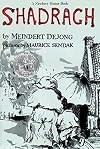
There is virtually no plot to this book, and it is delightful! It is quiet, gentle and nostalgic.
The Grandfather of Davie, a Dutch boy of unspecified age (I imagined him about 6 years old), tells him that he will get him a pet rabbit. About half the book is about Davie's excitement as he looks forward to getting the rabbit, and the other half is about what happens after he gets the rabbit. And honestly, not a great deal happens. But that's not the point.
DeJong is a master at portraying the show more inner thoughts and emotions of children. THAT is the point of this book. We learn about every little thought and feeling that goes through Davie's mind, and it reminds us with a sort of joyful nostalgia, about when we were that young... of a time when something as simple as getting a rabbit could completely and absolutely saturate all of our thoughts and actions.
Though written for upper elementary grade children, and a Newbery Honor book, I'm not sure the target age would appreciate "Shadrach" much. Today's 5th graders don't want to read about 6-year-olds. I think the perfect audience is adults who still enjoy intermediate books (like myself) or parents of children close to Davie's age. show less
The Grandfather of Davie, a Dutch boy of unspecified age (I imagined him about 6 years old), tells him that he will get him a pet rabbit. About half the book is about Davie's excitement as he looks forward to getting the rabbit, and the other half is about what happens after he gets the rabbit. And honestly, not a great deal happens. But that's not the point.
DeJong is a master at portraying the show more inner thoughts and emotions of children. THAT is the point of this book. We learn about every little thought and feeling that goes through Davie's mind, and it reminds us with a sort of joyful nostalgia, about when we were that young... of a time when something as simple as getting a rabbit could completely and absolutely saturate all of our thoughts and actions.
Though written for upper elementary grade children, and a Newbery Honor book, I'm not sure the target age would appreciate "Shadrach" much. Today's 5th graders don't want to read about 6-year-olds. I think the perfect audience is adults who still enjoy intermediate books (like myself) or parents of children close to Davie's age. show less
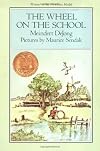
This read aloud, published in 1954, took us forever to get through -- partly because we've been so busy, and party because it started so slow. I'm so glad we stuck with it, though, because we loved it. If it started slow, it picked up in a big way about halfway through, with breathless action! This is a charming portrait of a bygone era -- a tiny fishing village in Holland, where the six school-aged children attend the one-room school in their wooden shoes, and their fishermen fathers spend show more long weeks at sea. Young Lina is distracted from her studies because her aunt told her of storks who come every year to nest on her town's roofs. Lina wonders why storks never come to Shora, and her teacher challenges the children to find out. They learn, and decide to bring them back. The problem: the steep roofs of Shora are not hospitable to storks, and similar towns solve the problem by putting wagon wheels on their roofs. Thus begins a mission to find a wheel for their school's roof -- an unlikely and improbable task. The result, however, unites the tiny community like never before. This is a very moving read and terrific storytelling. I'm so glad we stuck with it! show less

My first read of a book by this author, and it's a winner. In a small Netherlands fishing village the schoolteacher inspires the students to find out why there are no storks nesting on the town's roofs, and what follows is a delightful tale of what can happen when people are pushed out of their comfortable ruts.
Lists
Which house? (1)
Ambleside Y2 (1)
Ambleside Year 3 (1)
1964 Project (1)
1970s (1)
1950s (1)
THE WAR ROOM (1)
Newbery Adjacent (2)
Sonlight Books (5)
Ambleside Books (2)
Nifty Fifties (1)
Precious People (1)
4th Grade Books (1)
Ambleside Y3 (1)
Awards


You May Also Like


Associated Authors
Statistics
- Works
- 31
- Also by
- 5
- Members
- 9,462
- Popularity
- #2,538
- Rating
- 3.8
- Reviews
- 96
- ISBNs
- 165
- Languages
- 9
- Favorited
- 2