
Cristina Rathbone
Author of A World Apart: Women, Prison, and Life Behind Bars
Works by Cristina Rathbone
The Asylum Seekers: A Chronicle of Life, Death, and Community at the Border (2025) 29 copies, 12 reviews
Tagged
Common Knowledge
- Birthdate
- 1966-01-14
- Gender
- female
- Education
- Tisch School of the Arts, New York University
- Occupations
- journalist
Episcopal priest - Awards and honors
- Radcliffe Institute Fellow
- Places of residence
- Roslindale, Massachusetts, USA
- Associated Place (for map)
- Massachusetts, USA
Members
Reviews

The Asylum Seekers by Cristina Rathbone is a powerful and insightful look at those affected at our border by our dysfunctional and frequently cruel immigration system.
This book is both a collection of the individual stories of these asylum seekers as well as the collective story of how they are faced with often pointless and always inefficient bureaucratic obstacles. It is also, for those so inclined, a book about faith; about questioning it and reasserting it in one's life. I don't believe show more in a God, especially the Abrahamic one, so I won't dwell on that aspect except to say that the people Rathbone counseled and helped did, and that is what matters, not what my beliefs are. And having clergy there, in the midst of all that chaos, benefited everyone, even any of those who might not share that belief system, I know her presence would have helped me if I had to go through that.
Much of the hateful rhetoric around immigrants makes no distinction between those who came across without reporting and those who requested and applied for asylum. Crossing the border and requesting asylum is not illegal and is how it most often occurs, to pretend otherwise is a sign of bigotry and/or ignorance. What this rhetoric overlooks, or just plain doesn't care about, are the human beings involved.
These people, these families, have made the difficult decision to leave their homes, often leaving a house or property they own, to find safety from violence and threats and to make a new start. This isn't the "making a new start" of someone who decides to change careers or live some place they just really want to live. This "making a new life" is having to leave all one knows to start over from scratch in a place where they don't know anyone (usually) and their lifetime of work experience will mean next to nothing. The people being turned away at the border, by border patrol agents with no immigration law or policy experience, are not the criminals our current regime pretends to be concerned about. These are people, fellow human beings, trying to protect themselves and their families and wanting to do it the right way. But the US keeps changing policy, changing who is "desirable," and now, with cruelty driving all of our policy decisions, things might change day to day because someone upset the baby in the White House or Cosplay Barbie.
I would recommend this to readers who genuinely want to know the stories of the people wanting/needing to come to the US. If you're sure you want better immigration policies but you also want to be fair and compassionate, this might help you see these people as not so different from yourself. If you just enjoy the cruelty of harming those who you mistakenly think of as less worthy than you, skip this book, you'll just confuse your pathetic little brain.
Reviewed from a copy made available by the publisher via LibraryThing. show less
This book is both a collection of the individual stories of these asylum seekers as well as the collective story of how they are faced with often pointless and always inefficient bureaucratic obstacles. It is also, for those so inclined, a book about faith; about questioning it and reasserting it in one's life. I don't believe show more in a God, especially the Abrahamic one, so I won't dwell on that aspect except to say that the people Rathbone counseled and helped did, and that is what matters, not what my beliefs are. And having clergy there, in the midst of all that chaos, benefited everyone, even any of those who might not share that belief system, I know her presence would have helped me if I had to go through that.
Much of the hateful rhetoric around immigrants makes no distinction between those who came across without reporting and those who requested and applied for asylum. Crossing the border and requesting asylum is not illegal and is how it most often occurs, to pretend otherwise is a sign of bigotry and/or ignorance. What this rhetoric overlooks, or just plain doesn't care about, are the human beings involved.
These people, these families, have made the difficult decision to leave their homes, often leaving a house or property they own, to find safety from violence and threats and to make a new start. This isn't the "making a new start" of someone who decides to change careers or live some place they just really want to live. This "making a new life" is having to leave all one knows to start over from scratch in a place where they don't know anyone (usually) and their lifetime of work experience will mean next to nothing. The people being turned away at the border, by border patrol agents with no immigration law or policy experience, are not the criminals our current regime pretends to be concerned about. These are people, fellow human beings, trying to protect themselves and their families and wanting to do it the right way. But the US keeps changing policy, changing who is "desirable," and now, with cruelty driving all of our policy decisions, things might change day to day because someone upset the baby in the White House or Cosplay Barbie.
I would recommend this to readers who genuinely want to know the stories of the people wanting/needing to come to the US. If you're sure you want better immigration policies but you also want to be fair and compassionate, this might help you see these people as not so different from yourself. If you just enjoy the cruelty of harming those who you mistakenly think of as less worthy than you, skip this book, you'll just confuse your pathetic little brain.
Reviewed from a copy made available by the publisher via LibraryThing. show less
 This review was written for LibraryThing Early Reviewers.
This book was sent to me by Broadleaf Books and LibraryThing, in exchange for an honest review. Honestly, I’m a little discouraged by LibraryThing consistently tricking me into reading religious books. This book isn’t just religious—it’s a lot more—but as someone who has made it clear that I don’t want these books, I don’t understand why they keep sending them to me.
It wasn’t as bad as I thought though. There were definitely some things that annoyed me, and most of them were show more tied to religion, but they didn’t out shadow the main point. The author is a priest, so it’s hard to blame her for living in a fantasy world, but hopefully the real life horrors she experienced brought her back to Earth a little bit.
There were a few pages that I skipped or skimmed because they got to Jesus-y. I also didn’t appreciate the way Rathbone can condemn the cartel, while giving free passes to the disgusting border patrol agents who were causing people to lose their lives. She claims these monsters are “just doing a job,” that they care more about paying their mortgages and feeding their kids than they do about policies being passed in Washington DC. So what? If your orders are to break international laws and torture children, maybe you shouldn’t follow them. She also draws a line between “legitimate” asylum seekers and those who are not, even after seeing the almost impossibility of crossing the border, the “right” way. Finally, she gives god the credit for a kid getting through, but doesn’t seem to place any blame on god for the literally hundreds of thousands of people not allowed through or killed or tortured.
All that said, I enjoyed much more of this book than I disliked. At no point did I want to stop reading. Rathbone arrives at the border and immediately gets to work. Shit, at times she sounds like an anarchist. She makes it clear that she isn’t “helping” people, but instead working alongside them. She helps create a community that relies on its members to get their basic needs met, without any kind of top down organizing. She also talks a lot about knowing what she was doing wasn’t enough, but instead of letting this stop her she used it as a jumping off point. I can absolutely relate to that: It’s never enough, but what are our other options?
The stories that Rathbone relays (which I’m sure are only a small percentage of what she heard and saw) are absolutely heartbreaking, even for someone who has read and heard similar stories in the past. The violence that people faced, the murders of family members, the kidnapping of their children, the fact that 80 percent of female migrants traveling through Mexico to the border are sexually assaulted, and the drive to somehow collect what remains and try for a better life. It really brings home how heartless such a big chunk of this country is.
It’s illegal for an asylum seeker to be turned away at the border, but it happens hundreds of times per day. The agents don’t say no; instead they tell them that the building is full and it’s a fire hazard. Not technically breaking the law, but bending it with the sole purpose of hurting human beings.
Eventually the authorities realize that a community is forming and use all their might to squash it. They passed new laws, laws that led to many of the things the community was doing becoming irrelevant or even illegal. They sent in feds and garbage trucks to destroy what little possessions people had left. And it worked. The community scattered, many returned home to the almost sure deaths, and other tried to cross “illegally,” which could also result in their deaths.
Rathbone’s writing style is clear and concise. She feels things to the core and in comes across in this book. I challenge you to read it without feeling anything. I challenge you to hold on to your hatred and xenophobia throughout the 260-something pages. show less
It wasn’t as bad as I thought though. There were definitely some things that annoyed me, and most of them were show more tied to religion, but they didn’t out shadow the main point. The author is a priest, so it’s hard to blame her for living in a fantasy world, but hopefully the real life horrors she experienced brought her back to Earth a little bit.
There were a few pages that I skipped or skimmed because they got to Jesus-y. I also didn’t appreciate the way Rathbone can condemn the cartel, while giving free passes to the disgusting border patrol agents who were causing people to lose their lives. She claims these monsters are “just doing a job,” that they care more about paying their mortgages and feeding their kids than they do about policies being passed in Washington DC. So what? If your orders are to break international laws and torture children, maybe you shouldn’t follow them. She also draws a line between “legitimate” asylum seekers and those who are not, even after seeing the almost impossibility of crossing the border, the “right” way. Finally, she gives god the credit for a kid getting through, but doesn’t seem to place any blame on god for the literally hundreds of thousands of people not allowed through or killed or tortured.
All that said, I enjoyed much more of this book than I disliked. At no point did I want to stop reading. Rathbone arrives at the border and immediately gets to work. Shit, at times she sounds like an anarchist. She makes it clear that she isn’t “helping” people, but instead working alongside them. She helps create a community that relies on its members to get their basic needs met, without any kind of top down organizing. She also talks a lot about knowing what she was doing wasn’t enough, but instead of letting this stop her she used it as a jumping off point. I can absolutely relate to that: It’s never enough, but what are our other options?
The stories that Rathbone relays (which I’m sure are only a small percentage of what she heard and saw) are absolutely heartbreaking, even for someone who has read and heard similar stories in the past. The violence that people faced, the murders of family members, the kidnapping of their children, the fact that 80 percent of female migrants traveling through Mexico to the border are sexually assaulted, and the drive to somehow collect what remains and try for a better life. It really brings home how heartless such a big chunk of this country is.
It’s illegal for an asylum seeker to be turned away at the border, but it happens hundreds of times per day. The agents don’t say no; instead they tell them that the building is full and it’s a fire hazard. Not technically breaking the law, but bending it with the sole purpose of hurting human beings.
Eventually the authorities realize that a community is forming and use all their might to squash it. They passed new laws, laws that led to many of the things the community was doing becoming irrelevant or even illegal. They sent in feds and garbage trucks to destroy what little possessions people had left. And it worked. The community scattered, many returned home to the almost sure deaths, and other tried to cross “illegally,” which could also result in their deaths.
Rathbone’s writing style is clear and concise. She feels things to the core and in comes across in this book. I challenge you to read it without feeling anything. I challenge you to hold on to your hatred and xenophobia throughout the 260-something pages. show less
This review was written for LibraryThing Early Reviewers.Disclaimer: I received a copy via a Librarything giveaway.
One of the most rage inducing things in this world are the people who cling to their religion, in this case Christianity, and have a holier than thou attitude, but who don’t really follow the teachings of Christ or even seem to have read the Gospels. Cristina Rathbone is not one of those people. A great many politicians today are, however, and sadly, none of those politicians will read this excellent book.
Rathbone is an Episcopal show more Minster who did outreach and ministry to the homeless in Boston and then spent time at the border in Ciudad Juárez. The focus of the book is on the people she meets -both the asylum seekers as well as the people who try to help them. Rathbone’s account takes place during 2019, and in term of politics while Trump is never mentioned and Rathbone points out the systemic failure in the alyssum system that has occurred over years (and under the administration of different presidents) Trump because of his current actions and because he was president in 2019 does loom in the background. It is worth noting that while Rathbone condemns US failure in terms of alyssum seeker as a whole, she does not refer to any political party or politician. She seems to be trying to keep politics out of it, most likely in the hopes of gaining a wider readership, though I think those who should most read this book, are those who will not read this book.
One of the problems with the topic of immigration is that there is a tendency of people to conflate every brown immigrant from the south as one and the same. This disregards the basic fact that some are migrant workers (hello cheap food and labor) and some are refugees from various states whose actions or failure is due in part at least to US policies regarding South and Central America. While it is understandable for a state to control who enters it, undocumented immigration is far more complex than saying everyone belongs to MS 13, including that baby there as certain politicians and their advisors would have people think.
This is sharply drawn in the book, not just by the statistics that Rathbone cites (she was a journalist before she became a priest) but by the inclusion of the people who help the asylum seekers, in particular Peter Hinde and Betty Campbell, who are married but not married because of vows. Betty Campbell in particular sounds like a woman you would want on your side. Campbell, the reader is told, as made posters that list the names of the journalists killed in Mexico, the priests killed in Mexico, the 43 students who were disappeared in 2014, and is working on others listing the 1970 women and 18443 men killed in Juárez. Hinde and Campbell don’t really have money but their match their actions to their faith.
Faith does loom in the book as well, though Rathbone does not try to Bible thump the reader, she is a minister – she is called. The helpers that she describes are religious, hardly surprising. There are also places where she does talk about faith (she refers to receiving her call among other things).
However, the focus of the book is one those who are seeking away into the US to escape places where they cannot survive, to do so, to stay in their home, would mean their death. Most of these people in the book are mothers with children. While Rathbone does give statistics about the dangers and the abuse the women face on their journey, the focus here is on how the women are dealing with the wait at the border. In other words, trauma porn or a detail victimization isn’t the point- the point is the inhumane wait that the people must do. They face an increasingly uncaring process at the US border with the Mexican officials not wanting them at all. The image that will stick most with me from reading this book is the young children who view the rubber gloves as status symbols and something to be prized.
The book is a mixture of anger, despair but also hope. It presents a picture of place that more people should be aware of. show less
One of the most rage inducing things in this world are the people who cling to their religion, in this case Christianity, and have a holier than thou attitude, but who don’t really follow the teachings of Christ or even seem to have read the Gospels. Cristina Rathbone is not one of those people. A great many politicians today are, however, and sadly, none of those politicians will read this excellent book.
Rathbone is an Episcopal show more Minster who did outreach and ministry to the homeless in Boston and then spent time at the border in Ciudad Juárez. The focus of the book is on the people she meets -both the asylum seekers as well as the people who try to help them. Rathbone’s account takes place during 2019, and in term of politics while Trump is never mentioned and Rathbone points out the systemic failure in the alyssum system that has occurred over years (and under the administration of different presidents) Trump because of his current actions and because he was president in 2019 does loom in the background. It is worth noting that while Rathbone condemns US failure in terms of alyssum seeker as a whole, she does not refer to any political party or politician. She seems to be trying to keep politics out of it, most likely in the hopes of gaining a wider readership, though I think those who should most read this book, are those who will not read this book.
One of the problems with the topic of immigration is that there is a tendency of people to conflate every brown immigrant from the south as one and the same. This disregards the basic fact that some are migrant workers (hello cheap food and labor) and some are refugees from various states whose actions or failure is due in part at least to US policies regarding South and Central America. While it is understandable for a state to control who enters it, undocumented immigration is far more complex than saying everyone belongs to MS 13, including that baby there as certain politicians and their advisors would have people think.
This is sharply drawn in the book, not just by the statistics that Rathbone cites (she was a journalist before she became a priest) but by the inclusion of the people who help the asylum seekers, in particular Peter Hinde and Betty Campbell, who are married but not married because of vows. Betty Campbell in particular sounds like a woman you would want on your side. Campbell, the reader is told, as made posters that list the names of the journalists killed in Mexico, the priests killed in Mexico, the 43 students who were disappeared in 2014, and is working on others listing the 1970 women and 18443 men killed in Juárez. Hinde and Campbell don’t really have money but their match their actions to their faith.
Faith does loom in the book as well, though Rathbone does not try to Bible thump the reader, she is a minister – she is called. The helpers that she describes are religious, hardly surprising. There are also places where she does talk about faith (she refers to receiving her call among other things).
However, the focus of the book is one those who are seeking away into the US to escape places where they cannot survive, to do so, to stay in their home, would mean their death. Most of these people in the book are mothers with children. While Rathbone does give statistics about the dangers and the abuse the women face on their journey, the focus here is on how the women are dealing with the wait at the border. In other words, trauma porn or a detail victimization isn’t the point- the point is the inhumane wait that the people must do. They face an increasingly uncaring process at the US border with the Mexican officials not wanting them at all. The image that will stick most with me from reading this book is the young children who view the rubber gloves as status symbols and something to be prized.
The book is a mixture of anger, despair but also hope. It presents a picture of place that more people should be aware of. show less
This review was written for LibraryThing Early Reviewers.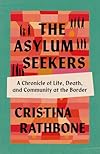
Summary: A priest lives with asylum seekers in Juarez, learning about what they fled, the community they built, and their faith.
Why would you leave home, community, livelihood? Why would you make a costly and perilous journey to the Mexican-American border for the uncertain opportunity to apply for asylum? This is a mental exercise I wonder if many on the American side of the border have ever engaged. So I ask, what would it take for you to do this in your situation.
Cristina Rathbone, an show more Episcopal priest, lived for close to a year in 2019 and early 2020 on the border, spending her days with the growing community of asylum seekers in Juarez. The Rio Grande and a bridge were not all that separated them from El Paso, and the United States. She learned why they came there. In general, they were fleeing gangs and cartels threatening their lives. In some cases they’d already lost a family member. Others had been threatened with death. Some wanted to save their children from choosing between life in a cartel and certain death. Up to 80 percent of the women had been sexually assaulted during their journey to Juarez. Many had spent fortunes on the journey.
Rathbone, a former journalist, had completed a parish assignment in Boston. Her mother’s family had immigrated from Cuba, and so she had some sense of what was stake, and felt it was time for her to see what she could do, and more importantly, what she could learn. In Boston, she had worked in a people-centered, community-based ministry among the homeless. And that is what she set out to do in Juarez. Very quickly, she came to struggle with the futility of her efforts. So many people. And border officials, acting for higher powers, who wanted to admit as few as possible. She wanted to flee until climbing one of the mountains to pray, and looking across the valley, she spotted a silhouetted statue of Jesus.
“Oh my God. Not to stay would be to run away. This is what I knew, all of a sudden: not to stay now would be to run away from him. And tell me, please, what in the world would there be to do after running away from Jesus?”
And so she stayed. Listened to stories. Organized children to collect trash. Set up a school with several other volunteers. Eventually, it was suggested she accompany families up the bridge to the border checkpoint where they could request asylum. It was thought her presence might help some get through. More often, though, they heard that there was no room (even though she later learned there were ample facilities sitting empty). And so she walked back down the bridge with those families. Presence.
She chronicles how a mass of refugees formed a community. Selected leaders. Established a list of asylum seekers, an order the community followed. Shared resources. Organized celebrations. Then as some succeeded in gaining entrance, others stepped up to lead.
Rathbone describes the pressure to set up big programs and how funders, and even her host bishop struggled to understand the person-centered ministry she engaged in. She writes:
“Small, real things. Small, real things. This is what I kept trying to remember and to trust. Not big, impressive things but small, real things are the way to love–with, through, and for the other. Small not because we can’t be bothered but because we are small ourselves.”
Often, her struggle was with herself. For example, she wrestled with her anger toward immigration officials representing an intransigent government. Or she despaired as family after family returned, especially after a more stringent HARP program. This program centered around a “credible fear” interview. If asylum seekers could not convince interviewers of the danger to their lives, the U.S. refused asylum and sent them back. And they could not re-apply. Consequently, they either had to return to the danger they fled, or try to find refuge with relatives living elsewhere.
Rathbone’s narrative is one in which she is kept, sometimes barely, by the scriptures and prayer–and the resilient faith of asylum seekers. Eventually, she gets help from the diocese, so that she never makes the march up the bridge unaccompanied.
Reading this narrative saddens one with the lack of generosity and humanitarian feeling of our country, which has only worsened. Far from the caricatures of asylum seekers as criminals, the people we meet on these pages are people I want as neighbors. They show determination, resilience, courage, integrity, and faith. Rathbone’s account offers a different vision of asylum seekers–one that looks beyond the challenges of settlement to the gift asylum seekers can be to a country. Along with that, her account reminds us that central to ministry is simply being the presence of Christ with people. Without that, we are just brash, arrogant Americans.
____________________
Disclosure of Material Connection: I received a complimentary copy of this book for review from the publisher through LibraryThing’s Early Reviewers Program. show less
Why would you leave home, community, livelihood? Why would you make a costly and perilous journey to the Mexican-American border for the uncertain opportunity to apply for asylum? This is a mental exercise I wonder if many on the American side of the border have ever engaged. So I ask, what would it take for you to do this in your situation.
Cristina Rathbone, an show more Episcopal priest, lived for close to a year in 2019 and early 2020 on the border, spending her days with the growing community of asylum seekers in Juarez. The Rio Grande and a bridge were not all that separated them from El Paso, and the United States. She learned why they came there. In general, they were fleeing gangs and cartels threatening their lives. In some cases they’d already lost a family member. Others had been threatened with death. Some wanted to save their children from choosing between life in a cartel and certain death. Up to 80 percent of the women had been sexually assaulted during their journey to Juarez. Many had spent fortunes on the journey.
Rathbone, a former journalist, had completed a parish assignment in Boston. Her mother’s family had immigrated from Cuba, and so she had some sense of what was stake, and felt it was time for her to see what she could do, and more importantly, what she could learn. In Boston, she had worked in a people-centered, community-based ministry among the homeless. And that is what she set out to do in Juarez. Very quickly, she came to struggle with the futility of her efforts. So many people. And border officials, acting for higher powers, who wanted to admit as few as possible. She wanted to flee until climbing one of the mountains to pray, and looking across the valley, she spotted a silhouetted statue of Jesus.
“Oh my God. Not to stay would be to run away. This is what I knew, all of a sudden: not to stay now would be to run away from him. And tell me, please, what in the world would there be to do after running away from Jesus?”
And so she stayed. Listened to stories. Organized children to collect trash. Set up a school with several other volunteers. Eventually, it was suggested she accompany families up the bridge to the border checkpoint where they could request asylum. It was thought her presence might help some get through. More often, though, they heard that there was no room (even though she later learned there were ample facilities sitting empty). And so she walked back down the bridge with those families. Presence.
She chronicles how a mass of refugees formed a community. Selected leaders. Established a list of asylum seekers, an order the community followed. Shared resources. Organized celebrations. Then as some succeeded in gaining entrance, others stepped up to lead.
Rathbone describes the pressure to set up big programs and how funders, and even her host bishop struggled to understand the person-centered ministry she engaged in. She writes:
“Small, real things. Small, real things. This is what I kept trying to remember and to trust. Not big, impressive things but small, real things are the way to love–with, through, and for the other. Small not because we can’t be bothered but because we are small ourselves.”
Often, her struggle was with herself. For example, she wrestled with her anger toward immigration officials representing an intransigent government. Or she despaired as family after family returned, especially after a more stringent HARP program. This program centered around a “credible fear” interview. If asylum seekers could not convince interviewers of the danger to their lives, the U.S. refused asylum and sent them back. And they could not re-apply. Consequently, they either had to return to the danger they fled, or try to find refuge with relatives living elsewhere.
Rathbone’s narrative is one in which she is kept, sometimes barely, by the scriptures and prayer–and the resilient faith of asylum seekers. Eventually, she gets help from the diocese, so that she never makes the march up the bridge unaccompanied.
Reading this narrative saddens one with the lack of generosity and humanitarian feeling of our country, which has only worsened. Far from the caricatures of asylum seekers as criminals, the people we meet on these pages are people I want as neighbors. They show determination, resilience, courage, integrity, and faith. Rathbone’s account offers a different vision of asylum seekers–one that looks beyond the challenges of settlement to the gift asylum seekers can be to a country. Along with that, her account reminds us that central to ministry is simply being the presence of Christ with people. Without that, we are just brash, arrogant Americans.
____________________
Disclosure of Material Connection: I received a complimentary copy of this book for review from the publisher through LibraryThing’s Early Reviewers Program. show less
This review was written for LibraryThing Early Reviewers.Lists
Awards


Statistics
- Works
- 3
- Members
- 142
- Popularity
- #144,864
- Rating
- 3.9
- Reviews
- 14
- ISBNs
- 9
