
Anton Shammas
Author of Arabesques
About the Author
Shammas is a Christian Arab citizen of Israel who writes novels, poetry, and nonfiction works in Hebrew. He draws heavily upon his heritage and the cultural distinctions among Arabs and Israelis in his work. His narrative style, with its epic scope and multiple levels of plot and theme, has been show more compared to that of Gabriel Garcia Marquez. (Bowker Author Biography) show less
Works by Anton Shammas
ʻArabesḳot ערבסקות 1 copy
שטח הפקר : שירים 1 copy
Associated Works
Tagged
Common Knowledge
- Canonical name
- Sjammas, Anton
- Other names
- أنطون شماس
אנטון שמאס - Birthdate
- 1950
- Gender
- male
- Occupations
- writer
professor - Awards and honors
- Whiting Writers' Award (1991)
- Nationality
- Palestine
- Birthplace
- Fassuta, Israel
- Places of residence
- Haifa, Israel
Jerusalem, Israel
Ann Arbor, Michigan, USA - Associated Place (for map)
- Israel
Members
Reviews

A complicated postmodern, postcolonial novel, exploring some of the complexities of the mid-20th century Middle East from the point of view of a Christian Arab family in Israel. One thread of the narrative digs into the background of the family and the Galilean village where they lived during the Arab revolt of the 1930s and the events of 1947-1948, and the childhood of a boy called “Anton Shabbas”, born soon after 1948 and named after a cousin said to have died in infancy, whilst show more another follows the Arab-Israeli writer “Anton Shabbas” through a visit to Paris and an international writers’ workshop in Iowa in the early 1980s, where he finds himself in a strange kind of interaction with a prominent Jewish-Israeli writer, Yehoshua Bar On, and another with a person who might or might not be the earlier Anton Shabbas, both of whom might or might not be writing his story, which might or might not be fictional.
In the original there’s a whole other layer of complexity (we are told) that comes from the way the story is written in a Hebrew that plays with that language’s close affinity with Arabic, but of course most of that has to count as lost-in-translation for us. Shabbas worked with the translator to restructure the book to make it work better in English, so it seems we are reading something that is rather more than a simple translation, which makes it hard to guess what the effect of the original would have been.
It’s a tricky book to follow, and it would probably benefit from a careful re-read, keeping track of how all the characters with the same or similar names in different generations fit together, but even on a quick first read it’s a fascinating approach to the paradoxical situation of becoming effectively an alien in the country where your family has always lived, something that definitely hasn’t lost its relevance. The approach Shammas takes is obviously meant to raise questions (if not hackles) on both sides: he is appropriating the dominant culture, as represented by the Hebrew language, as his own and asserting the right to use it to express his own ideas in his own way with it. show less
In the original there’s a whole other layer of complexity (we are told) that comes from the way the story is written in a Hebrew that plays with that language’s close affinity with Arabic, but of course most of that has to count as lost-in-translation for us. Shabbas worked with the translator to restructure the book to make it work better in English, so it seems we are reading something that is rather more than a simple translation, which makes it hard to guess what the effect of the original would have been.
It’s a tricky book to follow, and it would probably benefit from a careful re-read, keeping track of how all the characters with the same or similar names in different generations fit together, but even on a quick first read it’s a fascinating approach to the paradoxical situation of becoming effectively an alien in the country where your family has always lived, something that definitely hasn’t lost its relevance. The approach Shammas takes is obviously meant to raise questions (if not hackles) on both sides: he is appropriating the dominant culture, as represented by the Hebrew language, as his own and asserting the right to use it to express his own ideas in his own way with it. show less
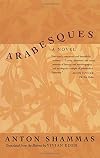
Finished Arabesques which was really wonderful though I couldn't decide whether or not to take careful notes, make a chronology and a few family trees...moreFinished Arabesques which was really wonderful though I couldn't decide whether or not to take careful notes, make a chronology and a few family trees or to give myself over to the highly circular and poetic narrative that doubled back and repeated itself with much twinning of characters and plot. I did a little of both Fantastic book show more and an excellent choice for the J Street Reading Group show less
not perfecrt structure, but excellent imagery
Awards

You May Also Like


Associated Authors
Statistics
- Works
- 6
- Also by
- 1
- Members
- 267
- Popularity
- #86,453
- Rating
- 3.8
- Reviews
- 3
- ISBNs
- 14
- Languages
- 5