
Works by Alan Ziegler
Short: An International Anthology of Five Centuries of Short-Short Stories, Prose Poems, Brief Essays, and Other Short Prose Forms (2014) 57 copies, 2 reviews
Almost grown 1 copy
Associated Works
Telephone 8 — Contributor — 1 copy
Tagged
Common Knowledge
There is no Common Knowledge data for this author yet. You can help.
Members
Reviews
Short: An International Anthology of Five Centuries of Short-Short Stories, Prose Poems, Brief Essays, and Other Short Prose Forms by Alan Ziegler
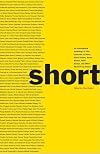
Data point - this takes a long time to get through, because each piece is worth trying, and then is so packed with stuff that it requires a reread and a period of processing time. It's not entertaining; it's *L*iterary. And it's very often very 'meta' and self-referential, which, frankly, got old.
Which means it was just too too much for me to read in the four days that I had available. Otoh, I don't think that I would have liked it much better had it been spread out. I like flash fiction, show more and I like works that make me think, but I don't like works that are deliberately difficult or pretentious.
On yet another hand (don't we rabid readers need more than two hands? in fact, doesn't everybody?), even though these weren't the bite-size treats I'd hoped to read, I did mark several passages with bookdarts:
First I appreciated the introduction. Especially because the editor pointed out that the pieces are arranged by the date the author was *born.* Which means that their formative years are in order on a timeline of the pieces, if you know what I mean. Original publication dates may fall out of order, for example if Hank was born in 1895 but the selection by him is from when he was 75, in 1970, but Zach was born in 1910 but the selection by him is from when he was 25, in 1935... Hank's piece will appear well before Zach's in the book. So, yes, historical *context* of the pieces gets very interesting throughout the book. Also, the book is copyright 2014 but the last authors were born in 1982, so none of the contemporary writers are young. (Otoh, at least one older piece was written by someone who died young, so, hmm....)
Anyway, that stuff isn't important. I found it interesting, but that says more about me than about the book.
So, second book dart, from the introduction: "In a conventional story, something happens and something changes; in a short-short story, one or the other can be sufficient."
I also marked "A Scholar's Idea of Happy Endings" by [a:Gianni Celati|66795|Gianni Celati|https://images.gr-assets.com/authors/1344161901p2/66795.jpg] because I liked it so much, but I'm not sure if I want to read more by him. Like many other pieces I enjoyed, I liked them because they were small pokes. To read a full-length work by most of these authors would be difficult for me, because they'd pack a wallop (of neuroses, or violence, or artsy-farstiness, or whatever) and I don't like to get beat up.
I might read more of [a:Ron Padgett|19990|Ron Padgett|https://s.gr-assets.com/assets/nophoto/user/u_50x66-632230dc9882b4352d753eedf9396530.png] because "The Salt and Pepper Shakers" sample 'memoir' is charming.
[a:Etgar Keret|34065|Etgar Keret|https://images.gr-assets.com/authors/1317329699p2/34065.jpg]'s "What Do We Have in Our Pockets" is both moving and accessible. It's beautifully written, to boot. I hope he's written something else that I can add to my to-read lists.
To be honest, it's going to be a four or five star book for a lot of smart people. Don't let my rating dissuade you from checking it out from your library. However, don't let others' rave reviews convince you to budget for a purchase of it untried. show less
Which means it was just too too much for me to read in the four days that I had available. Otoh, I don't think that I would have liked it much better had it been spread out. I like flash fiction, show more and I like works that make me think, but I don't like works that are deliberately difficult or pretentious.
On yet another hand (don't we rabid readers need more than two hands? in fact, doesn't everybody?), even though these weren't the bite-size treats I'd hoped to read, I did mark several passages with bookdarts:
First I appreciated the introduction. Especially because the editor pointed out that the pieces are arranged by the date the author was *born.* Which means that their formative years are in order on a timeline of the pieces, if you know what I mean. Original publication dates may fall out of order, for example if Hank was born in 1895 but the selection by him is from when he was 75, in 1970, but Zach was born in 1910 but the selection by him is from when he was 25, in 1935... Hank's piece will appear well before Zach's in the book. So, yes, historical *context* of the pieces gets very interesting throughout the book. Also, the book is copyright 2014 but the last authors were born in 1982, so none of the contemporary writers are young. (Otoh, at least one older piece was written by someone who died young, so, hmm....)
Anyway, that stuff isn't important. I found it interesting, but that says more about me than about the book.
So, second book dart, from the introduction: "In a conventional story, something happens and something changes; in a short-short story, one or the other can be sufficient."
I also marked "A Scholar's Idea of Happy Endings" by [a:Gianni Celati|66795|Gianni Celati|https://images.gr-assets.com/authors/1344161901p2/66795.jpg] because I liked it so much, but I'm not sure if I want to read more by him. Like many other pieces I enjoyed, I liked them because they were small pokes. To read a full-length work by most of these authors would be difficult for me, because they'd pack a wallop (of neuroses, or violence, or artsy-farstiness, or whatever) and I don't like to get beat up.
I might read more of [a:Ron Padgett|19990|Ron Padgett|https://s.gr-assets.com/assets/nophoto/user/u_50x66-632230dc9882b4352d753eedf9396530.png] because "The Salt and Pepper Shakers" sample 'memoir' is charming.
[a:Etgar Keret|34065|Etgar Keret|https://images.gr-assets.com/authors/1317329699p2/34065.jpg]'s "What Do We Have in Our Pockets" is both moving and accessible. It's beautifully written, to boot. I hope he's written something else that I can add to my to-read lists.
To be honest, it's going to be a four or five star book for a lot of smart people. Don't let my rating dissuade you from checking it out from your library. However, don't let others' rave reviews convince you to budget for a purchase of it untried. show less
Short: An International Anthology of Five Centuries of Short-Short Stories, Prose Poems, Brief Essays, and Other Short Prose Forms by Alan Ziegler
A wonderful selection of writings from 1500 to the present from people you wish you had known. What a fun read!
Lists
You May Also Like
Associated Authors
Statistics
- Works
- 11
- Also by
- 1
- Members
- 134
- Popularity
- #151,726
- Rating
- 3.3
- Reviews
- 2
- ISBNs
- 10