
Jack R. Reese
Author of The Body Broken: Embracing the Peace of Christ in a Fragmented Church
About the Author
Jack R. Reese has served as a preacher and missional leader in a variety of churches, urban ministries, and mission points across five continents. He is currently an interfaith leader and executive minister at the Northside Church of Christ in San Antonio. The author of The Body Broken: Embracing show more the Peace of Christ in a Fragmented Church, he has served as a community organizer, ministry consultant, professor, and academic dean. show less
Works by Jack R. Reese
Tagged
Common Knowledge
There is no Common Knowledge data for this author yet. You can help.
Members
Reviews
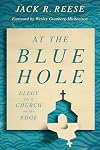
An exploration into themes of the history of churches of Christ as the author peers into what he sees as the abyss of the future for the movement.
The author uses "the Blue Hole", a source of water that is pure, as a metaphor for at least certain motivating purposes in the Restoration Movement. After reading I was not entirely clear exactly what the target of the metaphor was: it certainly did not seem to be the twin motivations of Christian unity and restoration of the ancient order; show more according to actual practice it might seem to be the emphasis on Christian unity which existed at the beginning of the movement, which primarily motivated Stone, could be seen in some like T.B. Larimore, but has been more lacking until recently; theologically, it would best be understood as the Holy Spirit, but since the work of the Spirit has been denigrated throughout wide swaths of the movement in its history, He would sit uneasily in that metaphor.
The author, in elaborate and often frustrating prose, sets forth his own story and heritage in "mainstream" or "institutional" churches of Christ. He fixes upon the story of Foy Wallace, Jr., as one of the pallbearers at T.B. Larimore's funeral in 1929 as a "pivot point" in history, with the death of one who worked hard to avoid sectarianism, and the one who would be a major promoter of what became very sectarian, and all in terms of what the author sees as a major transition point in American history, out of the 1920s and into the 30s and beyond. He talks about the challenges churches are facing. I think he thinks he provides some ways forward, but substance on that front seems lacking.
I very much appreciated the thesis of how the idea of restoration worked, at least for Campbell: by restoring the ancient order of things, Christians would become unified in the faith, and that is the Kingdom building work which would inaugurate the Millennium. The author's conclusion that restoration is a means to an end, and not an end unto itself, is very helpful and important, something those in churches of Christ must grapple with if there will be much of a future.
Yet, at the same time, this thesis really means that the Movement as conceived by Campbell, at least, is a misadventure. Very few if any of Campbell's heirs maintain his postmillennial perspective. Likewise, the call to restore the ancient order of things did not lead to widespread unity of Christians in the faith. We now live in an era when the ecumenical spirit, requiring agreement on everything which was agreed upon regarding the nature of Christ and otherwise maintaining partisan and sectarian divisions, is currently in vogue and has been affirmed by the Disciples stream of the Restoration Movement. Churches of Christ have been known historically for a more ecumenically sectarian perspective, having made restoration its own end.
Thus, if restoration is not its own end, then perhaps it is best to sing the elegy of the Restoration Movement and Churches of Christ as conceived of throughout most of the twentieth century.
But does this mean that the restoration impulse does not have value? Should Churches of Christ become as the Donatists or the Waldenses?
I fear that the author has remained a bit too siloed in his own stream. The reviewer maintains primary association among the groups the author identifies as "non-institutional," and throughout his narrative presumes that we have gone off in our own ways and have nothing to do with his stream in the movement.
The author clearly sees great importance in the emphasis on Christian unity. And that certainly is a theme which has been neglected among churches of Christ and should absolutely be restored. We should be as diligent to preserve the unity of the faith as we are to present ourselves as workmen without need to be ashamed.
But what does that unity look like? It is one thing at the level of joint participation in the local assembly, and I would be very interested to see if the author's commitment to unity would really survive the test of forsaking liberties regarding which lines were drawn 75 years ago in order to heal some of the divisions in our movement. Can we find ways to accommodate one another in matter of liberty? Can we really seek to build up our neighbor for his own good? Or will we lose ourselves in culture war or inter-tribal partisan bickering?
Yet throughout the work he seems to address unity at levels beyond the local assembly. And there has already been great movement in that regard: the Internet. Gone are the days of the dominance of "brotherhood publications" and all of the quarantining, "writing up," and other forms of gate keeping that was a hallmark of churches of Christ throughout the 20th century. On social media I have various forms of association with members of churches of Christ who use one cup and do not have Bible classes, who have instruments in their assembly, and have elevated women to positions of authority in the church, and everywhere in between. If there is sectarianism brewing, it is the sectarianism that has come from various political commitments and the injection of the "culture war" into the life of the church.
Likewise, members of churches of Christ are also engaging with those who profess Christ in Evangelical, Catholic, Protestant, and others on social media. They are reading books and staying abreast of happenings in these organizations like never before.
And we live in a time when "the distinctives" have lost their salience in terms of witnessing to the faith. Very few seem to care about doctrine or what makes us not like the other groups. The questions seem to center much more on the life of faith and who Jesus is and how to follow Him in the twenty first century, and how to understand things well in a world awash with information.
The author's perspective can be helpful, but I do not believe it is sufficient to help us understand the hour and the task at hand. In churches of Christ we absolutely need to ask the questions: who are we, that is, how have we been shaped by our legacy, for good and for ill? What is the gap between our pretense and the reality? How do we bear witness to the Gospel and seek restoration with God and His people in our particular contexts? How can we affirm what we still believe is important about reflecting God's purposes for Christ and His Kingdom as attested to in Scripture without being sectarian in the process?
The way the author answers these questions give no real hope for Churches of Christ. If that is the end of the matter, so be it. But even he recognizes that drifting into greater Evangelicalism is not the answer. Thus the questions endure, and we do well to grapple with them and find better answers. show less
The author uses "the Blue Hole", a source of water that is pure, as a metaphor for at least certain motivating purposes in the Restoration Movement. After reading I was not entirely clear exactly what the target of the metaphor was: it certainly did not seem to be the twin motivations of Christian unity and restoration of the ancient order; show more according to actual practice it might seem to be the emphasis on Christian unity which existed at the beginning of the movement, which primarily motivated Stone, could be seen in some like T.B. Larimore, but has been more lacking until recently; theologically, it would best be understood as the Holy Spirit, but since the work of the Spirit has been denigrated throughout wide swaths of the movement in its history, He would sit uneasily in that metaphor.
The author, in elaborate and often frustrating prose, sets forth his own story and heritage in "mainstream" or "institutional" churches of Christ. He fixes upon the story of Foy Wallace, Jr., as one of the pallbearers at T.B. Larimore's funeral in 1929 as a "pivot point" in history, with the death of one who worked hard to avoid sectarianism, and the one who would be a major promoter of what became very sectarian, and all in terms of what the author sees as a major transition point in American history, out of the 1920s and into the 30s and beyond. He talks about the challenges churches are facing. I think he thinks he provides some ways forward, but substance on that front seems lacking.
I very much appreciated the thesis of how the idea of restoration worked, at least for Campbell: by restoring the ancient order of things, Christians would become unified in the faith, and that is the Kingdom building work which would inaugurate the Millennium. The author's conclusion that restoration is a means to an end, and not an end unto itself, is very helpful and important, something those in churches of Christ must grapple with if there will be much of a future.
Yet, at the same time, this thesis really means that the Movement as conceived by Campbell, at least, is a misadventure. Very few if any of Campbell's heirs maintain his postmillennial perspective. Likewise, the call to restore the ancient order of things did not lead to widespread unity of Christians in the faith. We now live in an era when the ecumenical spirit, requiring agreement on everything which was agreed upon regarding the nature of Christ and otherwise maintaining partisan and sectarian divisions, is currently in vogue and has been affirmed by the Disciples stream of the Restoration Movement. Churches of Christ have been known historically for a more ecumenically sectarian perspective, having made restoration its own end.
Thus, if restoration is not its own end, then perhaps it is best to sing the elegy of the Restoration Movement and Churches of Christ as conceived of throughout most of the twentieth century.
But does this mean that the restoration impulse does not have value? Should Churches of Christ become as the Donatists or the Waldenses?
I fear that the author has remained a bit too siloed in his own stream. The reviewer maintains primary association among the groups the author identifies as "non-institutional," and throughout his narrative presumes that we have gone off in our own ways and have nothing to do with his stream in the movement.
The author clearly sees great importance in the emphasis on Christian unity. And that certainly is a theme which has been neglected among churches of Christ and should absolutely be restored. We should be as diligent to preserve the unity of the faith as we are to present ourselves as workmen without need to be ashamed.
But what does that unity look like? It is one thing at the level of joint participation in the local assembly, and I would be very interested to see if the author's commitment to unity would really survive the test of forsaking liberties regarding which lines were drawn 75 years ago in order to heal some of the divisions in our movement. Can we find ways to accommodate one another in matter of liberty? Can we really seek to build up our neighbor for his own good? Or will we lose ourselves in culture war or inter-tribal partisan bickering?
Yet throughout the work he seems to address unity at levels beyond the local assembly. And there has already been great movement in that regard: the Internet. Gone are the days of the dominance of "brotherhood publications" and all of the quarantining, "writing up," and other forms of gate keeping that was a hallmark of churches of Christ throughout the 20th century. On social media I have various forms of association with members of churches of Christ who use one cup and do not have Bible classes, who have instruments in their assembly, and have elevated women to positions of authority in the church, and everywhere in between. If there is sectarianism brewing, it is the sectarianism that has come from various political commitments and the injection of the "culture war" into the life of the church.
Likewise, members of churches of Christ are also engaging with those who profess Christ in Evangelical, Catholic, Protestant, and others on social media. They are reading books and staying abreast of happenings in these organizations like never before.
And we live in a time when "the distinctives" have lost their salience in terms of witnessing to the faith. Very few seem to care about doctrine or what makes us not like the other groups. The questions seem to center much more on the life of faith and who Jesus is and how to follow Him in the twenty first century, and how to understand things well in a world awash with information.
The author's perspective can be helpful, but I do not believe it is sufficient to help us understand the hour and the task at hand. In churches of Christ we absolutely need to ask the questions: who are we, that is, how have we been shaped by our legacy, for good and for ill? What is the gap between our pretense and the reality? How do we bear witness to the Gospel and seek restoration with God and His people in our particular contexts? How can we affirm what we still believe is important about reflecting God's purposes for Christ and His Kingdom as attested to in Scripture without being sectarian in the process?
The way the author answers these questions give no real hope for Churches of Christ. If that is the end of the matter, so be it. But even he recognizes that drifting into greater Evangelicalism is not the answer. Thus the questions endure, and we do well to grapple with them and find better answers. show less
Statistics
- Works
- 2
- Members
- 77
- Popularity
- #231,245
- Rating
- 3.8
- Reviews
- 1
- ISBNs
- 3