
Elizabeth Kerner
Author of Song in the Silence
About the Author
Image credit: Elizabeth Kerner
Series
Works by Elizabeth Kerner
"The Tale of Lanen Kaelar" 1 copy
Tagged
Common Knowledge
- Birthdate
- 1958
- Gender
- female
- Education
- University of St Andrews (MA - English Language & Literature)
- Nationality
- USA
- Birthplace
- Florida, USA
- Places of residence
- Edinburgh, Scotland, UK
Forest Grove, Oregon, USA
Hilo, Hawai'i, USA
New Orleans, Louisiana, USA
East Sussex, England, UK - Associated Place (for map)
- USA
Members
Reviews
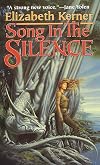
One of the rare stories in the fantasy genre where dragons are portrayed as majestic, intelligent creatures looked up to with admiration and respect, for which I loved this book. Being written from a woman's perspective, it felt immersive and portrayed a strong character, who at the same time remained humble, relatable and nuanced.
It also felt like there was a latent tension going on between the human and dragon protagonists that went a little beyond mere friendship and loyalty. If only the show more author had stopped just merely 40 pages earlier, the book would have been perfect in my eyes. The ending felt somewhat cliché for its time. show less
It also felt like there was a latent tension going on between the human and dragon protagonists that went a little beyond mere friendship and loyalty. If only the show more author had stopped just merely 40 pages earlier, the book would have been perfect in my eyes. The ending felt somewhat cliché for its time. show less
Hoo boy. Never re-read your childhood favorites, kids.
I first found this book in middle school, in the school library. The sci-fi/fantasy section pickings were very, very slim at the time and I was slowly working my way through the section when I came to this. I remember being arrested by the cover art and staring at it for a long time - I guess I really loved the design of the dragons.
I've never been a huge romance fan, but I dug on this hard. I suppose the best, or worst, connection I show more can make is that it was my Twilight - a regular young womanwith an irregular mental ability becomes infatuated with an incredibly powerful, much older magical beast, who instantly loves her back for some unfathomable reason, with the climax of the novel being the 'man' rushing to her rescue, and some debate over whether the young woman should become one of his kind or not. To be fair, at least there were no instances of stalking, gaslighting, or abuse between them, which I would argue is a very important difference.
Still, hard to believe this pre-dates Twilight by a good decade. But I loved it, I loved them, I loved the world, and the pronunciation/language info at the end gave me one of my first tastes of conlangs, albeit an incredibly simplified one.
I've re-read it a million times since, though I only listed it once since I don't want to have guesstimates in my Goodreads totals.
It really, really shows its age reading it through modern, adult eyes.
Both Lanen and Akhor are Mary Sue/Stus, with special abilities/qualities that are never really explained - they are just special. They fall in love at first sight because *~*destiny*~*, rather than through actual interaction. The dialogue between characters, particularly our protagonist couple, is some of the purplest prose I've ever seen in literature. The antagonists are cartoonishly evil in the vein of a Dragonlance novel. There's almost literal deus ex machina to move the plot along and solve the primary dilemmas of the novel. Its very much late 80s/early 90s fantasy.
If you are a sucker for flowery romance, old school fantasy, or dragons, this should be up your alley. If you have more refined tastes, you'll probably find this too simple. I'm still perfectly happy to re-visit it, flaws and all, because it captured my imagination so well as a kid.
And its still a better love story than Twilight. show less
I first found this book in middle school, in the school library. The sci-fi/fantasy section pickings were very, very slim at the time and I was slowly working my way through the section when I came to this. I remember being arrested by the cover art and staring at it for a long time - I guess I really loved the design of the dragons.
I've never been a huge romance fan, but I dug on this hard. I suppose the best, or worst, connection I show more can make is that it was my Twilight - a regular young woman
Still, hard to believe this pre-dates Twilight by a good decade. But I loved it, I loved them, I loved the world, and the pronunciation/language info at the end gave me one of my first tastes of conlangs, albeit an incredibly simplified one.
I've re-read it a million times since, though I only listed it once since I don't want to have guesstimates in my Goodreads totals.
It really, really shows its age reading it through modern, adult eyes.
Both Lanen and Akhor are Mary Sue/Stus, with special abilities/qualities that are never really explained - they are just special. They fall in love at first sight because *~*destiny*~*, rather than through actual interaction. The dialogue between characters, particularly our protagonist couple, is some of the purplest prose I've ever seen in literature. The antagonists are cartoonishly evil in the vein of a Dragonlance novel. There's almost literal deus ex machina to move the plot along and solve the primary dilemmas of the novel. Its very much late 80s/early 90s fantasy.
If you are a sucker for flowery romance, old school fantasy, or dragons, this should be up your alley. If you have more refined tastes, you'll probably find this too simple. I'm still perfectly happy to re-visit it, flaws and all, because it captured my imagination so well as a kid.
And its still a better love story than Twilight. show less
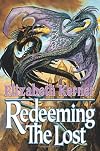
Let me talk about magic systems. Its hard to compliment a magic system in a novel, because it is so often used to handwave away cliches, bad prose, or M/Gary Sues. While you don't have to explicitly detail every single in and out of a system, the general rules and limitations need to be outlined for the reader. A system with rules allows you to be consistent and clever. A system without rules is an asshole you can pull anything out of. I'll come back to this in a moment.
Redeeming the Lost show more is a hot mess of a book. Lanen remains mostly a spectator in her own story. Akhor continues to oscillate between extreme emotions, sometimes within the same paragraph or sentence. There's a lot of repetition from previous books as well as within this one - we are subjugated to the "I'm finally with with love of my life but I can't fly so my life is ruined" angsty argument on at least 3 more occasions, with no real resolution.
A lot of plot threads/ideas are introduced and either solved immediately or forgotten. Practically every healer in the land is taken over with a demon and told to sow chaos - murdering, stealing, etc. Think about what it would be like if every hospital was suddenly filled with Jasons and Freddys. Yeah. What we're shown are about 2 healers that say some mean things that get people upset briefly. Humans are suspicious of dragons...for about the length of a conversation. There's no public proof of Lanen's parentage, but whenshe stands to inherit all her father's riches, her mother and a servant woman have a single conversation off screen and it is unquestionably resolved .
The Aiala/Lesser Kindred have been awakened, and they can all unambiguously see the future. They mention this future sight once and it is never mentioned or used again. They do not join any of the major battles, and only Salera has any lines. They are treated as a separate subspecies of dragon with a separate culture, meaning they also don't help the dying Katri breed we met in the first book. Salera's biggest contribution to the plot was to ask another character to share their feelings in the most awkward way possible, then exit stage right. As much as I like dragons, the Aiala could have been cut with no real loss to the plot, and would significantly tighten up the book. Everything they did could have been done by the other two dragon groups.
Then we have the Aral/Vilkas/Will storyline. Will does nothing in the book except pine over Aral. Aral does a bit more, but the majority of time is spent pining over Vil. Vilkas wallows in self-admonishment. Its just angst all the way down. Again, we get a lot of repetitive conversations about the love triangle. The actual resolution at the end is grossly unsatisfying.Vilkas goes Dark Phoenix on the demon race, who are actively invading the world. This is fine until defending the world turns into 'commit genocide.' Aral gets him to stop by telling him she loves him and that genocide is bad. The love triangle is resolved by Aral immediately latching on to Will after Vilkas rejects her, despite both her and Will knowing she is settling/not really into him. I hate everything about this. Aral's entire personality is based on obsessing over men. Will's entire personality is to hover around a woman who he knows is not interested in him, creepily sniffing her hair and waiting for her to realize she should be with him - he is a Nice Guy. Will could be cut entirely from the book as well with no loss. Let's force Aral to let go of Vilkas and learn to be her own person instead. If the above cuts were made and the repetition removed, this would easily be a duology, with book one being Kolmar -> Dragon Isle, and book two being Dragon Isle -> Kolmar.
Let's get back to magic systems and the ending. The rules for healing are never really clarified. The rules for demon magic aren't really specified. None of them are. The whole ending is a series of deus ex machinas and random events. The Demonlord keeps saying how he's not really a demon...but this is never expanded on. Why did that matter? We never learn the limits of what can and cannot be done with healing powers, so when Vilkas and Berys face off, they are doing things we've never seen in previous books. Lanen stops Berys at one point using the 'voice of the lady,' which is never explained other than "yeah this totally happens but we've never discussed it until now, and no one knows what it means," and it never happens again. Akhor istransformed into a giant dragon again, and then later gets the ability to shapeshift at will but there is no explanation given for either event, other than "It must be the gods/winds!" Even then, the religions aren't even expanded upon. All we know about them is the name of the gods.
Ultimately, the ending ties up all the loose ends, but does so in a really unsatisfying way. show less
Redeeming the Lost show more is a hot mess of a book. Lanen remains mostly a spectator in her own story. Akhor continues to oscillate between extreme emotions, sometimes within the same paragraph or sentence. There's a lot of repetition from previous books as well as within this one - we are subjugated to the "I'm finally with with love of my life but I can't fly so my life is ruined" angsty argument on at least 3 more occasions, with no real resolution.
A lot of plot threads/ideas are introduced and either solved immediately or forgotten. Practically every healer in the land is taken over with a demon and told to sow chaos - murdering, stealing, etc. Think about what it would be like if every hospital was suddenly filled with Jasons and Freddys. Yeah. What we're shown are about 2 healers that say some mean things that get people upset briefly. Humans are suspicious of dragons...for about the length of a conversation. There's no public proof of Lanen's parentage, but when
The Aiala/Lesser Kindred have been awakened, and they can all unambiguously see the future. They mention this future sight once and it is never mentioned or used again. They do not join any of the major battles, and only Salera has any lines. They are treated as a separate subspecies of dragon with a separate culture, meaning they also don't help the dying Katri breed we met in the first book. Salera's biggest contribution to the plot was to ask another character to share their feelings in the most awkward way possible, then exit stage right. As much as I like dragons, the Aiala could have been cut with no real loss to the plot, and would significantly tighten up the book. Everything they did could have been done by the other two dragon groups.
Then we have the Aral/Vilkas/Will storyline. Will does nothing in the book except pine over Aral. Aral does a bit more, but the majority of time is spent pining over Vil. Vilkas wallows in self-admonishment. Its just angst all the way down. Again, we get a lot of repetitive conversations about the love triangle. The actual resolution at the end is grossly unsatisfying.
Let's get back to magic systems and the ending. The rules for healing are never really clarified. The rules for demon magic aren't really specified. None of them are. The whole ending is a series of deus ex machinas and random events. The Demonlord keeps saying how he's not really a demon...but this is never expanded on. Why did that matter? We never learn the limits of what can and cannot be done with healing powers, so when Vilkas and Berys face off, they are doing things we've never seen in previous books. Lanen stops Berys at one point using the 'voice of the lady,' which is never explained other than "yeah this totally happens but we've never discussed it until now, and no one knows what it means," and it never happens again. Akhor is
Ultimately, the ending ties up all the loose ends, but does so in a really unsatisfying way. show less
There are a lot of dragon stories out there; tons of fantasy and sci-fi fiction about people and dragons, magic, sorcerers, demons, quests. It's pretty basic. But this novel stood out, maybe because I hadn't heard about it before or since I read it. And I really, really liked it.
Lanen Kaelar is a helper on her family's farm...until her father dies and she is set free. Off in search of adventure, accompanied by the roguish Jamie, who essentially raised her, Lanen heads for the coast. In her show more mind, she is determined to find the fabled Dragon Isle, where legends say the exiled true dragons still live. Ever since her youth, Lanen has felt a powerful connection to dragons, and she believes she is meant to have some kind of kinship with these legendary creatures she so reveres.
But when Lanen's arduous journey finally brings her to the Isle, she will become embroiled in more conflict than she can imagine. A demon sorcerer in disguise who needs her for a dark ritual. A kingdom of wise, stubborn, and intelligent dragons living in secret, whose world is shattered by Lanen's arrival. And the Silver King of the dragons himself, Akor, who finds himself drawn, against all laws of human, dragon, and nature, to the fiery Lanen Kaelar.
Forbidden love, complex cultures and histories of human and dragon, well-done characters, really nasty villians, and an interesting narrative style that rotates perspective every few pages among at least six different characters, this novel was different than any "dragon fantasy" I've ever read. And because of its little-known status, I try to recommend it as often as I can. show less
Lanen Kaelar is a helper on her family's farm...until her father dies and she is set free. Off in search of adventure, accompanied by the roguish Jamie, who essentially raised her, Lanen heads for the coast. In her show more mind, she is determined to find the fabled Dragon Isle, where legends say the exiled true dragons still live. Ever since her youth, Lanen has felt a powerful connection to dragons, and she believes she is meant to have some kind of kinship with these legendary creatures she so reveres.
But when Lanen's arduous journey finally brings her to the Isle, she will become embroiled in more conflict than she can imagine. A demon sorcerer in disguise who needs her for a dark ritual. A kingdom of wise, stubborn, and intelligent dragons living in secret, whose world is shattered by Lanen's arrival. And the Silver King of the dragons himself, Akor, who finds himself drawn, against all laws of human, dragon, and nature, to the fiery Lanen Kaelar.
Forbidden love, complex cultures and histories of human and dragon, well-done characters, really nasty villians, and an interesting narrative style that rotates perspective every few pages among at least six different characters, this novel was different than any "dragon fantasy" I've ever read. And because of its little-known status, I try to recommend it as often as I can. show less
Lists
Awards


You May Also Like


Statistics
- Works
- 4
- Members
- 1,836
- Popularity
- #14,020
- Rating
- 3.9
- Reviews
- 25
- ISBNs
- 13
- Favorited
- 9