
Rajan Khanna
Author of Falling Sky
Series
Works by Rajan Khanna
Asimov's Science Fiction: Vol. 46, No. 11 & 12 [November/December 2022] (2022) — Contributor — 6 copies, 1 review
Asimov's Science Fiction: Vol. 48, No. 3 & 4 [March/April 2024] — Contributor — 5 copies
Card Sharp 2 copies
Son of Man 2 copies
Doors [short story] 1 copy
When The Signal Is The Noise 1 copy
The Last Cloud Painter 1 copy
Shards of the Spellforge 1 copy
Associated Works
Shadows of the Emerald City: A Collection of Stories Based on the Writings of L. Frank Baum and The Wizard of Oz (2009) — Contributor — 14 copies
Tagged
Common Knowledge
There is no Common Knowledge data for this author yet. You can help.
Members
Reviews
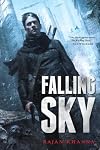
Cross posted at my blog: http://clsiewert.wordpress.com/2014/11/01/falling-sky-by-rajan-khanna/
I was zombie free for most of the summer. Once The Walking Dead ended, I mean. And except that one book, [b:The Girl with All the Gifts|17235026|The Girl with All the Gifts|M.R. Carey|http://images.gr-assets.com/books/1403033579s/17235026.jpg|23753235], which hardly counts, right? Oh, and I started that anthology [b:The Living Dead|3302568|The Living Dead (The Living Dead, #1)|John Joseph show more Adams|http://images.gr-assets.com/books/1391343270s/3302568.jpg|3339382], but didn't get very far, so that shouldn't count either. So when I saw a post about Falling Sky, I was both nostalgic and intrigued. Zombies? Check. Dystopia? Check. Airships? --Wait, what?
Yes--Airships.
Basic gist: Ben and his airship Cherub have reluctantly taken a contract to work with the scientists of the small community of Apple Pi. It has been a couple of generations since the Bug appeared, and the group of scientists there are hoping their research will bring a vaccine. Maybe even turn the infected, aggressive Ferals back into people. Ben considers it a pipe dream, and when the scientists want him to transport a Feral in Cherub, he puts his foot down. No matter how much he might admire Miranda, one of the lead scientists, there are some things that can’t be tolerated, and risking exposure to the Bug is one of them. Ben flies off in the Cherub only to discover that the nightmare attack that ruined the last community he was part of is about to start again. He needs to decide quickly if he will continue alone or rejoin a community.
I was most reminded of The Reapers are the Angels in atmosphere and theme. To me, atmosphere is a critical part of apocalypse/zombie books, and Khanna captures those elements beautifully. The setting is an interesting take in the genre; although it is at least a couple of generations post-disaster, there are some significant technological remnants of civilization as well as new cultural communities rising from the remainder of the old. The writing doesn’t quite soar to the Hemingway heights of Reapers, but it is appropriate for Ben. Writing is focused, with a pleasant variety of structure and vocabulary, making it above average in the field. A clever blend of flashback, dialogue and current action keeps the pace snappy while filling in details on character and world history.
Characterization is one of the standout aspects of this book. Khanna uses a single-narrator viewpoint through Ben, but still manages to convey a great deal of complexity to the main characters. It’s worth noting that there is a wide mix of people represented in the story, and neatly avoids the majority of genre tropes. Although I found I didn’t altogether like Ben, I found him far more tolerable than the equally selfish narrator of The Goldfinch, likely because he’s a person in progress.
Plotting is perhaps the weakest section of the story. I was carried along with the various events, noting a significant deus ex machina but not really caring, when the story was pleasantly sidetracked to an existence scenario. It is always interesting to experience the post-apocalypse world on those hardest of terms–the single forager–but the episode ended up resolving quickly and conveniently, moving Ben on to the next and more important section. There is a nice little genre twist, bringing an updated approach to the inhumanity of man. And the ending–whew. The ending was exceptionally brief, both in terms of emotional and plot resolution. While it opens the way to another story, it does end this one. More or less. I anticipate reviewer drama over this one. As an after thought, once I finished reading, a number logistical questions occurred to me. That could be a positive sign, in the sense I was still thinking about it, but it was also a negative one, as I realized a major decision didn’t make logical sense.
Regardless, it was a lot of fun, generally entertaining and worth the time. As a first novel, this was exceptional. But the $10.99 Kindle price? Now that, I’m no so sure–I’m glad this one was a library read. Overall, I recommend this for genre fans. As for myself, I’ll definitely be on the lookout for more from Khanna. show less
I was zombie free for most of the summer. Once The Walking Dead ended, I mean. And except that one book, [b:The Girl with All the Gifts|17235026|The Girl with All the Gifts|M.R. Carey|http://images.gr-assets.com/books/1403033579s/17235026.jpg|23753235], which hardly counts, right? Oh, and I started that anthology [b:The Living Dead|3302568|The Living Dead (The Living Dead, #1)|John Joseph show more Adams|http://images.gr-assets.com/books/1391343270s/3302568.jpg|3339382], but didn't get very far, so that shouldn't count either. So when I saw a post about Falling Sky, I was both nostalgic and intrigued. Zombies? Check. Dystopia? Check. Airships? --Wait, what?
Yes--Airships.
Basic gist: Ben and his airship Cherub have reluctantly taken a contract to work with the scientists of the small community of Apple Pi. It has been a couple of generations since the Bug appeared, and the group of scientists there are hoping their research will bring a vaccine. Maybe even turn the infected, aggressive Ferals back into people. Ben considers it a pipe dream, and when the scientists want him to transport a Feral in Cherub, he puts his foot down. No matter how much he might admire Miranda, one of the lead scientists, there are some things that can’t be tolerated, and risking exposure to the Bug is one of them. Ben flies off in the Cherub only to discover that the nightmare attack that ruined the last community he was part of is about to start again. He needs to decide quickly if he will continue alone or rejoin a community.
I was most reminded of The Reapers are the Angels in atmosphere and theme. To me, atmosphere is a critical part of apocalypse/zombie books, and Khanna captures those elements beautifully. The setting is an interesting take in the genre; although it is at least a couple of generations post-disaster, there are some significant technological remnants of civilization as well as new cultural communities rising from the remainder of the old. The writing doesn’t quite soar to the Hemingway heights of Reapers, but it is appropriate for Ben. Writing is focused, with a pleasant variety of structure and vocabulary, making it above average in the field. A clever blend of flashback, dialogue and current action keeps the pace snappy while filling in details on character and world history.
Characterization is one of the standout aspects of this book. Khanna uses a single-narrator viewpoint through Ben, but still manages to convey a great deal of complexity to the main characters. It’s worth noting that there is a wide mix of people represented in the story, and neatly avoids the majority of genre tropes. Although I found I didn’t altogether like Ben, I found him far more tolerable than the equally selfish narrator of The Goldfinch, likely because he’s a person in progress.
Plotting is perhaps the weakest section of the story. I was carried along with the various events, noting a significant deus ex machina but not really caring, when the story was pleasantly sidetracked to an existence scenario. It is always interesting to experience the post-apocalypse world on those hardest of terms–the single forager–but the episode ended up resolving quickly and conveniently, moving Ben on to the next and more important section. There is a nice little genre twist, bringing an updated approach to the inhumanity of man. And the ending–whew. The ending was exceptionally brief, both in terms of emotional and plot resolution. While it opens the way to another story, it does end this one. More or less. I anticipate reviewer drama over this one. As an after thought, once I finished reading, a number logistical questions occurred to me. That could be a positive sign, in the sense I was still thinking about it, but it was also a negative one, as I realized a major decision didn’t make logical sense.
Regardless, it was a lot of fun, generally entertaining and worth the time. As a first novel, this was exceptional. But the $10.99 Kindle price? Now that, I’m no so sure–I’m glad this one was a library read. Overall, I recommend this for genre fans. As for myself, I’ll definitely be on the lookout for more from Khanna. show less
I enjoyed Falling Sky a lot more than I thought I would. That’s no meagre accomplishment, considering how many books are out there in the market these days involving zombies in a post-apocalyptic type future. But Rajan Khanna did not have to resort to any gimmicks or convoluted methods to make his novel stand out. All he did was come up with an awesome premise – that when a virulent epidemic broke out two generations ago and turned most of the population into mindless Ferals, humanity show more managed to survive by simply taking to the skies.
That means airships. Entire cities that float. People like main protagonist and narrator Ben Gold feel most comfortable off the ground, because that translates to safety from coming in contact with the tainted blood of Ferals, and in turns means being able to live out another day. Ben, who has always been happy on his own piloting his airship Cherub, finds a way to make money by working with the intelligent and headstrong Miranda, leader of a group of ambitious scientists hoping to find a cure for the Feral virus.
But then Valhalla strikes, and the skies are no longer a safe haven. A faction made up of savage pirates, Valhalla is bent on conquering and stealing from other settlements by employing the most depraved measures – like airlifting infected Ferals and dropping them into defenseless cities. After being caught in one such attack, Ben’s life is forever changed and he is forced to make some difficult decisions. He’s the kind of guy who’s always lived by the motto “Every man for himself”, but for the first time in his life he realizes there may be bigger things to fight for.
I don’t think I would have enjoyed this book so much if it weren’t for Ben. I loved his voice and took to his casual and devil-may-care attitude right away, and I found that the first-person narrative in the present tense worked surprisingly well for the story. Ben isn’t exactly someone you can admire or point to as a good role model, but I liked him all the same. Somewhat self-serving at times and frequently having a short view of the problem, Ben doesn’t always mean to screw the people around him over, but his impulsive nature usually leads him to do it all the same. But he’s got a good heart, as proven by the many times he’s gone out of his way to try and repay a favor or make up for his mistakes, and I find that admirable. And fine, I’ll also admit he’s got a bit of that roguish charm which I find irresistible.
You also have to love the mood of the story. One might expect a post-apocalyptic zombie book to be on the dark and grim side, but I would describe Falling Sky as more an adventurous and action-filled novel. That’s not to say the world that Ben lives in is without its grit and despair, because in fact, the author does a good job illustrating why a future infested with Ferals is not a very pleasant place to be. Mindless and violent beast-like zombies aside, so much technology has been lost and a lot of the crucial supplies like ammo and fuel from two generations ago have been depleted. But humanity has had enough time to deal with aftermath of the epidemic, and the tone that I get from the story is that life continues moving forward. Certain facets of society and culture have eroded away and things may be done a little differently, but people like Ben still have their sense of humor, and others like Miranda and her scientists have their hopes and dreams.
My main complaint is that the ending came and went too quickly and suddenly. We are literally dropped into the conclusion, and…scene. All I can say is, I really, really, really hope there will be a sequel. The story may be more or less wrapped up, but because of the abruptness of the way things ended, I just can’t help but think it’s not over. If there’s a book two though, definitely sign me up for it. show less
That means airships. Entire cities that float. People like main protagonist and narrator Ben Gold feel most comfortable off the ground, because that translates to safety from coming in contact with the tainted blood of Ferals, and in turns means being able to live out another day. Ben, who has always been happy on his own piloting his airship Cherub, finds a way to make money by working with the intelligent and headstrong Miranda, leader of a group of ambitious scientists hoping to find a cure for the Feral virus.
But then Valhalla strikes, and the skies are no longer a safe haven. A faction made up of savage pirates, Valhalla is bent on conquering and stealing from other settlements by employing the most depraved measures – like airlifting infected Ferals and dropping them into defenseless cities. After being caught in one such attack, Ben’s life is forever changed and he is forced to make some difficult decisions. He’s the kind of guy who’s always lived by the motto “Every man for himself”, but for the first time in his life he realizes there may be bigger things to fight for.
I don’t think I would have enjoyed this book so much if it weren’t for Ben. I loved his voice and took to his casual and devil-may-care attitude right away, and I found that the first-person narrative in the present tense worked surprisingly well for the story. Ben isn’t exactly someone you can admire or point to as a good role model, but I liked him all the same. Somewhat self-serving at times and frequently having a short view of the problem, Ben doesn’t always mean to screw the people around him over, but his impulsive nature usually leads him to do it all the same. But he’s got a good heart, as proven by the many times he’s gone out of his way to try and repay a favor or make up for his mistakes, and I find that admirable. And fine, I’ll also admit he’s got a bit of that roguish charm which I find irresistible.
You also have to love the mood of the story. One might expect a post-apocalyptic zombie book to be on the dark and grim side, but I would describe Falling Sky as more an adventurous and action-filled novel. That’s not to say the world that Ben lives in is without its grit and despair, because in fact, the author does a good job illustrating why a future infested with Ferals is not a very pleasant place to be. Mindless and violent beast-like zombies aside, so much technology has been lost and a lot of the crucial supplies like ammo and fuel from two generations ago have been depleted. But humanity has had enough time to deal with aftermath of the epidemic, and the tone that I get from the story is that life continues moving forward. Certain facets of society and culture have eroded away and things may be done a little differently, but people like Ben still have their sense of humor, and others like Miranda and her scientists have their hopes and dreams.
My main complaint is that the ending came and went too quickly and suddenly. We are literally dropped into the conclusion, and…scene. All I can say is, I really, really, really hope there will be a sequel. The story may be more or less wrapped up, but because of the abruptness of the way things ended, I just can’t help but think it’s not over. If there’s a book two though, definitely sign me up for it. show less
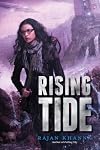
There's something about this series that just doesn't click with me.
To start, it picks up a few hours after the cliffanger ending of the last book.
Cliffhangers irritate me. I feel they usually fall into the realm of cheap marketing; if you've written an interesting series, your audience will return. Mainly, however, I object because it deprives the audience--and let's not mince words here, by 'audience,' I mean 'me'-- of emotional resolution. I'm big on resolution.
Where was I?
Oh, right: so show more Ben and Miranda have been rescued from the ocean and are on a large ship. Trouble is, they've been rescued by Mal (obvious, much?) who hates Ben, and is only keeping him alive because he wants Miranda's medical skills. I can sympathize with Mal, actually--Ben is pretty much a selfish ass, and everyone, even Ben, knows he can't be trusted. Ben wheels and deals his way into freedom, which leads to more adventure, and accompanying costs.
She thinks I broke the rules by shooting that soldier. I would feel guilty except I know that it was either him or one of us. Besides, he might have lived. If he got attention in time.
The truth is, I don't care either way.
Truth is, he does care, but only a little, mostly because Miranda cares. Miranda is a scientist passionate about finding a cure, but she's also come to appreciate Ben's devotion to her, even if he doesn't believe in her cause.The one area this book shines is capturing the emotional tone of their connection.
Narrative is from Ben's point of view. Remember when I said he was an ass? Yeah, that. He has little to no curiosity about those around him, so it doesn't really aid in world or character-building. There are a few chapters from Miranda's point of view, but they are journal entry style, complete with a sloppy font,and were hard for me to read.
Plotting felt weak. Device upon device solving Ben's problems as they appeared. No wonder the dude never makes a plan--the author will provide some solution for him.
World-building has interesting bones, but leaves me feeling like it is tremendously incomplete. I believe we're a generation or two beyond a viral outbreak that has turned exposed people into bloodthirsty 'ferals.' So there's still a serious looting-based society, with some return to self-sufficiency. Although some people have created a floating city, so take that for what you will. In this story, research data saved on a 'stick' proves vital, not to mention the electron microscope and the generators. That these devices work--but ships don't--is dismissed with a hand-wavy "leave it to the boffins to figure out how something like that could work." At the same time, water comes from a well and guests need to sleep in blankets by a fire. I suppose since it is reality-based, I'm looking for my world to hang together. But, they have created a hipster brew pub with both light and dark ale, so kudos!
I do like is the idea that there are many little pockets of civilization which have unique identities. I think that would be a logical evolution of people trying to survive. There a sciencey-twist to the story which is kind of enjoyable, except that it's been fairly well telegraphed to that point. Oh, and it makes real science look easy. In fact, it's the movie-version of science. Cue the montage! Here comes a cure!
And oh yes, I was reminded again of something I don't like--cliffhanger endings.
Two and a half salvaged stars, rounding down because--
yeah, that. show less
To start, it picks up a few hours after the cliffanger ending of the last book.
Cliffhangers irritate me. I feel they usually fall into the realm of cheap marketing; if you've written an interesting series, your audience will return. Mainly, however, I object because it deprives the audience--and let's not mince words here, by 'audience,' I mean 'me'-- of emotional resolution. I'm big on resolution.
Where was I?
Oh, right: so show more Ben and Miranda have been rescued from the ocean and are on a large ship. Trouble is, they've been rescued by Mal (obvious, much?) who hates Ben, and is only keeping him alive because he wants Miranda's medical skills. I can sympathize with Mal, actually--Ben is pretty much a selfish ass, and everyone, even Ben, knows he can't be trusted. Ben wheels and deals his way into freedom, which leads to more adventure, and accompanying costs.
She thinks I broke the rules by shooting that soldier. I would feel guilty except I know that it was either him or one of us. Besides, he might have lived. If he got attention in time.
The truth is, I don't care either way.
Truth is, he does care, but only a little, mostly because Miranda cares. Miranda is a scientist passionate about finding a cure, but she's also come to appreciate Ben's devotion to her, even if he doesn't believe in her cause.The one area this book shines is capturing the emotional tone of their connection.
Narrative is from Ben's point of view. Remember when I said he was an ass? Yeah, that. He has little to no curiosity about those around him, so it doesn't really aid in world or character-building. There are a few chapters from Miranda's point of view, but they are journal entry style, complete with a sloppy font,and were hard for me to read.
Plotting felt weak. Device upon device solving Ben's problems as they appeared. No wonder the dude never makes a plan--the author will provide some solution for him.
World-building has interesting bones, but leaves me feeling like it is tremendously incomplete. I believe we're a generation or two beyond a viral outbreak that has turned exposed people into bloodthirsty 'ferals.' So there's still a serious looting-based society, with some return to self-sufficiency. Although some people have created a floating city, so take that for what you will. In this story, research data saved on a 'stick' proves vital, not to mention the electron microscope and the generators. That these devices work--but ships don't--is dismissed with a hand-wavy "leave it to the boffins to figure out how something like that could work." At the same time, water comes from a well and guests need to sleep in blankets by a fire. I suppose since it is reality-based, I'm looking for my world to hang together. But, they have created a hipster brew pub with both light and dark ale, so kudos!
I do like is the idea that there are many little pockets of civilization which have unique identities. I think that would be a logical evolution of people trying to survive. There a sciencey-twist to the story which is kind of enjoyable, except that it's been fairly well telegraphed to that point. Oh, and it makes real science look easy. In fact, it's the movie-version of science. Cue the montage! Here comes a cure!
And oh yes, I was reminded again of something I don't like--cliffhanger endings.
Two and a half salvaged stars, rounding down because--
yeah, that. show less

My favorite stories were:
-"Falling Off the Edge of the World" by Suzanne Palmer. Two survivors on a wrecked spacecraft are rescued decades later, but by then they are both much changed. Although on the same ship and able to communicate, the two have been physically separated the whole time. This was haunting and oddly relatable.
"Lonely Hill" by James Maxley. Bereaved widower discovers spacecraft buried behind his house.
-"The Long Revenge of Chanda Sebalko" by Tom Purdom. Does the old adage show more "If you seek revenge dig two graves" still apply after the singularity?
-"When the Signal Is The Noise" by Rajan Khanna. A first contact, weird alien-object-hanging-in-sky story. If humans can't even communicate with their sweethearts, how can they communicate with life from other planets?
"Forty-Eight Minutes at the Trainview Cafe" by M. Bennardo. When we don't have bodies anymore, how can we live in the present and savor what is really happening?
I have to say the general tone of the stories was kind of a downer, but we have to write what we know. show less
-"Falling Off the Edge of the World" by Suzanne Palmer. Two survivors on a wrecked spacecraft are rescued decades later, but by then they are both much changed. Although on the same ship and able to communicate, the two have been physically separated the whole time. This was haunting and oddly relatable.
"Lonely Hill" by James Maxley. Bereaved widower discovers spacecraft buried behind his house.
-"The Long Revenge of Chanda Sebalko" by Tom Purdom. Does the old adage show more "If you seek revenge dig two graves" still apply after the singularity?
-"When the Signal Is The Noise" by Rajan Khanna. A first contact, weird alien-object-hanging-in-sky story. If humans can't even communicate with their sweethearts, how can they communicate with life from other planets?
"Forty-Eight Minutes at the Trainview Cafe" by M. Bennardo. When we don't have bodies anymore, how can we live in the present and savor what is really happening?
I have to say the general tone of the stories was kind of a downer, but we have to write what we know. show less
Lists
You May Also Like
Associated Authors
Statistics
- Works
- 11
- Also by
- 15
- Members
- 136
- Popularity
- #149,925
- Rating
- 4.1
- Reviews
- 12
- ISBNs
- 7