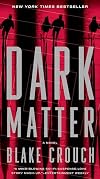
If nothing else, this novel gets high marks from me because of how unbelievably addictive it was. On a week night, with an early wake up time the next day, I was still reading with my heart pounding in my chest at 2am refusing to quit this puppy until I was finished. Even though I’ve known about the author’s Wayward Pines series years now, I’ve never read it nor have I watched the TV show based on it. But if those books are anything like Dark Matter, I just might have to go check them out now because Mr. Crouch has a new fan.
But first, how to describe Dark Matter? This is definitely one of those “the less you know going in, the better” kind of novels. It’s enough to say that I was hooked from the first page, and the story’s premise was both intriguing and a punch in the gut. Imagine yourself in protagonist Jason Dessen’s shoes. It’s family night. Jason’s heading out to see a friend, then to pick up some ice cream from the store for his wife and son. All of a sudden, a masked man comes out of nowhere, brandishing a gun and threatening to kill Jason unless he does exactly as he’s told. The abductor makes him take them to an isolated area, then knocks him out by injecting him with some kind of drug. The next thing Jason knows he’s waking up strapped to a gurney, in a sterile room, surrounded by people he’s never met. And it’s the weirdest thing, but all these strangers seem to have been expecting him.
Then Jason returns to his house and discovers show more everything about it is different. He was never married to his wife. They never had a son. He’s not a college professor, but an award winning physicist responsible for the biggest scientific breakthrough the world has ever known. Years ago, before he met his wife and became a dad, this was the life Jason always dreamed of, but now, alone in a world he doesn’t recognize, all he wants is his family back.
This story was both thrilling and terrifying. Its premise reminded me so much of a recurring nightmare I still have sometimes, in which find myself waking up in the crappy old apartment I had in college and learn that the last six or seven years never happened. The thought that my husband, my kids, my whole life since getting married could be all a dream is the most devastating feeling I could ever imagine, and I’m always filled with a breathless kind of relief when I wake up for real and get all my senses back. It’s probably no surprise then, that I felt an immediate connection to the main protagonist Jason Dessen. The opening scenario in this book really struck a chord with my deepest fears, and I found myself unable to tear my eyes away, wondering what might have happened to Jason, and hoping against hope that he will find the answers he seeks.
Of course, we eventually find out the truth. But since it’ll be difficult to discuss this book further without spoiling, I’m just going to describe my experience with the rest of the story in the broadest of terms. The pacing was great, and other than just a slight slowdown in the middle, Dark Matter was pretty much perfect in its execution. Even in his darkest moments, Jason was a protagonist I found I could root for, because Crouch made it easy for me to sympathize with the character’s desperation and anguish. The best part of the book was probably the last section, with its incredible mind-bending twist. I know it’s a bit of a cliché to call a book “unputdownable”, but in this case, I really can’t think of a better way to describe the ending. Not even the late hour or the unpleasant prospect of spending the next day as a sleep-deprived zombie could stop me from devouring the last few chapters.
It’s been a long time since a book has filled me so much excitement, or that amazing feeling of “Just one more page, just one more I swear…” This was simply fantastic. If you’re looking for a fast-paced, exhilarating read for the summer, look no further than Dark Matter, a flawless blend of science fiction, mystery, and thrilling suspense. show less
But first, how to describe Dark Matter? This is definitely one of those “the less you know going in, the better” kind of novels. It’s enough to say that I was hooked from the first page, and the story’s premise was both intriguing and a punch in the gut. Imagine yourself in protagonist Jason Dessen’s shoes. It’s family night. Jason’s heading out to see a friend, then to pick up some ice cream from the store for his wife and son. All of a sudden, a masked man comes out of nowhere, brandishing a gun and threatening to kill Jason unless he does exactly as he’s told. The abductor makes him take them to an isolated area, then knocks him out by injecting him with some kind of drug. The next thing Jason knows he’s waking up strapped to a gurney, in a sterile room, surrounded by people he’s never met. And it’s the weirdest thing, but all these strangers seem to have been expecting him.
Then Jason returns to his house and discovers show more everything about it is different. He was never married to his wife. They never had a son. He’s not a college professor, but an award winning physicist responsible for the biggest scientific breakthrough the world has ever known. Years ago, before he met his wife and became a dad, this was the life Jason always dreamed of, but now, alone in a world he doesn’t recognize, all he wants is his family back.
This story was both thrilling and terrifying. Its premise reminded me so much of a recurring nightmare I still have sometimes, in which find myself waking up in the crappy old apartment I had in college and learn that the last six or seven years never happened. The thought that my husband, my kids, my whole life since getting married could be all a dream is the most devastating feeling I could ever imagine, and I’m always filled with a breathless kind of relief when I wake up for real and get all my senses back. It’s probably no surprise then, that I felt an immediate connection to the main protagonist Jason Dessen. The opening scenario in this book really struck a chord with my deepest fears, and I found myself unable to tear my eyes away, wondering what might have happened to Jason, and hoping against hope that he will find the answers he seeks.
Of course, we eventually find out the truth. But since it’ll be difficult to discuss this book further without spoiling, I’m just going to describe my experience with the rest of the story in the broadest of terms. The pacing was great, and other than just a slight slowdown in the middle, Dark Matter was pretty much perfect in its execution. Even in his darkest moments, Jason was a protagonist I found I could root for, because Crouch made it easy for me to sympathize with the character’s desperation and anguish. The best part of the book was probably the last section, with its incredible mind-bending twist. I know it’s a bit of a cliché to call a book “unputdownable”, but in this case, I really can’t think of a better way to describe the ending. Not even the late hour or the unpleasant prospect of spending the next day as a sleep-deprived zombie could stop me from devouring the last few chapters.
It’s been a long time since a book has filled me so much excitement, or that amazing feeling of “Just one more page, just one more I swear…” This was simply fantastic. If you’re looking for a fast-paced, exhilarating read for the summer, look no further than Dark Matter, a flawless blend of science fiction, mystery, and thrilling suspense. show less

I didn’t really know what I was getting into when I started The Wolf Road, but once it started going I couldn’t stop! And to be honest, I’m surprised more attention hasn’t been given to the book’s “Western” vibe, as that really deserves to be front and center. Out of the novel’s many strengths, its harsh and gritty frontier-like atmosphere was what really stood out—a definite plus for me, considering there’s certainly no shortage of post-apocalyptic settings in the speculative fiction arena.
The Wolf Road features a world ravaged by war. As a little girl, protagonist Elka learned from her Nana about the “Big Damn Stupid”—the catastrophic event that destroyed everything and set human civilization back to zero. Technology and modern comforts are gone now, along with any kind of social infrastructure or protection. It’s everyone for themselves in the northern wilderness where Elka lives, and what’s left of the law here is swift and merciless in delivering justice to criminals and delinquents.
One day when Elka was seven years old though, she found herself lost and alone in the woods. Against all odds, she was rescued and taken in by a man known only as “Trapper”. He sheltered Elka, when he could have turned away and left her to die. For the next ten years he took care of her, and even taught her how to hunt and to trap and to survive off the land. And in time, Elka came to see Trapper as her father.
However, all that safety and happiness about show more to be ripped away. On a fateful trip into town, Elka discovers that the man who had raised her for the last decade is not who she always thought he was. Trapper turns out to be a serial murderer wanted by the law, and unfortunately for Elka, her close association with him makes her an accomplice. The law is now after her in the form of a ruthless magistrate named Lyon, a hard woman who will stop at nothing to apprehend her prey. And now that Elka is aware of his true identity, the man she used to call her father is coming after her as well, determined not to leave loose ends.
I don’t know what I expected when I first picked up The Wolf Road, but it really hooked me in from the start. First of all, this is a unique novel that encompasses a number of genre elements, making it a bit hard to categorize. While it doesn’t have the breakneck pace of a thriller, the suspense is so thick it’s almost palpable. The post-apocalyptic setting is also unusual in that it downplays the typical themes of technological collapse and life afterwards in the crumbling cities. Instead, we’re deep in the wilderness, focusing on the remnants of a rural population that has reverted to way of life last seen in the mid-1800s, complete with their own Gold Rush! Lone travelers have to guard themselves against wolves and bears, as well as the predators of a more human sort like scammers, murders, and sex traffickers. Throw in poison lakes, the sudden and devastating weather changes, and all the other lasting effects of the Big Damned Stupid, and you have yourself a fascinating mix.
Elka herself is an intriguing character, a product of her unconventional upbringing. She’s tough and independent, but having spent her whole life in the woods, Elka is also understandably a little naïve and all too trusting when she heads out into the world by herself. While her guilelessness does get her into all sorts of trouble, on the bright side it also leads her to an unlikely friendship. Elka meets Penelope, the daughter of a well-to-do doctor, and though the two young women cannot be any more different, they quickly become family to each other. Gradually, their stories are revealed to us, and that’s when the realization really hits you just how dramatically things have changed in this world. Survival in this post-apocalypse can take many forms, and each individual adapts by playing to their strengths. Together, Elka and Penelope make a great team by combining their skills.
Also, no matter who you are or where you come from, everyone in this world has their secrets. In order to understand Elka, we also have to take in account the tricky relationship she has with Trapper, a man she can’t help but still think of as her father, even though she knows he is a killer. The Wolf Road portrays the different relationships very well, but given Elka’s history, there’s also an element of the unreliable narrator to contend with, and I think that’s where the story stumbled for me a little. I can’t go into any more detail due to risk of spoilers, but I can say that fortunately, this issue only cropped up for me near the end of the book, and the twist didn’t affect my overall experience too much.
Bottom line, The Wolf Road is an outstanding novel, incredibly well-written and carried out with impressive finesse. I loved the atmosphere of this world, and the people in it feel fully fleshed out, brought to life with strikingly vivid imagery and realistic characterization. This was one great read. show less
The Wolf Road features a world ravaged by war. As a little girl, protagonist Elka learned from her Nana about the “Big Damn Stupid”—the catastrophic event that destroyed everything and set human civilization back to zero. Technology and modern comforts are gone now, along with any kind of social infrastructure or protection. It’s everyone for themselves in the northern wilderness where Elka lives, and what’s left of the law here is swift and merciless in delivering justice to criminals and delinquents.
One day when Elka was seven years old though, she found herself lost and alone in the woods. Against all odds, she was rescued and taken in by a man known only as “Trapper”. He sheltered Elka, when he could have turned away and left her to die. For the next ten years he took care of her, and even taught her how to hunt and to trap and to survive off the land. And in time, Elka came to see Trapper as her father.
However, all that safety and happiness about show more to be ripped away. On a fateful trip into town, Elka discovers that the man who had raised her for the last decade is not who she always thought he was. Trapper turns out to be a serial murderer wanted by the law, and unfortunately for Elka, her close association with him makes her an accomplice. The law is now after her in the form of a ruthless magistrate named Lyon, a hard woman who will stop at nothing to apprehend her prey. And now that Elka is aware of his true identity, the man she used to call her father is coming after her as well, determined not to leave loose ends.
I don’t know what I expected when I first picked up The Wolf Road, but it really hooked me in from the start. First of all, this is a unique novel that encompasses a number of genre elements, making it a bit hard to categorize. While it doesn’t have the breakneck pace of a thriller, the suspense is so thick it’s almost palpable. The post-apocalyptic setting is also unusual in that it downplays the typical themes of technological collapse and life afterwards in the crumbling cities. Instead, we’re deep in the wilderness, focusing on the remnants of a rural population that has reverted to way of life last seen in the mid-1800s, complete with their own Gold Rush! Lone travelers have to guard themselves against wolves and bears, as well as the predators of a more human sort like scammers, murders, and sex traffickers. Throw in poison lakes, the sudden and devastating weather changes, and all the other lasting effects of the Big Damned Stupid, and you have yourself a fascinating mix.
Elka herself is an intriguing character, a product of her unconventional upbringing. She’s tough and independent, but having spent her whole life in the woods, Elka is also understandably a little naïve and all too trusting when she heads out into the world by herself. While her guilelessness does get her into all sorts of trouble, on the bright side it also leads her to an unlikely friendship. Elka meets Penelope, the daughter of a well-to-do doctor, and though the two young women cannot be any more different, they quickly become family to each other. Gradually, their stories are revealed to us, and that’s when the realization really hits you just how dramatically things have changed in this world. Survival in this post-apocalypse can take many forms, and each individual adapts by playing to their strengths. Together, Elka and Penelope make a great team by combining their skills.
Also, no matter who you are or where you come from, everyone in this world has their secrets. In order to understand Elka, we also have to take in account the tricky relationship she has with Trapper, a man she can’t help but still think of as her father, even though she knows he is a killer. The Wolf Road portrays the different relationships very well, but given Elka’s history, there’s also an element of the unreliable narrator to contend with, and I think that’s where the story stumbled for me a little. I can’t go into any more detail due to risk of spoilers, but I can say that fortunately, this issue only cropped up for me near the end of the book, and the twist didn’t affect my overall experience too much.
Bottom line, The Wolf Road is an outstanding novel, incredibly well-written and carried out with impressive finesse. I loved the atmosphere of this world, and the people in it feel fully fleshed out, brought to life with strikingly vivid imagery and realistic characterization. This was one great read. show less
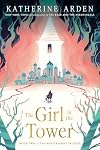
Mark my words, Katherine Arden is definitely going places. Early this year, she enchanted me with her lovely debut The Bear and the Nightingale, and now she has done it again with its follow-up The Girl in the Tower, which I thought was just as good—if not better—than its predecessor.
The story continues the journey of brave Vasya, a young woman with a gift that grants her a special connection with the wilderness and the spirits that dwell within. But in the small Russian village where she lives, her abilities and strange behaviors eventually give rise to rumors that she is a witch, made worse by the town’s zealous priest who holds a grudge against her. Now she has been driven out of her community, her options reduced to either letting her older sister arrange a marriage for her, or spending the rest of her life in a convent. Neither are acceptable to Vasya, so in the end she decides to take her fate in her own hands and attempts to forge a third path.
Disguising herself as a boy, Vasya takes to the road with Solovey, her trusty horse. Her adventures are cut short, however, when she encounters a group of bandits who have been preying on the nearby villages in the countryside. Unfortunately, her swift dispatching of them ends up drawing the attention of the Grand Prince of Moscow, whose party had been in the woods at the time, trying to track down the same bandits. Worse, riding with the prince is Vasya’s own brother Sasha, who had left home years ago to pledge his show more life to the monastery. Seeing through his sister’s disguise at once, Sasha nonetheless agrees not to reveal Vasya’s true identity as the two of them ride on to the capital with the prince, pretending to be brothers. For the moment, it seems our protagonist’s secret is safe, but with the precarious political situation in the city and the eye of the Winter King trained on her, Vasya must remain on her guard at all times.
While I loved The Bear and the Nightingale, like many debuts, the first book suffered from some flaws. Some of the ones I wrote about in my review included uneven pacing, which slowed to a crawl in certain parts of the story, as well as the excessive number of POVs and minor subplots that felt haphazardly inserted into the narrative, further disrupting the flow. The good news is, I experienced almost none of these problems in The Girl in the Tower, which really speaks to Arden’s growth as an author. It seems she’s ironed out most of the issues readers had with the first book, and the result is a much smoother and more tightly-plotted sequel.
When I read the first book, I also thought it a bit strange that Arden would make Sasha was such a huge part of Vasya’s life, only to send him away to become a monk, seemingly to be forgotten. As it turns out though, she actually had big plans for him in the second book, and indeed Sasha is one of the main characters in The Girl in the Tower, along with Vasya and their older sister Olga. While it’s true that they don’t always see eye to eye (especially when it comes to Vasya’s future), it still really pleased me to see more interaction between the three siblings, especially given how long we’ve watched Vasya struggle by herself. It was nice seeing her surrounded by love and support again, even if it was only for a brief period of time.
And speaking of developing relationships, this book also builds upon the complicated one between Vasya and Morozko, the powerful spirit known as the Winter King or the Frost Demon. Again, the story teases a bit more about his character—still not giving us all the answers, but readers who wanted to see more of his involvement in Vasya’s journey will be very happy with the way things are going, I think.
To be honest, I wasn’t sure what to make of it when I initially heard that The Bear and the Nightingale was going to be the start of a trilogy instead of a standalone. It’s always a challenge to follow up a successful debut, and I was worried Katherine Arden wouldn’t be able to come up with more to Vasya’s tale that’s worth telling. I realize now that those concerns were unwarranted, and I am glad because I found The Girl in the Tower to be as enchanting as the first book. In some ways, it even surpasses its predecessor, with a story that features more action, better pacing, and darker tones. As a reader, I just can’t ask for more than that. Now I’m very excited for the third book, which I’m sure will a finale to remember if this upward trend continues. show less
The story continues the journey of brave Vasya, a young woman with a gift that grants her a special connection with the wilderness and the spirits that dwell within. But in the small Russian village where she lives, her abilities and strange behaviors eventually give rise to rumors that she is a witch, made worse by the town’s zealous priest who holds a grudge against her. Now she has been driven out of her community, her options reduced to either letting her older sister arrange a marriage for her, or spending the rest of her life in a convent. Neither are acceptable to Vasya, so in the end she decides to take her fate in her own hands and attempts to forge a third path.
Disguising herself as a boy, Vasya takes to the road with Solovey, her trusty horse. Her adventures are cut short, however, when she encounters a group of bandits who have been preying on the nearby villages in the countryside. Unfortunately, her swift dispatching of them ends up drawing the attention of the Grand Prince of Moscow, whose party had been in the woods at the time, trying to track down the same bandits. Worse, riding with the prince is Vasya’s own brother Sasha, who had left home years ago to pledge his show more life to the monastery. Seeing through his sister’s disguise at once, Sasha nonetheless agrees not to reveal Vasya’s true identity as the two of them ride on to the capital with the prince, pretending to be brothers. For the moment, it seems our protagonist’s secret is safe, but with the precarious political situation in the city and the eye of the Winter King trained on her, Vasya must remain on her guard at all times.
While I loved The Bear and the Nightingale, like many debuts, the first book suffered from some flaws. Some of the ones I wrote about in my review included uneven pacing, which slowed to a crawl in certain parts of the story, as well as the excessive number of POVs and minor subplots that felt haphazardly inserted into the narrative, further disrupting the flow. The good news is, I experienced almost none of these problems in The Girl in the Tower, which really speaks to Arden’s growth as an author. It seems she’s ironed out most of the issues readers had with the first book, and the result is a much smoother and more tightly-plotted sequel.
When I read the first book, I also thought it a bit strange that Arden would make Sasha was such a huge part of Vasya’s life, only to send him away to become a monk, seemingly to be forgotten. As it turns out though, she actually had big plans for him in the second book, and indeed Sasha is one of the main characters in The Girl in the Tower, along with Vasya and their older sister Olga. While it’s true that they don’t always see eye to eye (especially when it comes to Vasya’s future), it still really pleased me to see more interaction between the three siblings, especially given how long we’ve watched Vasya struggle by herself. It was nice seeing her surrounded by love and support again, even if it was only for a brief period of time.
And speaking of developing relationships, this book also builds upon the complicated one between Vasya and Morozko, the powerful spirit known as the Winter King or the Frost Demon. Again, the story teases a bit more about his character—still not giving us all the answers, but readers who wanted to see more of his involvement in Vasya’s journey will be very happy with the way things are going, I think.
To be honest, I wasn’t sure what to make of it when I initially heard that The Bear and the Nightingale was going to be the start of a trilogy instead of a standalone. It’s always a challenge to follow up a successful debut, and I was worried Katherine Arden wouldn’t be able to come up with more to Vasya’s tale that’s worth telling. I realize now that those concerns were unwarranted, and I am glad because I found The Girl in the Tower to be as enchanting as the first book. In some ways, it even surpasses its predecessor, with a story that features more action, better pacing, and darker tones. As a reader, I just can’t ask for more than that. Now I’m very excited for the third book, which I’m sure will a finale to remember if this upward trend continues. show less
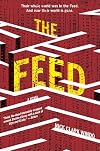
We’ve all heard the cautionary tales involving social media, about the dangers of being constantly plugged in. Nick Clark Windo’s dark thriller debut takes this idea even further, imagining a future where people are permanently connected via implants so that access to everything is instantaneous as well as continuous. This is “the Feed” that the novel’s title is referring to—a new tech that humans have become so dependent on, and so addicted to, that society can no longer function without it. And so, when the Feed collapses one day, the results are predictably catastrophic. Some of the most basic skills and knowledge are lost to the digital abyss as everyone must now learn how to survive offline and fend for themselves in this Feed-less new world.
For couple Kate and Tom, the adjustment has not been easy. But they have managed to keep going the past few years, living with a group of survivors as they raised their daughter Bea, who was born post-collapse. But then one day, Bea goes missing, snatched away by raiders, and so Kate and Tom must embark on a treacherous journey to bring her back.
It’s said that things have to get bad before they can get better, and likewise, some books make you go through some really rough patches before you can get to the good parts of the story. The Feed was a book like that. For most of the first half, I struggled with nearly everything—the characters, the plot, the world-building. From the moment the story opened, my patience show more was put to the test. I found both protagonists horribly off-putting. Kate was especially annoying, as a heavy user of the Feed before its collapse. She was an attention monger, self-absorbed and totally oblivious. To be fair, she was probably written this way by design, but in this case the author might have overplayed her personality. Tom, on the other hand, struck me as bland and lacking in any spirit or agency. I didn’t feel like I could connect to either of them at all, which made the first part of this book a difficult slog. I also struggled with the world-building and the exaggerated side effects of the Feed. Humans are biologically hard-wired for curiosity, and I found it hard to believe that almost the entire population would simply surrender themselves to the Feed unquestioningly and let themselves become so helpless.
And then the collapse happened, and subsequently, Bea’s disappearance really turned things around. Not to the point where I suddenly loved the book, mind you, but the story did become immensely more enjoyable once Tom and Kate finally had something to fight for. The second half of The Feed unfolded a lot more like a traditional dystopian novel, following our protagonists as they traversed the post-apocalyptic landscape, encountering violence and suffering. However, there is also a unique element to this world, which comes in the form of a very specialized threat. Even after the collapse, the sinister legacy of the Feed remains as those who possess the biological implants live in fear of being “taken”, a term to describe the process of being hacked and having your consciousness along with your personality and memories wiped clean and replaced. The result is a lot of chaos, mistrust, and panic, along with an “us vs. them” mentality among the survivors. While The Feed is not a zombie story, you can see how the overall tone and some of its themes can sometimes make it feel like one.
There is also a monumental twist near the end that changed nearly everything, and I’m still not entirely sure what to make of it simply because it was so out of left field. Did it make this book more interesting? Yes. But in terms of whether it made the story more coherent or feasible, probably not. That said, I’m impressed with how Windo handled the challenges that came about because of this surprising development. Everything could have fallen apart, but ultimately he was able to keep the threads of the story together and saw things through to the end.
I won’t lie, there were a lot of issues with this novel, particularly with the pacing and balance of the story’s numerous concepts. Still, there were plenty of fascinating ideas in here that I appreciated for their originality, especially once I got past the initial hurdles. There’s an almost sputtering, sporadic feel to the plot; in some ways, it’s like an engine that needs to be primed several times before it catches, but once it starts running, the ride smooths out and becomes a lot more enjoyable. The journey was certainly not boring, and that’s probably the best thing I can say about a novel in a saturated market like the dystopian genre. show less
For couple Kate and Tom, the adjustment has not been easy. But they have managed to keep going the past few years, living with a group of survivors as they raised their daughter Bea, who was born post-collapse. But then one day, Bea goes missing, snatched away by raiders, and so Kate and Tom must embark on a treacherous journey to bring her back.
It’s said that things have to get bad before they can get better, and likewise, some books make you go through some really rough patches before you can get to the good parts of the story. The Feed was a book like that. For most of the first half, I struggled with nearly everything—the characters, the plot, the world-building. From the moment the story opened, my patience show more was put to the test. I found both protagonists horribly off-putting. Kate was especially annoying, as a heavy user of the Feed before its collapse. She was an attention monger, self-absorbed and totally oblivious. To be fair, she was probably written this way by design, but in this case the author might have overplayed her personality. Tom, on the other hand, struck me as bland and lacking in any spirit or agency. I didn’t feel like I could connect to either of them at all, which made the first part of this book a difficult slog. I also struggled with the world-building and the exaggerated side effects of the Feed. Humans are biologically hard-wired for curiosity, and I found it hard to believe that almost the entire population would simply surrender themselves to the Feed unquestioningly and let themselves become so helpless.
And then the collapse happened, and subsequently, Bea’s disappearance really turned things around. Not to the point where I suddenly loved the book, mind you, but the story did become immensely more enjoyable once Tom and Kate finally had something to fight for. The second half of The Feed unfolded a lot more like a traditional dystopian novel, following our protagonists as they traversed the post-apocalyptic landscape, encountering violence and suffering. However, there is also a unique element to this world, which comes in the form of a very specialized threat. Even after the collapse, the sinister legacy of the Feed remains as those who possess the biological implants live in fear of being “taken”, a term to describe the process of being hacked and having your consciousness along with your personality and memories wiped clean and replaced. The result is a lot of chaos, mistrust, and panic, along with an “us vs. them” mentality among the survivors. While The Feed is not a zombie story, you can see how the overall tone and some of its themes can sometimes make it feel like one.
There is also a monumental twist near the end that changed nearly everything, and I’m still not entirely sure what to make of it simply because it was so out of left field. Did it make this book more interesting? Yes. But in terms of whether it made the story more coherent or feasible, probably not. That said, I’m impressed with how Windo handled the challenges that came about because of this surprising development. Everything could have fallen apart, but ultimately he was able to keep the threads of the story together and saw things through to the end.
I won’t lie, there were a lot of issues with this novel, particularly with the pacing and balance of the story’s numerous concepts. Still, there were plenty of fascinating ideas in here that I appreciated for their originality, especially once I got past the initial hurdles. There’s an almost sputtering, sporadic feel to the plot; in some ways, it’s like an engine that needs to be primed several times before it catches, but once it starts running, the ride smooths out and becomes a lot more enjoyable. The journey was certainly not boring, and that’s probably the best thing I can say about a novel in a saturated market like the dystopian genre. show less

Noir was my first experience with the writing of humorist Christopher Moore, and I was not disappointed. In fact, it’s been a few days since I finished reading the book, and every now and then I still catch myself chuckling at the memory of some of the wild and whacky things that happened in it. Although I’m unable to comment on the way this novel compares with the author’s other work (I’ve come across some reviews from longtime fans that mention that it feels different), l can nonetheless understand why many readers find his stories entertaining.
The book opens in San Francisco, 1947. Protagonist Sammy “Two Toes” Tiffin is working as a bartender at Sal’s Saloon, when a beautiful blonde named Stilton (like “the Cheese”, which is henceforth how she will be known to Sammy) breezes in through the door and captures his heart. However, the romance will have to wait, because soon afterwards, Sammy’s boss puts him in contact with an Air Force general who desperately needs his help. Certain “goods and services” are required at an upcoming function being held at the Bohemian Club, and Sammy, with his street smarts and connections, is in the perfect position to make it all happen.
But then, the Cheese disappears, and Sammy grows worried. More troubles also begin mounting as some of his other harebrained schemes proceed to spiral out of control, resulting in poisonous vipers, dead bodies, and the arrival of black-suited government men bedecked in dark show more sunglasses. Subsequently, when Sammy sets out on his search for the Cheese, he inadvertently stumbles into a loony conspiracy involving a mysterious flying object spotted over Mount Rainer, topped off by an unexplained plane crash in the desert near a town called Roswell, New Mexico.
Part satire and part homage, this novel feels like a zany, breathless love letter to the noir genre. Its influence can be seen everything, from the cover to the dialogue, attitudes, and mannerisms of the characters. It’s a bit like being transported straight into a 1950s classic noir film, with the tone and style of the writing giving the story’s post-war San Francisco an authentic flavor. Moore also provides fascinating commentary on the inspiration for his setting, as well as some of his experiences and the research he did into the culture, history, and environment of the city’s vibrant Chinatown.
That being said, Noir also has the feel of a tongue-in-cheek satire, which apparently is something of a specialty for the author. Certain elements are done in an over-the-top way to emphasize or poke fun at some of the genre’s more distinctive features, including larger-than-life heroes and coquettish femme fatales. As a result, rather than dark and tense, the atmosphere has been replaced by an eccentric, madcap energy that pervades the whole book, so that you have whacky things like chapters written from the perspective of an all-knowing snake, space aliens being smuggled away in rumble seats in the dead of night, and sexy beautiful women with nicknames like “the Cheese”. Noir is not really “noir” as such, in that it doesn’t really fit the style or the tone of the genre, and yet, the overall mood is still very much there, featuring a strong undercurrent of conflict and despondency in spite of some of the sillier themes.
At the end of the day, I suppose what really matters is that I enjoyed it. I enjoyed it a lot. Humor being such a subjective beast, I wasn’t sure if my tastes would mesh well with Christopher Moore’s style, but it appears I no longer have to be concerned on that front. If it means getting more of the same laughs and cleverness I found in Noir, I’m definitely on board to read more of the author’s work. show less
The book opens in San Francisco, 1947. Protagonist Sammy “Two Toes” Tiffin is working as a bartender at Sal’s Saloon, when a beautiful blonde named Stilton (like “the Cheese”, which is henceforth how she will be known to Sammy) breezes in through the door and captures his heart. However, the romance will have to wait, because soon afterwards, Sammy’s boss puts him in contact with an Air Force general who desperately needs his help. Certain “goods and services” are required at an upcoming function being held at the Bohemian Club, and Sammy, with his street smarts and connections, is in the perfect position to make it all happen.
But then, the Cheese disappears, and Sammy grows worried. More troubles also begin mounting as some of his other harebrained schemes proceed to spiral out of control, resulting in poisonous vipers, dead bodies, and the arrival of black-suited government men bedecked in dark show more sunglasses. Subsequently, when Sammy sets out on his search for the Cheese, he inadvertently stumbles into a loony conspiracy involving a mysterious flying object spotted over Mount Rainer, topped off by an unexplained plane crash in the desert near a town called Roswell, New Mexico.
Part satire and part homage, this novel feels like a zany, breathless love letter to the noir genre. Its influence can be seen everything, from the cover to the dialogue, attitudes, and mannerisms of the characters. It’s a bit like being transported straight into a 1950s classic noir film, with the tone and style of the writing giving the story’s post-war San Francisco an authentic flavor. Moore also provides fascinating commentary on the inspiration for his setting, as well as some of his experiences and the research he did into the culture, history, and environment of the city’s vibrant Chinatown.
That being said, Noir also has the feel of a tongue-in-cheek satire, which apparently is something of a specialty for the author. Certain elements are done in an over-the-top way to emphasize or poke fun at some of the genre’s more distinctive features, including larger-than-life heroes and coquettish femme fatales. As a result, rather than dark and tense, the atmosphere has been replaced by an eccentric, madcap energy that pervades the whole book, so that you have whacky things like chapters written from the perspective of an all-knowing snake, space aliens being smuggled away in rumble seats in the dead of night, and sexy beautiful women with nicknames like “the Cheese”. Noir is not really “noir” as such, in that it doesn’t really fit the style or the tone of the genre, and yet, the overall mood is still very much there, featuring a strong undercurrent of conflict and despondency in spite of some of the sillier themes.
At the end of the day, I suppose what really matters is that I enjoyed it. I enjoyed it a lot. Humor being such a subjective beast, I wasn’t sure if my tastes would mesh well with Christopher Moore’s style, but it appears I no longer have to be concerned on that front. If it means getting more of the same laughs and cleverness I found in Noir, I’m definitely on board to read more of the author’s work. show less
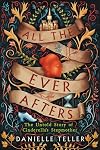
I’ve never been able to say no to a good fairy tale retelling. They are my absolute weakness, and I’ve been especially tempted as of late by the recent crop of novels touting the point-of-view of the “villain”. It ultimately led me to pick up All the Ever Afters, which boldly bears the tagline describing itself as the untold story of Cinderella’s stepmother, the notoriously cruel and wicked antagonist from the classic fairy tale we all know and love.
However, the author Danielle Teller’s approach to this novel is one that I’ve seldom seen in most fairy tale retellings I’ve read, in that she has completely eschewed all aspects of fantasy and magic, choosing instead to ground her story in history. Opening on the French countryside sometime during the mid-fourteenth or early fifteenth century, the tale introduces readers to Agnes, a young girl born into poverty. Her family could not afford to raise her, so she was sent at the tender age of ten to a nearby lord’s manor to become a laundress’s assistant. Worked to the bone and unfairly treated, Agnes had no choice but to use all her wits and wiles to finagle a better position for herself, eventually managing to escape the manor for a less punishing job at the local abbey.
All goes well for several years until Agnes is seduced by the Abbess’s ward and messenger, and their relationship results in a pregnancy. Ejected from the abbey, our protagonist is set up in a village where she becomes the proprietor of a show more brewery and alehouse, mostly raising her daughters on her own. But soon, tragedy strikes, and Agnes is forced into a situation where she must work her way up from nothing once more. A twist of fate lands her back in the manor where she worked as a child, but the lord is now married with an infant daughter. And thus, Agnes finds herself hired on to be a nursemaid to little Ella, the awkward but radiantly beautiful girl who will one day marry the handsome prince she meets at a fateful ball.
Now Agnes and her two daughters live at the palace, where she tells her tale in the hopes of showing how accounts of her wickedness have either been greatly exaggerated or are outright lies. In fact, she was a victim of forced labor herself, and All the Ever Afters is her own rags to riches story. It is a heart-wrenching novel about growing up with nothing to your name, of having to pull yourself up by your own bootstraps to make your own success. While there have been times where she had to use her cunning or resort to deception to get what she wants, Agnes is no villain. And if on occasion she was tough on Ella or punished her too harshly as a child, we learn that it is only because Agnes has been independent and hardworking her whole life, and as a result, she cannot bear idleness or watching her stepdaughter grow up helpless and spoiled.
In a way, All the Ever Afters is also the untold story of Cinderella’s stepsisters, called Charlotte and Matilda in this version of the retelling. Like their mother, they aren’t the awful people from the many popular versions of Cinderella either, and they’ve gone through their own share of hard times. Now that I’ve read Teller’s portrayal, I also doubt that I’ll ever think about the “ugly stepsisters” epithet the same way again, not after reading about a mother’s hurt and pain from Agnes’s perspective.
As I said before, this is also a purely non-magical story; there will be no fairy godmothers, pumpkin carriages, or singing animals here (though, I was amused to see, the author had managed to work in a tongue-in-cheek jibe at the popular depiction of Cinderella and her affinity for mice, except in this book, Ella’s friendship with her rat Henrietta is nowhere near as adorable…or hygienic). A lot of fairy tale retellings tend to give the mundane things of the world a fantastical twist, but it seems All the Ever Afters set out to do almost the exact opposite, downplaying the magical elements and addressing all that we know about the Cinderella story with realistic explanations.
I also found it interesting how the novel mirrored many of the original fairy tale’s lessons—that is, to always work hard and never let setbacks or difficult people get you down. However, while the classic version also taught that beauty is esteemed, but that having a good heart is the most important, things are not so idealized in Agnes’s more realistic world. Her stepdaughter Ella—who is naïve, spoiled, and rather soft and vapid—manages to snag a prince and is loved by all in the kingdom for no other reason because she is beautiful. Meanwhile, Charlotte and Matilda, who have endured so much more, will never have anywhere close to the same opportunities simply because they are homely. Agnes’s lesson for her daughters? Life is not fair, but you still do what you must to keep moving forward.
All in all, I enjoyed All the Ever Afters very much. With Cinderella only playing a bit part, this tale truly belongs to her stepmother, who has been given new life by Danielle Teller. In this heartfelt novel, there are no magical spells or fairy godmothers, for Agnes is a woman who relies on nothing but herself to change her life and make a better future for her children. If you prefer fantasy in your fairy tale retellings, you may wish to reconsider this one, but if you don’t mind a narrative that’s more rooted in realism, then I really can’t recommend this highly enough. show less
However, the author Danielle Teller’s approach to this novel is one that I’ve seldom seen in most fairy tale retellings I’ve read, in that she has completely eschewed all aspects of fantasy and magic, choosing instead to ground her story in history. Opening on the French countryside sometime during the mid-fourteenth or early fifteenth century, the tale introduces readers to Agnes, a young girl born into poverty. Her family could not afford to raise her, so she was sent at the tender age of ten to a nearby lord’s manor to become a laundress’s assistant. Worked to the bone and unfairly treated, Agnes had no choice but to use all her wits and wiles to finagle a better position for herself, eventually managing to escape the manor for a less punishing job at the local abbey.
All goes well for several years until Agnes is seduced by the Abbess’s ward and messenger, and their relationship results in a pregnancy. Ejected from the abbey, our protagonist is set up in a village where she becomes the proprietor of a show more brewery and alehouse, mostly raising her daughters on her own. But soon, tragedy strikes, and Agnes is forced into a situation where she must work her way up from nothing once more. A twist of fate lands her back in the manor where she worked as a child, but the lord is now married with an infant daughter. And thus, Agnes finds herself hired on to be a nursemaid to little Ella, the awkward but radiantly beautiful girl who will one day marry the handsome prince she meets at a fateful ball.
Now Agnes and her two daughters live at the palace, where she tells her tale in the hopes of showing how accounts of her wickedness have either been greatly exaggerated or are outright lies. In fact, she was a victim of forced labor herself, and All the Ever Afters is her own rags to riches story. It is a heart-wrenching novel about growing up with nothing to your name, of having to pull yourself up by your own bootstraps to make your own success. While there have been times where she had to use her cunning or resort to deception to get what she wants, Agnes is no villain. And if on occasion she was tough on Ella or punished her too harshly as a child, we learn that it is only because Agnes has been independent and hardworking her whole life, and as a result, she cannot bear idleness or watching her stepdaughter grow up helpless and spoiled.
In a way, All the Ever Afters is also the untold story of Cinderella’s stepsisters, called Charlotte and Matilda in this version of the retelling. Like their mother, they aren’t the awful people from the many popular versions of Cinderella either, and they’ve gone through their own share of hard times. Now that I’ve read Teller’s portrayal, I also doubt that I’ll ever think about the “ugly stepsisters” epithet the same way again, not after reading about a mother’s hurt and pain from Agnes’s perspective.
As I said before, this is also a purely non-magical story; there will be no fairy godmothers, pumpkin carriages, or singing animals here (though, I was amused to see, the author had managed to work in a tongue-in-cheek jibe at the popular depiction of Cinderella and her affinity for mice, except in this book, Ella’s friendship with her rat Henrietta is nowhere near as adorable…or hygienic). A lot of fairy tale retellings tend to give the mundane things of the world a fantastical twist, but it seems All the Ever Afters set out to do almost the exact opposite, downplaying the magical elements and addressing all that we know about the Cinderella story with realistic explanations.
I also found it interesting how the novel mirrored many of the original fairy tale’s lessons—that is, to always work hard and never let setbacks or difficult people get you down. However, while the classic version also taught that beauty is esteemed, but that having a good heart is the most important, things are not so idealized in Agnes’s more realistic world. Her stepdaughter Ella—who is naïve, spoiled, and rather soft and vapid—manages to snag a prince and is loved by all in the kingdom for no other reason because she is beautiful. Meanwhile, Charlotte and Matilda, who have endured so much more, will never have anywhere close to the same opportunities simply because they are homely. Agnes’s lesson for her daughters? Life is not fair, but you still do what you must to keep moving forward.
All in all, I enjoyed All the Ever Afters very much. With Cinderella only playing a bit part, this tale truly belongs to her stepmother, who has been given new life by Danielle Teller. In this heartfelt novel, there are no magical spells or fairy godmothers, for Agnes is a woman who relies on nothing but herself to change her life and make a better future for her children. If you prefer fantasy in your fairy tale retellings, you may wish to reconsider this one, but if you don’t mind a narrative that’s more rooted in realism, then I really can’t recommend this highly enough. show less
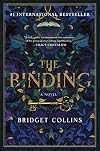
The Binding by Bridget Collins was an okay book, but it could have been better. In its defense, I confess I probably would have enjoyed this a lot more if my patience threshold hadn’t been so low when I started this; I’ve had a recent run of bad to mediocre reads lately which has made me extremely finicky, and unfortunately, there are many things about this one that make it a very mood-dependent book.
But first, I did love the novel’s concept. I’ve always had a thing for “books about books”, and I thought The Binding deserves points for tackling the idea quite a bit differently. That’s because books in this world are nothing like the way we think of them, neither for knowledge or for pleasure. Instead, they are magical devices handcrafted by specially trained artisans called Bookbinders, who use books as vessels to take away and store a person’s worst memories. All the secrets and the pain and hurt and guilt that one can’t bear to live with, a Bookbinder has the mysterious power to erase and lock away, which has resulted in much fear and mistrust around the profession, and not surprisingly, books themselves are anathema and forbidden.
This was a lesson protagonist Emmett Farmer learned early on, when he was a young boy punished by his father for bringing home a book from the Wakening Fair, not understanding the gravity of what he’d done. But for as long as he can remember, Emmett has always been drawn to books, and soon enough, we get to learn why. What show more he’s always thought of as a debilitating condition which has prevented him from working efficiently in his family’s fields actually turns out to be a sign of his potential to become a Bookbinder. Before long, a letter arrives from an elderly Bookbinder named Seredith with a demand for his apprenticeship, and despite his reluctance to leave the farm, Emmett knows deep in his heart that he has no choice.
Under Seredith’s tutelage, Emmett learns the delicate art of binding. He also discovers the truth behind the books she creates, watching as customers arrive at her doorstep, beseeching the old Bookbinder to take away their memories and lock them up. But not everything is as they seem either. Soon, we get to see that the business of bookbinding is rife for abuse, with some engaging in the illegal trading of books while others misuse the services for their own nefarious purposes. Which brings us to Lucian, a wealthy young patron who visits Seredith’s shop one day. We won’t find out how until much later, but Emmett and Lucian’s lives are connected in some way, and in time we learn how a great disservice has been done to both of them.
I have to say, The Binding was a deeply layered book. Again, I suspect that I would have enjoyed it a lot more had I had been in a better mood for a story like this, but there was also plenty about its execution I found aggravating. For one thing, the book is told in three parts, with some accompanying perspective and time shifts that I didn’t feel were written all that effectively. I liked the first part well enough, mostly due to Collins’ amazing characterization of both Emmett and Seredith, as well as the development of their master-apprentice relationship. This section also introduced a world of mystery that I found very enticing, making it hard to resist reading more.
But then came the second act, told via a flashback. Emotionally, I found it challenging to connect with this section—very unfortunate, considering how so much of what was covered here would play directly into the crux of the novel, revealed in the third and final act. My enthusiasm already dampened at this point, my apathy only increased as we shift POVs for this concluding section, which felt a world away from the magic and allure of the first act. Instead, we mostly got a lot of drama and anguish. I don’t want to spoil things too much, even though many of the reviews have already mentioned the queer romance and the tale of star-crossed lovers (though honestly, it’s quite obvious that the book was setting up for it), but essentially, I felt this last act failed to deliver the emotional intensity such crucial dissemination of events required, or it’s possible I just felt too disconnected from the POV to feel much of it.
My final verdict? I really thought I would love The Binding, given its fantastic premise. However, I struggled miserably with the shifts between the novel’s three parts, and as such, things did not go as smoothly as I would have liked. On a better day, I might have felt a little more magnanimous, but lately I’ve been burned by too many books that show early promise only to fizzle out by the end, and I was disappointed when this one followed the same trend. In all fairness, this wasn’t a bad book, but I do wish it had been more emotionally satisfying. show less
But first, I did love the novel’s concept. I’ve always had a thing for “books about books”, and I thought The Binding deserves points for tackling the idea quite a bit differently. That’s because books in this world are nothing like the way we think of them, neither for knowledge or for pleasure. Instead, they are magical devices handcrafted by specially trained artisans called Bookbinders, who use books as vessels to take away and store a person’s worst memories. All the secrets and the pain and hurt and guilt that one can’t bear to live with, a Bookbinder has the mysterious power to erase and lock away, which has resulted in much fear and mistrust around the profession, and not surprisingly, books themselves are anathema and forbidden.
This was a lesson protagonist Emmett Farmer learned early on, when he was a young boy punished by his father for bringing home a book from the Wakening Fair, not understanding the gravity of what he’d done. But for as long as he can remember, Emmett has always been drawn to books, and soon enough, we get to learn why. What show more he’s always thought of as a debilitating condition which has prevented him from working efficiently in his family’s fields actually turns out to be a sign of his potential to become a Bookbinder. Before long, a letter arrives from an elderly Bookbinder named Seredith with a demand for his apprenticeship, and despite his reluctance to leave the farm, Emmett knows deep in his heart that he has no choice.
Under Seredith’s tutelage, Emmett learns the delicate art of binding. He also discovers the truth behind the books she creates, watching as customers arrive at her doorstep, beseeching the old Bookbinder to take away their memories and lock them up. But not everything is as they seem either. Soon, we get to see that the business of bookbinding is rife for abuse, with some engaging in the illegal trading of books while others misuse the services for their own nefarious purposes. Which brings us to Lucian, a wealthy young patron who visits Seredith’s shop one day. We won’t find out how until much later, but Emmett and Lucian’s lives are connected in some way, and in time we learn how a great disservice has been done to both of them.
I have to say, The Binding was a deeply layered book. Again, I suspect that I would have enjoyed it a lot more had I had been in a better mood for a story like this, but there was also plenty about its execution I found aggravating. For one thing, the book is told in three parts, with some accompanying perspective and time shifts that I didn’t feel were written all that effectively. I liked the first part well enough, mostly due to Collins’ amazing characterization of both Emmett and Seredith, as well as the development of their master-apprentice relationship. This section also introduced a world of mystery that I found very enticing, making it hard to resist reading more.
But then came the second act, told via a flashback. Emotionally, I found it challenging to connect with this section—very unfortunate, considering how so much of what was covered here would play directly into the crux of the novel, revealed in the third and final act. My enthusiasm already dampened at this point, my apathy only increased as we shift POVs for this concluding section, which felt a world away from the magic and allure of the first act. Instead, we mostly got a lot of drama and anguish. I don’t want to spoil things too much, even though many of the reviews have already mentioned the queer romance and the tale of star-crossed lovers (though honestly, it’s quite obvious that the book was setting up for it), but essentially, I felt this last act failed to deliver the emotional intensity such crucial dissemination of events required, or it’s possible I just felt too disconnected from the POV to feel much of it.
My final verdict? I really thought I would love The Binding, given its fantastic premise. However, I struggled miserably with the shifts between the novel’s three parts, and as such, things did not go as smoothly as I would have liked. On a better day, I might have felt a little more magnanimous, but lately I’ve been burned by too many books that show early promise only to fizzle out by the end, and I was disappointed when this one followed the same trend. In all fairness, this wasn’t a bad book, but I do wish it had been more emotionally satisfying. show less
 This review was written for LibraryThing Early Reviewers.
Okay, I’m intrigued. Very intrigued. Leigh Bardugo’s Six of Crows may have fallen slightly short of my expectations, but it’s still great. And honestly, it was going up against a super high bar, considering the ridiculous number of good books I’ve read this year so far and the fact that I can be very finicky about my heist stories.
First though, let’s get something out of the way, since I’ve gotten asked this question a bunch of times: You don’t need to read or even be familiar with the Grisha trilogy before starting this book. It is set in the same world, but other than a few references to events and people from the other series, Six of Crows features an all new story and an all new cast of characters. Personally, that made me very happy. As much as I enjoyed the Grisha trilogy, it didn’t end as strongly as it started, and I was definitely ready for something fresh.
So here we find ourselves in the new setting of Ketterdam, a bustling trade city and home to a gang of thieves calling themselves the Dregs. Kaz “Dirty Hands” Brekker is their fearless leader and mastermind, willing to take on any job for the right price. When tasked by a powerful crime lord to rescue a scientist with a secret formula from the impenetrable walls of the Ice Court, Kaz goes forth and gathers his crew in preparation for the heist of a lifetime.
For better or worse, the heist itself actually takes a backseat to the amount of attention given to the members of the Dregs. This also show more means the plot is decidedly uncomplicated once you pare it all down, because the complexity is all in the characters. Probably a good thing too, when you have as many as six crew members to follow.
Kaz is the clever one, the one who makes the plans and takes care of the boys and girls in his crew. A child of the streets, Kaz’s background is one huge sob story, which lends sympathy to his thirst for revenge against the man he blames for his brother’s death. Reserved and coolheaded, Kaz also wears fancy-pants clothes and walks around with an ostentatiously well-fashioned cane due to a “childhood” injury to his leg (in quotes because right now he’s still all of what, 17?) Kaz is interesting, though whenever I think of him I picture a kid trying to play at being an adult, and unfortunately that whole persona tends to drive me crazy.
Then there’s Inej, also known as the Wraith. Her talents lie in being able to melt into the shadows. She has a pretty sad story too (okay, I’m just going to say right now, ALL of them have pretty sad stories. Seems like that’s Bardugo’s go-to approach for every single one of her characters) but out of everyone, Inej was my favorite.
Jesper is the sharpshooter, and he’s also the joker of the group. I don’t think he got near enough the attention he deserved, which is a shame because I really liked him. There was also this great dynamic between him and Wylan, the Dreg’s “outsider” who nonetheless found his way to a special place in my heart. Seriously, the two most interesting members of the crew with the best banter got shafted here, because the story decided instead to shine all the attention on…
Nina and Matthias. The Grisha and the Witch Hunter. Nina brings the magic and Matthias brings the insider knowledge of the Ice Court and its security systems. Together they bring enough YA clichés to fill an ocean. Normally, I am all for forbidden love and a romance between characters who start off hating each other’s guts, but these two were downright insufferable. Just shut up and make with the kissy-face already. Plus, Matthias was distractingly perfect. And Nina was distractingly awkward whenever she attempted her sexy act. Every time they interacted, I had to fight the urge to cringe because it all just felt so damn scripted.
Personally, I would have been happier with less drama, more action (more heist!) The story was also a little slow to take off, with a long and drawn out intro. Most heist stories typically use this time to focus on the planning and preparation, but Bardugo has opted for a different strategy, giving us background information on the characters in the form of flashbacks and memories instead. I really enjoyed some of these flashbacks (Inej and Kaz had great backstories) while others felt more like a distraction (Nina and Matthias), which makes me think your mileage may vary depending on how you feel about the various members of the Dregs. This is very much a character-focused story, which is great, but when you have such a big cast, I will invariably connect with some more than others.
And speaking of a big cast, the audiobook is also a fantastic format to enjoy Six of Crows. I simply adore huge productions that involve multiple narrators because each perspective character gets to have their own unique “voice”. Six of Crows features a whopping seven narrators, many of whom are big names in the world of YA audiobooks. Several of them I’ve had the pleasure of listening to their work in the past, like Elizabeth Evans (she’s great on the Throne of Glass series), Lauren Fortgang (from the Grisha trilogy audiobooks), David LeDoux (who narrated Sam’s chapters in Maggie Stiefvater’s Shiver) and Jay Snyder (from Peter Clines’ Ex-Heroes). Everyone delivered fantastic performances, including the narrators who were new to me.
Bottom line, this is a great start to a series with some serious potential. It wasn’t exactly the type of heist story I expected, though it just as well Leigh Bardugo made it all about her characters because characters are what makes a good book. Even though I despised the corny romance, there are some wonderfully unique and memorable personalities here, and I’d like to see more of some of them in the next installment. show less
First though, let’s get something out of the way, since I’ve gotten asked this question a bunch of times: You don’t need to read or even be familiar with the Grisha trilogy before starting this book. It is set in the same world, but other than a few references to events and people from the other series, Six of Crows features an all new story and an all new cast of characters. Personally, that made me very happy. As much as I enjoyed the Grisha trilogy, it didn’t end as strongly as it started, and I was definitely ready for something fresh.
So here we find ourselves in the new setting of Ketterdam, a bustling trade city and home to a gang of thieves calling themselves the Dregs. Kaz “Dirty Hands” Brekker is their fearless leader and mastermind, willing to take on any job for the right price. When tasked by a powerful crime lord to rescue a scientist with a secret formula from the impenetrable walls of the Ice Court, Kaz goes forth and gathers his crew in preparation for the heist of a lifetime.
For better or worse, the heist itself actually takes a backseat to the amount of attention given to the members of the Dregs. This also show more means the plot is decidedly uncomplicated once you pare it all down, because the complexity is all in the characters. Probably a good thing too, when you have as many as six crew members to follow.
Kaz is the clever one, the one who makes the plans and takes care of the boys and girls in his crew. A child of the streets, Kaz’s background is one huge sob story, which lends sympathy to his thirst for revenge against the man he blames for his brother’s death. Reserved and coolheaded, Kaz also wears fancy-pants clothes and walks around with an ostentatiously well-fashioned cane due to a “childhood” injury to his leg (in quotes because right now he’s still all of what, 17?) Kaz is interesting, though whenever I think of him I picture a kid trying to play at being an adult, and unfortunately that whole persona tends to drive me crazy.
Then there’s Inej, also known as the Wraith. Her talents lie in being able to melt into the shadows. She has a pretty sad story too (okay, I’m just going to say right now, ALL of them have pretty sad stories. Seems like that’s Bardugo’s go-to approach for every single one of her characters) but out of everyone, Inej was my favorite.
Jesper is the sharpshooter, and he’s also the joker of the group. I don’t think he got near enough the attention he deserved, which is a shame because I really liked him. There was also this great dynamic between him and Wylan, the Dreg’s “outsider” who nonetheless found his way to a special place in my heart. Seriously, the two most interesting members of the crew with the best banter got shafted here, because the story decided instead to shine all the attention on…
Nina and Matthias. The Grisha and the Witch Hunter. Nina brings the magic and Matthias brings the insider knowledge of the Ice Court and its security systems. Together they bring enough YA clichés to fill an ocean. Normally, I am all for forbidden love and a romance between characters who start off hating each other’s guts, but these two were downright insufferable. Just shut up and make with the kissy-face already. Plus, Matthias was distractingly perfect. And Nina was distractingly awkward whenever she attempted her sexy act. Every time they interacted, I had to fight the urge to cringe because it all just felt so damn scripted.
Personally, I would have been happier with less drama, more action (more heist!) The story was also a little slow to take off, with a long and drawn out intro. Most heist stories typically use this time to focus on the planning and preparation, but Bardugo has opted for a different strategy, giving us background information on the characters in the form of flashbacks and memories instead. I really enjoyed some of these flashbacks (Inej and Kaz had great backstories) while others felt more like a distraction (Nina and Matthias), which makes me think your mileage may vary depending on how you feel about the various members of the Dregs. This is very much a character-focused story, which is great, but when you have such a big cast, I will invariably connect with some more than others.
And speaking of a big cast, the audiobook is also a fantastic format to enjoy Six of Crows. I simply adore huge productions that involve multiple narrators because each perspective character gets to have their own unique “voice”. Six of Crows features a whopping seven narrators, many of whom are big names in the world of YA audiobooks. Several of them I’ve had the pleasure of listening to their work in the past, like Elizabeth Evans (she’s great on the Throne of Glass series), Lauren Fortgang (from the Grisha trilogy audiobooks), David LeDoux (who narrated Sam’s chapters in Maggie Stiefvater’s Shiver) and Jay Snyder (from Peter Clines’ Ex-Heroes). Everyone delivered fantastic performances, including the narrators who were new to me.
Bottom line, this is a great start to a series with some serious potential. It wasn’t exactly the type of heist story I expected, though it just as well Leigh Bardugo made it all about her characters because characters are what makes a good book. Even though I despised the corny romance, there are some wonderfully unique and memorable personalities here, and I’d like to see more of some of them in the next installment. show less
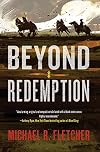
Would it make sense to call a book “grimdarker than grimdark”? This question was the second thought that crossed my mind as I pensively closed the cover on the final page of my copy of Beyond Redemption. It followed right on the heels of my first thought, which was “Damn, that shit was a hundred different kinds of awesome.”
Grimdark, after all, is a term frequently used to describe fantasy fiction with mostly dystopic, brutal or violent themes. Very often it also features characters that are amoral or dishonorable. All of this applies to this novel, which most certainly is nihilistic and violent—viciously and disturbingly so. It’s also aptly titled, seeing as no one in this story is in possession of a single redeeming attribute. They are all terrible, disgusting people. No joke, I could strip these characters down to their infinitesimal building blocks in order to examine each and every single atom under an electron microscope, and I still wouldn’t be able to find the smallest trace of goodness in any of them. It’s quite amazing, really.
Gods help me then, why did I enjoy them so much? Perhaps one has to be a little bit crazy to revel in reading about dark, gritty and twisted characters such as these. In which case, can you please pass me some more of that sweet, sweet insanity?
Fortunately, Michael R. Fletcher is happy to oblige. The world he gives us is literally steeped in chaos, madness, and delusion. In Beyond Redemption, individuals known as show more Geisteskranken are the unstable and insane individuals whose psychoses manifest as reality. Furthermore, under normal circumstances their powers are also shaped by collective beliefs, so the more people who believe in your delusion, the more those ideas become the truth.
Let’s just take a moment to digest this, shall we? You’re essentially being thrown into a world where the “magic” is delusion, and all your magicians are batshit insane. Come on, doesn’t that sound positively delightful!
Not to mention, there are just so many types of Geisteskranken. Rarely do I recommend this, but in the case of this book, it might actually be helpful to check out the glossary of all the different kinds of delusions described in the back before you start reading. It’s an impressive list, each one more frightening than the last. Hassebrands, for example, like to set fire to everything as an outlet for their repressed rage and loneliness. Therianthropes, on the other hand, think they are possessed by animal spirits, and are able to shapeshift into these creatures simply because they believe they can. But perhaps the most nefarious of all are the Gefahrgeists, sociopaths who are driven by their desperate desire to be at the center of attention and to rule over others.
And heaven forfend if you happen to be one of those Geisteskranken who are comorbidic, a person who manifests multiple delusions. These men and women tend to be even more unhinged, as mental instability often goes hand in hand with comorbidity. In Beyond Redemption, High Priest Konig Furimmer is one such individual, a twisted madman who seeks to forge order from the fiery chaos around him. Konig’s plans involve creating a god – a god his church can control. An innocent and sheltered young boy named Morgen is being groomed for the honor, to be killed once it is determined that he is ready to Ascend.
But before his Ascension could come to pass, Morgen is stolen away by three wretched thieves: Bedeckt the old cantankerous warrior, Stehlen the bloodthirsty kleptomaniac woman, and Wichtig the pompous Gefahrgeist who fancies himself the Greatest Swordsman in the World. Konig has no choice but to send the most dastardly of his Geisteskranken after the trio of brazen miscreants, hoping to salvage his plans before Morgen is forever corrupted. Anything can happen in this wild, dark tale of cat and mouse, but one thing is guaranteed – there’ll be a body count numbering in the hundreds and a whole lot more blood and guts spilled before this is done.
If you think a book like this sounds too crazy and ludicrous to pull off, I don’t blame you. The thing is though, it works. It really does. Declaring the protagonists as flawed might be the understatement of the century, but I was nevertheless fascinated by their delusions and eccentricities. You might find yourself wanting to root for them, even if you hate yourself a little for it. They are all so vile and depraved, and yet I cannot deny this was one of the most fantastic and unique cast of characters I’ve ever met.
It’s impossible not to get completely sucked into this story. Not that I wanted to fight the pull, mind you. Beyond Redemption is so wildly imaginative and intensely entertaining, you just can’t help but embrace its bleak world, the tortured characters, the wicked concepts. Giving in to the madness has never felt so good. show less
Grimdark, after all, is a term frequently used to describe fantasy fiction with mostly dystopic, brutal or violent themes. Very often it also features characters that are amoral or dishonorable. All of this applies to this novel, which most certainly is nihilistic and violent—viciously and disturbingly so. It’s also aptly titled, seeing as no one in this story is in possession of a single redeeming attribute. They are all terrible, disgusting people. No joke, I could strip these characters down to their infinitesimal building blocks in order to examine each and every single atom under an electron microscope, and I still wouldn’t be able to find the smallest trace of goodness in any of them. It’s quite amazing, really.
Gods help me then, why did I enjoy them so much? Perhaps one has to be a little bit crazy to revel in reading about dark, gritty and twisted characters such as these. In which case, can you please pass me some more of that sweet, sweet insanity?
Fortunately, Michael R. Fletcher is happy to oblige. The world he gives us is literally steeped in chaos, madness, and delusion. In Beyond Redemption, individuals known as show more Geisteskranken are the unstable and insane individuals whose psychoses manifest as reality. Furthermore, under normal circumstances their powers are also shaped by collective beliefs, so the more people who believe in your delusion, the more those ideas become the truth.
Let’s just take a moment to digest this, shall we? You’re essentially being thrown into a world where the “magic” is delusion, and all your magicians are batshit insane. Come on, doesn’t that sound positively delightful!
Not to mention, there are just so many types of Geisteskranken. Rarely do I recommend this, but in the case of this book, it might actually be helpful to check out the glossary of all the different kinds of delusions described in the back before you start reading. It’s an impressive list, each one more frightening than the last. Hassebrands, for example, like to set fire to everything as an outlet for their repressed rage and loneliness. Therianthropes, on the other hand, think they are possessed by animal spirits, and are able to shapeshift into these creatures simply because they believe they can. But perhaps the most nefarious of all are the Gefahrgeists, sociopaths who are driven by their desperate desire to be at the center of attention and to rule over others.
And heaven forfend if you happen to be one of those Geisteskranken who are comorbidic, a person who manifests multiple delusions. These men and women tend to be even more unhinged, as mental instability often goes hand in hand with comorbidity. In Beyond Redemption, High Priest Konig Furimmer is one such individual, a twisted madman who seeks to forge order from the fiery chaos around him. Konig’s plans involve creating a god – a god his church can control. An innocent and sheltered young boy named Morgen is being groomed for the honor, to be killed once it is determined that he is ready to Ascend.
But before his Ascension could come to pass, Morgen is stolen away by three wretched thieves: Bedeckt the old cantankerous warrior, Stehlen the bloodthirsty kleptomaniac woman, and Wichtig the pompous Gefahrgeist who fancies himself the Greatest Swordsman in the World. Konig has no choice but to send the most dastardly of his Geisteskranken after the trio of brazen miscreants, hoping to salvage his plans before Morgen is forever corrupted. Anything can happen in this wild, dark tale of cat and mouse, but one thing is guaranteed – there’ll be a body count numbering in the hundreds and a whole lot more blood and guts spilled before this is done.
If you think a book like this sounds too crazy and ludicrous to pull off, I don’t blame you. The thing is though, it works. It really does. Declaring the protagonists as flawed might be the understatement of the century, but I was nevertheless fascinated by their delusions and eccentricities. You might find yourself wanting to root for them, even if you hate yourself a little for it. They are all so vile and depraved, and yet I cannot deny this was one of the most fantastic and unique cast of characters I’ve ever met.
It’s impossible not to get completely sucked into this story. Not that I wanted to fight the pull, mind you. Beyond Redemption is so wildly imaginative and intensely entertaining, you just can’t help but embrace its bleak world, the tortured characters, the wicked concepts. Giving in to the madness has never felt so good. show less
I have to say, so far I’ve been very impressed with the variety of Tor.com novellas. Just as I’ve gotten myself settled in with a couple stories that are rather sober, more serious-like endeavors, along comes Envy of Angels barging into this black tie dinner party like your favorite uncle, the one who gets loud when he’s had too many but is always ready to entertain the crowd with a funny yarn.
I had such a great time with this book. Imagine Hell’s Kitchen meets Dresden Files, marinated in a flavorful blend of action and thrills, seasoned generously with humor. When I first glimpsed the conspicuously short publisher description for this novella, I had my suspicions about what this meant and now they have been confirmed: The less you know about this story going in, the better.
Fortunately, I can give the general gist of it without spoiling anything. Envy of Angels is about Lena and Darren, two ordinary down-on-their-luck New York chefs who suddenly find themselves landing the gig of lifetime at Sin du Jour, an exclusive catering company owned by one of the city’s hottest celebrity chefs. However, it soon becomes clear that Sin du Jour is no ordinary catering company. For one thing, their clients are demons.
When asked to serve a morally questionable item on the menu at their next event (and we’re not talking about veal), Sin du Jour owner and executive chef Byron “Bronko” Luck gathers his staff and puts it to a vote. Should they do what they’re told and go show more through with the whole thing? Or should they take the dangerous, near-impossible option and attempt to pull the wool over their devilish clientele’s eyes by preparing a substitute main course and praying they won’t notice? By the way, these types of hellish customers, when they don’t get what they order, aren’t just going to be sending it back. But guess what our characters decide to go ahead and do anyway.
The result is an extraordinary amount of story packed into this novella. Envy of Angels features plenty of action both in the kitchen and out in the field, and even includes a thrilling heist sequence starring Ritter, Cindy, Hara and Moon, the unforgettable foursome who make up Sin du Jour’s Stocking and Receiving Department.
The plot is also very addictive, especially when it gets more and more bizarre. Between getting completely sucked into the story and the sheer morbid curiosity to see what other crazy things might be happening next, I kept turning the pages and finished this book in no time at all. It was fantastically good fun. I really don’t want to give much more away, though in truth, there are moments so absurdly hilarious, so out-of-this-world-insane that I would be hard-pressed to describe them, anyway. Seriously. There are moments in here that you simply must experience for yourself.
One thing is certain though. I’ll never look at a Chicken McNugget the same way again. show less
I had such a great time with this book. Imagine Hell’s Kitchen meets Dresden Files, marinated in a flavorful blend of action and thrills, seasoned generously with humor. When I first glimpsed the conspicuously short publisher description for this novella, I had my suspicions about what this meant and now they have been confirmed: The less you know about this story going in, the better.
Fortunately, I can give the general gist of it without spoiling anything. Envy of Angels is about Lena and Darren, two ordinary down-on-their-luck New York chefs who suddenly find themselves landing the gig of lifetime at Sin du Jour, an exclusive catering company owned by one of the city’s hottest celebrity chefs. However, it soon becomes clear that Sin du Jour is no ordinary catering company. For one thing, their clients are demons.
When asked to serve a morally questionable item on the menu at their next event (and we’re not talking about veal), Sin du Jour owner and executive chef Byron “Bronko” Luck gathers his staff and puts it to a vote. Should they do what they’re told and go show more through with the whole thing? Or should they take the dangerous, near-impossible option and attempt to pull the wool over their devilish clientele’s eyes by preparing a substitute main course and praying they won’t notice? By the way, these types of hellish customers, when they don’t get what they order, aren’t just going to be sending it back. But guess what our characters decide to go ahead and do anyway.
The result is an extraordinary amount of story packed into this novella. Envy of Angels features plenty of action both in the kitchen and out in the field, and even includes a thrilling heist sequence starring Ritter, Cindy, Hara and Moon, the unforgettable foursome who make up Sin du Jour’s Stocking and Receiving Department.
The plot is also very addictive, especially when it gets more and more bizarre. Between getting completely sucked into the story and the sheer morbid curiosity to see what other crazy things might be happening next, I kept turning the pages and finished this book in no time at all. It was fantastically good fun. I really don’t want to give much more away, though in truth, there are moments so absurdly hilarious, so out-of-this-world-insane that I would be hard-pressed to describe them, anyway. Seriously. There are moments in here that you simply must experience for yourself.
One thing is certain though. I’ll never look at a Chicken McNugget the same way again. show less
I read a whopping number of books last year. Like, the final tally was probably somewhere close to 200. And out of the dozens upon dozens of books, do you know which one stood out to me the most? Juliet Marillier’s Dreamer’s Pool. It should come as no surprise then, that its sequel Tower of Thorns is hands down my most anticipated novel this fall. Heck, most anticipated novel this year. We’re talking, if there’s one book I need to read in 2015, THIS. IS. IT.
So, please understand now when I say I need a moment to pull myself together. I’m still trying desperately to come up with the words to describe how I felt about this novel, without coming off as a gushing, fangirly lunatic. After all, it’s not every day that I get to read a book that I’ve been dying for, only to have that book exceed all my expectations.
What can I say? Tower of Thorns, you were utter perfection. Juliet Marillier, you are truly amazing.
Yeah, that whole trying-not-to-be-a-gushy-fangirl thing. Not really working out, is it?
Let me start again, all proper-like this time. Tower of Thorns is the direct sequel to Dreamer’s Pool. Theoretically, you can start with this book, though in my opinion you’d be doing yourself a great disservice if you don’t start from the beginning. Blackthorn and Grim have a very special connection, and being familiar with the story of how these two characters first met and came to be partners in Dreamer’s Pool made Tower of Thorns all the more powerful and show more touching.
Almost a year has passed since Blackthorn made her deal with the fey, buying her freedom and a new beginning by promising two things: 1) that she will travel to and settle in Dalriada as a wise woman healer, never turning away any request for help, and 2) for seven years she will stay there, putting aside her desire for revenge against Mathuin, the cruel Lord of Laois who destroyed her life and took everything away from her. Hatred for Mathuin and the need to see him brought to justice has made keeping her end of the bargain difficult, but Blackthorn is aided by Grim, her steadfast and taciturn companion who has stayed by her side since their escape from Mathuin’s dungeons.
However, peace is disrupted once again with the arrival of Lady Geiléis, a noblewoman who comes to beg Blackthorn for help with a monster of a problem—literally. A howling creature has taken up residence in an old tower on Lady Geiléis’ land, its mournful calls driving the surrounding populace to depression and madness. The tower is inaccessible due to a hedge of thorns surrounding its base, and it soon becomes clear that any means to vanquish the monster would have to be magical.
Have you ever wanted to peel back the layers of a fairy tale? Dive deeper into its secrets and investigate its puzzles? If fairy tales were turned into mystery novels, I think they would look very much like these books. And I couldn’t ask for a better detective team on the case than Blackthorn and Grim.
As characters, they are broken and flawed, but I’m more than a bit fond of them. Tower of Thorns is a defining book for both our protagonists, exploring the pain in their pasts. Blackthorn gave up a huge part of herself when she struck her bargain with the Fae, a part that she still cannot completely let go of, even if it will mean paying a steeper, more severe price down the road. Grim too is haunted by his own demons, his memories of blood and loss brought to the surface by the miserable cries of the monster in the tower.
I can’t deny Grim really stole the show in this one. As much as I admired Blackthorn’s intelligence and her strength in the face of overwhelming odds, my heart broke for Grim and the darkness he’s kept locked up inside himself for so long. A big, quiet man often dismissed as an oaf and a simpleton, Grim’s character actually holds the sort of depth rarely seen in fantasy fiction. His sincerity and unwavering loyalty to Blackthorn is what makes their relationship so remarkable and unique, reducing me to tears in the concluding chapters of this novel.
All this takes place in a world infused with as much darkness as whimsy, reminiscent of most fairy tale settings. And like many fairy tales, the themes of love and sacrifice are strong in Tower of Thorns. The courage of unlikely heroes is pitted against the malice and underhandedness of tricksters, both the mortal and immortal kind. Even the closest of friends will find themselves torn at a crossroads, faced with decisions that can change their entire lives. There’s no doubt about it, the gut-wrenching emotions that this book brought out in me made reading this sequel even more rewarding that the first book.
If you’re looking for a fantasy novel filled with irresistible characters and the kind of rich, evocative magic that will take your breath away, look no further than this brilliant series by Juliet Marillier. Tower of Thorns made me fall in love with Blackthorn and Grim all over again. Powerful and emotionally-charged, this tale will hold you absolutely spellbound. I highly recommend it. show less
So, please understand now when I say I need a moment to pull myself together. I’m still trying desperately to come up with the words to describe how I felt about this novel, without coming off as a gushing, fangirly lunatic. After all, it’s not every day that I get to read a book that I’ve been dying for, only to have that book exceed all my expectations.
What can I say? Tower of Thorns, you were utter perfection. Juliet Marillier, you are truly amazing.
Yeah, that whole trying-not-to-be-a-gushy-fangirl thing. Not really working out, is it?
Let me start again, all proper-like this time. Tower of Thorns is the direct sequel to Dreamer’s Pool. Theoretically, you can start with this book, though in my opinion you’d be doing yourself a great disservice if you don’t start from the beginning. Blackthorn and Grim have a very special connection, and being familiar with the story of how these two characters first met and came to be partners in Dreamer’s Pool made Tower of Thorns all the more powerful and show more touching.
Almost a year has passed since Blackthorn made her deal with the fey, buying her freedom and a new beginning by promising two things: 1) that she will travel to and settle in Dalriada as a wise woman healer, never turning away any request for help, and 2) for seven years she will stay there, putting aside her desire for revenge against Mathuin, the cruel Lord of Laois who destroyed her life and took everything away from her. Hatred for Mathuin and the need to see him brought to justice has made keeping her end of the bargain difficult, but Blackthorn is aided by Grim, her steadfast and taciturn companion who has stayed by her side since their escape from Mathuin’s dungeons.
However, peace is disrupted once again with the arrival of Lady Geiléis, a noblewoman who comes to beg Blackthorn for help with a monster of a problem—literally. A howling creature has taken up residence in an old tower on Lady Geiléis’ land, its mournful calls driving the surrounding populace to depression and madness. The tower is inaccessible due to a hedge of thorns surrounding its base, and it soon becomes clear that any means to vanquish the monster would have to be magical.
Have you ever wanted to peel back the layers of a fairy tale? Dive deeper into its secrets and investigate its puzzles? If fairy tales were turned into mystery novels, I think they would look very much like these books. And I couldn’t ask for a better detective team on the case than Blackthorn and Grim.
As characters, they are broken and flawed, but I’m more than a bit fond of them. Tower of Thorns is a defining book for both our protagonists, exploring the pain in their pasts. Blackthorn gave up a huge part of herself when she struck her bargain with the Fae, a part that she still cannot completely let go of, even if it will mean paying a steeper, more severe price down the road. Grim too is haunted by his own demons, his memories of blood and loss brought to the surface by the miserable cries of the monster in the tower.
I can’t deny Grim really stole the show in this one. As much as I admired Blackthorn’s intelligence and her strength in the face of overwhelming odds, my heart broke for Grim and the darkness he’s kept locked up inside himself for so long. A big, quiet man often dismissed as an oaf and a simpleton, Grim’s character actually holds the sort of depth rarely seen in fantasy fiction. His sincerity and unwavering loyalty to Blackthorn is what makes their relationship so remarkable and unique, reducing me to tears in the concluding chapters of this novel.
All this takes place in a world infused with as much darkness as whimsy, reminiscent of most fairy tale settings. And like many fairy tales, the themes of love and sacrifice are strong in Tower of Thorns. The courage of unlikely heroes is pitted against the malice and underhandedness of tricksters, both the mortal and immortal kind. Even the closest of friends will find themselves torn at a crossroads, faced with decisions that can change their entire lives. There’s no doubt about it, the gut-wrenching emotions that this book brought out in me made reading this sequel even more rewarding that the first book.
If you’re looking for a fantasy novel filled with irresistible characters and the kind of rich, evocative magic that will take your breath away, look no further than this brilliant series by Juliet Marillier. Tower of Thorns made me fall in love with Blackthorn and Grim all over again. Powerful and emotionally-charged, this tale will hold you absolutely spellbound. I highly recommend it. show less
Breq used to be part of a whole, one of the many connected ancillaries linked up with the artificial intelligence aboard the Justice of Toren. But when the great starship was destroyed, Breq suddenly became one. All alone. The last fragment of the AI still living on in a human body. Ever since then, she has been trying to get revenge on the one responsible: Anaander Mianaai, Lord of the Radch and supreme leader of the Radchaai Empire.
But the quite possibly insane Anaander Mianaai, divided across a multitude of bodies, is at war with itself. The conflict is fast spreading through the empire and Breq must now prepare the Athoek space station against invading factions. Meanwhile, someone who shouldn’t exist shows up in this book and causes some complications, not to mention the mysterious translator who had arrived as a messenger from the alien Presger Empire. Breq is awash in a sea of divided loyalties, hidden truths and unknown factors. However, leaving everyone at Athoek to fend for themselves is not an option. Breq and her allies are going to do whatever they can to confront the new threat and bring back peace.
Ancillary Mercy is, hands down, my favorite book of the trilogy. I make it no secret my feelings for the first two novels, which I enjoyed well enough, but they probably didn’t work as well for me as they could have or should have. Each installment has piqued my interest, spurring me on to continue reading, but I know I’ve never truly embraced these books as show more wholeheartedly as some of my fellow bloggers. Still, that’s not to say I did not appreciate their many merits, because I did; I was very happy to see Ancillary Justice sweep up all the awards because I felt it was very much deserved. I might not have connected as well with it, but I nevertheless the book was innovative, clever, hard-hitting, and had everything to make it a modern sci-fi classic. And after reading the sequel Ancillary Sword, I just knew I had to see Breq’s story through.
I did do something different with this third book, though. I switched to the audiobook. And I think that might have made a positive difference. This actually doesn’t come as much of a surprise, since I’ve said it many times and I’ll say it again: some books simply work better for me when I’m listening to the words rather than reading them off a page, especially when it comes to science fiction. Whenever I read sci-fi novels and I come across a new elaborate concept, I slow down because I have this tendency to get hung up on the details. And as you know, with this series, it’s all about the elaborate concepts! It would be so much better to just give in to the flow of the narrative, and that’s just much easier to do while listening to an audiobook because I’m less likely to get distracted and dwell on every word. It also made me appreciate the little things, like just how humorous this series can be. I’ve noticed the subtle jokes in the dialogue before, those little quips traded back and forth between characters, but they were definitely more effective being delivered by a narrator versus just me reading it in my head, especially by a reader as talented as actress Adjoa Andoh.
That might be why I finished Ancillary Mercy over the course of two evenings. I could hardly bring myself to stop. It’s not just because I was listening to the audiobook either, because of course the story itself was brilliant too. This was the grand finish I’ve been waiting for, and for this I am so very glad that I decided to complete this trilogy.
Without a doubt, the most rewarding aspect for me was finally being seeing the groundwork from the first two books come to fruition. This here is the defining moment of Breq’s epic journey to personhood. She began as one of many. Then she became separate. She came to understand what being an individual really means. What relationships mean. What personal freedom means. And she also came to learn and appreciate the value of other individuals. Everyone on the station has an identity and purpose, so no, Breq isn’t about to leave them all in terrible danger, even if she could have easily packed up and left. Her motivations have evolved throughout the course of this trilogy, and that process itself is a very personal and touching tale that stands out in amidst all these other conflicts.
I was also happy that we got to see a lot more of Seivarden! There was definitely not enough Seivarden in the last book, especially since this character’s presence in Ancillary Justice has always struck me as a plot device for Leckie to highlight the differences between humanity and an ancillary. By the end of this book, however, if there was one character I cared for as much as Breq, it would be Seivarden. The dynamics between the two of them is another testament to just how much things have changed for the Breq, an ex-ancillary on the path to embracing her own personhood and recognizing the individuality of others.
No question about it, I had a lot more fun this time around. I also find it kind of interesting that all three books follow a similar pacing pattern, building momentum slowly before letting go of all that pent up energy to deliver a sensational ending. That the series as a whole should also follow this pattern is quite fitting, actually. It means a bit of investment is required, but it’s well worth it in the end. show less
But the quite possibly insane Anaander Mianaai, divided across a multitude of bodies, is at war with itself. The conflict is fast spreading through the empire and Breq must now prepare the Athoek space station against invading factions. Meanwhile, someone who shouldn’t exist shows up in this book and causes some complications, not to mention the mysterious translator who had arrived as a messenger from the alien Presger Empire. Breq is awash in a sea of divided loyalties, hidden truths and unknown factors. However, leaving everyone at Athoek to fend for themselves is not an option. Breq and her allies are going to do whatever they can to confront the new threat and bring back peace.
Ancillary Mercy is, hands down, my favorite book of the trilogy. I make it no secret my feelings for the first two novels, which I enjoyed well enough, but they probably didn’t work as well for me as they could have or should have. Each installment has piqued my interest, spurring me on to continue reading, but I know I’ve never truly embraced these books as show more wholeheartedly as some of my fellow bloggers. Still, that’s not to say I did not appreciate their many merits, because I did; I was very happy to see Ancillary Justice sweep up all the awards because I felt it was very much deserved. I might not have connected as well with it, but I nevertheless the book was innovative, clever, hard-hitting, and had everything to make it a modern sci-fi classic. And after reading the sequel Ancillary Sword, I just knew I had to see Breq’s story through.
I did do something different with this third book, though. I switched to the audiobook. And I think that might have made a positive difference. This actually doesn’t come as much of a surprise, since I’ve said it many times and I’ll say it again: some books simply work better for me when I’m listening to the words rather than reading them off a page, especially when it comes to science fiction. Whenever I read sci-fi novels and I come across a new elaborate concept, I slow down because I have this tendency to get hung up on the details. And as you know, with this series, it’s all about the elaborate concepts! It would be so much better to just give in to the flow of the narrative, and that’s just much easier to do while listening to an audiobook because I’m less likely to get distracted and dwell on every word. It also made me appreciate the little things, like just how humorous this series can be. I’ve noticed the subtle jokes in the dialogue before, those little quips traded back and forth between characters, but they were definitely more effective being delivered by a narrator versus just me reading it in my head, especially by a reader as talented as actress Adjoa Andoh.
That might be why I finished Ancillary Mercy over the course of two evenings. I could hardly bring myself to stop. It’s not just because I was listening to the audiobook either, because of course the story itself was brilliant too. This was the grand finish I’ve been waiting for, and for this I am so very glad that I decided to complete this trilogy.
Without a doubt, the most rewarding aspect for me was finally being seeing the groundwork from the first two books come to fruition. This here is the defining moment of Breq’s epic journey to personhood. She began as one of many. Then she became separate. She came to understand what being an individual really means. What relationships mean. What personal freedom means. And she also came to learn and appreciate the value of other individuals. Everyone on the station has an identity and purpose, so no, Breq isn’t about to leave them all in terrible danger, even if she could have easily packed up and left. Her motivations have evolved throughout the course of this trilogy, and that process itself is a very personal and touching tale that stands out in amidst all these other conflicts.
I was also happy that we got to see a lot more of Seivarden! There was definitely not enough Seivarden in the last book, especially since this character’s presence in Ancillary Justice has always struck me as a plot device for Leckie to highlight the differences between humanity and an ancillary. By the end of this book, however, if there was one character I cared for as much as Breq, it would be Seivarden. The dynamics between the two of them is another testament to just how much things have changed for the Breq, an ex-ancillary on the path to embracing her own personhood and recognizing the individuality of others.
No question about it, I had a lot more fun this time around. I also find it kind of interesting that all three books follow a similar pacing pattern, building momentum slowly before letting go of all that pent up energy to deliver a sensational ending. That the series as a whole should also follow this pattern is quite fitting, actually. It means a bit of investment is required, but it’s well worth it in the end. show less
Thorn Jack has been on my to-read list for a while, but nothing could have prepared me for magical story I found when I cracked open its pages. I was also delighted to find out that it’s a modern retelling inspired by “Tam Lin”.
First of all, I love creative reimaginings of all sorts; myths, folklore, fairytales – you name it, I want it. Second, if it’s a retelling of a story I’m not as familiar with…well, that actually just makes me even more interested. Needless to say, I had to go and brush up on the old Scottish legendary ballad while reading this book. There are many versions, but most variants of “Tam Lin” involve a mortal woman rescuing her true love held captive by the Queen of the Fairies, and like most old stories involving the Fae, it encompasses some pretty dark themes. Thorn Jack may be a modern retelling, but it likewise features some of the same themes, including those surrounding the power of young woman’s determination and courage.
So if you enjoy reading about strong, dedicated and genuine female protagonists, you’ll definitely like Finn Sullivan. We come upon her at a very dark time of her life, though. The recent suicide of her sister Lily Rose is an open wound on her heart as Finn and her father move from San Diego to a small town called Fair Hollow in upstate New York. While unpacking, Finn finds Lily Rose’s journal, filled with mad ramblings about strange occurrences and dark creatures that have preyed on humanity for hundreds show more of years. Dismissing these as her sister’s fanciful stories, Finn puts this aside and goes back to her grieving.
However, it soon becomes clear that things in Fair Hollow are not as they seem. Something feels wrong, and it all seems to revolve around the town’s most wealthiest and notorious family, the Fatas. When Finn and her new college friends are invited to a lakeside party, she immediately becomes drawn to one of the Fatas, a mysterious young man named Jack. But as they grow closer, the more unsettled Finn feels in spite of herself. So much about Jack and his family reminds her of Lily Rose’s journal and her sister’s descriptions of the “Children of Night and Nothing”. There’s an enigmatic, sinister air around the Fatas, but are they really dangerous? And what have they got to do with Lily Rose’s suicide?
Walking into Katherine Harbour’s world of Thorn Jack is like walking into a modern fairytale, a little bit of Buffy the Vampire Slayer meets Once Upon a Time. Also, you know you’re in for a good time whenever there are Fae involved, though these Fae are unlike any I’ve ever seen. Their characteristics make me think they are an amalgamation of many different kinds of monsters and creatures, with traits that bring to mind vampires, shapeshifters, ghostly spirits and more. There’s some excellent world-building going on here; I sensed the dark wonder and otherworldliness of Fair Hollow as soon as Finn and her father arrived at their new home. Harbour has created an almost palpable atmosphere, the kind that slowly seeps off the page to send tingles up your arms.
There’s also a heavy element of romance. After all, the story is based on a legend about a man rescued by his true love, so I went into Thorn Jack expecting the plot to center on a romantic relationship. My only issue with it is that it was a bit slow to take off. Part of the reason for this is because the narrative meanders quite a bit, occasionally branching out into small side threads and different POVs. Fortunately, in many cases the characters make up for much of it. While the story might not be constantly moving forward, I loved getting to know Christie and Sylvie (whom I pictured in my mind as Finn’s Xander and Willow) and I got to enjoy reading about the different members of the extended Fata family in all their creepy and dangerous glory. Even the various townies and seemingly innocuous professors at Finn’s college have hidden secrets. Part of the fun was discovering the mysteries of Fair Hollow and its people.
This book also turned out to be a wonderful read for October especially as we approach Halloween (which plays a significant role in this book, much like it did in the ballad of Tam Lin). It’s the time of the year when the leaves are starting to turn and the days are getting colder and shorter, and I found Thorn Jack and its mystical and eerie vibes to be incredibly immersive even though it’s not a horror novel and there’s nothing overtly frightening about the story. What Katherine Harbour has done here is really cool; she has reinvented a legend and put it into a modern package while making sure to preserve all the beauty and magic and seduction. show less
First of all, I love creative reimaginings of all sorts; myths, folklore, fairytales – you name it, I want it. Second, if it’s a retelling of a story I’m not as familiar with…well, that actually just makes me even more interested. Needless to say, I had to go and brush up on the old Scottish legendary ballad while reading this book. There are many versions, but most variants of “Tam Lin” involve a mortal woman rescuing her true love held captive by the Queen of the Fairies, and like most old stories involving the Fae, it encompasses some pretty dark themes. Thorn Jack may be a modern retelling, but it likewise features some of the same themes, including those surrounding the power of young woman’s determination and courage.
So if you enjoy reading about strong, dedicated and genuine female protagonists, you’ll definitely like Finn Sullivan. We come upon her at a very dark time of her life, though. The recent suicide of her sister Lily Rose is an open wound on her heart as Finn and her father move from San Diego to a small town called Fair Hollow in upstate New York. While unpacking, Finn finds Lily Rose’s journal, filled with mad ramblings about strange occurrences and dark creatures that have preyed on humanity for hundreds show more of years. Dismissing these as her sister’s fanciful stories, Finn puts this aside and goes back to her grieving.
However, it soon becomes clear that things in Fair Hollow are not as they seem. Something feels wrong, and it all seems to revolve around the town’s most wealthiest and notorious family, the Fatas. When Finn and her new college friends are invited to a lakeside party, she immediately becomes drawn to one of the Fatas, a mysterious young man named Jack. But as they grow closer, the more unsettled Finn feels in spite of herself. So much about Jack and his family reminds her of Lily Rose’s journal and her sister’s descriptions of the “Children of Night and Nothing”. There’s an enigmatic, sinister air around the Fatas, but are they really dangerous? And what have they got to do with Lily Rose’s suicide?
Walking into Katherine Harbour’s world of Thorn Jack is like walking into a modern fairytale, a little bit of Buffy the Vampire Slayer meets Once Upon a Time. Also, you know you’re in for a good time whenever there are Fae involved, though these Fae are unlike any I’ve ever seen. Their characteristics make me think they are an amalgamation of many different kinds of monsters and creatures, with traits that bring to mind vampires, shapeshifters, ghostly spirits and more. There’s some excellent world-building going on here; I sensed the dark wonder and otherworldliness of Fair Hollow as soon as Finn and her father arrived at their new home. Harbour has created an almost palpable atmosphere, the kind that slowly seeps off the page to send tingles up your arms.
There’s also a heavy element of romance. After all, the story is based on a legend about a man rescued by his true love, so I went into Thorn Jack expecting the plot to center on a romantic relationship. My only issue with it is that it was a bit slow to take off. Part of the reason for this is because the narrative meanders quite a bit, occasionally branching out into small side threads and different POVs. Fortunately, in many cases the characters make up for much of it. While the story might not be constantly moving forward, I loved getting to know Christie and Sylvie (whom I pictured in my mind as Finn’s Xander and Willow) and I got to enjoy reading about the different members of the extended Fata family in all their creepy and dangerous glory. Even the various townies and seemingly innocuous professors at Finn’s college have hidden secrets. Part of the fun was discovering the mysteries of Fair Hollow and its people.
This book also turned out to be a wonderful read for October especially as we approach Halloween (which plays a significant role in this book, much like it did in the ballad of Tam Lin). It’s the time of the year when the leaves are starting to turn and the days are getting colder and shorter, and I found Thorn Jack and its mystical and eerie vibes to be incredibly immersive even though it’s not a horror novel and there’s nothing overtly frightening about the story. What Katherine Harbour has done here is really cool; she has reinvented a legend and put it into a modern package while making sure to preserve all the beauty and magic and seduction. show less
Last year, I became a big fan of Cassandra Rose Clarke after reading her adult novel debut The Mad Scientist’s Daughter, an emotional tale about love, loss and androids that shattered my heart to pieces and left me pining for more. So ever since I learned about her new book Our Lady of the Ice, I have been counting the days. Its premise sounded captivating too, a mystery drama unfolding inside a city encapsulated by a glass dome, the only protection against the frigid darkness of an Antarctic winter raging outside.
The novel also features an intriguing cast. Eliana Gomez is a female PI, taking on as many jobs as she can in the hopes of scraping together enough money to get out of Hope City and head for the mainland. Her boyfriend Diego Amitrano is the adopted son of and right-hand man of Ignacio Cabrera, the city’s most notorious crime boss. Lady Marianella Luna is an Argentinian aristocrat and the celebrity face of an independence movement to build agricultural domes, a project which would help free Antarctica from the control of the mainland. Last but not least is Sofia, an android fighting for a different kind of freedom, envisioning Antarctica as a safe and human-free haven for all of robotkind.
Despite being a brand new story featuring all-new characters, I was thrilled that in some ways Our Lady of the Ice felt very much like the spiritual successor to The Mad Scientist’s Daughter. It explores some similar themes, such as: What does it mean to be human? How far show more would you go for love? What is the price of personal freedom? Still, The Mad Scientist’s Daughter was more of a character study, looking at these questions on a more personal and intimate level. Our Lady of the Ice, on the other hand, widens the scope. Here we get to see through the eyes of four very different characters who are all connected to each other in some way, weaving a rich narrative that readers get to experience from multiple angles.
All this also takes place at the bottom of the world, in Hope City, Antarctica – a settlement that grew out of the remnants of a failed amusement park built near the turn of the century in the coldest, most forbidding place on earth. Many of its citizens are descendants of the hundreds of workers who arrived decades ago to build and maintain the park. The city is also home to a great number of robots, from repair drones to fully sentient androids or “andies” that were left over when the park closed down.
Human or non-human, everyone is out for something. Eliana only has her eyes set on a ticket out of Hope City. Diego is torn between carrying out unsavory errands for Cabrera, who is like a father to him, and his love for Eliana, who makes him want to become a better person. Marianella has a huge secret, and she’s terrified of being found out. And Sofia…well, Sofia probably has the most astonishing story of them all. She has reasons to be more motivated than most. Programmed to be a “comfort girl” during the amusement park’s heyday, music is written into her code to trigger some very unpleasant reactions, making Sofia highly averse to any old song recorded before the 1930s. It’s frightening and it’s heartbreaking. I love how this book stirred up my emotions. Time after time the characters will do things to make you hate them, but then the story will always remind you again of their respective situations and why they made those choices. I felt much the same way reading about Cat in The Mad Scientist’s Daughter. Cassandra Rose Clarke’s characters are complex and multi-faceted; even when they are being frustrating, you can’t help but connect with them.
Furthermore, everywhere you look is another reminder of what Hope City once was, a bright and shining testament to humankind’s triumph over the elements, now reduced to a faltering system run by corrupt gangsters and two-faced politicians who are out only for themselves. If you have ever played Bioshock, Hope City reminded me a lot of where that game takes place, a beautiful-utopia-turned-crumbling-dystopia under the sea. There’s a feeling of isolation from the rest of the world and a sense of helplessness that emanates from the population, really complementing the dark mystery plot as well as the fatalistic and cynical attitudes of the protagonists.
The resulting effect of this eclectic hodgepodge is something truly amazing: A sci-fi novel infused with hard-boiled noir vibes featuring wonderfully flawed characters in one of the most mind-blowingly unique settings I’ve ever seen. I found this book simply irresistible. show less
The novel also features an intriguing cast. Eliana Gomez is a female PI, taking on as many jobs as she can in the hopes of scraping together enough money to get out of Hope City and head for the mainland. Her boyfriend Diego Amitrano is the adopted son of and right-hand man of Ignacio Cabrera, the city’s most notorious crime boss. Lady Marianella Luna is an Argentinian aristocrat and the celebrity face of an independence movement to build agricultural domes, a project which would help free Antarctica from the control of the mainland. Last but not least is Sofia, an android fighting for a different kind of freedom, envisioning Antarctica as a safe and human-free haven for all of robotkind.
Despite being a brand new story featuring all-new characters, I was thrilled that in some ways Our Lady of the Ice felt very much like the spiritual successor to The Mad Scientist’s Daughter. It explores some similar themes, such as: What does it mean to be human? How far show more would you go for love? What is the price of personal freedom? Still, The Mad Scientist’s Daughter was more of a character study, looking at these questions on a more personal and intimate level. Our Lady of the Ice, on the other hand, widens the scope. Here we get to see through the eyes of four very different characters who are all connected to each other in some way, weaving a rich narrative that readers get to experience from multiple angles.
All this also takes place at the bottom of the world, in Hope City, Antarctica – a settlement that grew out of the remnants of a failed amusement park built near the turn of the century in the coldest, most forbidding place on earth. Many of its citizens are descendants of the hundreds of workers who arrived decades ago to build and maintain the park. The city is also home to a great number of robots, from repair drones to fully sentient androids or “andies” that were left over when the park closed down.
Human or non-human, everyone is out for something. Eliana only has her eyes set on a ticket out of Hope City. Diego is torn between carrying out unsavory errands for Cabrera, who is like a father to him, and his love for Eliana, who makes him want to become a better person. Marianella has a huge secret, and she’s terrified of being found out. And Sofia…well, Sofia probably has the most astonishing story of them all. She has reasons to be more motivated than most. Programmed to be a “comfort girl” during the amusement park’s heyday, music is written into her code to trigger some very unpleasant reactions, making Sofia highly averse to any old song recorded before the 1930s. It’s frightening and it’s heartbreaking. I love how this book stirred up my emotions. Time after time the characters will do things to make you hate them, but then the story will always remind you again of their respective situations and why they made those choices. I felt much the same way reading about Cat in The Mad Scientist’s Daughter. Cassandra Rose Clarke’s characters are complex and multi-faceted; even when they are being frustrating, you can’t help but connect with them.
Furthermore, everywhere you look is another reminder of what Hope City once was, a bright and shining testament to humankind’s triumph over the elements, now reduced to a faltering system run by corrupt gangsters and two-faced politicians who are out only for themselves. If you have ever played Bioshock, Hope City reminded me a lot of where that game takes place, a beautiful-utopia-turned-crumbling-dystopia under the sea. There’s a feeling of isolation from the rest of the world and a sense of helplessness that emanates from the population, really complementing the dark mystery plot as well as the fatalistic and cynical attitudes of the protagonists.
The resulting effect of this eclectic hodgepodge is something truly amazing: A sci-fi novel infused with hard-boiled noir vibes featuring wonderfully flawed characters in one of the most mind-blowingly unique settings I’ve ever seen. I found this book simply irresistible. show less
From the very start, I had a feeling that Walk on Earth a Stranger would be just the book for me. I have a huge weakness for fantasy western settings and themes exploring wild frontiers, so a story set in Gold Rush-era America about a young woman trying to make her way to California sounded exactly like something I would enjoy.
Ahem. Then came several of my Goodreads friends’ reviews comparing it to The Oregon Trail.
Okay, hold up a second. The Oregon Trail? THE OREGON TRAIL?!! I loved that game growing up. I’m not ashamed to admit that I still dig it up to play every few years, just to relive the nostalgia. If this book lives up to even just a fraction of those descriptions, it was going to be awesome.
But the best has yet to come. Not long after I started this book, I was delighted to discover that In Walk on Earth a Stranger, the protagonist is a girl named Leah Westfall who has to take on the guise of a boy, becoming Lee McCauley in order to strike it out on her own cross-country.
Why, yes, the girl-disguised-as-boy trope happens to be one of my favorites, actually.
Perhaps my love for this book was a forgone conclusion, perhaps not. Regardless, I don’t hand out full marks lightly, especially when it comes to Young Adult fiction. Folks know I’m super picky about my YA. As I was reading, I was looking for other things to fall into place, because nothing frustrates me more than a great idea undermined by shoddy execution. This being my first book by Rae Carson, her show more writing and storytelling was also a big question mark to me so I had no idea what to expect.
As you can see though, I ended up enjoying every moment! I was also very impressed with Carson’s writing, so much so that I want to rush to add her other books to my TBR, post-haste.
Still, I’m not sure that I would enjoy anything as much as I did Walk on Earth a Stranger. True, this book features several themes I like, but it also deviates from a lot of YA conventions, which is probably another reason why I took to it so completely.
First of all, if you like a lot of magic in your fantasy, you’re not going to find much of it here. The only fantasy element in this book is Lee’s special power, her ability to sense gold around her. A most handy talent for someone with plans to head out west during the Gold Rush hoping to make their fortune, but it doesn’t come into play throughout much of the story, which mostly involves a lot of traveling. And traveling. And more traveling.
Which brings me to my second caveat. If you’re seeking action and excitement, a fast-paced plot to get your blood pumping in your veins, Walk on Earth a Stranger is not really that kind of story. It is a tale of survival, with as much focus on the emotional journey as the physical one. Let’s go back to The Oregon Trail comparison. You remember all the horrible things that could befall your company, right? You had everything from buffalo stampedes to little Mary has the measles. The point is, not every danger or threat is immediate; some, in truth, are pretty boring and routine. Doesn’t mean they still can’t kill you though, if you don’t have help. Thus, while brute force and personal determination might help get you to California, so too does the power of cooperation and forging lasting friendships. No, this book isn’t exactly a page-turner, but what you do get is your character development and meaningful relationships in spades. The people you meet in this book will become your family. Whenever good things happened to the characters, I couldn’t help but feel giddy with joy. And when they experienced tragedy, my heart ached along with theirs.
Third caveat: If you need a love story, you can forget it. While the slightest hint of lovey-dovey feelings are ever present between Lee and her best friend Jefferson, the romance is so slow-burning that it is virtually non-existent. Wait, you mean, there’s no unnecessary romantic drama to get in the way of the story? Perfect! Lee does end up feeling jealous towards another girl in their wagon train, but eventually the two of them actually become friends. I can’t tell you how refreshing that is, especially these days when it feels like every four out of five YA novels I read that has a female character who’s not the main protagonist, they inevitably become bitter enemies. It’s nice to see a potential rival end up an ally for a change.
Another nice thing about this book is that it can be read as a self-contained story. Of course, Rae Carson leaves plenty of breadcrumbs along this journey to pick up for the later books, but she’s not leaving us with any burning questions or an infuriating cliffhanger. Honestly, I don’t need any of those to want to read the sequel; a chance to spend more time with the wonderful characters I met in this book is already incentive enough for me. This is YA fiction done right, in my opinion, with a charming approach to history and just a light brush of fantasy. I loved it, and I want more like this. show less
Ahem. Then came several of my Goodreads friends’ reviews comparing it to The Oregon Trail.
Okay, hold up a second. The Oregon Trail? THE OREGON TRAIL?!! I loved that game growing up. I’m not ashamed to admit that I still dig it up to play every few years, just to relive the nostalgia. If this book lives up to even just a fraction of those descriptions, it was going to be awesome.
But the best has yet to come. Not long after I started this book, I was delighted to discover that In Walk on Earth a Stranger, the protagonist is a girl named Leah Westfall who has to take on the guise of a boy, becoming Lee McCauley in order to strike it out on her own cross-country.
Why, yes, the girl-disguised-as-boy trope happens to be one of my favorites, actually.
Perhaps my love for this book was a forgone conclusion, perhaps not. Regardless, I don’t hand out full marks lightly, especially when it comes to Young Adult fiction. Folks know I’m super picky about my YA. As I was reading, I was looking for other things to fall into place, because nothing frustrates me more than a great idea undermined by shoddy execution. This being my first book by Rae Carson, her show more writing and storytelling was also a big question mark to me so I had no idea what to expect.
As you can see though, I ended up enjoying every moment! I was also very impressed with Carson’s writing, so much so that I want to rush to add her other books to my TBR, post-haste.
Still, I’m not sure that I would enjoy anything as much as I did Walk on Earth a Stranger. True, this book features several themes I like, but it also deviates from a lot of YA conventions, which is probably another reason why I took to it so completely.
First of all, if you like a lot of magic in your fantasy, you’re not going to find much of it here. The only fantasy element in this book is Lee’s special power, her ability to sense gold around her. A most handy talent for someone with plans to head out west during the Gold Rush hoping to make their fortune, but it doesn’t come into play throughout much of the story, which mostly involves a lot of traveling. And traveling. And more traveling.
Which brings me to my second caveat. If you’re seeking action and excitement, a fast-paced plot to get your blood pumping in your veins, Walk on Earth a Stranger is not really that kind of story. It is a tale of survival, with as much focus on the emotional journey as the physical one. Let’s go back to The Oregon Trail comparison. You remember all the horrible things that could befall your company, right? You had everything from buffalo stampedes to little Mary has the measles. The point is, not every danger or threat is immediate; some, in truth, are pretty boring and routine. Doesn’t mean they still can’t kill you though, if you don’t have help. Thus, while brute force and personal determination might help get you to California, so too does the power of cooperation and forging lasting friendships. No, this book isn’t exactly a page-turner, but what you do get is your character development and meaningful relationships in spades. The people you meet in this book will become your family. Whenever good things happened to the characters, I couldn’t help but feel giddy with joy. And when they experienced tragedy, my heart ached along with theirs.
Third caveat: If you need a love story, you can forget it. While the slightest hint of lovey-dovey feelings are ever present between Lee and her best friend Jefferson, the romance is so slow-burning that it is virtually non-existent. Wait, you mean, there’s no unnecessary romantic drama to get in the way of the story? Perfect! Lee does end up feeling jealous towards another girl in their wagon train, but eventually the two of them actually become friends. I can’t tell you how refreshing that is, especially these days when it feels like every four out of five YA novels I read that has a female character who’s not the main protagonist, they inevitably become bitter enemies. It’s nice to see a potential rival end up an ally for a change.
Another nice thing about this book is that it can be read as a self-contained story. Of course, Rae Carson leaves plenty of breadcrumbs along this journey to pick up for the later books, but she’s not leaving us with any burning questions or an infuriating cliffhanger. Honestly, I don’t need any of those to want to read the sequel; a chance to spend more time with the wonderful characters I met in this book is already incentive enough for me. This is YA fiction done right, in my opinion, with a charming approach to history and just a light brush of fantasy. I loved it, and I want more like this. show less
I was so happy when I found out that Clay Griffith and Susan Griffith were returning to the world of Vampire Empire this fall with another Adele and Gareth book. Even though you can read the upcoming novel as a stand-alone without reading this trilogy first, I still wanted to find out how things will end in the third book before tackling The Geomancer. Plus, I am a completionist at heart.
It’s actually been quite a while since I read the first two books in this series, but this is a very special world full of very special characters, the kind that stay with you for a long time. I jumped right back in with no problems, and it was like I never left. War between humans and vampire is at full tilt, with Empress Adele of Equatoria launching a campaign to take back the lands of the north. Fighting at her side is her consort, the vampire Prince Gareth who is helping the human cause in his guise as the legendary Greyfriar.
The Equatorians also have a secret weapon – Adele herself. A talented geomancer, she has the ability to use the powers of the earth to burn away vampires in vast numbers. But geomancy has its costs. As surely as it kills vampires, the power also poses a danger to her beloved Gareth, not to mention every time she uses geomancy it drains her energy and threatens her own life. After a huge attack on the heart of vampire territory, Adele sees the destruction she has wrought and starts to wonder if there is another way to wage this war. Gareth seeks a chance to do show more affect change as well, using his influence to undermine the efforts of his brother Cesare, who has become the new king of the vampire clans.
This book is full of bloody battles, hidden alliances, and betrayals. It’s a lot to fit into the concluding volume of a trilogy, but in spite of this, the novel is well balanced and pulls everything together in a spectacular finish. Of all three books, The Kingmakers is probably the most action-packed and fast-paced, building up to the climax of the war.
And yet, there’s also plenty of what first drew me to this series: the romance! In between all the intense fighting and war planning, it’s good to see that Adele and Gareth are still able to find ways to spend quality time together. When it comes to forbidden love, theirs is one of my favorites. So many tales involving star-crossed lovers rely on unnecessary drama and emotional manipulation to keep things “interesting”, but there’s no need for that nonsense when it comes to Adele and Gareth. Throughout the trilogy, their romance has never once felt contrived to me, with their relationship rising above all those cloying clichés. It’s always good to see them as a team, with the Greyfriar’s resolve complementing the Empress’s indomitable spirit.
The Kingmakers is an emotional finale, filled with difficult choices and dark twists. You might be surprised at how things end. For me, it was a satisfying conclusion to the trilogy, and that’s what mattered. Clay and Susan Griffith did something very amazing here, taking a tired old trope like vampires but still somehow managed to make it interesting and unique. Throwing in the alternate history and steampunk setting was a stroke of genius as well.
This book has only cemented my love for this world and the characters. Thinking about the sweet moments like the scenes of Gareth and Adele together at the opera house or at the Great Library of Alexandria still makes me smile. It has also made me realize that it’s probably a good thing that I read this only after I found out there’s another Vampire Empire book on the horizon. Clearly, I’m not ready to say good bye just yet! Now onwards to The Geomancer! show less
It’s actually been quite a while since I read the first two books in this series, but this is a very special world full of very special characters, the kind that stay with you for a long time. I jumped right back in with no problems, and it was like I never left. War between humans and vampire is at full tilt, with Empress Adele of Equatoria launching a campaign to take back the lands of the north. Fighting at her side is her consort, the vampire Prince Gareth who is helping the human cause in his guise as the legendary Greyfriar.
The Equatorians also have a secret weapon – Adele herself. A talented geomancer, she has the ability to use the powers of the earth to burn away vampires in vast numbers. But geomancy has its costs. As surely as it kills vampires, the power also poses a danger to her beloved Gareth, not to mention every time she uses geomancy it drains her energy and threatens her own life. After a huge attack on the heart of vampire territory, Adele sees the destruction she has wrought and starts to wonder if there is another way to wage this war. Gareth seeks a chance to do show more affect change as well, using his influence to undermine the efforts of his brother Cesare, who has become the new king of the vampire clans.
This book is full of bloody battles, hidden alliances, and betrayals. It’s a lot to fit into the concluding volume of a trilogy, but in spite of this, the novel is well balanced and pulls everything together in a spectacular finish. Of all three books, The Kingmakers is probably the most action-packed and fast-paced, building up to the climax of the war.
And yet, there’s also plenty of what first drew me to this series: the romance! In between all the intense fighting and war planning, it’s good to see that Adele and Gareth are still able to find ways to spend quality time together. When it comes to forbidden love, theirs is one of my favorites. So many tales involving star-crossed lovers rely on unnecessary drama and emotional manipulation to keep things “interesting”, but there’s no need for that nonsense when it comes to Adele and Gareth. Throughout the trilogy, their romance has never once felt contrived to me, with their relationship rising above all those cloying clichés. It’s always good to see them as a team, with the Greyfriar’s resolve complementing the Empress’s indomitable spirit.
The Kingmakers is an emotional finale, filled with difficult choices and dark twists. You might be surprised at how things end. For me, it was a satisfying conclusion to the trilogy, and that’s what mattered. Clay and Susan Griffith did something very amazing here, taking a tired old trope like vampires but still somehow managed to make it interesting and unique. Throwing in the alternate history and steampunk setting was a stroke of genius as well.
This book has only cemented my love for this world and the characters. Thinking about the sweet moments like the scenes of Gareth and Adele together at the opera house or at the Great Library of Alexandria still makes me smile. It has also made me realize that it’s probably a good thing that I read this only after I found out there’s another Vampire Empire book on the horizon. Clearly, I’m not ready to say good bye just yet! Now onwards to The Geomancer! show less
I know I can be quite picky when it comes to short stories and novellas, and in fact there was a time in my life where I simply avoided them all together. I’m big on the immersive reading experience which is something longer novels are in a better position to provide, not to mention characters are also very important to me but it’s less likely I can connect to them when the story is over in a blink of an eye.
But every once in a while, along will come a novella that is so bizarre, so offbeat and so unlike anything I have ever read before, that somehow, against all the odds, it just…works.
The Last Witness by K. J. Parker is such a novella. Its protagonist and narrator is a man with a very special talent. He would be quick to tell you that it is not like mind-reading, not really. What he does is something much more fiddly and delicate. What he can do is enter your mind and take away your memories. A single one or all of them, it doesn’t matter; they would be transferred to his own mind, and it would be like you never had them.
That makes it sound a lot more clear-cut than it is, though. The reality is that things can get a little messy in our narrator’s mind, because all the memories he has ever taken, he retains along with his own. He’s holding so many that he’s not always sure which ones were taken from others and which one are actually his. As you can imagine, that has a profound effect on the narrative.
Also, what would you do if you had an ability like that? show more Would you use it for good or evil? Our protagonist, who appears to have a dark and mischievous side to him, has decided to let money decide that for him, selling his services to whoever might require them. His clients range from criminals who don’t want anyone to remember their crimes, to traumatized victims who want their bad memories wiped away. Either way, the point is nobody ever asks to get rid of their happy memories. So it’s always the violent, nasty, embarrassing, painful, shameful ones that he has to take away and into himself. And if you’re already someone who’s slightly unhinged, what do think adding that extra load to your psyche does to a person?
The result is a non-linear account of events told through the eyes of a protagonist whom you can’t really count on him to provide a credible narrative. You get also get a sense that he’s not altogether there, or that he’s a twisted guy deep down and all the memories he’s absorbed has only made him even more so. There are moments of clarity in the story, but most of the time you’re also kept guessing – are we still in the character’s present headspace, or are we in a memory? If we are in a memory, is it his or someone else’s? Is it a true memory, or just another “truth” he has created? Because that’s the thing: in addition to his ability to take a memory away, he can also plant seeds of doubt in someone’s mind. If you know someone has been in your head, would you trust what they saw in it? Even if you only half-believed, an innocent comment in passing can sprout into something bigger and change someone’s whole perspective. One of my favorite movies ever, Inception, plays upon this very idea. And our protagonist in The Last Witness, being somewhat of an ass, likes to screw with people the same way, having little to no respect for truths:
“Truth is like love; it’s universally lauded and admired, and most of the time it just causes pain and makes trouble for people.”
Who can blame him, though? To someone who can erase memory and knowledge and history so easily, no wonder truth feels overrated. When you read this, it’s best to brace yourself for a nice little romp through some wild and tangled territory.
I also want to mention that this is the first book I’ve ever read by this author under the name K.J. Parker, even though earlier this year I read a book by Tom Holt, the author behind the pseudonym. After reading The Last Witness, I can really believe the two are one and the same. Though it is completely different from his satirical work, there’s definitely the telltale thread of Holt’s sly and wicked sense of humor lurking beneath the surface. It is a nice, sweet treat.
By all rights I should have found The Last Witness unfulfilling, given the story’s disorganized structure and how impossible it was connect with the character and his haphazard perspective, but it ended up really resonating with me. It’s strange, but in the best way possible – just like this book! The story’s vision was incredible, and K.J. Parker made it work very well. This one gets my recommendation. show less
But every once in a while, along will come a novella that is so bizarre, so offbeat and so unlike anything I have ever read before, that somehow, against all the odds, it just…works.
The Last Witness by K. J. Parker is such a novella. Its protagonist and narrator is a man with a very special talent. He would be quick to tell you that it is not like mind-reading, not really. What he does is something much more fiddly and delicate. What he can do is enter your mind and take away your memories. A single one or all of them, it doesn’t matter; they would be transferred to his own mind, and it would be like you never had them.
That makes it sound a lot more clear-cut than it is, though. The reality is that things can get a little messy in our narrator’s mind, because all the memories he has ever taken, he retains along with his own. He’s holding so many that he’s not always sure which ones were taken from others and which one are actually his. As you can imagine, that has a profound effect on the narrative.
Also, what would you do if you had an ability like that? show more Would you use it for good or evil? Our protagonist, who appears to have a dark and mischievous side to him, has decided to let money decide that for him, selling his services to whoever might require them. His clients range from criminals who don’t want anyone to remember their crimes, to traumatized victims who want their bad memories wiped away. Either way, the point is nobody ever asks to get rid of their happy memories. So it’s always the violent, nasty, embarrassing, painful, shameful ones that he has to take away and into himself. And if you’re already someone who’s slightly unhinged, what do think adding that extra load to your psyche does to a person?
The result is a non-linear account of events told through the eyes of a protagonist whom you can’t really count on him to provide a credible narrative. You get also get a sense that he’s not altogether there, or that he’s a twisted guy deep down and all the memories he’s absorbed has only made him even more so. There are moments of clarity in the story, but most of the time you’re also kept guessing – are we still in the character’s present headspace, or are we in a memory? If we are in a memory, is it his or someone else’s? Is it a true memory, or just another “truth” he has created? Because that’s the thing: in addition to his ability to take a memory away, he can also plant seeds of doubt in someone’s mind. If you know someone has been in your head, would you trust what they saw in it? Even if you only half-believed, an innocent comment in passing can sprout into something bigger and change someone’s whole perspective. One of my favorite movies ever, Inception, plays upon this very idea. And our protagonist in The Last Witness, being somewhat of an ass, likes to screw with people the same way, having little to no respect for truths:
“Truth is like love; it’s universally lauded and admired, and most of the time it just causes pain and makes trouble for people.”
Who can blame him, though? To someone who can erase memory and knowledge and history so easily, no wonder truth feels overrated. When you read this, it’s best to brace yourself for a nice little romp through some wild and tangled territory.
I also want to mention that this is the first book I’ve ever read by this author under the name K.J. Parker, even though earlier this year I read a book by Tom Holt, the author behind the pseudonym. After reading The Last Witness, I can really believe the two are one and the same. Though it is completely different from his satirical work, there’s definitely the telltale thread of Holt’s sly and wicked sense of humor lurking beneath the surface. It is a nice, sweet treat.
By all rights I should have found The Last Witness unfulfilling, given the story’s disorganized structure and how impossible it was connect with the character and his haphazard perspective, but it ended up really resonating with me. It’s strange, but in the best way possible – just like this book! The story’s vision was incredible, and K.J. Parker made it work very well. This one gets my recommendation. show less
Sunset Mantle is my first venture into Tor.com’s impressive line-up of novellas from their brand spanking new publishing arm. It wasn’t originally on my to-read list, but after hearing it described as a pocket-sized epic fantasy, I decided I had to take a look after all. The idea of a story like that, packed into just over 190 print copy pages really intrigued me.
The book’s protagonist is Cete, a former hero now in exile. Dismissed from his command both in honor and disgrace, he wanders the Reaches in search for a new place to call home. His travels lead him to Reach Antach, a settlement doomed to fall in the coming storm of infighting among several factions. But before Cete can turn on his heels and leave, a chance meeting with a blind woman in her shop changes everything.
Hanging there on display is the sunset mantle, beauty and light embroidered in cloth. The fine craftsmanship touches Cete in a way he cannot understand; all he knows is that he must have it, and if he can’t, he would want to commission a garment for himself from the shopkeeper and weaver, Marelle. To afford the commission and to stay in Reach Antach, Cete would have to find employment, and to find employment, Cete was going to have to go back to doing what he knows best. Once a fighting man, always a fighting man. However, being in the army also means being embroiled in the politics and schemes of the various clans trying to destroy Reach Antach, and even as his relationship with Marelle show more deepens, Cete’s fight eventually becomes more than just the mantle and even more than love.
This story left with mixed feelings. On the one hand, I am beyond impressed with author Alter S. Reiss’s marvelous success at laying out Cete’s journey from outcast to legendary warrior, all within this very slim volume. Sunset Mantle is not a “true” epic fantasy per se, with no magical element, and nor does it span a gazillion kingdoms or have enough points-of-view to populate a small village. There is, however, enough political intrigue to fill two fantasy worlds. This degree of complexity is not something I would have expected from a novella, and it also makes the scope of the story feel much, much bigger than the thin slice of what we get to see. Reiss gets a lot more accomplished in under two hundred pages than it takes some other authors to do the same thing in novels three to four times as thick. It does have a way of making you stop and wonder just how much gratuitous or unnecessary flourish goes into some of these doorstoppers.
I also really liked Cete as a protagonist as well as the nature of his relationship with Marelle, which goes much deeper than a romantic union. The trust and honesty between them is a rare thing to find indeed, even between two lovers. Cete sees Marelle as his equal, taking her guidance and respecting her need to do what she believes is right, even if it means letting her put herself in harm’s way. Cete also treats his own soldiers with that same practical respect. He is a man of honor and duty, as evidenced by the loyalty he shows Reach Antach, even though he came to them as a stranger and outcast. Other highlights include the battle scenes, which are quick but powerful, making the most out of the restrictive page count.
That said, the book wastes no words in establishing the situation surrounding Reach Antach and the city clans. Blink, and you could potentially miss something important. Ironically, it made Sunset Mantle a slower read, and it doesn’t give you much time to chew on the plot or characters. In fact, most of my questions came later, after I had finished the book and had some time to mull over what I just read. It made me realize a lack of background information made the story a little harder to understand, and sometimes that uncertainty or need to re-read a passage or two distracted from my enjoyment and prevented me from being fully engaged. Simply put, the overall style of the narrative begs to be savored, but the format is not that well suited for it.
Still, there’s something to be said about something as special as Sunset Mantle. It’s true I would have preferred a bit more breathing room, but that is not an uncommon complaint from me when it comes to novellas and short fiction. I’m usually very picky about this format, which is probably why I don’t read as much of it as I should. All things considered, I was actually quite pleased with this novella, which for me is saying a lot. show less
The book’s protagonist is Cete, a former hero now in exile. Dismissed from his command both in honor and disgrace, he wanders the Reaches in search for a new place to call home. His travels lead him to Reach Antach, a settlement doomed to fall in the coming storm of infighting among several factions. But before Cete can turn on his heels and leave, a chance meeting with a blind woman in her shop changes everything.
Hanging there on display is the sunset mantle, beauty and light embroidered in cloth. The fine craftsmanship touches Cete in a way he cannot understand; all he knows is that he must have it, and if he can’t, he would want to commission a garment for himself from the shopkeeper and weaver, Marelle. To afford the commission and to stay in Reach Antach, Cete would have to find employment, and to find employment, Cete was going to have to go back to doing what he knows best. Once a fighting man, always a fighting man. However, being in the army also means being embroiled in the politics and schemes of the various clans trying to destroy Reach Antach, and even as his relationship with Marelle show more deepens, Cete’s fight eventually becomes more than just the mantle and even more than love.
This story left with mixed feelings. On the one hand, I am beyond impressed with author Alter S. Reiss’s marvelous success at laying out Cete’s journey from outcast to legendary warrior, all within this very slim volume. Sunset Mantle is not a “true” epic fantasy per se, with no magical element, and nor does it span a gazillion kingdoms or have enough points-of-view to populate a small village. There is, however, enough political intrigue to fill two fantasy worlds. This degree of complexity is not something I would have expected from a novella, and it also makes the scope of the story feel much, much bigger than the thin slice of what we get to see. Reiss gets a lot more accomplished in under two hundred pages than it takes some other authors to do the same thing in novels three to four times as thick. It does have a way of making you stop and wonder just how much gratuitous or unnecessary flourish goes into some of these doorstoppers.
I also really liked Cete as a protagonist as well as the nature of his relationship with Marelle, which goes much deeper than a romantic union. The trust and honesty between them is a rare thing to find indeed, even between two lovers. Cete sees Marelle as his equal, taking her guidance and respecting her need to do what she believes is right, even if it means letting her put herself in harm’s way. Cete also treats his own soldiers with that same practical respect. He is a man of honor and duty, as evidenced by the loyalty he shows Reach Antach, even though he came to them as a stranger and outcast. Other highlights include the battle scenes, which are quick but powerful, making the most out of the restrictive page count.
That said, the book wastes no words in establishing the situation surrounding Reach Antach and the city clans. Blink, and you could potentially miss something important. Ironically, it made Sunset Mantle a slower read, and it doesn’t give you much time to chew on the plot or characters. In fact, most of my questions came later, after I had finished the book and had some time to mull over what I just read. It made me realize a lack of background information made the story a little harder to understand, and sometimes that uncertainty or need to re-read a passage or two distracted from my enjoyment and prevented me from being fully engaged. Simply put, the overall style of the narrative begs to be savored, but the format is not that well suited for it.
Still, there’s something to be said about something as special as Sunset Mantle. It’s true I would have preferred a bit more breathing room, but that is not an uncommon complaint from me when it comes to novellas and short fiction. I’m usually very picky about this format, which is probably why I don’t read as much of it as I should. All things considered, I was actually quite pleased with this novella, which for me is saying a lot. show less
Bat out of Hell was pretty scary, though not in the way I expected. Going in, I don’t know what exactly I was hoping for. An apocalyptic-type thriller novel, perhaps? Or a science fiction with a horror spin?
The story ended up being neither of those. I attribute my first impressions to the somewhat misleading book description, which I think overplays the urgency of the premise. I expected a nightmare scenario in which humanity was dying by the millions to a new Black Death. In truth, the book isn’t so much about the plague than the social and political games that surround it. It’s also not really a sci-fi or techno-thriller in the vein of Michael Crichton or Douglas Preston. Even though the tagline says “Eco-Thriller”, I wouldn’t say suspense and excitement are the book’s main elements.
Oh but there are plenty of cool things about it, all right. Like I said, the premise is pretty frightening. All around the world, outbreaks of infectious diseases are happening all at once, and not just in third world countries or rural areas either. London gets hit. Then a built up neighborhood in New Jersey. The UN quickly puts together a first-response team and dispatches them all around the world to find out what’s going on. The diseases have to be spreading through a vector, and scientists narrow it down to bats. (Or birds. A stunning amount of time is actually spent by characters in the book hotly debating whether or not it’s one or the other.) The point is though, show more infectious diseases are scary as hell, and they make great topics for Horror/Thriller novels. That’s the reason I was originally drawn to Bat Out of Hell and why I wanted to read it.
Of course, there were also parts of the story that just didn’t work for me. But that doesn’t mean they won’t work for you. Truth be told, I find books like this very hard to review, because its style and structure (and genre, arguably) don’t mesh too well with my own reading preferences. That’s not the book’s fault, obviously. For this reason, I’m going to leave my rating off for the blog.
Essentially, I enjoyed the overall premise of the story. It’s smart, it’s entertaining, and the subject matter is fascinating. However, there are several things I felt could have been changed in order to make it a better and more exciting read. First of all, I wish there had been a lot more focus on the diseases themselves. The story didn’t cover too many outbreaks to begin with, and every time we saw one, only a few pages were devoted to the entire cycle of infection, immediate deaths (inevitably the scenarios all involved children), and eventual fallout. And then without skipping a beat, we are right back to the politicians and the special interest groups shamelessly spinning the situation.
Hence, my second observation: from politicians to leading scientists, animal rights activists to celebrities – everyone seems to get their chance to weigh in on the worldwide health crisis. Everyone except the ones who are the most affected. Where are the victims’ voices? The family and friends of the dead? Seems like a gross oversight to exclude their perspectives and influence on the global discourse.
Thirdly, I thought the narrative greatly oversimplified certain elements of the story. For example, birds are lovely and cute. So the idea of killing them en masse to prevent them from transmitting deadly diseases to humans would be met with outrage and resistance, to the joyful glee of the activists behind Citizens for Humane Animal Treatment. Bats, on the other hand, are icky. So if it turns out they’re the culprits, no one cares. There’s also the disturbing implication that most people will blindly follow the random claims of pop stars and Hollywood actors over the word of scientific experts who actually know what they’re talking about. Maybe a some people, but I think most folks tend to trust the epidemiologist with the PHD over some aging metalhead, no matter how famous they are — especially when it comes to matters of health. Speaking of which, where’s the internet and social media? Something like this should have had millions talking about it, but once again we’re only getting the perspectives of the elite, the world leaders and the CEOs and the celebrities who treat the population like lemmings — point in the direction you want them to go and they will follow – but reality just isn’t like that.
In the end, I think what I wanted was a more intense and more personal story. Still, I thought the book was interesting and devoured it quickly because I really wanted to find out what happens. Something tells me Bat Out of Hell might be somewhat of an esoteric novel, and certainly if you have an interest in stories about outbreaks and infectious diseases, it’d definitley be worth giving this book a shot. show less
The story ended up being neither of those. I attribute my first impressions to the somewhat misleading book description, which I think overplays the urgency of the premise. I expected a nightmare scenario in which humanity was dying by the millions to a new Black Death. In truth, the book isn’t so much about the plague than the social and political games that surround it. It’s also not really a sci-fi or techno-thriller in the vein of Michael Crichton or Douglas Preston. Even though the tagline says “Eco-Thriller”, I wouldn’t say suspense and excitement are the book’s main elements.
Oh but there are plenty of cool things about it, all right. Like I said, the premise is pretty frightening. All around the world, outbreaks of infectious diseases are happening all at once, and not just in third world countries or rural areas either. London gets hit. Then a built up neighborhood in New Jersey. The UN quickly puts together a first-response team and dispatches them all around the world to find out what’s going on. The diseases have to be spreading through a vector, and scientists narrow it down to bats. (Or birds. A stunning amount of time is actually spent by characters in the book hotly debating whether or not it’s one or the other.) The point is though, show more infectious diseases are scary as hell, and they make great topics for Horror/Thriller novels. That’s the reason I was originally drawn to Bat Out of Hell and why I wanted to read it.
Of course, there were also parts of the story that just didn’t work for me. But that doesn’t mean they won’t work for you. Truth be told, I find books like this very hard to review, because its style and structure (and genre, arguably) don’t mesh too well with my own reading preferences. That’s not the book’s fault, obviously. For this reason, I’m going to leave my rating off for the blog.
Essentially, I enjoyed the overall premise of the story. It’s smart, it’s entertaining, and the subject matter is fascinating. However, there are several things I felt could have been changed in order to make it a better and more exciting read. First of all, I wish there had been a lot more focus on the diseases themselves. The story didn’t cover too many outbreaks to begin with, and every time we saw one, only a few pages were devoted to the entire cycle of infection, immediate deaths (inevitably the scenarios all involved children), and eventual fallout. And then without skipping a beat, we are right back to the politicians and the special interest groups shamelessly spinning the situation.
Hence, my second observation: from politicians to leading scientists, animal rights activists to celebrities – everyone seems to get their chance to weigh in on the worldwide health crisis. Everyone except the ones who are the most affected. Where are the victims’ voices? The family and friends of the dead? Seems like a gross oversight to exclude their perspectives and influence on the global discourse.
Thirdly, I thought the narrative greatly oversimplified certain elements of the story. For example, birds are lovely and cute. So the idea of killing them en masse to prevent them from transmitting deadly diseases to humans would be met with outrage and resistance, to the joyful glee of the activists behind Citizens for Humane Animal Treatment. Bats, on the other hand, are icky. So if it turns out they’re the culprits, no one cares. There’s also the disturbing implication that most people will blindly follow the random claims of pop stars and Hollywood actors over the word of scientific experts who actually know what they’re talking about. Maybe a some people, but I think most folks tend to trust the epidemiologist with the PHD over some aging metalhead, no matter how famous they are — especially when it comes to matters of health. Speaking of which, where’s the internet and social media? Something like this should have had millions talking about it, but once again we’re only getting the perspectives of the elite, the world leaders and the CEOs and the celebrities who treat the population like lemmings — point in the direction you want them to go and they will follow – but reality just isn’t like that.
In the end, I think what I wanted was a more intense and more personal story. Still, I thought the book was interesting and devoured it quickly because I really wanted to find out what happens. Something tells me Bat Out of Hell might be somewhat of an esoteric novel, and certainly if you have an interest in stories about outbreaks and infectious diseases, it’d definitley be worth giving this book a shot. show less
Paperback (edit)
Review 4 of 5 stars at The BiblioSanctum http://bibliosanctum.com/2015/09/29/a...
Reign of Iron was a great end to a great trilogy. But it still felt like it was missing something.
If you’ve read the last book, you probably know what I’m talking about. After the shocking events that took place at the end of Clash of Iron, I was curious to see how the characters will pick up the pieces and carry on. Hopefully towards a triumphant ending, but with Angus Watson you just never know. As he has already shown us with the previous two books, anything can happen in this series. All we can do is brace ourselves and hold on tight.
This third book wastes no time at all, picking up right where we left off. Quite some time passes in the intro, however, as the tribes of Britain finally wake up to the reality of the invading Roman forces of General Caesar on their doorstep, ready to claim the land for themselves. They rally around Lowa, the warrior queen of Maidun.
But Lowa herself has quite a lot of her mind. Her campaign and her own morale was dealt a serious blow at the end of book two. Over the next year, a lot of significant events take place. Lowa gives birth to her son, the child awakening feelings in her she never knew existed. Sadly, she also loses touch with Spring, the young druid distancing herself to deal with her private grief. All the while, Caesar’s troops are amassing, and the Roman general now has druids and magic of his own. Things look pretty bad for show more Lowa, but she will do whatever it takes to save her people. For the future and freedom of Britain, every warrior is determined to fight to their last breath.
Thematically, Reign of Iron probably feels closer to Clash of Iron than it does to the first book, Age of Iron. The Romans aren’t just a threat now; they are real. They’ve even unleashed the war elephants, for Jupiter’s sake! We’re in the midst of war, the fighting is in full swing, and the book is as brutal and bloody as ever. The caveat I brought up in my reviews of the first two books also applies here: if you’re squeamish about violence, cruelty, torture, death and all that unpleasantness and pain, it’s best to avoid this series or approach it with discretion. Watson’s Iron Age is a cruel and dark world.
Also, once again the emphasis has shifted on the characters. For me, Age of Iron was Dug’s story. Clash of Iron was more like Lowa’s. Reign of Iron is a novel that focuses on everyone, but I also can’t help but feel that Spring finally got her own book. She really got to shine in this one, and I loved her escapades across enemy lines.
That said, we see a lot of growth in all the characters. The feelings left behind from the last book are still there, which can’t be helped, but the characters’ spirit and resolve at least helped lift me out of that gaping chasm of sorrow. Both Spring and Lowa have their own ways to bolster Britain’s armies, which kept things interesting and sometimes humorous. Motherhood has also changed Lowa, and the mixed feelings she has for her baby becomes a new factor in her war planning.
Not everyone is such a joy to read about, though. Over on the Roman side, you have Ragnall the former druid and *cough* traitor *cough* who can’t seem to peel his lips off Julius Caesar’s backside long enough to see what really is going on in the world around him. We also have the druid Felix, whose flashback chapters don’t change my opinions on him that he is an insane and evil child-murdering sadist. The fact that he’s after Spring makes him even more hated. And Caesar is…well, Caesar is just Caesar. The man had many eccentricities, and let’s just say Angus Watson made sure to capture them all here.
So yep, it’s definitely the women who win big in this book.
Now that the series is over, I just have to say how impressed I am with the way the author tied everything together. Very little is known about life in Iron Age Britain and Mr. Watson made it clear from the start he was going to have a bit of fun with filling in the history, but he would be doing so by drawing from the huge amount of research he did for these books. But even though the premise is rooted in history, he never failed to place characters and story first. And the result is a huge success.
Finally, this is also the first time I reviewed the audio version of a book in this series, and I’m happy to report that listening was just as enjoyable as reading. English actor and narrator Sean Barrett is perfect! I love his accent and his inflections. Also, funny sometimes how we as audiobook listeners immediately associate a narrator’s voice to a character’s. Barrett’s voice is exactly how I would have imagine Dug to sound like, making me wish now to experience Iron Age again from the beginning, but in audio this time around. They really couldn’t have chosen a better actor to read this series.
All in all, I can’t recommend this trilogy enough. I had my doubts this book could deliver, after the second book and what was one of the most shocking endings I’ve ever read. That’s not something a series can easily bounce back from, and in truth I doubt it’s even possible to fully recover. And yet, Reign of Iron pressed on and finished off marvelously. I wait on pins and needles, arrows and swords to see what Angus Watson might do next. Here’s hoping he’ll keep writing great stories. show less
Review 4 of 5 stars at The BiblioSanctum http://bibliosanctum.com/2015/09/29/a...
Reign of Iron was a great end to a great trilogy. But it still felt like it was missing something.
If you’ve read the last book, you probably know what I’m talking about. After the shocking events that took place at the end of Clash of Iron, I was curious to see how the characters will pick up the pieces and carry on. Hopefully towards a triumphant ending, but with Angus Watson you just never know. As he has already shown us with the previous two books, anything can happen in this series. All we can do is brace ourselves and hold on tight.
This third book wastes no time at all, picking up right where we left off. Quite some time passes in the intro, however, as the tribes of Britain finally wake up to the reality of the invading Roman forces of General Caesar on their doorstep, ready to claim the land for themselves. They rally around Lowa, the warrior queen of Maidun.
But Lowa herself has quite a lot of her mind. Her campaign and her own morale was dealt a serious blow at the end of book two. Over the next year, a lot of significant events take place. Lowa gives birth to her son, the child awakening feelings in her she never knew existed. Sadly, she also loses touch with Spring, the young druid distancing herself to deal with her private grief. All the while, Caesar’s troops are amassing, and the Roman general now has druids and magic of his own. Things look pretty bad for show more Lowa, but she will do whatever it takes to save her people. For the future and freedom of Britain, every warrior is determined to fight to their last breath.
Thematically, Reign of Iron probably feels closer to Clash of Iron than it does to the first book, Age of Iron. The Romans aren’t just a threat now; they are real. They’ve even unleashed the war elephants, for Jupiter’s sake! We’re in the midst of war, the fighting is in full swing, and the book is as brutal and bloody as ever. The caveat I brought up in my reviews of the first two books also applies here: if you’re squeamish about violence, cruelty, torture, death and all that unpleasantness and pain, it’s best to avoid this series or approach it with discretion. Watson’s Iron Age is a cruel and dark world.
Also, once again the emphasis has shifted on the characters. For me, Age of Iron was Dug’s story. Clash of Iron was more like Lowa’s. Reign of Iron is a novel that focuses on everyone, but I also can’t help but feel that Spring finally got her own book. She really got to shine in this one, and I loved her escapades across enemy lines.
That said, we see a lot of growth in all the characters. The feelings left behind from the last book are still there, which can’t be helped, but the characters’ spirit and resolve at least helped lift me out of that gaping chasm of sorrow. Both Spring and Lowa have their own ways to bolster Britain’s armies, which kept things interesting and sometimes humorous. Motherhood has also changed Lowa, and the mixed feelings she has for her baby becomes a new factor in her war planning.
Not everyone is such a joy to read about, though. Over on the Roman side, you have Ragnall the former druid and *cough* traitor *cough* who can’t seem to peel his lips off Julius Caesar’s backside long enough to see what really is going on in the world around him. We also have the druid Felix, whose flashback chapters don’t change my opinions on him that he is an insane and evil child-murdering sadist. The fact that he’s after Spring makes him even more hated. And Caesar is…well, Caesar is just Caesar. The man had many eccentricities, and let’s just say Angus Watson made sure to capture them all here.
So yep, it’s definitely the women who win big in this book.
Now that the series is over, I just have to say how impressed I am with the way the author tied everything together. Very little is known about life in Iron Age Britain and Mr. Watson made it clear from the start he was going to have a bit of fun with filling in the history, but he would be doing so by drawing from the huge amount of research he did for these books. But even though the premise is rooted in history, he never failed to place characters and story first. And the result is a huge success.
Finally, this is also the first time I reviewed the audio version of a book in this series, and I’m happy to report that listening was just as enjoyable as reading. English actor and narrator Sean Barrett is perfect! I love his accent and his inflections. Also, funny sometimes how we as audiobook listeners immediately associate a narrator’s voice to a character’s. Barrett’s voice is exactly how I would have imagine Dug to sound like, making me wish now to experience Iron Age again from the beginning, but in audio this time around. They really couldn’t have chosen a better actor to read this series.
All in all, I can’t recommend this trilogy enough. I had my doubts this book could deliver, after the second book and what was one of the most shocking endings I’ve ever read. That’s not something a series can easily bounce back from, and in truth I doubt it’s even possible to fully recover. And yet, Reign of Iron pressed on and finished off marvelously. I wait on pins and needles, arrows and swords to see what Angus Watson might do next. Here’s hoping he’ll keep writing great stories. show less
The Craft Sequence is unlike many conventional fantasy series in that each book can be read as a stand-alone, their stories ping-ponging unapologetically all over time and place, focusing on different characters. It makes it an unusual, albeit very special series. That said, many of these characters and events connect to each other, and there is a clear advantage to reading these books in the order in which they are published.
Last First Snow, for instance, is technically a prequel, taking place before the other three books, but it still felt like I was reaching a “crossroads” of sorts, on account of some of the familiar faces. The two main protagonists, Elayne and Temoc, are characters we’ve met before, though both appeared in their respective books in a supporting capacity only. It is also only forty years after the God Wars, and the city of Dresediel Lex still feels its effects, not least of all the poor population in the district of Skittersill, constrained by the old gods’ wards. Elayne Kevarian, a craftswoman, necromancer, and lawyer (not necessarily in that order) is retained by the King in Red to repair the wards, but the people of Skittersill rise up against her efforts, led by the warrior-priest Temoc.
Something had to be done, so Elayne organizes a meeting between all the parties in the hopes of negotiating a deal. After long days of bargaining back and forth and against all odds, an agreement is finally reached. However, no sooner had the ink dried on show more the contract than an assassination attempt throws all possibility of peace out the window. An all-out battle ensues. Gods and mortals, law and tradition, magic and reason, duty and family – it all comes to a head as both Elayne and Temoc must decide what they fight for.
In spite of all the cool ideas and fiery clashes, so far in the series Last First Snow was probably the toughest book for me to get into. Each installment has focused on a different theme, and something about this one just didn’t quite capture me right off the bat. We got started on a lethargic note, establishing the situation and mood in the Dresediel Lex. I didn’t feel what we were supposed to feel: a growing pressure, a sense of a city on the brink of losing control, the citizenry holding its collective breath. I don’t think I felt much of a connection to the people of Skittersill, not if I spent half the book actually rooting for the King in Red – whom, I might add, is not the villain in my eyes. In truth, there are no villains in this story. It also means no good guys either, but more on that later.
In essence, it felt like Max Gladstone tried to save all the good stuff for the second half of the novel. It wasn’t until the negotiations went sideways that I found myself full engaged; those scenes following the assassination attempt featured some of the best writing I’ve seen from Gladstone in this series so far. Once those floodgates were open, the story became more interesting, but still only because the main characters’ potentials were unlocked and not because I felt much for the nameless, faceless crowds of Skitterskill. Bottom line, Last First Snow is all about Elayne and Temoc, both of whom valiantly propped up the narrative.
Let’s start with Elayne Kevarian. You don’t mess with her. For readers who’ve been following this series since the beginning, that’s a lesson we learned early. There’s a certain satisfaction seeing her take center stage in this book, because though we’ve already taken her measure, there are still clearly so many ways in which she can surprise you. While Elayne remains one of my favorite Craft Sequence personalities, Temoc on the other hand stirred up plenty of mixed emotions. Seeing him with his young son Caleb, who will grow up to be the main character in Two Serpents Rise, was both a treat and a dreadful reminder of how things will turn out. Temoc’s personal journey in Last First Snow puts him in the difficult situation of choosing between two things that mean everything to him. Is he right for choosing one over the other? Just as difficult as it is to call the King in Red a villain, I too find it hard to get a bead on Temoc; for all the reasons there are to support him, I can probably find just as many to condemn him.
I enjoy books that throw me curve balls. Last First Snow by Max Gladstone is such a book. Is it my favorite of the series? Probably not. Still, as I say, there’s no such thing as a bad Craft Sequence book, just that some are better than others. Taking place before all the other books, Last First Snow was perhaps disadvantaged from the start, because the future is known for a lot of the characters. We already know who will make it out alive, how events will come to pass, how certain relationships will play out. For a book that’s mostly for filling the gaps in history though, it paints a rather fulfilling picture of two important characters who have thus far been on the periphery of our attention. I still love this series, and I can’t recommend it enough. show less
Last First Snow, for instance, is technically a prequel, taking place before the other three books, but it still felt like I was reaching a “crossroads” of sorts, on account of some of the familiar faces. The two main protagonists, Elayne and Temoc, are characters we’ve met before, though both appeared in their respective books in a supporting capacity only. It is also only forty years after the God Wars, and the city of Dresediel Lex still feels its effects, not least of all the poor population in the district of Skittersill, constrained by the old gods’ wards. Elayne Kevarian, a craftswoman, necromancer, and lawyer (not necessarily in that order) is retained by the King in Red to repair the wards, but the people of Skittersill rise up against her efforts, led by the warrior-priest Temoc.
Something had to be done, so Elayne organizes a meeting between all the parties in the hopes of negotiating a deal. After long days of bargaining back and forth and against all odds, an agreement is finally reached. However, no sooner had the ink dried on show more the contract than an assassination attempt throws all possibility of peace out the window. An all-out battle ensues. Gods and mortals, law and tradition, magic and reason, duty and family – it all comes to a head as both Elayne and Temoc must decide what they fight for.
In spite of all the cool ideas and fiery clashes, so far in the series Last First Snow was probably the toughest book for me to get into. Each installment has focused on a different theme, and something about this one just didn’t quite capture me right off the bat. We got started on a lethargic note, establishing the situation and mood in the Dresediel Lex. I didn’t feel what we were supposed to feel: a growing pressure, a sense of a city on the brink of losing control, the citizenry holding its collective breath. I don’t think I felt much of a connection to the people of Skittersill, not if I spent half the book actually rooting for the King in Red – whom, I might add, is not the villain in my eyes. In truth, there are no villains in this story. It also means no good guys either, but more on that later.
In essence, it felt like Max Gladstone tried to save all the good stuff for the second half of the novel. It wasn’t until the negotiations went sideways that I found myself full engaged; those scenes following the assassination attempt featured some of the best writing I’ve seen from Gladstone in this series so far. Once those floodgates were open, the story became more interesting, but still only because the main characters’ potentials were unlocked and not because I felt much for the nameless, faceless crowds of Skitterskill. Bottom line, Last First Snow is all about Elayne and Temoc, both of whom valiantly propped up the narrative.
Let’s start with Elayne Kevarian. You don’t mess with her. For readers who’ve been following this series since the beginning, that’s a lesson we learned early. There’s a certain satisfaction seeing her take center stage in this book, because though we’ve already taken her measure, there are still clearly so many ways in which she can surprise you. While Elayne remains one of my favorite Craft Sequence personalities, Temoc on the other hand stirred up plenty of mixed emotions. Seeing him with his young son Caleb, who will grow up to be the main character in Two Serpents Rise, was both a treat and a dreadful reminder of how things will turn out. Temoc’s personal journey in Last First Snow puts him in the difficult situation of choosing between two things that mean everything to him. Is he right for choosing one over the other? Just as difficult as it is to call the King in Red a villain, I too find it hard to get a bead on Temoc; for all the reasons there are to support him, I can probably find just as many to condemn him.
I enjoy books that throw me curve balls. Last First Snow by Max Gladstone is such a book. Is it my favorite of the series? Probably not. Still, as I say, there’s no such thing as a bad Craft Sequence book, just that some are better than others. Taking place before all the other books, Last First Snow was perhaps disadvantaged from the start, because the future is known for a lot of the characters. We already know who will make it out alive, how events will come to pass, how certain relationships will play out. For a book that’s mostly for filling the gaps in history though, it paints a rather fulfilling picture of two important characters who have thus far been on the periphery of our attention. I still love this series, and I can’t recommend it enough. show less
I went into this with no small amount of skepticism, as I do with most books that get this much hype before release. In spite of myself though, I found myself hooked. Basically I chewed through this book like its pages were made of sweet, sweet candy.
And in a way, Illuminae IS like candy – visual candy, that is, a feast for the eyes. I originally started out with a digital galley of this book, and then later, through the generosity of a couple bloggers, I was lucky enough to get my hands on a physical copy of the hardcover ARC. And seriously, it’s gorgeous. All the pictures I’ve seen of this bad boy from conventions and on social media don’t do it an ounce of justice. Quite simply, Illuminae is as much a book as it is a work of art. That’s what I really want to say about its presentation. You don’t so much as read it as experience it.
That said, you should know this is not a convention novel. It is presented in an epistolary format (which is looking like a growing trend in Young Adult fiction these days) written as a series of documents. Think works like Dracula or World War Z. However, when it comes to the variety of document types, I don’t know if I’ve ever read a book that takes it as far as Illuminae, which makes use of everything from emails, interviews, journal entries, instant messaging logs and video transcripts to more unconventional media like starship schematics, medical reports, and even “Unipedia” webpages and more besides. It’s a show more futuristic sci-fi novel, which lets the authors go to town and draw from so many different ideas. In many ways, it’s this variety which made this book such an addictive read, because there’s always something different on the next page and the story never lets you fall into a rut.
Still, interesting format and fantastic art direction aside, right now you might be wondering: Yeah, but is the story worth it? Here’s the rundown: Illuminae follows a pair of high school students, Kady and Ezra, who break up the morning their planet was invaded. Talk about poor timing. It is the year 2575 and whole galactic empires are ruled by megacorps, and the two teenagers just happen to reside on Kerenza, a small ice planet on the edge of the universe involved in a secret and illegal mining operation by one of these corporations. Rival corp BeiTech descends upon them, destroying the Kerenza settlement, leaving thousands dead and on the run. Kady and Ezra are among the lucky (unlucky?) survivors who end up on the Alexander fleet, made up of the three ships that came to Kerenza’s rescue.
Damaged and crippled, the fleet limps away towards the closest jump gate more than half a year away, while an enemy dreadnaught follows in hot pursuit, determined to leave no witnesses. But when it comes to the refugees’ problems, that’s only the tip of the iceberg. Exposed to some of the biological weapons BeiTech used in their attack, many of the survivors come down with a highly contagious plague which turns its victims into mindless, savage husks. To make things worse, several systems on the Alexander were also damaged beyond repair, resulting in a crazed AI running the ship. Through it all, Kady and Ezra are starting to realize just how tiny and insignificant their problems were back in their simple, sheltered lives on Kerenza. After all this death and destruction, all they have left is each other.
No doubt if you’re a regular reader of sci-fi, a lot of plot elements will feel familiar to you. In a way, the format of the book carried a lot of the story for me, the clever layout and the visuals keeping me going especially at the beginning when the premise was still being established. A lot of the conflicts, from the pursuing enemy ship to the deadly plague, are pretty standard for the genre, and in fact I had myself an eye-rolling “REALLY?” moment when the Phobos virus and its zombie horde-like symptoms were introduced.
Once again though, what blew me away me was not so much the ideas themselves but the way they were presented. I’m also incredibly impressed at the sense of urgency the story conveyed, quite an achievement considering the intimacy and personal touch you lose with the characters when you utilize the epistolary format, because so often you are not actually “in their heads”. Many times while I was reading this, I was brought to mind the scenes from the re-imagined Battlestar Galactica series where surviving Colonial citizens and military members in the fleet were counted down on a stark whiteboard as the episodes progressed, lending a certain gravitas and desperation to the Alexander fleet’s dire situation.
Oh, and that climax. Even barring spoilers, there’s really nothing I can say about it that will even come close to its expressing its sheer awesomeness. Really, it’s something you just have to read for yourself. Oh wait, I mean…experience for yourself.
That said, there were some minor complaints. First of all, in all my years of consuming sci-fi stories featuring an Artificial Intelligence, I have never come across one that spoke in such gratingly purple, flowery prose. I guess it was supposed to make the AI creepy, but for me it just felt like nails on a chalkboard. The story also has more holes than a sponge (and a lot of times feels as fluffy as one), the space combat dialogue felt like it was lifted straight out of Independence Day or Star Wars, and the ending was also infuriatingly abrupt. However, this last point was before I realized Illuminae was the first of a trilogy, so knowing that there is more to come makes me feel a little better.
Small quibbles really, considering how much fun I had with this book. I was able to overlook many problems that would otherwise ruin a story for me. How much of that was due to the writing and how much of that was due to the format and pretty visuals, I can’t say for sure, but I would guess they contributed to my enjoyment in equal parts. If more traditional styles of storytelling is what you prefer, I probably would not recommend this. On the other hand, if this sounds good to you, I recommend forsaking digital or audio versions of this book and go all-out for the hardcopy, the way it’s meant to be read. I had a great time with the full experience. show less
And in a way, Illuminae IS like candy – visual candy, that is, a feast for the eyes. I originally started out with a digital galley of this book, and then later, through the generosity of a couple bloggers, I was lucky enough to get my hands on a physical copy of the hardcover ARC. And seriously, it’s gorgeous. All the pictures I’ve seen of this bad boy from conventions and on social media don’t do it an ounce of justice. Quite simply, Illuminae is as much a book as it is a work of art. That’s what I really want to say about its presentation. You don’t so much as read it as experience it.
That said, you should know this is not a convention novel. It is presented in an epistolary format (which is looking like a growing trend in Young Adult fiction these days) written as a series of documents. Think works like Dracula or World War Z. However, when it comes to the variety of document types, I don’t know if I’ve ever read a book that takes it as far as Illuminae, which makes use of everything from emails, interviews, journal entries, instant messaging logs and video transcripts to more unconventional media like starship schematics, medical reports, and even “Unipedia” webpages and more besides. It’s a show more futuristic sci-fi novel, which lets the authors go to town and draw from so many different ideas. In many ways, it’s this variety which made this book such an addictive read, because there’s always something different on the next page and the story never lets you fall into a rut.
Still, interesting format and fantastic art direction aside, right now you might be wondering: Yeah, but is the story worth it? Here’s the rundown: Illuminae follows a pair of high school students, Kady and Ezra, who break up the morning their planet was invaded. Talk about poor timing. It is the year 2575 and whole galactic empires are ruled by megacorps, and the two teenagers just happen to reside on Kerenza, a small ice planet on the edge of the universe involved in a secret and illegal mining operation by one of these corporations. Rival corp BeiTech descends upon them, destroying the Kerenza settlement, leaving thousands dead and on the run. Kady and Ezra are among the lucky (unlucky?) survivors who end up on the Alexander fleet, made up of the three ships that came to Kerenza’s rescue.
Damaged and crippled, the fleet limps away towards the closest jump gate more than half a year away, while an enemy dreadnaught follows in hot pursuit, determined to leave no witnesses. But when it comes to the refugees’ problems, that’s only the tip of the iceberg. Exposed to some of the biological weapons BeiTech used in their attack, many of the survivors come down with a highly contagious plague which turns its victims into mindless, savage husks. To make things worse, several systems on the Alexander were also damaged beyond repair, resulting in a crazed AI running the ship. Through it all, Kady and Ezra are starting to realize just how tiny and insignificant their problems were back in their simple, sheltered lives on Kerenza. After all this death and destruction, all they have left is each other.
No doubt if you’re a regular reader of sci-fi, a lot of plot elements will feel familiar to you. In a way, the format of the book carried a lot of the story for me, the clever layout and the visuals keeping me going especially at the beginning when the premise was still being established. A lot of the conflicts, from the pursuing enemy ship to the deadly plague, are pretty standard for the genre, and in fact I had myself an eye-rolling “REALLY?” moment when the Phobos virus and its zombie horde-like symptoms were introduced.
Once again though, what blew me away me was not so much the ideas themselves but the way they were presented. I’m also incredibly impressed at the sense of urgency the story conveyed, quite an achievement considering the intimacy and personal touch you lose with the characters when you utilize the epistolary format, because so often you are not actually “in their heads”. Many times while I was reading this, I was brought to mind the scenes from the re-imagined Battlestar Galactica series where surviving Colonial citizens and military members in the fleet were counted down on a stark whiteboard as the episodes progressed, lending a certain gravitas and desperation to the Alexander fleet’s dire situation.
Oh, and that climax. Even barring spoilers, there’s really nothing I can say about it that will even come close to its expressing its sheer awesomeness. Really, it’s something you just have to read for yourself. Oh wait, I mean…experience for yourself.
That said, there were some minor complaints. First of all, in all my years of consuming sci-fi stories featuring an Artificial Intelligence, I have never come across one that spoke in such gratingly purple, flowery prose. I guess it was supposed to make the AI creepy, but for me it just felt like nails on a chalkboard. The story also has more holes than a sponge (and a lot of times feels as fluffy as one), the space combat dialogue felt like it was lifted straight out of Independence Day or Star Wars, and the ending was also infuriatingly abrupt. However, this last point was before I realized Illuminae was the first of a trilogy, so knowing that there is more to come makes me feel a little better.
Small quibbles really, considering how much fun I had with this book. I was able to overlook many problems that would otherwise ruin a story for me. How much of that was due to the writing and how much of that was due to the format and pretty visuals, I can’t say for sure, but I would guess they contributed to my enjoyment in equal parts. If more traditional styles of storytelling is what you prefer, I probably would not recommend this. On the other hand, if this sounds good to you, I recommend forsaking digital or audio versions of this book and go all-out for the hardcopy, the way it’s meant to be read. I had a great time with the full experience. show less
Julia Knight is also Francis Knight, an author whose name has been on my radar since her Rojan Dizon trilogy, though this is the first time I’ve read her work. As soon as I found out about Swords and Scoundrels I knew it was going to be just right for me. As it happens, I’m a super mega fan of anything to do with swashbuckling duelists, and I could always use more scoundrels in my life. That and the cover is stunning too, not to mention the tagline made me chuckle.
Plus, a brother-sister team? Count me in. Older sister Kacha has devoted a lifetime to the training and mastery of sword fighting while growing up in the Duelist’s Guild, but she’s not content with being just good – she wants to be the best. Problem is, so does Vocho, whose whole life spent in his big sister’s shadow grates on him something fierce. Neither skill nor reputation would come to much use though, when both of them get thrown out of the guild for an infraction, and the siblings are forced to turn to banditry in order to make a living.
One day, a routine stick-up of a carriage goes wrong when their target turns out to be protected by a group of heavily armed men, including a powerful magician as well as Petri Egimont, Kacha’s former lover. The siblings manage to escape the scene with their lives and a mysterious locked chest. What it ends up containing though, is something much more valuable and dangerous than mere treasure, and Kacha and Vocho are about to discover just how far their show more enemies will go to get it back.
For readers who are looking for a fast and fun read, Swords and Scoundrels is perfect. There are a lot of things I liked about it: the smooth flow of the writing, the quick pacing, the witty dialogue, and plenty of adventurous action. But by far the novel’s greatest strength is its characters, and the complex sibling relationship between Kacha and Vocho, which Knight deftly conveys.
The focus on the brother and sister team was what immediately stood out for me when I read the description for this book, so it was no surprise when I also felt that was one of the most developed aspects of the story. As anyone with a sibling can attest, sometimes getting along with your brother or sister can be hard. Growing up, I probably spent as much time fighting with my own little brother as we did doing fun stuff together. Not to toot my own horn or anything, but I was also definitely the overachiever and the more responsible one, so for many reasons Kacha and Vocho’s rivalry struck me on a personal level. After all, siblings can drive you crazy sometimes, but they’re still family. Despite their differences, Kacha and Vocho stick together. They look out for one another. Arsehole or not, no one better lay a finger on Vocho, because if anyone’s going to kick his ass, it’s going to be Kacha herself. No one kills my brother but ME, damn it. Yep, I can sympathize with that sentiment.
We also find out more about the characters through a series of interlude chapters woven through the narrative. These begin in the past, chronicling the siblings’ admission into the Duelist’s Guild and their subsequent rise in their ranks, before gradually moving forward to present day where we find out why the two of them were kicked out. Sure, there were a few times where the placing of these interludes confused me and also disrupted the flow of the story, but generally these flashbacks helped by adding depth to character development and plot.
Like many first books of a series though, Swords and Scoundrels also had its weaknesses, mainly when it comes to the world-building and secondary characters. For the first half of the book, whenever the focus wasn’t on the protagonists, my attention would flag. I understood why Petri Egimont’s perspective needed to be there in order to show the other side of the situation, but understandably his sections simply lacked the draw and energy compared to Kacha’s or Vocho’s. Fortunately, towards the end of the book Egimont’s role became bigger so this became less of an issue, and I can see this improving in the sequel as well. The next book will probably also expand on the world-building, hopefully filling some holes left by this one. There’s magic in this world, but most of what we know about it is that magic and those who use it are bad and dangerous. Plus there’s also an insanely cool society and religion revolving around clockwork that I would really like to know more about.
Ultimately, the most important thing is that Swords and Scoundrels is great entertainment, and there’s more where that came from, too. All three books in this trilogy will be released in relatively quick succession, with book one releasing on October 6, 2015, book two Legends and Liars due on November 10, 2015, and book three Warlords and Wastrels on December 15, 2015. That’s great news for me, because I’m definitely on board for another duelist adventure. show less
Plus, a brother-sister team? Count me in. Older sister Kacha has devoted a lifetime to the training and mastery of sword fighting while growing up in the Duelist’s Guild, but she’s not content with being just good – she wants to be the best. Problem is, so does Vocho, whose whole life spent in his big sister’s shadow grates on him something fierce. Neither skill nor reputation would come to much use though, when both of them get thrown out of the guild for an infraction, and the siblings are forced to turn to banditry in order to make a living.
One day, a routine stick-up of a carriage goes wrong when their target turns out to be protected by a group of heavily armed men, including a powerful magician as well as Petri Egimont, Kacha’s former lover. The siblings manage to escape the scene with their lives and a mysterious locked chest. What it ends up containing though, is something much more valuable and dangerous than mere treasure, and Kacha and Vocho are about to discover just how far their show more enemies will go to get it back.
For readers who are looking for a fast and fun read, Swords and Scoundrels is perfect. There are a lot of things I liked about it: the smooth flow of the writing, the quick pacing, the witty dialogue, and plenty of adventurous action. But by far the novel’s greatest strength is its characters, and the complex sibling relationship between Kacha and Vocho, which Knight deftly conveys.
The focus on the brother and sister team was what immediately stood out for me when I read the description for this book, so it was no surprise when I also felt that was one of the most developed aspects of the story. As anyone with a sibling can attest, sometimes getting along with your brother or sister can be hard. Growing up, I probably spent as much time fighting with my own little brother as we did doing fun stuff together. Not to toot my own horn or anything, but I was also definitely the overachiever and the more responsible one, so for many reasons Kacha and Vocho’s rivalry struck me on a personal level. After all, siblings can drive you crazy sometimes, but they’re still family. Despite their differences, Kacha and Vocho stick together. They look out for one another. Arsehole or not, no one better lay a finger on Vocho, because if anyone’s going to kick his ass, it’s going to be Kacha herself. No one kills my brother but ME, damn it. Yep, I can sympathize with that sentiment.
We also find out more about the characters through a series of interlude chapters woven through the narrative. These begin in the past, chronicling the siblings’ admission into the Duelist’s Guild and their subsequent rise in their ranks, before gradually moving forward to present day where we find out why the two of them were kicked out. Sure, there were a few times where the placing of these interludes confused me and also disrupted the flow of the story, but generally these flashbacks helped by adding depth to character development and plot.
Like many first books of a series though, Swords and Scoundrels also had its weaknesses, mainly when it comes to the world-building and secondary characters. For the first half of the book, whenever the focus wasn’t on the protagonists, my attention would flag. I understood why Petri Egimont’s perspective needed to be there in order to show the other side of the situation, but understandably his sections simply lacked the draw and energy compared to Kacha’s or Vocho’s. Fortunately, towards the end of the book Egimont’s role became bigger so this became less of an issue, and I can see this improving in the sequel as well. The next book will probably also expand on the world-building, hopefully filling some holes left by this one. There’s magic in this world, but most of what we know about it is that magic and those who use it are bad and dangerous. Plus there’s also an insanely cool society and religion revolving around clockwork that I would really like to know more about.
Ultimately, the most important thing is that Swords and Scoundrels is great entertainment, and there’s more where that came from, too. All three books in this trilogy will be released in relatively quick succession, with book one releasing on October 6, 2015, book two Legends and Liars due on November 10, 2015, and book three Warlords and Wastrels on December 15, 2015. That’s great news for me, because I’m definitely on board for another duelist adventure. show less
A lot of the books that I’m excited for in 2015 are actually releasing quite late this year, so as we sauntered into fall and said good bye to summer, I was getting ready to say hello to a couple of my most anticipated titles. Shadows of Self was most definitely near the top of that list. I’m a big fan of Brandon Sanderson, and I absolutely loved The Alloy of Law – probably more than all three books of the original Mistborn trilogy put together, so small wonder that I was really looking forward to this follow-up.
If there’s one thing I can never resist, it’s a good Fantasy meets Western setting. Three centuries after the events at the end of The Hero of Ages, the world of Mistborn has transformed into something altogether different. We’re on the cusp of an era similar to the industrial revolution, and all around are new inventions giving rise to mild hints of steampunk. On the outskirts of the built-up city of Elendel is a dusty, lawless territory known as the Roughs, where our protagonist Lord Waxillium Ladrian made his name as a lawman-for-hire.
Magic, however, is alive and well. Allomancy and Feruchemy are still around, though applied here in a different way which preserves the marvel of the original system while adding a whole new dimension to it at the same time. Characters from the original trilogy like Vin, Elend, Kelsier and Sazed are also now long gone but not lost, their names immortalized forever in history and religion. It’s therefore possible to show more read this subseries without having to start with the first three books, though the experience might be richer if you do because then you’ll understand all the references to these past people and events. And for those who enjoyed the original trilogy, The Alloy of Law and Shadows of Self will introduce you to a fresh start featuring great new characters in a dynamic world that evolves with time. You’ll still be getting all the good stuff, but these books are far from being just the same-old, same-old; they’re shorter, more lighthearted and fun in tone and style, and I found that the mix of old and new worked very well for me.
Shadows of Self continues the adventure by bringing back Waxillium and his good friend Wayne in a new mystery involving a hunt for an assassin. Nearly two decades have passed since Wax first started his youthful escapades into the Roughs, and he has recently returned to the city in order to take up the mantle of his lordship, which comes with a whole new set of responsibilities – including getting married. Wax and Wayne now use their allomantic powers to assist the constabulary of Elendel, working alongside the constable-general’s chief aide Marasi Harms, who is also the half-sister of Wax’s fiancée. Their latest case involves a massacre at an auction organized by the governor’s corrupt brother, whose body was found among the victims which included nobles as well the city’s most notorious crime lords.
It soon becomes clear that the governor himself is a target. And to make matters worse, Wax learns that the assassin they hunt may not be human at all, but a Faceless Immortal who calls herself Bleeder, a kandra that ingests the bones of other beings to take on their physical appearance and personality. What do you do when your quarry could be anyone?
Given how much I enjoyed The Alloy of Law, I was not surprised that I had a great time with this book too. Shadows of Self features a more complex plot, drawing heavily upon the world of Mistborn and its religious lore. The gods play a much bigger role in this one, with the stormy politics of the deities mirroring the political state of the mortal world. Just as the people of Elendel are sick and tired of the corruption in the government and in the nobility, not all kandra are content with Harmony’s rule. When both situations come to a boiling point, the results aren’t pretty. For readers though, it’s a tense race against time with Wax, Wayne and Marasi as they try to prevent the city from tearing itself apart, and the only way to stop the destruction is to catch Bleeder. For a supposedly insane killer, she proves to be much craftier than anyone could imagine.
Wax and Wayne are also as fantastic a duo as the synergy of their names imply (though in truth, any scene with Wayne in it is automatically awesome, even when he’s solo) and having Marasi back is great as well. It’s interesting to see the dynamics play out between them when they work together, and as always I love the humor and the snappy dialogue which is way more prominent here than in the original trilogy, and probably where the lighter “fluffier” feel of these books comes from. Each character also has his or her own strengths and foibles, and I thought this installment explored those traits and covered them remarkably well without taking away from the main story.
The most exciting moments came at the end for me, and I won’t lie, I was a bit of an emotional wreck after last few chapters. Strangely, I wouldn’t say the events leading up to the climax were entirely unpredictable, though the twists were a mix of “Okay, I saw that coming” along with “Wait, that wasn’t what I expected.” Either way, Sanderson knows how to deliver a conclusion, and it’s a jaw-dropping one that left me reeling from the impact. I’ve become deeply invested in Wax’s story over the course of these two novels, and the ending did not disappoint.
All told, this book sees Brandon Sanderson doing more of what he does best – telling captivating stories that delight and enchant. Shadows of Self is another great addition to the Mistborn sequence, and another fantastic book from an author well known for his creative world-building and ingenious magic systems. show less
If there’s one thing I can never resist, it’s a good Fantasy meets Western setting. Three centuries after the events at the end of The Hero of Ages, the world of Mistborn has transformed into something altogether different. We’re on the cusp of an era similar to the industrial revolution, and all around are new inventions giving rise to mild hints of steampunk. On the outskirts of the built-up city of Elendel is a dusty, lawless territory known as the Roughs, where our protagonist Lord Waxillium Ladrian made his name as a lawman-for-hire.
Magic, however, is alive and well. Allomancy and Feruchemy are still around, though applied here in a different way which preserves the marvel of the original system while adding a whole new dimension to it at the same time. Characters from the original trilogy like Vin, Elend, Kelsier and Sazed are also now long gone but not lost, their names immortalized forever in history and religion. It’s therefore possible to show more read this subseries without having to start with the first three books, though the experience might be richer if you do because then you’ll understand all the references to these past people and events. And for those who enjoyed the original trilogy, The Alloy of Law and Shadows of Self will introduce you to a fresh start featuring great new characters in a dynamic world that evolves with time. You’ll still be getting all the good stuff, but these books are far from being just the same-old, same-old; they’re shorter, more lighthearted and fun in tone and style, and I found that the mix of old and new worked very well for me.
Shadows of Self continues the adventure by bringing back Waxillium and his good friend Wayne in a new mystery involving a hunt for an assassin. Nearly two decades have passed since Wax first started his youthful escapades into the Roughs, and he has recently returned to the city in order to take up the mantle of his lordship, which comes with a whole new set of responsibilities – including getting married. Wax and Wayne now use their allomantic powers to assist the constabulary of Elendel, working alongside the constable-general’s chief aide Marasi Harms, who is also the half-sister of Wax’s fiancée. Their latest case involves a massacre at an auction organized by the governor’s corrupt brother, whose body was found among the victims which included nobles as well the city’s most notorious crime lords.
It soon becomes clear that the governor himself is a target. And to make matters worse, Wax learns that the assassin they hunt may not be human at all, but a Faceless Immortal who calls herself Bleeder, a kandra that ingests the bones of other beings to take on their physical appearance and personality. What do you do when your quarry could be anyone?
Given how much I enjoyed The Alloy of Law, I was not surprised that I had a great time with this book too. Shadows of Self features a more complex plot, drawing heavily upon the world of Mistborn and its religious lore. The gods play a much bigger role in this one, with the stormy politics of the deities mirroring the political state of the mortal world. Just as the people of Elendel are sick and tired of the corruption in the government and in the nobility, not all kandra are content with Harmony’s rule. When both situations come to a boiling point, the results aren’t pretty. For readers though, it’s a tense race against time with Wax, Wayne and Marasi as they try to prevent the city from tearing itself apart, and the only way to stop the destruction is to catch Bleeder. For a supposedly insane killer, she proves to be much craftier than anyone could imagine.
Wax and Wayne are also as fantastic a duo as the synergy of their names imply (though in truth, any scene with Wayne in it is automatically awesome, even when he’s solo) and having Marasi back is great as well. It’s interesting to see the dynamics play out between them when they work together, and as always I love the humor and the snappy dialogue which is way more prominent here than in the original trilogy, and probably where the lighter “fluffier” feel of these books comes from. Each character also has his or her own strengths and foibles, and I thought this installment explored those traits and covered them remarkably well without taking away from the main story.
The most exciting moments came at the end for me, and I won’t lie, I was a bit of an emotional wreck after last few chapters. Strangely, I wouldn’t say the events leading up to the climax were entirely unpredictable, though the twists were a mix of “Okay, I saw that coming” along with “Wait, that wasn’t what I expected.” Either way, Sanderson knows how to deliver a conclusion, and it’s a jaw-dropping one that left me reeling from the impact. I’ve become deeply invested in Wax’s story over the course of these two novels, and the ending did not disappoint.
All told, this book sees Brandon Sanderson doing more of what he does best – telling captivating stories that delight and enchant. Shadows of Self is another great addition to the Mistborn sequence, and another fantastic book from an author well known for his creative world-building and ingenious magic systems. show less
This series and I have definitely had our ups and downs. Throne of Glass first swept me off my feet with an introduction to the feisty Celaena Sardothien and the whole wide world of rebel princesses, deadly assassins and glass castles – definitely an “up”. However, the sequel Crown of Midnight frustrated me with a dry formulaic plot which spun its wheels and went nowhere for most of the book – definitely a “down”. But then along came Heir of Fire. Not only did it get the bad taste the previous novel left in my mouth, this third installment made up for everything by being my favorite book of the series. I could hardly wait to get my hands on Queen of Shadows after that, so to say I had high hopes for this fourth book would be putting it lightly, since I was very curious to see if the upwards trend will continue.
One thing I was sure of though, was that I was going to review the audiobook once more. It would feel wrong not to, at this point. I’ve experienced this whole series thus far in this format, and narrator Elizabeth Evans has always been fantastic. The association between her name and this series for me is so strong by now, that even if I read the book I think I would hear the characters in her voice. She’s just so good at bringing them to life.
And so when I first saw the length of this audiobook, I felt an instant surge of optimism. Generally speaking, a long book should equate to a lot of interesting things happening, a ton of action and suspense and show more all that goodness.
Well, I suppose I was half-right – “half” being the operative word here. Lots of things do indeed happen in Queen of Shadows, but I found the entire first half to be a struggle. Even now, I feel torn. Overall, this book was actually pretty great, and it had one hell of an ending that’s definitely not to be missed. But we did have to take the longest and most meandering road to get there.
Before I go further though, I must warn that this review assumes you have at least read as far as the end of Heir of Fire, so there will be details from the first three books. Queen of Shadows builds upon everything that came before, so it’ll be quite impossible to talk about it without addressing some major events, such as the fact that Celaena Sardothien is actually the long lost princess Aelin Galathynius (the publisher’s own book description itself states this though, so I don’t think it’ll be too big a deal to reveal). She has finally embraced this as her identity, thus Celaena will be henceforth referred to as Aelin.
Still, while the name has changed, the woman is still the same. Aelin definitely isn’t a character everyone can take to overnight; she’s full of arrogance and bluster, and it wasn’t until the end of Crown of Midnight that I started to like her. It’s no coincidence that I also saw this as a turning point for the series. As the story went down a darker path, Aelin also started to act like a real assassin; no longer just talk, it was great to see her finally walk the walk.
That said though, too many alpha personalities can also spoil a good plot. Aelin is surrounded by men just like her in this book – Chaol, Aedion, Rowan – all very competitive, impatient, conceited and combustible people. There you have a problem, because watching them all in the same scene together is like having to sit through a boardroom meeting with a bunch of Donald Trumps – a whole lot of posturing and snapping at each other, with waves of hormones flying off the walls but no actual progress made, and at the end of it all you just feel like jettisoning the lot of them out an airlock.
I also admit that while a good ship I can get behind is definitely a plus, I read primarily for story, not for who’s getting together with whom (and quite frankly, the latter usually gets in the way of the former, which is frustrating). I do feel like I have to comment on this one thing though, since Rowan and Aelin’s mentor-protégé relationship was one thing that stood out for me in Heir of Fire. I should have known it wouldn’t last. As a formidable teacher, ally and friend, Rowan was actually interesting. As just another hot piece of man meat for Aelin, not so much. Must she throw herself at every available good looking guy that’s not related to her? And parading around in front of Rowan in a skimpy nightie and acting like a schoolgirl with a first crush, was that really necessary?
I feel like such a curmudgeon whenever I say this, but sometimes no romance is better than a forced romance. Aelin and Rowan were just so AWKWARD. Making up for their platonic relationship in the first book meant a whole lot of overcompensating in this one, resulting in some truly banal and cringe-worthy dialogue.
Thankfully, the second half of the book goes a long way in redeeming the tedium and overindulgences of the first half. When Manon Blackbeak was introduced in the previous book, she was one of the highlights. The wyvern-riding witches are one of the best additions to this series, and I loved that we saw more of Manon and Abraxos in this one! Queen of Shadows is also a must-read simply because of all the things the characters go through at the end. There’s a crazy climax, some major changes, and one explosive conclusion, and that’s really all I can say about the second half of the book without spoiling more plot details. Suffice to say, if you’ve been following the series thus far, you’d be insane to miss this.
The ending also begs the question: What is left for book five? I’ve heard that there are at least two more sequels after this, and it’s hard to imagine what could possibly be epic enough to match the events at the end of this book. Despite some of the problems I had with Queen of Shadows, I still enjoyed it and I look forward to finding out what’s next. show less
One thing I was sure of though, was that I was going to review the audiobook once more. It would feel wrong not to, at this point. I’ve experienced this whole series thus far in this format, and narrator Elizabeth Evans has always been fantastic. The association between her name and this series for me is so strong by now, that even if I read the book I think I would hear the characters in her voice. She’s just so good at bringing them to life.
And so when I first saw the length of this audiobook, I felt an instant surge of optimism. Generally speaking, a long book should equate to a lot of interesting things happening, a ton of action and suspense and show more all that goodness.
Well, I suppose I was half-right – “half” being the operative word here. Lots of things do indeed happen in Queen of Shadows, but I found the entire first half to be a struggle. Even now, I feel torn. Overall, this book was actually pretty great, and it had one hell of an ending that’s definitely not to be missed. But we did have to take the longest and most meandering road to get there.
Before I go further though, I must warn that this review assumes you have at least read as far as the end of Heir of Fire, so there will be details from the first three books. Queen of Shadows builds upon everything that came before, so it’ll be quite impossible to talk about it without addressing some major events, such as the fact that Celaena Sardothien is actually the long lost princess Aelin Galathynius (the publisher’s own book description itself states this though, so I don’t think it’ll be too big a deal to reveal). She has finally embraced this as her identity, thus Celaena will be henceforth referred to as Aelin.
Still, while the name has changed, the woman is still the same. Aelin definitely isn’t a character everyone can take to overnight; she’s full of arrogance and bluster, and it wasn’t until the end of Crown of Midnight that I started to like her. It’s no coincidence that I also saw this as a turning point for the series. As the story went down a darker path, Aelin also started to act like a real assassin; no longer just talk, it was great to see her finally walk the walk.
That said though, too many alpha personalities can also spoil a good plot. Aelin is surrounded by men just like her in this book – Chaol, Aedion, Rowan – all very competitive, impatient, conceited and combustible people. There you have a problem, because watching them all in the same scene together is like having to sit through a boardroom meeting with a bunch of Donald Trumps – a whole lot of posturing and snapping at each other, with waves of hormones flying off the walls but no actual progress made, and at the end of it all you just feel like jettisoning the lot of them out an airlock.
I also admit that while a good ship I can get behind is definitely a plus, I read primarily for story, not for who’s getting together with whom (and quite frankly, the latter usually gets in the way of the former, which is frustrating). I do feel like I have to comment on this one thing though, since Rowan and Aelin’s mentor-protégé relationship was one thing that stood out for me in Heir of Fire. I should have known it wouldn’t last. As a formidable teacher, ally and friend, Rowan was actually interesting. As just another hot piece of man meat for Aelin, not so much. Must she throw herself at every available good looking guy that’s not related to her? And parading around in front of Rowan in a skimpy nightie and acting like a schoolgirl with a first crush, was that really necessary?
I feel like such a curmudgeon whenever I say this, but sometimes no romance is better than a forced romance. Aelin and Rowan were just so AWKWARD. Making up for their platonic relationship in the first book meant a whole lot of overcompensating in this one, resulting in some truly banal and cringe-worthy dialogue.
Thankfully, the second half of the book goes a long way in redeeming the tedium and overindulgences of the first half. When Manon Blackbeak was introduced in the previous book, she was one of the highlights. The wyvern-riding witches are one of the best additions to this series, and I loved that we saw more of Manon and Abraxos in this one! Queen of Shadows is also a must-read simply because of all the things the characters go through at the end. There’s a crazy climax, some major changes, and one explosive conclusion, and that’s really all I can say about the second half of the book without spoiling more plot details. Suffice to say, if you’ve been following the series thus far, you’d be insane to miss this.
The ending also begs the question: What is left for book five? I’ve heard that there are at least two more sequels after this, and it’s hard to imagine what could possibly be epic enough to match the events at the end of this book. Despite some of the problems I had with Queen of Shadows, I still enjoyed it and I look forward to finding out what’s next. show less
It’s really interesting to me how the Daniel Blackland trilogy has evolved over the three books, and reading Dragon Coast made me want to cheer because we were going back to the series’ heist story beginnings. I am a total sucker for caper stories, so not surprisingly I loved the first book California Bones. On the other hand, the second book Pacific Fire took a different direction, and was more like a coming-of-age tale that explored the characters’ histories and relationships. To me, what’s great is that this third book felt like a combination of both, tying up loose ends to bring it all home. Throw in a fire-breathing dragon, and I really can’t ask for more than that.
Right away, Dragon Coast resolves a few questions left open at the end of the last book, so if you haven’t read Pacific Fire yet, you probably should first. This review won’t be revealing spoilers beyond what’s available in the publisher description, but they might be unavoidable anyway because each book builds on the previous one, and I would not recommend reading either of the sequels as stand alones. The focus returns to Daniel in this book, though Sam still plays a big role. A golem made from the magical essence of the late Hierarch, Sam was taken in by Daniel as an adopted son. Together they’ve been on the run for a long time, until things came to a head with a Pacific firedrake, a magical creature constructed by Daniel’s half-brother Paul.
Everyone thought Sam was lost when he was show more consumed by the firedrake, but it turns out the boy’s consciousness is still alive and aware inside the dragon, albeit in magical form. This leaves Daniel and his friends with a bit of a dilemma. They cannot kill the firedrake without losing Sam, even while the huge creature rampages across Southern California turning huge swathes of it into fiery ruin. Daniel comes up with a plan: he will find a way to subdue the dragon, then use a magical substance called the axis mundi to draw out Sam’s essence, before replacing it in a new constructed golem body. Great plan, except for one problem – axis mundi is one of the rarest substances on earth. To get it, Daniel will have to pose as Paul—whom he killed—to sneak into the kingdom of Northern California, win a promotion to become the Lord High Osteomancer, then steal a piece of axis mundi on the ceremonial jeweled scepter of the Northern Hierarch herself as she uses it to confirm his position.
It’s like stealing the crown jewels…meets Face/Off. I love it.
I’ll also say this about Daniel: the man never does anything by halves, even when it comes to planning the riskiest, most impossible of heists. However, this time he’s going into the enemy’s lair without the usual caper crew, with only Moth by his side as his bodyguard. He sends his Cassandra, his go-to safe-cracker, with Gabriel the water mage and Max the hound to track down the firedrake. Meanwhile, Sam is stuck in the belly of the beast, so to speak. We as readers are treated to a somewhat abstract concept of the boy’s consciousness trapped within the half-organic, half-mechanical insides of the dragon. The team is split into those three main threads that make up the story.
For obvious reasons, the most compelling of these was Daniel’s sections. It’s intense and exciting watching him pose as Paul, working against the clock to achieve his goals while also struggling to familiarize himself with all the intricate customs of the Northern Kingdom in order to pass as his dead half-brother. Of all the supporting characters, Moth also shines in Dragon Coast as the muscle and the brains of this operation, taking over some of Daniel’s duties as mastermind to gather intelligence. Next up was Cassandra, Gabriel, and Max’s sections, which featured a bit of sleuthing and espionage, adding intrigue to the equation. Finally, even though Sam is my favorite character, unfortunately his sections were the weakest in my eyes. This has a lot to do with my own preferences; I just don’t do well with abstract conceptualizations and I also felt those bizarre glimpses inside the dragon were less relevant to the story and seemed more like dream-like interludes.
This isn’t a very long book, which means there’s a lot happening in a relatively small number of pages. It’s great because there is absolutely no slowing down, and Greg Van Eekhout’s writing has a very cinematic quality that helps the story drive you ever forward between these three separate plot threads, so one thing you can count on is snappy pacing and a quick read.
On the flip side though, this also means there’s little opportunity to delve deeper into anything else. Our time with Daniel in Northern California feels far too brief and there’s not much to his challenge to become Lord High Osteomancer. Remember in Face/Off, when John Travolta’s character with Nic Cage’s face finds himself in his nemesis’ hideout, meets his lover and his child, and realizes then that even the bad guys have their lives, their loves, and their families? I sense this book going for the same kind of deep, heartfelt revelation but it never quite manages, simply because there was so little time to know everyone in Daniel’s — or rather, Paul’s — life. Dragon Coast should have been a more emotional story, exploring the painful side of one’s self and past, but realistically, the novel was just too short to be effective with that.
Still, this series has long established itself to be more fun and adventurous than weighty and profound, though it has a deep and very complex magic system and some pretty dark themes, what with osteomancers cannibalizing each other for their powers and all that. The world-building remains one of my favorite aspects, and I love how each book has given us more osteomancy as well as the author’s strange and dystopian version of a flooded and divided California. If you’ve enjoyed the previous books, Dragon Coast is not to be missed. It wraps up the series with a bang, and gives satisfying answers to a lot of character conflicts and plot questions besides. And if you’ve always been curious about these books, now is the best time to check out the whole completed trilogy. It’s one I highly recommend. show less
Right away, Dragon Coast resolves a few questions left open at the end of the last book, so if you haven’t read Pacific Fire yet, you probably should first. This review won’t be revealing spoilers beyond what’s available in the publisher description, but they might be unavoidable anyway because each book builds on the previous one, and I would not recommend reading either of the sequels as stand alones. The focus returns to Daniel in this book, though Sam still plays a big role. A golem made from the magical essence of the late Hierarch, Sam was taken in by Daniel as an adopted son. Together they’ve been on the run for a long time, until things came to a head with a Pacific firedrake, a magical creature constructed by Daniel’s half-brother Paul.
Everyone thought Sam was lost when he was show more consumed by the firedrake, but it turns out the boy’s consciousness is still alive and aware inside the dragon, albeit in magical form. This leaves Daniel and his friends with a bit of a dilemma. They cannot kill the firedrake without losing Sam, even while the huge creature rampages across Southern California turning huge swathes of it into fiery ruin. Daniel comes up with a plan: he will find a way to subdue the dragon, then use a magical substance called the axis mundi to draw out Sam’s essence, before replacing it in a new constructed golem body. Great plan, except for one problem – axis mundi is one of the rarest substances on earth. To get it, Daniel will have to pose as Paul—whom he killed—to sneak into the kingdom of Northern California, win a promotion to become the Lord High Osteomancer, then steal a piece of axis mundi on the ceremonial jeweled scepter of the Northern Hierarch herself as she uses it to confirm his position.
It’s like stealing the crown jewels…meets Face/Off. I love it.
I’ll also say this about Daniel: the man never does anything by halves, even when it comes to planning the riskiest, most impossible of heists. However, this time he’s going into the enemy’s lair without the usual caper crew, with only Moth by his side as his bodyguard. He sends his Cassandra, his go-to safe-cracker, with Gabriel the water mage and Max the hound to track down the firedrake. Meanwhile, Sam is stuck in the belly of the beast, so to speak. We as readers are treated to a somewhat abstract concept of the boy’s consciousness trapped within the half-organic, half-mechanical insides of the dragon. The team is split into those three main threads that make up the story.
For obvious reasons, the most compelling of these was Daniel’s sections. It’s intense and exciting watching him pose as Paul, working against the clock to achieve his goals while also struggling to familiarize himself with all the intricate customs of the Northern Kingdom in order to pass as his dead half-brother. Of all the supporting characters, Moth also shines in Dragon Coast as the muscle and the brains of this operation, taking over some of Daniel’s duties as mastermind to gather intelligence. Next up was Cassandra, Gabriel, and Max’s sections, which featured a bit of sleuthing and espionage, adding intrigue to the equation. Finally, even though Sam is my favorite character, unfortunately his sections were the weakest in my eyes. This has a lot to do with my own preferences; I just don’t do well with abstract conceptualizations and I also felt those bizarre glimpses inside the dragon were less relevant to the story and seemed more like dream-like interludes.
This isn’t a very long book, which means there’s a lot happening in a relatively small number of pages. It’s great because there is absolutely no slowing down, and Greg Van Eekhout’s writing has a very cinematic quality that helps the story drive you ever forward between these three separate plot threads, so one thing you can count on is snappy pacing and a quick read.
On the flip side though, this also means there’s little opportunity to delve deeper into anything else. Our time with Daniel in Northern California feels far too brief and there’s not much to his challenge to become Lord High Osteomancer. Remember in Face/Off, when John Travolta’s character with Nic Cage’s face finds himself in his nemesis’ hideout, meets his lover and his child, and realizes then that even the bad guys have their lives, their loves, and their families? I sense this book going for the same kind of deep, heartfelt revelation but it never quite manages, simply because there was so little time to know everyone in Daniel’s — or rather, Paul’s — life. Dragon Coast should have been a more emotional story, exploring the painful side of one’s self and past, but realistically, the novel was just too short to be effective with that.
Still, this series has long established itself to be more fun and adventurous than weighty and profound, though it has a deep and very complex magic system and some pretty dark themes, what with osteomancers cannibalizing each other for their powers and all that. The world-building remains one of my favorite aspects, and I love how each book has given us more osteomancy as well as the author’s strange and dystopian version of a flooded and divided California. If you’ve enjoyed the previous books, Dragon Coast is not to be missed. It wraps up the series with a bang, and gives satisfying answers to a lot of character conflicts and plot questions besides. And if you’ve always been curious about these books, now is the best time to check out the whole completed trilogy. It’s one I highly recommend. show less
I confess, any time I go into a new book by one of my favorite authors, I always do so with some nervousness, especially if it’s a sequel to a book I loved. So when I finished The Bloodforged and it ended up being even better than The Bloodbound, it was definitely cause to rejoice! This series is showing no signs of slowing down; in fact, the author ramps up the intrigue and adventure in this brilliant follow-up, building upon her characters and further expanding the political and historical scope of her world. Moreover, The Bloodforged shows there are even higher stakes and bigger plans in place in this far-reaching game of love and war. Well done, Erin Lindsey!
Like the first book, this second volume focuses on our three protagonists. If you haven’t read The Bloodbound yet, I recommend starting from there to get acquainted with the characters, and you should also be aware that this review will contain spoilers for what has happened for them since the events of book one. Noblewoman and warrior Alix Black, formerly a scout in the Aldenian army, is now the king’s personal bodyguard and wife to the prince. Erik White is the desperate king of Alden, trying to find ways to repel the invading Oridian forces closing in on his kingdom on all sides. While all this is going on, Liam White, newly married and newly recognized as the king’s brother, is also still struggling to adjust to royal life.
What surprised and delighted me though, was this book’s addition of a new show more point-of-view character in the form of Riggard Black! We first met Rig back in The Bloodbound, where he was introduced as Alix’s older brother, bannerman of his house, and Commander General of the king’s army. His greater role and presence in this book was a real treat, providing an up-close and harrowing view of the war right on the frontlines.
Meanwhile, Erik and Alix attempt a near-impossible journey through the mountains to reach the capital of Harram, Alden’s neighbor to the west. Brutal weather, illness, avalanches, hostile tribesmen, and a host of other dangers plague their mission, but all would be lost if they cannot negotiate an alliance with the Harrami and convince them to aid Alden in the war. And then there’s Liam, way on the other side of the country, tasked to lead a diplomatic convoy east to the Republic of Onnan where he is to investigate the delay on the construction of a great fleet of Aldenian warships. Instead, he finds himself woefully unprepared for the cutthroat nature of the Republic’s politics, a deadly web of complexity and intrigue which quickly swallows him up.
A lot clearly happens in this book, and I also feel that it takes a somewhat different approach than The Bloodbound, which was a fantasy story with adventurous and romantic elements in equal parts. In contrast, the romance gets dialed down a little in The Bloodforged while the adventure gets dialed up, up, up, WAY UP! If that sounds more to your liking, you will not be disappointed.
All the characters resonated with me in a big way in this one, and I particularly enjoyed how the dynamics between them have evolved in the months since the events at the end of the first book. What Alix, Erik, and Liam went through together has made their friendship stronger, but nevertheless there is some of that residual tension left over from Alix’s choice. Those emotions play a big and powerful part in her chapters with Erik, adding layers of meaning to the things they say and do. It also adds a whole new dimension to their already precarious situation, the fact that they can persevere through all their troubles in the mountains and still not know what kind of reception they’ll receive in Harram.
But as much as I enjoyed reading about Alix and Erik’s perilous trek through the snowy wilderness, Liam and Rig’s chapters were even more exciting. Liam was always a favorite of mine. For a new POV character like Rig though, it surprised me how quickly he won me over. Rig is a risk-taker, living up to the saying about his family “As bold as a Black.” His chapters show us just how dire things are for Alden in this war, and there’s never a dull moment. Still, Rig’s fighting and leadership skills aside, what I loved most about his storyline was his relationship with the priestess Vel, reminding us of this series’ romantic roots. With their personalities, it’s no surprise there was so much delicious chemistry!
Then there’s Liam. Unlike the other threads, his story had little outright action and lacked any romance, but nevertheless I could not get enough. I always looked forward to Liam’s chapters and cheered a little bit when his POV came back into play. There’s so much to like about him: he’s down-to-earth, funny, and charming even when he’s being self-deprecating. I love stories involving political intrigue, and the Republic of Onnan was the perfect setting for this. But even with the power struggles and deadly machinations, Liam’s chapters were humorous, simply because he is his lovable self, trying to solve the mystery of the Aldenian fleet while navigating his way around “political speak” hoping not to bumble it up too badly.
I can already tell there is so much more coming. For a sequel, The Bloodforged accomplished a lot, revving up the threat of an Oridian invasion while also opening up the world to show just how much is at stake for the entire continent, and you just know no one will be getting off easy. A solid blend of action, mystery and romance makes The Bloodforged a serious page-turner. World-building and characters in this series are amazing, and Erin Lindsey’s writing has that fun and addictive quality that sucks you right in and won’t let go. I really hope more readers will discover her talent for entertaining and immersive storytelling and see why I enjoy her books so much! Highly recommended, and I can hardly wait for book three, The Bloodsworn! show less
Like the first book, this second volume focuses on our three protagonists. If you haven’t read The Bloodbound yet, I recommend starting from there to get acquainted with the characters, and you should also be aware that this review will contain spoilers for what has happened for them since the events of book one. Noblewoman and warrior Alix Black, formerly a scout in the Aldenian army, is now the king’s personal bodyguard and wife to the prince. Erik White is the desperate king of Alden, trying to find ways to repel the invading Oridian forces closing in on his kingdom on all sides. While all this is going on, Liam White, newly married and newly recognized as the king’s brother, is also still struggling to adjust to royal life.
What surprised and delighted me though, was this book’s addition of a new show more point-of-view character in the form of Riggard Black! We first met Rig back in The Bloodbound, where he was introduced as Alix’s older brother, bannerman of his house, and Commander General of the king’s army. His greater role and presence in this book was a real treat, providing an up-close and harrowing view of the war right on the frontlines.
Meanwhile, Erik and Alix attempt a near-impossible journey through the mountains to reach the capital of Harram, Alden’s neighbor to the west. Brutal weather, illness, avalanches, hostile tribesmen, and a host of other dangers plague their mission, but all would be lost if they cannot negotiate an alliance with the Harrami and convince them to aid Alden in the war. And then there’s Liam, way on the other side of the country, tasked to lead a diplomatic convoy east to the Republic of Onnan where he is to investigate the delay on the construction of a great fleet of Aldenian warships. Instead, he finds himself woefully unprepared for the cutthroat nature of the Republic’s politics, a deadly web of complexity and intrigue which quickly swallows him up.
A lot clearly happens in this book, and I also feel that it takes a somewhat different approach than The Bloodbound, which was a fantasy story with adventurous and romantic elements in equal parts. In contrast, the romance gets dialed down a little in The Bloodforged while the adventure gets dialed up, up, up, WAY UP! If that sounds more to your liking, you will not be disappointed.
All the characters resonated with me in a big way in this one, and I particularly enjoyed how the dynamics between them have evolved in the months since the events at the end of the first book. What Alix, Erik, and Liam went through together has made their friendship stronger, but nevertheless there is some of that residual tension left over from Alix’s choice. Those emotions play a big and powerful part in her chapters with Erik, adding layers of meaning to the things they say and do. It also adds a whole new dimension to their already precarious situation, the fact that they can persevere through all their troubles in the mountains and still not know what kind of reception they’ll receive in Harram.
But as much as I enjoyed reading about Alix and Erik’s perilous trek through the snowy wilderness, Liam and Rig’s chapters were even more exciting. Liam was always a favorite of mine. For a new POV character like Rig though, it surprised me how quickly he won me over. Rig is a risk-taker, living up to the saying about his family “As bold as a Black.” His chapters show us just how dire things are for Alden in this war, and there’s never a dull moment. Still, Rig’s fighting and leadership skills aside, what I loved most about his storyline was his relationship with the priestess Vel, reminding us of this series’ romantic roots. With their personalities, it’s no surprise there was so much delicious chemistry!
Then there’s Liam. Unlike the other threads, his story had little outright action and lacked any romance, but nevertheless I could not get enough. I always looked forward to Liam’s chapters and cheered a little bit when his POV came back into play. There’s so much to like about him: he’s down-to-earth, funny, and charming even when he’s being self-deprecating. I love stories involving political intrigue, and the Republic of Onnan was the perfect setting for this. But even with the power struggles and deadly machinations, Liam’s chapters were humorous, simply because he is his lovable self, trying to solve the mystery of the Aldenian fleet while navigating his way around “political speak” hoping not to bumble it up too badly.
I can already tell there is so much more coming. For a sequel, The Bloodforged accomplished a lot, revving up the threat of an Oridian invasion while also opening up the world to show just how much is at stake for the entire continent, and you just know no one will be getting off easy. A solid blend of action, mystery and romance makes The Bloodforged a serious page-turner. World-building and characters in this series are amazing, and Erin Lindsey’s writing has that fun and addictive quality that sucks you right in and won’t let go. I really hope more readers will discover her talent for entertaining and immersive storytelling and see why I enjoy her books so much! Highly recommended, and I can hardly wait for book three, The Bloodsworn! show less
Today, legions of Whovians are welcoming the Doctor back for another new season of BBC’s science fiction television program Doctor Who. And then there’s yours truly, probably one of the last three people on this earth who hasn’t watched the show yet. I won’t even be able to speak on the matter of how well the books capture the spirit of the series, because I just don’t know. As such, you might be wondering why I’m reading them. To that, I point you to my love of science fiction and fondness for media tie-ins of all kinds.
This is a category of fiction that has come a long way. Media tie-ins and novelizations of movies or television shows have long gotten a bad rap for hardly ever being able to live up to the original source material, but in the last few years I have noticed a definite rise in the quality of stories and writing in this area. Tie-ins aren’t strictly for hardcore fans anymore; many of the books now can stand on their own with lots to offer in terms of plot and characters, providing general audiences with a good reading experience or the perfect jumping-on point for those curious about a media property – folks just like me. I’m definitely interested in the Doctor Who series; a lot of my friends adore this show and I want to find out more. And of course I would never say no to checking out a book.
After much internal deliberation and conflict, I decided to start with Doctor Who: Royal Blood, a story about a falling kingdom, invading armies, and show more let’s face it, any mention of a “Grail Quest” and you can pretty much guarantee I’m on board. This book begins with the Twelfth Doctor and Clara arriving on an unnamed planet, where they are quickly ushered into the city-state of Varuz to meet its Duke Aurelian and his wife, Lady Guena. All is not well in their kingdom. Their palace is crumbling, the nobles have wondrous electric gadgets but they barely have the power or knowledge (“What, shoot death rays? I shouldn’t think so!”) to work them, and a rival Duke on the other side of the mountains is even now preparing to launch an attack.
Taking him for a holy man, Aurelian asks The Doctor for his blessing in the coming war and refuses to surrender. Meanwhile, everyone else wants to avoid conflict, seizing upon an opportunity to negotiate with the mysterious stranger who shows up at the castle, presumably the ambassador of Conrad, the rival Duke. Aurelian does not take this well when he finds out, throwing poor Clara and the ambassador out of his city which leaves the Doctor behind to hold the fort, so to speak, along with Guena and Bernhardt, Varuz’s most trusted knight. But even that may not be enough though, when a company of thirty warriors shows up, led by a captain claiming to be the great Sir Lancelot. He also claims that he is from Ravenna, and on behalf of his King Arthur, they are on a mission to seek out the most holy of treasures.
For such a slim volume – presumably to appeal to all Doctor Who fans, young and old – I was actually very impressed with the richness of the writing and story. A quick look at Una McCormack’s author page shows that she’s written many other Doctor Who books as well as a few Star Trek titles. She’s clearly no stranger to writing a good tie-in and it shows in her smart pacing of the plot. The story’s construction is solid, has great flow, and is easy to read. I had a moment of confusion early on when I encountered a point-of-view change, where the narrative inexplicably switched from being first-person to third-person (told in Bernhardt and then Clara’s POV, respectively) and it continues on in this fashion for the rest of the novel. It’s a very bizarre decision, one that I wasn’t sure about initially, but it ended up working surprisingly well. It’s worth noting too that even though the Doctor is the series and book’s titular character, his role in this feels more like a supporting character rather than the main protagonist. It wasn’t what I was expecting, but it’s also quite intriguing.
On that note, while we are speaking of bucking expectations I most certainly also found Royal Blood to go against the trend of tie-in books being poorly cobbled together or coming across very “bare-bones.” This book reads like a sci-fi adventure for young adults, with an ambitious plot written into a small package, but is no less enjoyable because of it. I had my doubts before picking it up but I actually ended up liking it a lot. If it was fun for me, I imagine it would be even better for fans of the show, though going in blind likely benefited in some ways as well, since I had no preconceived notions of how a Doctor Who novel should “feel” like. Still, based on the things I’ve heard, I imagine the tone of style of it to be similar to an episode of the show – fast-paced and adventurous, with a good dose of humor.
In the end, it was probably a good thing that I started with Royal Blood. Released on the same day along with Deep Time by Trevor Baxendale and Big Bang Generation by Gary Russel, it seems Royal Blood is the introductory volume of the three books that make up a series called The Glamour Chronicles, following the Doctor on his adventures across time and space in search for The Glamour, “the most desirable—and dangerous—artifact in the universe.” Whovian or not, the trilogy could be worth a look if that sounds interesting to you. This was my first Doctor Who novel but it most likely won’t be my last, especially if the other two books in the series prove just as easy–and fun–to get into. show less
This is a category of fiction that has come a long way. Media tie-ins and novelizations of movies or television shows have long gotten a bad rap for hardly ever being able to live up to the original source material, but in the last few years I have noticed a definite rise in the quality of stories and writing in this area. Tie-ins aren’t strictly for hardcore fans anymore; many of the books now can stand on their own with lots to offer in terms of plot and characters, providing general audiences with a good reading experience or the perfect jumping-on point for those curious about a media property – folks just like me. I’m definitely interested in the Doctor Who series; a lot of my friends adore this show and I want to find out more. And of course I would never say no to checking out a book.
After much internal deliberation and conflict, I decided to start with Doctor Who: Royal Blood, a story about a falling kingdom, invading armies, and show more let’s face it, any mention of a “Grail Quest” and you can pretty much guarantee I’m on board. This book begins with the Twelfth Doctor and Clara arriving on an unnamed planet, where they are quickly ushered into the city-state of Varuz to meet its Duke Aurelian and his wife, Lady Guena. All is not well in their kingdom. Their palace is crumbling, the nobles have wondrous electric gadgets but they barely have the power or knowledge (“What, shoot death rays? I shouldn’t think so!”) to work them, and a rival Duke on the other side of the mountains is even now preparing to launch an attack.
Taking him for a holy man, Aurelian asks The Doctor for his blessing in the coming war and refuses to surrender. Meanwhile, everyone else wants to avoid conflict, seizing upon an opportunity to negotiate with the mysterious stranger who shows up at the castle, presumably the ambassador of Conrad, the rival Duke. Aurelian does not take this well when he finds out, throwing poor Clara and the ambassador out of his city which leaves the Doctor behind to hold the fort, so to speak, along with Guena and Bernhardt, Varuz’s most trusted knight. But even that may not be enough though, when a company of thirty warriors shows up, led by a captain claiming to be the great Sir Lancelot. He also claims that he is from Ravenna, and on behalf of his King Arthur, they are on a mission to seek out the most holy of treasures.
For such a slim volume – presumably to appeal to all Doctor Who fans, young and old – I was actually very impressed with the richness of the writing and story. A quick look at Una McCormack’s author page shows that she’s written many other Doctor Who books as well as a few Star Trek titles. She’s clearly no stranger to writing a good tie-in and it shows in her smart pacing of the plot. The story’s construction is solid, has great flow, and is easy to read. I had a moment of confusion early on when I encountered a point-of-view change, where the narrative inexplicably switched from being first-person to third-person (told in Bernhardt and then Clara’s POV, respectively) and it continues on in this fashion for the rest of the novel. It’s a very bizarre decision, one that I wasn’t sure about initially, but it ended up working surprisingly well. It’s worth noting too that even though the Doctor is the series and book’s titular character, his role in this feels more like a supporting character rather than the main protagonist. It wasn’t what I was expecting, but it’s also quite intriguing.
On that note, while we are speaking of bucking expectations I most certainly also found Royal Blood to go against the trend of tie-in books being poorly cobbled together or coming across very “bare-bones.” This book reads like a sci-fi adventure for young adults, with an ambitious plot written into a small package, but is no less enjoyable because of it. I had my doubts before picking it up but I actually ended up liking it a lot. If it was fun for me, I imagine it would be even better for fans of the show, though going in blind likely benefited in some ways as well, since I had no preconceived notions of how a Doctor Who novel should “feel” like. Still, based on the things I’ve heard, I imagine the tone of style of it to be similar to an episode of the show – fast-paced and adventurous, with a good dose of humor.
In the end, it was probably a good thing that I started with Royal Blood. Released on the same day along with Deep Time by Trevor Baxendale and Big Bang Generation by Gary Russel, it seems Royal Blood is the introductory volume of the three books that make up a series called The Glamour Chronicles, following the Doctor on his adventures across time and space in search for The Glamour, “the most desirable—and dangerous—artifact in the universe.” Whovian or not, the trilogy could be worth a look if that sounds interesting to you. This was my first Doctor Who novel but it most likely won’t be my last, especially if the other two books in the series prove just as easy–and fun–to get into. show less

This was it, the long-awaited novel in the new Star Wars canon that was marketed as the “bridge” between Return of the Jedi and the new upcoming movie. In retrospect, the publisher might have oversold that just a tad. Well, okay, maybe a lot more than just a tad. Call me cynical though, but I never really expected to see this book provide much detail. In truth, I was more excited to see one of my favorite authors tackle one of my favorite franchises.
I did have my misgivings though. Chuck Wendig’s Blackbirds in my eyes is one of the best books ever. But it is also as far away from a general-audience thing like Star Wars as you can get. I love Wendig’s style for its gritty dark edginess and his brand of dry, sarcastic wit, and I worried that writing for a media tie-in would come with a lot of restrictions, leading him to dial it way back. In the end, I think something like this must have happened, because while I typically adore Wendig’s writing, I somehow found myself struggling with it in Aftermath. Something vital felt missing, which made his normally punchy and enjoyable style feel awkward, choppy, and grating here instead. I even had to switch to the audiobook version midway, which fortunately made getting through the book easier. Wendig is a fantastic writer, but I feel his style is more suited to urban fantasy, and feels a little out of place in the Star Wars universe, especially given his tendency to use many modern colloquialisms in his prose that jolted show more me out of the story.
And speaking of story, it was decent but not great. The problem was the lack of any compelling characters. Being a fan of expanded universes and tie-ins of all media, not just Star Wars, I have no problems with making the acquaintances of new faces, but in Aftermath there were JUST. SO. MANY. It was impossible to form an attachment to any one character, not even the familiar ones like good old Wedge Antilles or Rae Sloane the Imperial Admiral who was first introduced in A New Dawn. And so like many of the middling Star Wars novels I have read, I had a good enough time enjoying this ride, but never truly felt invested in the fate of the characters or the plot direction.
Furthermore, as I’d alluded to before, this isn’t exactly the “aftermath” I was expecting. It barely has anything to do with the destruction of the Death Star at end of ROTJ, nor does it give us many clues for The Force Awakens. It reads like any other new adventure with new characters; the story doesn’t feel whole, it feels a lot more like an introduction. It’s fun, but it’s fluffy. It lacks weight.
Aside from feeling sad about the loss of a couple great stories, for the most part I’m actually quite happy about the new canon. There was so much bloat in the old EU and I cringe whenever I think about how many years of my life I wasted torturing myself trying to finish series that aren’t even all that great (*cough* New Jedi Order *cough*). Good riddance, I say. I’m actually really optimistic about the wonderful possibilities going forward. So far, the majority of the new books have impressed me. Aftermath was actually a pretty decent read too, and my 3-star rating reflects that. Still, for a book I anticipated so much, it’s hard not to see that as a disappointment. For the first post-ROTJ novel, I admit I’d hoped for something more. show less
I did have my misgivings though. Chuck Wendig’s Blackbirds in my eyes is one of the best books ever. But it is also as far away from a general-audience thing like Star Wars as you can get. I love Wendig’s style for its gritty dark edginess and his brand of dry, sarcastic wit, and I worried that writing for a media tie-in would come with a lot of restrictions, leading him to dial it way back. In the end, I think something like this must have happened, because while I typically adore Wendig’s writing, I somehow found myself struggling with it in Aftermath. Something vital felt missing, which made his normally punchy and enjoyable style feel awkward, choppy, and grating here instead. I even had to switch to the audiobook version midway, which fortunately made getting through the book easier. Wendig is a fantastic writer, but I feel his style is more suited to urban fantasy, and feels a little out of place in the Star Wars universe, especially given his tendency to use many modern colloquialisms in his prose that jolted show more me out of the story.
And speaking of story, it was decent but not great. The problem was the lack of any compelling characters. Being a fan of expanded universes and tie-ins of all media, not just Star Wars, I have no problems with making the acquaintances of new faces, but in Aftermath there were JUST. SO. MANY. It was impossible to form an attachment to any one character, not even the familiar ones like good old Wedge Antilles or Rae Sloane the Imperial Admiral who was first introduced in A New Dawn. And so like many of the middling Star Wars novels I have read, I had a good enough time enjoying this ride, but never truly felt invested in the fate of the characters or the plot direction.
Furthermore, as I’d alluded to before, this isn’t exactly the “aftermath” I was expecting. It barely has anything to do with the destruction of the Death Star at end of ROTJ, nor does it give us many clues for The Force Awakens. It reads like any other new adventure with new characters; the story doesn’t feel whole, it feels a lot more like an introduction. It’s fun, but it’s fluffy. It lacks weight.
Aside from feeling sad about the loss of a couple great stories, for the most part I’m actually quite happy about the new canon. There was so much bloat in the old EU and I cringe whenever I think about how many years of my life I wasted torturing myself trying to finish series that aren’t even all that great (*cough* New Jedi Order *cough*). Good riddance, I say. I’m actually really optimistic about the wonderful possibilities going forward. So far, the majority of the new books have impressed me. Aftermath was actually a pretty decent read too, and my 3-star rating reflects that. Still, for a book I anticipated so much, it’s hard not to see that as a disappointment. For the first post-ROTJ novel, I admit I’d hoped for something more. show less
Never Never confirms what I’ve always suspected – that Peter Pan is a twisted and evil little psycho! Even as a little kid watching the Disney movie, I always felt something was off about him. Seriously, why does everyone love Peter Pan? He’s kind of a dick.
Actually, now that I think about it, it’s a wonder how I haven’t come across a book like this sooner. I’ve always had a penchant for interesting and imaginative retellings, and Peter Pan stories are my weakness. I can never resist them. There’s just something about the original tale which lends itself to so many interpretations, and the nature of Neverland as a boundary-free and adventurous place in the minds of children, never the same from one person to the next, strikes me as whimsical and yet a bit unnerving at the same time. I find that aspect very interesting, and as it happens, Never Never makes use of it to good effect.
So, clearly I didn’t need much more incentive to check out this book. But the main draw of it and what eventually sealed the deal for me was the fact this story isn’t really about Peter Pan. It’s about James Hook. Never Never presents an intriguing scenario. What if the relationship between Pan and Hook went back much further than we thought? What if Hook wasn’t from Neverland, but instead grew up in London where he was whisked away from Kensington Gardens like all of Peter’s other Lost Boys?
Unlike the others though, James actually wanted to grow up. As a boy, he thought show more going to Neverland with Peter Pan would be the greatest holiday adventure, but soon discovers that the place is not all it’s cracked up to be. Peter is an arrogant and heartless tyrant, keeping the Lost Boys under his thumb, never allowing anyone to leave, and even the island’s weather is subject to his whims. Worse, the little maniac’s favorite pastime is killing pirates, which doesn’t sit right with James at all. James has always had a soft spot for pirates; in his old life, being the captain of a pirate ship was one of his greatest dreams.
So, James grows up. In a world that hates grown-ups. He manages to escape Peter’s attempts to kill him, after it becomes clear that James is becoming a man. But even after all these years, James cannot forgive Peter’s lies, or the fact that he stole his life away from him, trapping him in Neverland forever. And so begins the eternal game of cat-and-mouse between Pan and Hook.
First of all, I like getting into the heads of villains. The problem is, these kinds of books are always a bit tricky to pull off. However, Brianna Shrum gives us plenty of good reasons for us to understand why Hook hates Pan, and to be honest, after reading this book I probably wouldn’t say no to a chance to strangle the fairy boy myself. The question is though, does Never Never make Captain James Hook a more sympathetic character?
My answer is: it’s complicated. To understand why, you also have to understand how James Hook is portrayed in this book. The character starts off as a twelve-year-old boy, bamboozled into following the older, cooler Peter Pan to Neverland where he is trapped and grows up to become a man. Physically, James ends up being about twenty-years-old or thereabouts. But mentally (at least to me) he stays twelve, still the little boy who misses his home and his parents, who dreams of becoming a pirate captain, and no matter how much he hates Peter Pan, he still has trouble imagining himself taking a life. The story is in essence a giant tug o’ war with itself, because James is constantly going back and forth in his mind, wanting badly to kill Peter but also not being able to bring himself to do the deed. He’s indecisive and unsure of himself, like a little boy. It’s what sets him apart from Peter, the one is entirely unprincipled and has no morals.
This also makes Never Never tough to categorize. It is a Young Adult novel and goes into some mature themes – coalition killing among the residents of Neverland, pirate debauchery, a hand getting cut off and fed to a crocodile, and so forth – but the tone of the writing feels younger, almost like middle-grade, owing to James’ perspective and the fact that, trapped in this place of dreams, his mind never really had the chance to catch up with his body. It’s a very interesting contrast to see some of these horrible things through the eyes of someone who is technically still a child, and interpret a lot of the other situations in this light. For instance, it struck me that a couple of the pirate characters, like Starkey and Smee, were effectively surrogate parents. They berate James and then tolerate his subsequent tantrums, while in truth, deep down the captain craves nothing more than the approval of his first mate and cook. So yeah, not gonna lie, sometimes sharing James Hook’s headspace can be frustrating as hell, but now and then it can also be quite fascinating.
Ultimately, it’s probably easiest to describe Never Never as a coming-of-age tale. This kind of style is not going to work for everyone, but if you’re a fan of Peter Pan retellings, it might be worth checking out for a different perspective. The book isn’t heavy on plot, placing more emphasis on the protagonist’s internal dialogue and growth – no pun intended. Admittedly, the writing and plotting could do with more polish, but it is nonetheless impressive when taking into account the fact we’re talking about a book from a small independent publishing house. Bottom line, this was an enjoyable story and I really liked how there’s a lot more going on beneath the surface than meets the eye, and it’s not just a tick-tock croc! I had a good time. show less
Actually, now that I think about it, it’s a wonder how I haven’t come across a book like this sooner. I’ve always had a penchant for interesting and imaginative retellings, and Peter Pan stories are my weakness. I can never resist them. There’s just something about the original tale which lends itself to so many interpretations, and the nature of Neverland as a boundary-free and adventurous place in the minds of children, never the same from one person to the next, strikes me as whimsical and yet a bit unnerving at the same time. I find that aspect very interesting, and as it happens, Never Never makes use of it to good effect.
So, clearly I didn’t need much more incentive to check out this book. But the main draw of it and what eventually sealed the deal for me was the fact this story isn’t really about Peter Pan. It’s about James Hook. Never Never presents an intriguing scenario. What if the relationship between Pan and Hook went back much further than we thought? What if Hook wasn’t from Neverland, but instead grew up in London where he was whisked away from Kensington Gardens like all of Peter’s other Lost Boys?
Unlike the others though, James actually wanted to grow up. As a boy, he thought show more going to Neverland with Peter Pan would be the greatest holiday adventure, but soon discovers that the place is not all it’s cracked up to be. Peter is an arrogant and heartless tyrant, keeping the Lost Boys under his thumb, never allowing anyone to leave, and even the island’s weather is subject to his whims. Worse, the little maniac’s favorite pastime is killing pirates, which doesn’t sit right with James at all. James has always had a soft spot for pirates; in his old life, being the captain of a pirate ship was one of his greatest dreams.
So, James grows up. In a world that hates grown-ups. He manages to escape Peter’s attempts to kill him, after it becomes clear that James is becoming a man. But even after all these years, James cannot forgive Peter’s lies, or the fact that he stole his life away from him, trapping him in Neverland forever. And so begins the eternal game of cat-and-mouse between Pan and Hook.
First of all, I like getting into the heads of villains. The problem is, these kinds of books are always a bit tricky to pull off. However, Brianna Shrum gives us plenty of good reasons for us to understand why Hook hates Pan, and to be honest, after reading this book I probably wouldn’t say no to a chance to strangle the fairy boy myself. The question is though, does Never Never make Captain James Hook a more sympathetic character?
My answer is: it’s complicated. To understand why, you also have to understand how James Hook is portrayed in this book. The character starts off as a twelve-year-old boy, bamboozled into following the older, cooler Peter Pan to Neverland where he is trapped and grows up to become a man. Physically, James ends up being about twenty-years-old or thereabouts. But mentally (at least to me) he stays twelve, still the little boy who misses his home and his parents, who dreams of becoming a pirate captain, and no matter how much he hates Peter Pan, he still has trouble imagining himself taking a life. The story is in essence a giant tug o’ war with itself, because James is constantly going back and forth in his mind, wanting badly to kill Peter but also not being able to bring himself to do the deed. He’s indecisive and unsure of himself, like a little boy. It’s what sets him apart from Peter, the one is entirely unprincipled and has no morals.
This also makes Never Never tough to categorize. It is a Young Adult novel and goes into some mature themes – coalition killing among the residents of Neverland, pirate debauchery, a hand getting cut off and fed to a crocodile, and so forth – but the tone of the writing feels younger, almost like middle-grade, owing to James’ perspective and the fact that, trapped in this place of dreams, his mind never really had the chance to catch up with his body. It’s a very interesting contrast to see some of these horrible things through the eyes of someone who is technically still a child, and interpret a lot of the other situations in this light. For instance, it struck me that a couple of the pirate characters, like Starkey and Smee, were effectively surrogate parents. They berate James and then tolerate his subsequent tantrums, while in truth, deep down the captain craves nothing more than the approval of his first mate and cook. So yeah, not gonna lie, sometimes sharing James Hook’s headspace can be frustrating as hell, but now and then it can also be quite fascinating.
Ultimately, it’s probably easiest to describe Never Never as a coming-of-age tale. This kind of style is not going to work for everyone, but if you’re a fan of Peter Pan retellings, it might be worth checking out for a different perspective. The book isn’t heavy on plot, placing more emphasis on the protagonist’s internal dialogue and growth – no pun intended. Admittedly, the writing and plotting could do with more polish, but it is nonetheless impressive when taking into account the fact we’re talking about a book from a small independent publishing house. Bottom line, this was an enjoyable story and I really liked how there’s a lot more going on beneath the surface than meets the eye, and it’s not just a tick-tock croc! I had a good time. show less