
Armstrong Sperry (1897–1976)
Author of Call It Courage
About the Author
Armstrong Sperry was a well-known writer and illustrator of books for children and young adults. Many of his works were historical fiction and biography, and he often wrote about sailing ships. His most famous book, Call It Courage, won the Newbery Medal in 1941 for excellence in children's show more literature. show less
Image credit: armstrongsperry.com
Works by Armstrong Sperry
Landmarks of American History, 10 Vol. Set (Voyages of Christopher Columbus, Landing of the Pilgrims, Paul Revere & (1950) 5 copies, 1 review
Newbery Winner Set: The Door in the Wall; Call It Courage; Roll of Thunder, Hear My Cry (1990) 2 copies
A selva 2 copies
Coconut: The Wonder Tree 2 copies
A Selva 1 copy
Odvaha 1 copy
Associated Works
Stars to Steer By — Illustrator — 1 copy
Tagged
Common Knowledge
- Canonical name
- Sperry, Armstrong
- Legal name
- Sperry, Armstrong Wells
- Birthdate
- 1897-11-07
- Date of death
- 1976-04-26
- Gender
- male
- Education
- Stamford Preparatory School
Art Students League of New York
Yale University (School of Art)
Académie Colarossi - Occupations
- painter
illustrator
author - Organizations
- United States Navy
- Relationships
- Sperry, Paul A. (brother)
- Short biography
- Armstrong W. Sperry was born on November 7, 1897 in New Haven, Connecticut. Sperry was an American writer and illustrator of children's literature. His books include historical fiction and biography, often set on sailing ships, and stories of boys from Polynesia, Asia and indigenous American cultures. He is best known for his 1941 Newbery Medal-winning book "Call It Courage." Sperry died on April 26, 1976.
- Nationality
- USA
- Birthplace
- New Haven, Connecticut, USA
- Places of residence
- New York, New York, USA
Hanover, New Hampshire, USA
Paris, Île-de-France, France
Thetford Center, Vermont, USA - Place of death
- Hanover, New Hampshire, USA
- Burial location
- Evergreen Rest Cemetery, Thetford Center, Orange County, Vermont, USA
- Associated Place (for map)
- USA
Members
Reviews
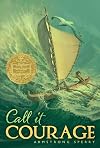
I remember reading this book years ago for school. Our copy doesn’t have a particularly inspiring cover, so I wasn’t sure if I would like it or not, but as soon as I got into it, I realized the cover was misleading. I loved it!
More recently, when my siblings wanted me to read a book to them one day, we chose this one…and ended up finishing it the same day. This is a gripping read! I love the way it showcases history and how people lived in the past, while also illustrating what it show more means to be courageous and push yourself outside your comfort zone.
This isn’t an easy story, in some ways—Mafatu faced some very difficult circumstances, and then there are (vague) allusions to horrific worship practices that were not uncommon back then. There are also quite a few mentions of Polynesian gods, as this book is based on a legend that was formed long before any Christian missionaries got to the area.
Overall, though, it’s a great book. It has become a family favorite, one of those books that if someone mentions the title, everyone’s eyes light up. “Yes, that one!”. In my opinion, everyone should read this at least once in their lives. It’s a short, sharp, impactful story, and I’m grateful my mom introduced me to it when I was a child. show less
More recently, when my siblings wanted me to read a book to them one day, we chose this one…and ended up finishing it the same day. This is a gripping read! I love the way it showcases history and how people lived in the past, while also illustrating what it show more means to be courageous and push yourself outside your comfort zone.
This isn’t an easy story, in some ways—Mafatu faced some very difficult circumstances, and then there are (vague) allusions to horrific worship practices that were not uncommon back then. There are also quite a few mentions of Polynesian gods, as this book is based on a legend that was formed long before any Christian missionaries got to the area.
Overall, though, it’s a great book. It has become a family favorite, one of those books that if someone mentions the title, everyone’s eyes light up. “Yes, that one!”. In my opinion, everyone should read this at least once in their lives. It’s a short, sharp, impactful story, and I’m grateful my mom introduced me to it when I was a child. show less
I had read this title a few years ago & refreshed it in my mind with the book on CD. It is an effective fable, set in a mythical Polynesia with the 10-year-old Mafatu at its center. The elevated language and the brief simplicity of this moral tale makes for an inspiring, old-fashioned good read for a variety of readers. Any reader might enjoy the excitement of this coming-of-age adventure wherein the young protagonist, frightened of the sea since it took his mother years ago, braves the show more elements, survives near starvation, thirst, solitude alleviated only by his beloved dog & a tame albatross. He learns to rely on the “womanly” skills he developed while ostracized, as well as patiently taking charge of his means of escape by whetting stone into knives & using them to build a canoe & make a mast and sail, and eventually returning home with a necklace of boar’s teeth emphasizing his apparent triumph.
Because of its age, the book employs outdated conventions like the simplistic portrayal of a complex cultures as Rousseauian noble savages or as bloodthirsty black savages.
Nonetheless, I was just thinking that I needed to start reading my way through the Newbery winners of the past and am pleased to see that this is the one from 1941. show less
Because of its age, the book employs outdated conventions like the simplistic portrayal of a complex cultures as Rousseauian noble savages or as bloodthirsty black savages.
Nonetheless, I was just thinking that I needed to start reading my way through the Newbery winners of the past and am pleased to see that this is the one from 1941. show less

Very rich story. Interesting descriptions of making the materials of a Polynesian life - weapons, tools, canoe, cloth, fire... The story is very simple, and the end is pretty much obvious from the start - though I wasn't sure the dog would make it through. Nice, and interesting. I may want to reread it sometime - though it's a very thin book, wouldn't be hard to memorize even.
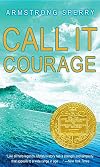
Mafatu grows up on the Polynesian island of Hakaeru, where the people worship courage. The only problem, is he's a huge scaredy-cat of the ocean ever since he and his mother went out in a boat and she died in a storm while bringing him to safety. Sick of the jeers of the others, he runs off in a canoe determined to find his courage.
This slight novel is told as a fable and survival story. The noble savage and cannibals, the moralistic pat-me-on-the-head narrator were irritating to me as an show more adult, 21st-century reader, though I realize both were of its time (and, in fact, in portrayal of another culture a bit ahead of its time). I'm not a huge reader of survival narratives, and as an adult it was really clear to me that Mafatu really was brave, he just had to find it out for himself. So this was just an okay read for me. show less
This slight novel is told as a fable and survival story. The noble savage and cannibals, the moralistic pat-me-on-the-head narrator were irritating to me as an show more adult, 21st-century reader, though I realize both were of its time (and, in fact, in portrayal of another culture a bit ahead of its time). I'm not a huge reader of survival narratives, and as an adult it was really clear to me that Mafatu really was brave, he just had to find it out for himself. So this was just an okay read for me. show less
Lists
Awards


You May Also Like


Associated Authors
Statistics
- Works
- 39
- Also by
- 29
- Members
- 9,266
- Popularity
- #2,599
- Rating
- 3.7
- Reviews
- 73
- ISBNs
- 99
- Languages
- 4