
Marie Under (1883–1980)
Author of Mu süda laulab : luuletusi kolmeteistkümnest kogust
About the Author
Image credit: Max Heixner. 1899.
Works by Marie Under
Valitud luuletused 3 copies
Uneretk 3 copies
Marie Under : [luuletused] 1 copy
Valitud luuletused 1 copy
Ääremail 1 copy
Rõõm ühest ilusast päevast 1 copy
Kogutud luuletused 1 copy
Sädemed tuhas 1 copy
Associated Works
Tagged
Common Knowledge
- Canonical name
- Under, Marie
- Birthdate
- 1883-03-27
- Date of death
- 1980-09-25
- Gender
- female
- Relationships
- Adson, Artur (husband)
- Nationality
- Estonia (birth)
- Burial location
- Skogskyrkogården (Woodland Cemetery), Stockholm, Sweden
- Associated Place (for map)
- Stockholm, Sweden
Members
Reviews
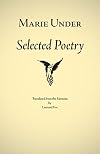
The 2 stars is for the Kindle reading experience which may be an unjust rating as I actually read this on a laptop where it was quite frustrating. It perhaps works better on an actual Kindle.
When you are fortunate enough to know both languages, much of the joy of a bilingual edition is to be able to compare the original and the translation side by side so as to better appreciate how the translator has dealt with the actual word by word translation. In the case of poetry it is also to see how show more the metre and rhyming may have been managed in translation if that was possible.
So in this format it is not possible (or it is a trick unknown to me) to view the originals and the translations side by side. It actually becomes quite confusing as in the case of multi-page poems you read 1 page of the original then 1 page of the translation, then a further 2nd page of the original and then a further 2nd page of the translation etc. without being able get a sense of the full structure. Several typos in both the original e.g. "Sn laud" (s/b "Su laud" (Your table)) and the translation (e.g. "frangrance" "brighteness") did not give a lot of confidence in the quality control.
Leonard Fox is an Estonian translator previously unknown to me, but the actual word by word translations did all seem accurate. Unfortunately the lyrical magic of Marie Under's poetry seems to be lost in English. It was still mostly a pleasure to read though.
There was a crowd-funder several years ago at Hooandja, the Estonian version of Kickstarter/IndieGoGo etc.) which was to fund the translation of both Marie Under's biography by Sirje Kiin and an English translation of her poetry by Ilmar Lehtpere. Presumably this book is not the result of that project although an excellent Introduction by Sirje Kiin is included here. Hopefully there is more to come to help propagate the works of Marie Under.
Links
A link to the Hooandja crowd-funder from 2013 is here: https://www.hooandja.ee/en/projekt/marie-underi-eluloo-ja-luule-inglise-keelde-t...
A related article from 2013 about the crowd-funder project is here: http://estonianworld.com/culture/a-mission-to-translate-marie-under-estonias-mos...
An updated article from 2018 with additional Marie Under poetry translations (not from this current above book) is available here: http://estonianworld.com/culture/six-poems-estonian-poet-marie/ show less
When you are fortunate enough to know both languages, much of the joy of a bilingual edition is to be able to compare the original and the translation side by side so as to better appreciate how the translator has dealt with the actual word by word translation. In the case of poetry it is also to see how show more the metre and rhyming may have been managed in translation if that was possible.
So in this format it is not possible (or it is a trick unknown to me) to view the originals and the translations side by side. It actually becomes quite confusing as in the case of multi-page poems you read 1 page of the original then 1 page of the translation, then a further 2nd page of the original and then a further 2nd page of the translation etc. without being able get a sense of the full structure. Several typos in both the original e.g. "Sn laud" (s/b "Su laud" (Your table)) and the translation (e.g. "frangrance" "brighteness") did not give a lot of confidence in the quality control.
Leonard Fox is an Estonian translator previously unknown to me, but the actual word by word translations did all seem accurate. Unfortunately the lyrical magic of Marie Under's poetry seems to be lost in English. It was still mostly a pleasure to read though.
There was a crowd-funder several years ago at Hooandja, the Estonian version of Kickstarter/IndieGoGo etc.) which was to fund the translation of both Marie Under's biography by Sirje Kiin and an English translation of her poetry by Ilmar Lehtpere. Presumably this book is not the result of that project although an excellent Introduction by Sirje Kiin is included here. Hopefully there is more to come to help propagate the works of Marie Under.
Links
A link to the Hooandja crowd-funder from 2013 is here: https://www.hooandja.ee/en/projekt/marie-underi-eluloo-ja-luule-inglise-keelde-t...
A related article from 2013 about the crowd-funder project is here: http://estonianworld.com/culture/a-mission-to-translate-marie-under-estonias-mos...
An updated article from 2018 with additional Marie Under poetry translations (not from this current above book) is available here: http://estonianworld.com/culture/six-poems-estonian-poet-marie/ show less

First Flowering
Review of the original Siuru (1917) edition in facsimile
The Siurulind (Siuru Bird) is a fire-bird in Finno-Ugric mythology. It inspired the name of both the Siuru literary movement and its publishing moniker. Marie Under (1883-1980) was the movement's leader and its only female member and her book of sonnets Sonetid with poems collected from 1912-1917 was its first publication.
It is still somewhat of a shock to read the passionate poetry of Under's youth from over a hundred show more years ago and to imagine the reactions of the non-bohemian society at the time. In that late Tsarist era it was probably only the political turmoil of the time that prevented the censors from stopping publication altogether. Helged sonetid I (Bright Sonnets I) is probably the most notorious of the early erotic works, and my poor attempt to translate it is below. I can't match the metre or the rhyme of the original, but I think the meaning comes through easily enough.
An excellent summary of Under's early work and the reaction to it is below:
Trivia and Links
You can read a 2017 article by Elle-Mari Talivee about Marie Under and the Siuru Literary Movement at the Estonian Literary Magazine (ELM).
The original Estonian edition of Sonetid (1917) by Marie Under is available to view online as both a facsimile & an html edition and also as a downloadable eBook at the Kreutzwaldi sajand (Kreutzwald Centenary) website. show less
Review of the original Siuru (1917) edition in facsimile
The Siurulind (Siuru Bird) is a fire-bird in Finno-Ugric mythology. It inspired the name of both the Siuru literary movement and its publishing moniker. Marie Under (1883-1980) was the movement's leader and its only female member and her book of sonnets Sonetid with poems collected from 1912-1917 was its first publication.
It is still somewhat of a shock to read the passionate poetry of Under's youth from over a hundred show more years ago and to imagine the reactions of the non-bohemian society at the time. In that late Tsarist era it was probably only the political turmoil of the time that prevented the censors from stopping publication altogether. Helged sonetid I (Bright Sonnets I) is probably the most notorious of the early erotic works, and my poor attempt to translate it is below. I can't match the metre or the rhyme of the original, but I think the meaning comes through easily enough.
Your fingers wandered in the silk of my blouse,
Then the cloth from the brooch was released.
And like a blossom a white shoulder emerged,
As from the shirt the breast swelled to be loose:
The passionate heat of your gaze cried out,
As if you were to cancel the debt of love:
The body slid from under the snow-white dress
No part of me is left covered anymore.
From head to toes the passion stripped me.
As through a veil with half-closed eyes
I saw you standing there aquiver,
Admiring the beauty of my body.
Then suddenly desire's flame ignited both of us:
And I fell lost into your arms. - translated from Helged sonetid I from Sonetid
An excellent summary of Under's early work and the reaction to it is below:
"Under’s youthful poems are predominantly classical in style, but by relaxing adherence to strict structural rules, she succeeded in achieving spontaneity of rhythm even in the most demanding forms. Under’s emphatically feminine imagery is baroquely decorative and derived from the boudoir, saturated with perfumes, colors, flora, especially flowers, and sensual shadings of mood. The basic theme is the radiant ecstasy of love and the rapture of passionate surrender. Under’s love and nature poetry, intense in feeling and graphic in depiction, shocked the contemporary bourgeois public with its erotic explicitness and its almost narcissistic self-absorption. Among younger, more liberal readers, however, her poetry immediately became enormously popular. Sonetid was reprinted three times in 1917, a rare occurrence for that time in Estonia." – Sirje Kiin, from the Introduction to Marie Under: Selected Poetry (2016)
Trivia and Links
You can read a 2017 article by Elle-Mari Talivee about Marie Under and the Siuru Literary Movement at the Estonian Literary Magazine (ELM).
The original Estonian edition of Sonetid (1917) by Marie Under is available to view online as both a facsimile & an html edition and also as a downloadable eBook at the Kreutzwaldi sajand (Kreutzwald Centenary) website. show less
Luule by Marie Under

Mulle meeldivad peaaegu kõik Underi luulekogud. Kõige enam meeldivad luuletused, mis räägivad loodusest, sest need on nii siirad ja tõetruud. Põnevad on ka luuletused, mis põhinevad mingitel legendidel või pärimustel. Vist on üheks selliseks luulekoguks "Õnnevarjutus." Näiteks luuletus "Porkuni preili" põhineb legendil.
Luule by Marie Under
Marie Underi luule on väga mitmekesine.
Tema varasemad luuletused räägivad armastusest, tunnetest ja loodusest. Ta võtab oma luules vastu eluküllust, rõõmu, õitsemist kui ka erootikat.
Ajaluule perioodil, aga kadus Underi luulest ära elurõõm. Ta hakkas kirjutama kaose-ja katatroofi luulet. Võib öelda, et tema luulet mõjutas väga palju sõda.
Underi luulel oli palju erinevaid perioode veel.
Tema varasemad luuletused räägivad armastusest, tunnetest ja loodusest. Ta võtab oma luules vastu eluküllust, rõõmu, õitsemist kui ka erootikat.
Ajaluule perioodil, aga kadus Underi luulest ära elurõõm. Ta hakkas kirjutama kaose-ja katatroofi luulet. Võib öelda, et tema luulet mõjutas väga palju sõda.
Underi luulel oli palju erinevaid perioode veel.
You May Also Like
Associated Authors
Statistics
- Works
- 37
- Also by
- 1
- Members
- 75
- Popularity
- #235,803
- Rating
- 3.7
- Reviews
- 5
- ISBNs
- 24
- Languages
- 3