
Cary Fagan
Author of Mr. Zinger's Hat
About the Author
Image credit: openbooktoronto.com
Series
Works by Cary Fagan
Tagged
Common Knowledge
- Birthdate
- 1957
- Gender
- male
- Nationality
- Canada
- Places of residence
- Toronto, Ontario, Canada
- Associated Place (for map)
- Ontario, Canada
Members
Reviews
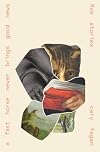
I am more familiar with Cary Fagan’s books for children than his works for an adult audience, but I’m always interested in what he is up to. His is an unusual sensibility: observant, sometimes philosophical, tending toward the zany, absurd, and unexpected—basically off-kilter. In this collection of five stories—unlike My Life Among the Apes (a more conventional work of short fiction, which I read years ago but didn’t review)—Fagan’s quirky, playful side is in full swing.
The show more first piece, my favourite, “The Big Story,” focuses on a group of five businesspeople (some known to each other, some not) dining together in a restaurant. The main topic over dinner is “the big story,” a matter which everyone’s posting about on social media. One of the diners explains to the uninformed but curious narrator: It’s “a theory that’s going around”—some regard it as a “truth”—that every person has a story from childhood that explains him in the deepest most essential way. Of course, people can have childhood anecdotes, but the big story is different because it explains why they have grown into the adults they are.
The unnamed narrator is skeptical. She finds the idea simplistic—a single story?—and asks the most ardent proponent of the theory to tell her big story. The woman does, as do two of the others seated at the table. (The fourth claims he has no such story and is dismissed as lacking the requisite self-reflectiveness.)
The stories told are believed by the tellers to explain their psychological makeup—whether it be a deep fear of abandonment, an overall sense of confidence and safety in the face of tribulation, a decision to never again play the musical instrument that was once so passionately loved. However, even after hearing all these tales, the narrator remains doubtful. Asked to offer her own big story, she tells a fanciful tale of something that happened when she was eighta family, whom she alone could see, moved into and lived in a nearby tree, staying from late spring and until autumn The narrator declines to explain the life-changing impact of the “event,” leaving the dinner guests and the reader to speculate. Is the story testimony to the power of imagination in childhood? Was it playfully invented at the dinner table to underscore the absurdity of the idea that a single story can offer a key to understanding a whole life? Perhaps the narrator was testing the gullibility of her audience. Maybe it was told with some other purpose entirely. Whatever the case, walking away from the restaurant, the narrator reflects, “Doesn’t every story change something?” One wonders if the teller changed any of the minds of the listeners. I have to say it got me thinking about explanatory stories, and I had an interesting conversation with a family member who also weighed in with a few tales of formative experiences.
The other four stories in Fagan’s collection match the first in creativity and playfulness. “Indivisible Property” concerns a young couple splitting up after three years of living together. Their pets, a dog and a cat, will stay with the original owners. Once settled in their new lodgings with their respective companion animals, both the man and the woman wonder if they’re going mad when their pets begin to speak to them, often saucily or sharply, in English. This is a light, fun story, with a delightful twist.
The third story, “Higher and Higher,” follows the journey of a book (Fagan’s own folktale-like novel, The Animals, from 2022) as it passes through the hands of several people in New York City, until the wind itself seizes and scatters the pages. In “Muswell Hill,” set in a London suburb in 1978, an eccentric and persnickety boarder—with a very little life—takes excessive interest in his thirty-five-year-old landlady’s adulterous carryings-on with another of her boarders, a Canadian student.
For me, “The Musicianers,” the final and longest story, was the least satisfying of the lot. Set in southern Saskatchewan in the late nineteenth century, it concerns three musical brothers on the run after committing a crime in their hometown of Asheville, North Carolina. Starving, one of them kills a Swedish farmer’s prized milk cow. To pay off their debt, the brothers work for the Shakespeare-quoting Scandinavian immigrant and each takes a fancy to one of his three daughters: Desdemona, Juliet, and Cordelia. Yes, the tale is inventive and clever at times (I loved the Shakespeare!), but I’m afraid I mostly found it silly, a little too “Three Stooges” for my taste, and very long.
Overall, I enjoyed Fagan’s recent offering and found it a pleasant diversion from the more serious somber literary fiction I’ve read of late.
Rating: 3.5 rounded down show less
The show more first piece, my favourite, “The Big Story,” focuses on a group of five businesspeople (some known to each other, some not) dining together in a restaurant. The main topic over dinner is “the big story,” a matter which everyone’s posting about on social media. One of the diners explains to the uninformed but curious narrator: It’s “a theory that’s going around”—some regard it as a “truth”—that every person has a story from childhood that explains him in the deepest most essential way. Of course, people can have childhood anecdotes, but the big story is different because it explains why they have grown into the adults they are.
The unnamed narrator is skeptical. She finds the idea simplistic—a single story?—and asks the most ardent proponent of the theory to tell her big story. The woman does, as do two of the others seated at the table. (The fourth claims he has no such story and is dismissed as lacking the requisite self-reflectiveness.)
The stories told are believed by the tellers to explain their psychological makeup—whether it be a deep fear of abandonment, an overall sense of confidence and safety in the face of tribulation, a decision to never again play the musical instrument that was once so passionately loved. However, even after hearing all these tales, the narrator remains doubtful. Asked to offer her own big story, she tells a fanciful tale of something that happened when she was eight
The other four stories in Fagan’s collection match the first in creativity and playfulness. “Indivisible Property” concerns a young couple splitting up after three years of living together. Their pets, a dog and a cat, will stay with the original owners. Once settled in their new lodgings with their respective companion animals, both the man and the woman wonder if they’re going mad when their pets begin to speak to them, often saucily or sharply, in English. This is a light, fun story, with a delightful twist.
The third story, “Higher and Higher,” follows the journey of a book (Fagan’s own folktale-like novel, The Animals, from 2022) as it passes through the hands of several people in New York City, until the wind itself seizes and scatters the pages. In “Muswell Hill,” set in a London suburb in 1978, an eccentric and persnickety boarder—with a very little life—takes excessive interest in his thirty-five-year-old landlady’s adulterous carryings-on with another of her boarders, a Canadian student.
For me, “The Musicianers,” the final and longest story, was the least satisfying of the lot. Set in southern Saskatchewan in the late nineteenth century, it concerns three musical brothers on the run after committing a crime in their hometown of Asheville, North Carolina. Starving, one of them kills a Swedish farmer’s prized milk cow. To pay off their debt, the brothers work for the Shakespeare-quoting Scandinavian immigrant and each takes a fancy to one of his three daughters: Desdemona, Juliet, and Cordelia. Yes, the tale is inventive and clever at times (I loved the Shakespeare!), but I’m afraid I mostly found it silly, a little too “Three Stooges” for my taste, and very long.
Overall, I enjoyed Fagan’s recent offering and found it a pleasant diversion from the more serious somber literary fiction I’ve read of late.
Rating: 3.5 rounded down show less

Thing-Thing was neither a Teddy bear nor a rabbit; not a stuffed dog or cat. It was something like each of those, and nothing at all you could name. But it had something special. It had the hope that one day it would find a child to love it and talk to it and make it tea parties and take it to bed. A child it could love back.
Certainly Archibald Crimp was not that child. He had just thrown Thing-Thing out the open sixth-floor window of the Excelsior Hotel.
Oh, dear, thought Thing-Thing to show more itself. This is bad, this is very bad. show less
Certainly Archibald Crimp was not that child. He had just thrown Thing-Thing out the open sixth-floor window of the Excelsior Hotel.
Oh, dear, thought Thing-Thing to show more itself. This is bad, this is very bad. show less

Schoolgirl Andie Gladman has unusual parents. Tired of working for other people, they left their jobs in Toronto for a fresh start and a simpler, more independent life in Meaford, Ontario near Georgian Bay. After unsuccessful attempts at soap-making and wedding-cake baking, they chanced upon a third idea that would prove to be the charm. Their daughter Andie’s pet gecko, Zilla, required a diet of crickets, but pet shops in the region had an ongoing problem sourcing the insects. The show more Gladmans decided to create a soundproof cricket hatchery in their basement and distribute their product to many regional pet shops, eventually sidelining into high-fibre, high-protein “choco-cricks.”
Andie doesn’t dare tell classmates what her mum and dad do for a living. If asked, she says that they “farm.” Andie, an imaginative and slightly eccentric girl, has an arch-nemesis: Myrtle Klinghoffer. Myrtle is big: she has a big head, big hands, big feet, and an exceptionally big mouth. Her very loud voice is used to belittle others, and Andie is the preferred target. Myrtle never harasses Andie directly; rather, she addresses the other students as though they are in on the joke with her. Intimidated, they comply with mean Myrtle’s unspoken rules and avoid Andie.
Life changes for the main character when a new neighbour moves into the house next door. He’s a very thin, very tall man who leans forward like a stork when he walks. He also looks remarkably familiar. When he puts the sticky letters H, C, A on his mailbox, Andie convinces herself that he is none other than Hans Christian Andersen. In the book’s opening pages, Andie assures the reader she’s not “a dimwit” most of the time. The question this novel answers is how she could have believed something that is patently untrue.
Author Cary Fagan charms his young readers by providing Andie with a wonderfully neurotic friend, the orange-haired, freckle-faced, and very allergic Newton Newsom, a new boy at school so preoccupied with recording his future life plans in a little notebook that the existence of Myrtle Klinghoffer barely registers. The reader also gets to enjoy Andie’s often hilarious poems, inspired by Andersen’s tales—among them: The Emperor’s New Clothes, The Princess and the Pea, The Ugly Duckling, The Nightingale, and The Steadfast Tin Soldier. Andie gets to know her new neighbour, HCA, by reading her verses to him. Interestingly, he plays along with her, accepting her “persistent” friendship, assuming the role of the famous Danish writer of fairytales, and absorbing Andie’s ire about his having written such a grim and heartbreaking tale as The Little Matchgirl.
Things come to a head, however, when Andie brings HCA—the famous writer!—to school as a career-day guest. As one might imagine, Myrtle Klinghoffer has a great deal to say about this. Andie retaliates in an uncharacteristically aggressive way, ends up suspended, and is forced to confront the reasons why she has been so willing to deceive herself by falling into fantasy.
With Chelsea O’Byrne’s attractive ink drawings (reminiscent of Edward Gorey’s) and an accessible text, this is a very nice little middle-grade novel. Needless to say, I think it would be most appreciated by kids already familiar with Andersen’s stories. It might, however, prompt a few to seek them out.
You really can’t go wrong with Cary Fagan.
Rating: 3.5 rounded down. show less
Andie doesn’t dare tell classmates what her mum and dad do for a living. If asked, she says that they “farm.” Andie, an imaginative and slightly eccentric girl, has an arch-nemesis: Myrtle Klinghoffer. Myrtle is big: she has a big head, big hands, big feet, and an exceptionally big mouth. Her very loud voice is used to belittle others, and Andie is the preferred target. Myrtle never harasses Andie directly; rather, she addresses the other students as though they are in on the joke with her. Intimidated, they comply with mean Myrtle’s unspoken rules and avoid Andie.
Life changes for the main character when a new neighbour moves into the house next door. He’s a very thin, very tall man who leans forward like a stork when he walks. He also looks remarkably familiar. When he puts the sticky letters H, C, A on his mailbox, Andie convinces herself that he is none other than Hans Christian Andersen. In the book’s opening pages, Andie assures the reader she’s not “a dimwit” most of the time. The question this novel answers is how she could have believed something that is patently untrue.
Author Cary Fagan charms his young readers by providing Andie with a wonderfully neurotic friend, the orange-haired, freckle-faced, and very allergic Newton Newsom, a new boy at school so preoccupied with recording his future life plans in a little notebook that the existence of Myrtle Klinghoffer barely registers. The reader also gets to enjoy Andie’s often hilarious poems, inspired by Andersen’s tales—among them: The Emperor’s New Clothes, The Princess and the Pea, The Ugly Duckling, The Nightingale, and The Steadfast Tin Soldier. Andie gets to know her new neighbour, HCA, by reading her verses to him. Interestingly, he plays along with her, accepting her “persistent” friendship, assuming the role of the famous Danish writer of fairytales, and absorbing Andie’s ire about his having written such a grim and heartbreaking tale as The Little Matchgirl.
Things come to a head, however, when Andie brings HCA—the famous writer!—to school as a career-day guest. As one might imagine, Myrtle Klinghoffer has a great deal to say about this. Andie retaliates in an uncharacteristically aggressive way, ends up suspended, and is forced to confront the reasons why she has been so willing to deceive herself by falling into fantasy.
With Chelsea O’Byrne’s attractive ink drawings (reminiscent of Edward Gorey’s) and an accessible text, this is a very nice little middle-grade novel. Needless to say, I think it would be most appreciated by kids already familiar with Andersen’s stories. It might, however, prompt a few to seek them out.
You really can’t go wrong with Cary Fagan.
Rating: 3.5 rounded down. show less
“What I’ve realized is you never know what will happen next.”
Thirteen-year-old Hartley Staples’s troubled brother, Jackson, disappeared nine months ago. It isn’t the first time he’s run away. Jackson made previous escapes when he was eleven and fourteen, but those attempts, being of shorter duration, did not shake the family’s foundations the way this one has. Jackson’s twin sister, Heather, has withdrawn from the world. The youngest Staples child, George, is the least show more troubled. His quirky imagination helps him bob along, like a cork in a river. Hartley’s parents are so distraught over their eldest son’s disappearance, they barely notice Hartley exists.
To make matters worse, Hartley’s best friend, Zack, has also withdrawn from him. Like many people, Ms. Mirani, Zack’s mother, thinks other people’s misfortune is contagious. The Miranis were initially supportive of Hartley’s family, but then they abruptly distanced themselves. Hartley had phoned over for his friend one day and got Mrs. Marini instead. “Zack is a special boy,” she told Hartley, “he needs to surround himself with positive influences.” For people to succeed in life, she added, they have to cut out all the negative influences in their lives—and even it means being ruthless. Still, she really did wish Hartley’s family the best; the Staples would remain foremost in the Marinis’ “positive thoughts.”
The story proper opens one Saturday afternoon when Hartley slips unnoticed out of the family home. With nothing better to do, he goes to the Whirton Library, housed in a mobile home. The Whirton Library, aka “the Place Where Books Go to Die,” has no budget. Its stacks are filled with cast-offs, donations direct from musty basements of family homes: lots of paperback romances, true crime, and an almost complete set of a magazine called Funeral Service Monthly. Looking for something in teen fiction that isn’t “about a kid whose mother was dying or father was dying or whose mother, father, or girlfriend . . . [has] been turned into a zombie,” Hartley finds, sticking up from the pages of a book, the first of nine post-card sized artworks, each a small collage with enigmatic poetry formed of cut-out type and signed. “g.o.”. This one reads—all in lower case: “i hate all kinds of flags except pirate flags.” In the following weeks, the last few of the school year, Hartley finds more of these cards—stuck in trees, between bicycle wheel spokes, and in fences. He carefully stores them in a small tin box, with a view to presenting them to his missing brother, should he ever return. Hartley also does his best to search out the identity of the elusive artist poet who is planting them.
Another of Hartley’s challenges in these last days before he graduates from elementary school is to research a topic of his own choosing. Ms. Gorham, Hartley’s sensitive and sympathetic grade-eight teacher, is willing to allow him to forego this assignment. She is as aware as the next person in Whirton that it is hard for Hartley to feel passionate about anything given the worry over his brother’s disappearance. However, the boy will accept no special treatment. When pressed about the subject of his project, he is as surprised as his teacher to hear himself blurt the word “tractors”. What?! Where did that idea come from?
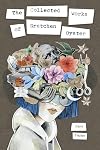
Hartley’s only real passion at this point is, of course, finding “g.o.” who, as the title of Fagan’s book announces, is actually Gretchen Oyster. Gretchen has a story of her own, which the reader gains real satisfaction in eventually coming to know.
I love Cary Fagan’s unconventional writing, the unique sensibility and sensitivity that informs it. I don’t know how he does it. His books for children are works of some depth, yet they are also characterized by humour and a remarkable lightness of touch. They are probably not for everybody, but they are special gifts to those of us who appreciate something different.
I enjoyed this book and I’m very grateful to the publisher for providing me with a free copy of it to review. show less
Thirteen-year-old Hartley Staples’s troubled brother, Jackson, disappeared nine months ago. It isn’t the first time he’s run away. Jackson made previous escapes when he was eleven and fourteen, but those attempts, being of shorter duration, did not shake the family’s foundations the way this one has. Jackson’s twin sister, Heather, has withdrawn from the world. The youngest Staples child, George, is the least show more troubled. His quirky imagination helps him bob along, like a cork in a river. Hartley’s parents are so distraught over their eldest son’s disappearance, they barely notice Hartley exists.
To make matters worse, Hartley’s best friend, Zack, has also withdrawn from him. Like many people, Ms. Mirani, Zack’s mother, thinks other people’s misfortune is contagious. The Miranis were initially supportive of Hartley’s family, but then they abruptly distanced themselves. Hartley had phoned over for his friend one day and got Mrs. Marini instead. “Zack is a special boy,” she told Hartley, “he needs to surround himself with positive influences.” For people to succeed in life, she added, they have to cut out all the negative influences in their lives—and even it means being ruthless. Still, she really did wish Hartley’s family the best; the Staples would remain foremost in the Marinis’ “positive thoughts.”
The story proper opens one Saturday afternoon when Hartley slips unnoticed out of the family home. With nothing better to do, he goes to the Whirton Library, housed in a mobile home. The Whirton Library, aka “the Place Where Books Go to Die,” has no budget. Its stacks are filled with cast-offs, donations direct from musty basements of family homes: lots of paperback romances, true crime, and an almost complete set of a magazine called Funeral Service Monthly. Looking for something in teen fiction that isn’t “about a kid whose mother was dying or father was dying or whose mother, father, or girlfriend . . . [has] been turned into a zombie,” Hartley finds, sticking up from the pages of a book, the first of nine post-card sized artworks, each a small collage with enigmatic poetry formed of cut-out type and signed. “g.o.”. This one reads—all in lower case: “i hate all kinds of flags except pirate flags.” In the following weeks, the last few of the school year, Hartley finds more of these cards—stuck in trees, between bicycle wheel spokes, and in fences. He carefully stores them in a small tin box, with a view to presenting them to his missing brother, should he ever return. Hartley also does his best to search out the identity of the elusive artist poet who is planting them.
Another of Hartley’s challenges in these last days before he graduates from elementary school is to research a topic of his own choosing. Ms. Gorham, Hartley’s sensitive and sympathetic grade-eight teacher, is willing to allow him to forego this assignment. She is as aware as the next person in Whirton that it is hard for Hartley to feel passionate about anything given the worry over his brother’s disappearance. However, the boy will accept no special treatment. When pressed about the subject of his project, he is as surprised as his teacher to hear himself blurt the word “tractors”. What?! Where did that idea come from?
Hartley’s only real passion at this point is, of course, finding “g.o.” who, as the title of Fagan’s book announces, is actually Gretchen Oyster. Gretchen has a story of her own, which the reader gains real satisfaction in eventually coming to know.
I love Cary Fagan’s unconventional writing, the unique sensibility and sensitivity that informs it. I don’t know how he does it. His books for children are works of some depth, yet they are also characterized by humour and a remarkable lightness of touch. They are probably not for everybody, but they are special gifts to those of us who appreciate something different.
I enjoyed this book and I’m very grateful to the publisher for providing me with a free copy of it to review. show less
 This review was written for LibraryThing Early Reviewers.
Lists
Awards


You May Also Like


Associated Authors
Statistics
- Works
- 63
- Members
- 1,571
- Popularity
- #16,432
- Rating
- 3.9
- Reviews
- 210
- ISBNs
- 174
- Languages
- 6
