
M. Terry Green
Author of Shaman, Healer, Heretic
About the Author
Series
Works by M. Terry Green
Iced (Chronicles of White World Book 1): A Dystopian Science-Fiction Thriller (2015) 7 copies, 2 reviews
Tagged
Common Knowledge
There is no Common Knowledge data for this author yet. You can help.
Members
Reviews

Olivia Lawson ("Livvy") is a twenty-something techno-shaman, a medium that connects with the spirit world but relies on technology, rather than hallucinogens or other drugs, to get there. She uses her craft to heal people, though the pay isn't very good. Skeptics treat her with cynicism at best; violence at worst. One morning she's contacted by a kachina, a spirit being of southwestern US Native American cultures. Such a visit is supposed to be impossible.
While Livvy attempts to figure out show more why she's being contacted by a Hopi Indian god, trouble is brewing in the physical and spirit worlds. Her clients and friends are threatened while other shamans disdain her practice. Once people start dying, Livvy finds herself under assault from all sides, including an ancient being longing to wreak havoc upon the world.
M. Terry Green draws upon her archaeology background to craft a highly believable world where shamanism thrives in contemporary Los Angeles. Green introduces us to this world through Livvy and her agent, SK, a dwarf. We accompany Livvy as she heals those too poor or desperate to utilize modern medicine. A former medical student herself, Livvy barely scrapes by on what people can afford to pay for her services. When Livvy encounters a problem that neither she nor SK can answer, we are brought deeper into this world and meet other shamans.
It is through these latter encounters that Green's talent at developing diverse characters comes to light. Each of the shamans is distinctly different from the others in both her skills and personality. We also learn that this is a very territorial business and "sisterhood" is a concept that is secondary to a profitable enterprise.
Short chapters and an active dialogue move the story along at a quick pace. Green crams so much into Livvy's days, and thus the story, that she wears the poor girl out! The reader feels her fatigue.
Although Green isn't marketing this as a Young Adult novel, there's very little here that would preclude it from being read by a teen. There's no foul language, no sex (a couple of kisses), and only one incident involving alcohol. And the latter was definitely portrayed in a non-glamorous light. I think that teen girls would be able to relate to Livvy and her struggle with self-doubt, not to mention her love life.
As for the technicals, Green hired an editor so the quality of the manuscript is at a professional level. It made for very easy reading. Let that be a lesson to all of you indie authors out there!
Shaman, Healer, Heretic by M. Terry Green is an enjoyable read. Green provides us with a diverse group of realistic characters and is adept at creating a highly believable and easy to visualize setting. Her very personable protagonist is a charming guide to Green's Techno-Shaman world and I expect to be seeing more of her adventures in the future. show less
While Livvy attempts to figure out show more why she's being contacted by a Hopi Indian god, trouble is brewing in the physical and spirit worlds. Her clients and friends are threatened while other shamans disdain her practice. Once people start dying, Livvy finds herself under assault from all sides, including an ancient being longing to wreak havoc upon the world.
M. Terry Green draws upon her archaeology background to craft a highly believable world where shamanism thrives in contemporary Los Angeles. Green introduces us to this world through Livvy and her agent, SK, a dwarf. We accompany Livvy as she heals those too poor or desperate to utilize modern medicine. A former medical student herself, Livvy barely scrapes by on what people can afford to pay for her services. When Livvy encounters a problem that neither she nor SK can answer, we are brought deeper into this world and meet other shamans.
It is through these latter encounters that Green's talent at developing diverse characters comes to light. Each of the shamans is distinctly different from the others in both her skills and personality. We also learn that this is a very territorial business and "sisterhood" is a concept that is secondary to a profitable enterprise.
Short chapters and an active dialogue move the story along at a quick pace. Green crams so much into Livvy's days, and thus the story, that she wears the poor girl out! The reader feels her fatigue.
Although Green isn't marketing this as a Young Adult novel, there's very little here that would preclude it from being read by a teen. There's no foul language, no sex (a couple of kisses), and only one incident involving alcohol. And the latter was definitely portrayed in a non-glamorous light. I think that teen girls would be able to relate to Livvy and her struggle with self-doubt, not to mention her love life.
As for the technicals, Green hired an editor so the quality of the manuscript is at a professional level. It made for very easy reading. Let that be a lesson to all of you indie authors out there!
Shaman, Healer, Heretic by M. Terry Green is an enjoyable read. Green provides us with a diverse group of realistic characters and is adept at creating a highly believable and easy to visualize setting. Her very personable protagonist is a charming guide to Green's Techno-Shaman world and I expect to be seeing more of her adventures in the future. show less

As the story opens, Olivia Lawson ("Livvy") has been rewarded for her heroic deeds in Shaman, Healer, Heretic. Shamans are no longer scorned, in fact, they are sought after. Livvy's client list now includes celebrities, who pay her handsomely for her healing powers. This new found prosperity has enabled her to move out of her rat trap and into a luxury apartment. She no longer has to buy her clothes from Goodwill. Her friend and fellow shaman, Min, drives her around in a Porsche. Life is show more good.
Unfortunately, success has brought its share of trouble. The paparazzi hound Livvy whenever possible, particularly when she's visiting one of her celebrity clients. Worse still, her success has earned her the enmity of a dark shaman, Dominique. Green doesn't waste any time establishing the conflict between these two.
Dominique is a well-crafted villain. An immigrant from Haiti, she moved to L.A. to seek a better life utilizing her skills as a shaman. An influx of earthquake refugees from her former homeland hasn't helped matters. The rough life in Haiti has hardened her heart and made her bitter. The world owes her for what she's had to endure. Now in a position of power, the cruelty she once faced now resides within. She figures that if she can eliminate Livvy, she can be the top shaman in L.A. and the money will help her climb out of the ghetto and salve the wounds of her past (and present).
To complicate matters, Livvy is distracted by her relationship with SK (her agent) and a side project in the "forbidden arts". I don't want to say anything more to spoil it for future readers.
After reading Shaman, Healer, Heretic, I felt that it would've been easy for Green to resort to a series formula and churn out twenty variations on the original story. Instead, Green has forged ahead with the next step in Livvy's life as Techno-Shaman. Through Green's hand, Livvy has matured. The innocent little girl persona has given way to a confident young woman who pushes the boundaries of her powers. She's no longer content to accept what she's been told. She doesn't like the rules and wants to break them.
As for the technicals, the quality of the manuscript is at a professional level. It is well-edited, thus making for very easy reading. Short chapters and an active dialogue move the story along at a quick pace. There are no lulls in this story. The action scenes are well choreographed and more intense than in her first novel.
This was a highly enjoyable read. Green's characters have grown in their complexity and realism. Her protagonist and antagonist both harbor painful secrets which fuel their motives and actions in the story. The resolution of their conflict is immensely gratifying for its approach and in its execution. In the hands of a less capable writer, it would've been rendered trite. I highly recommend Shaman, Friend, Enemy, and Green's Techno-Shaman series in general, to all urban fantasy aficionados. show less
Unfortunately, success has brought its share of trouble. The paparazzi hound Livvy whenever possible, particularly when she's visiting one of her celebrity clients. Worse still, her success has earned her the enmity of a dark shaman, Dominique. Green doesn't waste any time establishing the conflict between these two.
Dominique is a well-crafted villain. An immigrant from Haiti, she moved to L.A. to seek a better life utilizing her skills as a shaman. An influx of earthquake refugees from her former homeland hasn't helped matters. The rough life in Haiti has hardened her heart and made her bitter. The world owes her for what she's had to endure. Now in a position of power, the cruelty she once faced now resides within. She figures that if she can eliminate Livvy, she can be the top shaman in L.A. and the money will help her climb out of the ghetto and salve the wounds of her past (and present).
To complicate matters, Livvy is distracted by her relationship with SK (her agent) and a side project in the "forbidden arts". I don't want to say anything more to spoil it for future readers.
After reading Shaman, Healer, Heretic, I felt that it would've been easy for Green to resort to a series formula and churn out twenty variations on the original story. Instead, Green has forged ahead with the next step in Livvy's life as Techno-Shaman. Through Green's hand, Livvy has matured. The innocent little girl persona has given way to a confident young woman who pushes the boundaries of her powers. She's no longer content to accept what she's been told. She doesn't like the rules and wants to break them.
As for the technicals, the quality of the manuscript is at a professional level. It is well-edited, thus making for very easy reading. Short chapters and an active dialogue move the story along at a quick pace. There are no lulls in this story. The action scenes are well choreographed and more intense than in her first novel.
This was a highly enjoyable read. Green's characters have grown in their complexity and realism. Her protagonist and antagonist both harbor painful secrets which fuel their motives and actions in the story. The resolution of their conflict is immensely gratifying for its approach and in its execution. In the hands of a less capable writer, it would've been rendered trite. I highly recommend Shaman, Friend, Enemy, and Green's Techno-Shaman series in general, to all urban fantasy aficionados. show less

3,5 stars
I received this book from the author, in exchange for an honest review.
From the author’s site:
Though she doesn’t know her name, Thirteen is sure of two things: survival and finding her sister. Nothing stands in her way—not the great Pacifica Ice Sheet nor the slavers she escaped—until her deadly hunt takes a maddening turn. The first and only clue in her search is held by the survivor of a wrecked ice ship. But he’s not sharing. He has a daughter to rescue, and he needs show more Thirteen’s help. In the unforgiving subzero, a wary alliance is formed. Although she’d do anything to find her sister and finally know her own name, Thirteen never forgets the first rule of the ice. You only get one mistake—your last.
Sometimes there are books that draw you in from the very first paragraph and don’t let you go until the end, and Iced is indeed one of them. The world depicted here is our world, our Earth, but dramatically altered by some climate change that has transformed it into a ball of ice: no reason is given and yet that hardly matters – whatever happened in the past is unimportant. The focus here is on the aftermath, and the way people have adapted to this radically different – and merciless – world.
People either live in protected cities near volcanoes, drawing heat and energy from the fiery lava boiling underneath, or they move around on the ice in “boats” that use the strong winds as a propulsion force and as a source of power. In such a situation, preying on each other becomes the norm: people either trust the relative safety of a convoy or brave it alone, while slaver crews target the defenseless to supply fresh manpower to city dwellers and the feared Skulls swoop down on everyone to wreak bloody havoc.
Thirteen is one of the loners, and a very peculiar one: that’s not even her name, but just the last two digits of the identification code tattooed on any slave’s back. She hunts for slavers, drawing them in with her unthreatening looks and killing them, in her dogged pursuit for her sister’s whereabouts: that’s how she gained the name of “Ghost”, spoken with hatred by the slavers and whispered in hopeful awe by the exploited. Thirteen is unusual in many ways, appearance being the foremost: frosty hair and eyes, the latter sporting a nictitating membrane, she can blend quite easily into the colorless surroundings in a land where this ability enhances one’s chances for survival. She’s also a cypher, even to herself: it’s quite clear that some parts of her past have been erased – or maybe she chose to forget them – and that pain and anguish have damaged her both in body and spirit, yet she's a fighter and a survivor, not at all inclined to give in to whatever fate deals her. Readers get to know Thirteen – as much as the story allows it – in small increments: she does not speak much and even that little is measured out with enormous reluctance, as Cord will learn the hard way.
He’s the other driving force of this story: a father desperate to find his daughter, abducted by slavers – that’s how he looks on the surface. Yet there are many untapped depths in Cord, not unlike Thirteen, and the tantalizing indications of an interesting past: his basic honesty and integrity play quite well against Thirteen’s wariness, making their alliance a fascinating, if complicated, one. Through Cord, and his recollections of happier times with his daughter Miyu, we also catch glimpses of everyday life in the ice-treading caravans.
Glimpses is also what we get of the way the more fortunate live: the city of Helado, built around a volcano, offers all the creature comforts one could want in that desolate landscape – warmth, food, shelter – but it’s also a place of danger and intrigue, where prince Céfiro, a cold-blooded, psychopathic killer, schemes against the king his father to gain the power he thirsts for. And what about the prophets? A cross between ministers and scientist, they look like the real power behind the throne and the hidden movers and shakers of the world.
These are all compelling hints of a broader story that sees its starting point in this book: that’s what drew me in from the beginning and kept me glued to the pages until the end – an end that left me suspended in mid-air as if over one of the many ice crevasses peppering the landscape. If I wanted to find a negative side in Iced it would be its brevity: it’s over far too soon, and it leaves you with a great amount of frustrated curiosity and too many unanswered questions – and I want to make it clear I consider this a compliment. The sheer believability of this world, the compelling nature of the characters, put their hooks into my imagination, and they will not let go until I know more about them.
To me, that’s the mark of a good, solid story. To say I’m looking forward to the rest of it, would be a massive understatement.
Review on Space and Sorcery show less
I received this book from the author, in exchange for an honest review.
From the author’s site:
Though she doesn’t know her name, Thirteen is sure of two things: survival and finding her sister. Nothing stands in her way—not the great Pacifica Ice Sheet nor the slavers she escaped—until her deadly hunt takes a maddening turn. The first and only clue in her search is held by the survivor of a wrecked ice ship. But he’s not sharing. He has a daughter to rescue, and he needs show more Thirteen’s help. In the unforgiving subzero, a wary alliance is formed. Although she’d do anything to find her sister and finally know her own name, Thirteen never forgets the first rule of the ice. You only get one mistake—your last.
Sometimes there are books that draw you in from the very first paragraph and don’t let you go until the end, and Iced is indeed one of them. The world depicted here is our world, our Earth, but dramatically altered by some climate change that has transformed it into a ball of ice: no reason is given and yet that hardly matters – whatever happened in the past is unimportant. The focus here is on the aftermath, and the way people have adapted to this radically different – and merciless – world.
People either live in protected cities near volcanoes, drawing heat and energy from the fiery lava boiling underneath, or they move around on the ice in “boats” that use the strong winds as a propulsion force and as a source of power. In such a situation, preying on each other becomes the norm: people either trust the relative safety of a convoy or brave it alone, while slaver crews target the defenseless to supply fresh manpower to city dwellers and the feared Skulls swoop down on everyone to wreak bloody havoc.
Thirteen is one of the loners, and a very peculiar one: that’s not even her name, but just the last two digits of the identification code tattooed on any slave’s back. She hunts for slavers, drawing them in with her unthreatening looks and killing them, in her dogged pursuit for her sister’s whereabouts: that’s how she gained the name of “Ghost”, spoken with hatred by the slavers and whispered in hopeful awe by the exploited. Thirteen is unusual in many ways, appearance being the foremost: frosty hair and eyes, the latter sporting a nictitating membrane, she can blend quite easily into the colorless surroundings in a land where this ability enhances one’s chances for survival. She’s also a cypher, even to herself: it’s quite clear that some parts of her past have been erased – or maybe she chose to forget them – and that pain and anguish have damaged her both in body and spirit, yet she's a fighter and a survivor, not at all inclined to give in to whatever fate deals her. Readers get to know Thirteen – as much as the story allows it – in small increments: she does not speak much and even that little is measured out with enormous reluctance, as Cord will learn the hard way.
He’s the other driving force of this story: a father desperate to find his daughter, abducted by slavers – that’s how he looks on the surface. Yet there are many untapped depths in Cord, not unlike Thirteen, and the tantalizing indications of an interesting past: his basic honesty and integrity play quite well against Thirteen’s wariness, making their alliance a fascinating, if complicated, one. Through Cord, and his recollections of happier times with his daughter Miyu, we also catch glimpses of everyday life in the ice-treading caravans.
Glimpses is also what we get of the way the more fortunate live: the city of Helado, built around a volcano, offers all the creature comforts one could want in that desolate landscape – warmth, food, shelter – but it’s also a place of danger and intrigue, where prince Céfiro, a cold-blooded, psychopathic killer, schemes against the king his father to gain the power he thirsts for. And what about the prophets? A cross between ministers and scientist, they look like the real power behind the throne and the hidden movers and shakers of the world.
These are all compelling hints of a broader story that sees its starting point in this book: that’s what drew me in from the beginning and kept me glued to the pages until the end – an end that left me suspended in mid-air as if over one of the many ice crevasses peppering the landscape. If I wanted to find a negative side in Iced it would be its brevity: it’s over far too soon, and it leaves you with a great amount of frustrated curiosity and too many unanswered questions – and I want to make it clear I consider this a compliment. The sheer believability of this world, the compelling nature of the characters, put their hooks into my imagination, and they will not let go until I know more about them.
To me, that’s the mark of a good, solid story. To say I’m looking forward to the rest of it, would be a massive understatement.
Review on Space and Sorcery show less
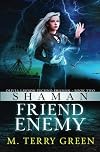
This second volume in the series was even better than the first! Having done the basic world-building in the previous volume, Green can now focus more thoroughly on the plot, and on fleshing out the details in this fascinating urban fantasy world.
I LOVE the way Green handled the "Big Bad" in this- not at all the usual, even though at first it looks like it will be.
The characters grow and develop, too, and are individuals; they all have their own backgrounds, attitudes, and agendas, and as show more the world gets more complex, so do they.
It is interesting to note that, thus far, ALL the shamans are women. This is never mentioned in the text specifically, and I am looking forward to an explanation- although I do love the matter-of-fact way Green does this without making a point of it! And because of this, her novels pass the Bechel Test with flying colors!
Highly recommended, especially if you like urban fantasy and want to branch out from the standard vamp/were tropes. But do yourself a favor and start with the first book in this series! While this one would probably make sense without it, you will miss a lot if you skip directly to #2. show less
I LOVE the way Green handled the "Big Bad" in this- not at all the usual, even though at first it looks like it will be.
The characters grow and develop, too, and are individuals; they all have their own backgrounds, attitudes, and agendas, and as show more the world gets more complex, so do they.
It is interesting to note that, thus far, ALL the shamans are women. This is never mentioned in the text specifically, and I am looking forward to an explanation- although I do love the matter-of-fact way Green does this without making a point of it! And because of this, her novels pass the Bechel Test with flying colors!
Highly recommended, especially if you like urban fantasy and want to branch out from the standard vamp/were tropes. But do yourself a favor and start with the first book in this series! While this one would probably make sense without it, you will miss a lot if you skip directly to #2. show less
You May Also Like


Statistics
- Works
- 10
- Members
- 230
- Popularity
- #97,993
- Rating
- 4.1
- Reviews
- 31
- ISBNs
- 11