
Traci Brimhall
Author of Our Lady of the Ruins: Poems (Barnard Women Poets Prize)
About the Author
Image credit: Author Traci Brimhall at the 2018 Texas Book Festival in Austin, Texas, United States. By Larry D. Moore, CC BY-SA 4.0, https://commons.wikimedia.org/w/index.php?curid=74459054
Works by Traci Brimhall
Associated Works
The Best American Poetry 2014 (The Best American Poetry series) (2014) — Contributor — 89 copies, 1 review
Bodies Built for Game: The Prairie Schooner Anthology of Contemporary Sports Writing (2019) — Contributor — 7 copies
Tagged
Common Knowledge
- Legal name
- Brimhall, Traci
- Birthdate
- 1982
- Occupations
- dichter
docent - Birthplace
- Little Falls, Minnesota, USA
- Places of residence
- Manhattan, Kansas, USA
Members
Reviews
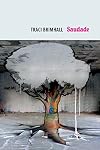
There are poems and collections that resist easy understanding, yet draw the reader in through the senses, structure, and by making brief contact with familiar references. The feeling of longing for persons, for things, for a hand, or even a god that are absent can be felt throughout. Details which can’t necessarily be found in histories are missing. The myths, imagination, and storytelling fill in the gaps – something one of the speakers asserts, saying ‘The end of biography is death show more / . . . / the end of mythology is forgetfulness.’ (from ‘Rapture: Lucus’). There is a connection dependent on memory, for stories to be passed down or at least for this generation to interrogate the past.
Imagery and allusions do not come from one set of myths though much of the animal and plantlife and terrain emerge from Brazil – references to classical ideas such as the Chorus, and to Western Christianity merge with a pre-Christian sense of sacredness leading a speaker to challenge belief, saying ‘They don’t believe you exist / even though they wrap slices of lamb / in the pages of the book you wrote / for the illiterate shepherds’ (from ‘Incomplete Address to the Lord’) and later to speak of an ambivalent god with an ‘ambition / to be free of us’ (from ‘Sanctuary’). The fusion of established ideals into places that precede those ideals challenges the reader to listen rather than assume or impose.
The title poem ‘Saudade’ closes the collection with a Prospero-like monologue, shifting attention from the story to the speaker. Where Prospero asks to be set free, the poet and mythmaker expresses a desire for ‘a world of my own’, a place ‘where everything is true but retreats when you try / to touch it.’ In this way the past comes to seem more ‘endless’ to the speaker and the poems, rather than simply being a riddle solved (which I don’t think I could) and placed on the shelf, become a starting point. show less
Imagery and allusions do not come from one set of myths though much of the animal and plantlife and terrain emerge from Brazil – references to classical ideas such as the Chorus, and to Western Christianity merge with a pre-Christian sense of sacredness leading a speaker to challenge belief, saying ‘They don’t believe you exist / even though they wrap slices of lamb / in the pages of the book you wrote / for the illiterate shepherds’ (from ‘Incomplete Address to the Lord’) and later to speak of an ambivalent god with an ‘ambition / to be free of us’ (from ‘Sanctuary’). The fusion of established ideals into places that precede those ideals challenges the reader to listen rather than assume or impose.
The title poem ‘Saudade’ closes the collection with a Prospero-like monologue, shifting attention from the story to the speaker. Where Prospero asks to be set free, the poet and mythmaker expresses a desire for ‘a world of my own’, a place ‘where everything is true but retreats when you try / to touch it.’ In this way the past comes to seem more ‘endless’ to the speaker and the poems, rather than simply being a riddle solved (which I don’t think I could) and placed on the shelf, become a starting point. show less

I tend to prefer the older poets quite a bit more than many contemporary ones. But Brinhall is a remarkable exception to my general preferences. She is lyrical, magical, mystifying, honest, brutal, and hopeful all at once. Her poems speak to me of life - life unfiltered in all its pain and anguish as well as it joys, in all its sorrow and struggles as well as its triumphs. I look forward to reading more by this amazing poet but for now all I can say is how amazed I am by this volume and the show more power of the feelings and emotions she pours into it and evokes from the reader. show less
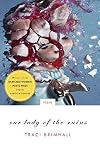
Traci Brimhall's second collection is filled with unnerving beauty, doubt, and darkly idyllic imagery. Religious symbolism is obsessively apparent, filtered through a keen sense of Rilkean dread. This obsessiveness lends and itself to redundancy, and form and style often follow, which is a drawback to a book that contains a number of brilliant poems. If the imagery and the formal qualities with regard to syntax especially were more varied, the book would be spectacular.
This is a startling and bold poetry collection about apocalypse, faith, and the female body. The language is evocative and colorful, and the stanzas bring up a progression of the world's decay.
Lists
to get (1)
You May Also Like
Associated Authors
Statistics
- Works
- 9
- Also by
- 7
- Members
- 164
- Popularity
- #129,116
- Rating
- 3.8
- Reviews
- 6
- ISBNs
- 13