
David Batchelor (1) (1955–)
Author of Chromaphobia : Ancient and Modern, and a Few Notable Exceptions
For other authors named David Batchelor, see the disambiguation page.
About the Author
David Batchelor is an artist and writer based in London. He is Senior Tutor in Critical Theory at the Royal College of Art, London
Works by David Batchelor
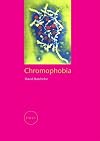
Chromaphobia : Ancient and Modern, and a Few Notable Exceptions (2000) — Author — 257 copies, 5 reviews
Robert Rauschenberg: Short Stories 2 copies
Associated Works
Tagged
Common Knowledge
- Birthdate
- 1955-07-17
- Gender
- male
- Education
- Trent Polytechnic
Birmingham University - Occupations
- artist
teacher
writer - Nationality
- Scotland
- Birthplace
- Dundee, Scotland, UK
- Places of residence
- London, England, UK
- Map Location
- UK
Members
Reviews

Chromophobia by David Batchelor traces the attitude in Western philosophy and aesthetics from Aristotle to contemporary art toward color, which he characterizes as one of extreme prejudice. Philosophers, artists, architects, and cultural theorists related color to the Other: “the feminine, the oriental, the primitive, the infantile, the vulgar, the queer or the pathological.” Color is seen as superficial, inessential and cosmetic, emotional, with “the power .. to agitate the heart” show more while line, drawing and (tellingly) language provide a Western, masculine, intellectual foundation.
Batchelor cites philosophers (Aristotle, Plato, Pliny, Kant, Rousseau, Kierkegaard) artists and art historians (Blanc, Reynolds, Berenson, Le Corbusier) and writers (Huxley, Goethe, Melville, Conrad) who define color this way, and who see it as dangerously sensual. He cites Aristotle calling color a drug. Batchelor spends considerable time analyzing Le Corbusier’s rejection of industrialized ornamentation and the “narcotic haze” of color in favor of clean, rational, shadowless white through his writings, including The Decorative Art of Today and Purism. Le Corbusier and his collaborators created scales for color that they claimed unified and stabilized it, a system for attempting to control what seems uncontrollable
Even those who wrote or spoke in favor of color, like Roland Barthes, Paul Cezanne, Baudelaire and Moreau, identified it as sensual, even erotic, “with the power to overwhelm and annihilate,” substituting chromophilia for chromophobia without disrupting the theoretical structure of color:line, feminine:masculine, sensual:intellectural. Film has also used this, contrasting a (paradoxically) black-and-white realism to color when characters fall into fantasy, hallucination or psychosis.
Later chapters study the “cosmetic” use of color in modern art, especially Warhol, Huxley’s analysis of color in drug-induced hallucinations, the association with color to gems and the earth, and the way color appears to “escape language.” Batchelor also discusses the move of contemporary artists away from artists’ colors to the use of industrial paints, which he represents as an escape from the traditional color circle and its hierarchies of color (primaries, secondaries and tertiaries) to the industrial color chart of two thousand colors, what he describes as a “grammarless accumulation of color units” that provides “autonomy for color.”
The book is part of the Reaktion series Focus on Contemporary Issues (FOCI) which are intended for general audiences interested in contemporary cultural debates. The author makes sophisticated but accessible arguments that are well-supported by his wide-ranging use of the literature. He starts with a vivid description of an art collector’s “aggressively white” house, stripped of all ornamentation to represent sophistication. I would have like to see an analysis of the related turn to black, especially in clothing, as a symbol of sophistication and cosmopolitan taste wherever white is also privileged. show less
Batchelor cites philosophers (Aristotle, Plato, Pliny, Kant, Rousseau, Kierkegaard) artists and art historians (Blanc, Reynolds, Berenson, Le Corbusier) and writers (Huxley, Goethe, Melville, Conrad) who define color this way, and who see it as dangerously sensual. He cites Aristotle calling color a drug. Batchelor spends considerable time analyzing Le Corbusier’s rejection of industrialized ornamentation and the “narcotic haze” of color in favor of clean, rational, shadowless white through his writings, including The Decorative Art of Today and Purism. Le Corbusier and his collaborators created scales for color that they claimed unified and stabilized it, a system for attempting to control what seems uncontrollable
Even those who wrote or spoke in favor of color, like Roland Barthes, Paul Cezanne, Baudelaire and Moreau, identified it as sensual, even erotic, “with the power to overwhelm and annihilate,” substituting chromophilia for chromophobia without disrupting the theoretical structure of color:line, feminine:masculine, sensual:intellectural. Film has also used this, contrasting a (paradoxically) black-and-white realism to color when characters fall into fantasy, hallucination or psychosis.
Later chapters study the “cosmetic” use of color in modern art, especially Warhol, Huxley’s analysis of color in drug-induced hallucinations, the association with color to gems and the earth, and the way color appears to “escape language.” Batchelor also discusses the move of contemporary artists away from artists’ colors to the use of industrial paints, which he represents as an escape from the traditional color circle and its hierarchies of color (primaries, secondaries and tertiaries) to the industrial color chart of two thousand colors, what he describes as a “grammarless accumulation of color units” that provides “autonomy for color.”
The book is part of the Reaktion series Focus on Contemporary Issues (FOCI) which are intended for general audiences interested in contemporary cultural debates. The author makes sophisticated but accessible arguments that are well-supported by his wide-ranging use of the literature. He starts with a vivid description of an art collector’s “aggressively white” house, stripped of all ornamentation to represent sophistication. I would have like to see an analysis of the related turn to black, especially in clothing, as a symbol of sophistication and cosmopolitan taste wherever white is also privileged. show less
Interesting thesis that Western culture is afraid of color. Unfortunately, the book reads like a 40-page essay stretched into 120 pages.
A nice exploration into how colour is treated at the turn of the century, looking at art theory, philosophy and other cultural studies for ideas on why we view colour the way we do. Gives an itch to throw lots of paint at things.
Studio North Library - shelved at : N173
Lists
You May Also Like


Associated Authors
Statistics
- Works
- 10
- Also by
- 1
- Members
- 597
- Popularity
- #42,084
- Rating
- 3.8
- Reviews
- 6
- ISBNs
- 41
- Languages
- 9