
Evan Currie
Author of Into the Black
About the Author
Series
Works by Evan Currie
Associated Works
Tagged
Common Knowledge
- Birthdate
- 1976-06-03
- Gender
- male
- Occupations
- writer
- Nationality
- Canada
- Associated Place (for map)
- Canada
Members
Reviews

This review is written with a GPL 4.0 license and the rights contained therein shall supersede all TOS by any and all websites in regards to copying and sharing without proper authorization and permissions. Crossposted at WordPress, Blogspot & Librarything by Bookstooge’s Exalted Permission
Title: Odysseus Awakening
Series: Odyssey One #6
Author: Evan Currie
Rating: 4 of 5 Stars
Genre: SF
Pages: 318
Format: Digital Edition
Synopsis:
The Empire sends out another expeditionary force and they head show more out to a small Priminae system to gather information. A small Priminae fleet with the new hybrid human'priminae technology attempt to stall the fleet in hopes that more reinforcements will arrive.
Commodore Weston and the (very) small Earth fleet make a rescue run and eventually drive off the bigger Imperial fleet, but not before the Imperial Fleet gets a data core dump from a captured Priminae ship.
And at the very end of the book, Odysseus manifests.
My Thoughts:
My goodness, such pulpy spaceship and space marine fun! Obviously, from having read about the Priminae world consciousness and Weston learning about Earth's world consciousness, I was not at all surprised when a ship consciousness happened. I just don't know how it will impact the storyline in later books.
Earlier in the month I complained about Croma Venture and the whole Spiral Wars series by Joel Shepherd being a never ending series. As I was reading this book I had to stop and question myself as to why I didn't feel the same about this Odyssey One series. One part is that each book in the Odyssey One series is at least 25-35% shorter than in the Spiral Wars. I don't feel like I'm “investing” my time in these, I'm just having a short fun read. Secondly, each book here is an almost self-contained story. While we learn little bits about the Empire or the Priminae, etc, Currie is NOT trying to setup galaxy spanning Empires and boring me to death with politics between them all. Thirdly, the focus of each book is on itself instead of feeling like nothing but super long setup for the NEXT book, which then repeats. I feel satisfied with each of the Odyssey One books where I really didn't with the later Spiral Wars books.
If you want romance, look elsewhere. If you want deep characterization where every thought and possible permutation is hashed out inside a character's mind, look elsewhere. If you want a grand space opera with a good balance of ship to ship fighting and ground pounder action, then look here.
I dont' ever plan on re-reading this series and usually that means only a 3.5 rating. However, after realizing just how stingy I am with my ratings, (3.31 average in 2018 for goodness sake) I've decided that if I enjoyed the heck out of a book, then it deserves 4 stars. So 4 stars with the caveat that this is not great literature. It also isn't a waste of time. So decide which is more important to you and choose.
★★★★☆ show less
Title: Odysseus Awakening
Series: Odyssey One #6
Author: Evan Currie
Rating: 4 of 5 Stars
Genre: SF
Pages: 318
Format: Digital Edition
Synopsis:
The Empire sends out another expeditionary force and they head show more out to a small Priminae system to gather information. A small Priminae fleet with the new hybrid human'priminae technology attempt to stall the fleet in hopes that more reinforcements will arrive.
Commodore Weston and the (very) small Earth fleet make a rescue run and eventually drive off the bigger Imperial fleet, but not before the Imperial Fleet gets a data core dump from a captured Priminae ship.
And at the very end of the book, Odysseus manifests.
My Thoughts:
My goodness, such pulpy spaceship and space marine fun! Obviously, from having read about the Priminae world consciousness and Weston learning about Earth's world consciousness, I was not at all surprised when a ship consciousness happened. I just don't know how it will impact the storyline in later books.
Earlier in the month I complained about Croma Venture and the whole Spiral Wars series by Joel Shepherd being a never ending series. As I was reading this book I had to stop and question myself as to why I didn't feel the same about this Odyssey One series. One part is that each book in the Odyssey One series is at least 25-35% shorter than in the Spiral Wars. I don't feel like I'm “investing” my time in these, I'm just having a short fun read. Secondly, each book here is an almost self-contained story. While we learn little bits about the Empire or the Priminae, etc, Currie is NOT trying to setup galaxy spanning Empires and boring me to death with politics between them all. Thirdly, the focus of each book is on itself instead of feeling like nothing but super long setup for the NEXT book, which then repeats. I feel satisfied with each of the Odyssey One books where I really didn't with the later Spiral Wars books.
If you want romance, look elsewhere. If you want deep characterization where every thought and possible permutation is hashed out inside a character's mind, look elsewhere. If you want a grand space opera with a good balance of ship to ship fighting and ground pounder action, then look here.
I dont' ever plan on re-reading this series and usually that means only a 3.5 rating. However, after realizing just how stingy I am with my ratings, (3.31 average in 2018 for goodness sake) I've decided that if I enjoyed the heck out of a book, then it deserves 4 stars. So 4 stars with the caveat that this is not great literature. It also isn't a waste of time. So decide which is more important to you and choose.
★★★★☆ show less
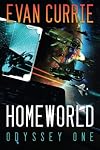
This is the best book in the series so far.
We know what the Odyssey is capable of, we know her allies and her enemies, so there is not a lot to be set up, nothing to mumble through.
Once again, the battles are absolutely great. This time we stick all the time with the main ship, which provides a sense of continuity.
A great improvement on the series are the various points the author makes on various topics: drone warfare, cold war, politics, pacifism, economy and others. He drops one idea or show more two, just to make you say "huh, good point, I guess" and moves on to prepare the next major plot point. It's enough to spawn a discussion on a subject without forcing his perspective down your throat.
The only problem with this book is that in the final pages Currie pulls a "Lady Stoneheart", just like George RR Martin. So again, the author plays down some of the strongest parts of the book by refusing to commit completely to an idea. He just had to have his cake and eat it too.
Anyway, this is a very entertaining series and I really appreciate how old problems need new solutions because of technical advancement: communication is yet again slow, localization of other ships is difficult, even travel happens blindly. This feels again like reading about wooden ships lost at sea, which is brilliant. show less
We know what the Odyssey is capable of, we know her allies and her enemies, so there is not a lot to be set up, nothing to mumble through.
Once again, the battles are absolutely great. This time we stick all the time with the main ship, which provides a sense of continuity.
A great improvement on the series are the various points the author makes on various topics: drone warfare, cold war, politics, pacifism, economy and others. He drops one idea or show more two, just to make you say "huh, good point, I guess" and moves on to prepare the next major plot point. It's enough to spawn a discussion on a subject without forcing his perspective down your throat.
The only problem with this book is that in the final pages Currie pulls a "Lady Stoneheart", just like George RR Martin. So again, the author plays down some of the strongest parts of the book by refusing to commit completely to an idea. He just had to have his cake and eat it too.
Anyway, this is a very entertaining series and I really appreciate how old problems need new solutions because of technical advancement: communication is yet again slow, localization of other ships is difficult, even travel happens blindly. This feels again like reading about wooden ships lost at sea, which is brilliant. show less
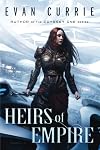
So I was reading this old-style fantasy adventure with the stalwart knight picking up an protecting the young children of the rightful king who had just been deposed right in his castle. After a few cool battles and gathering together all the outcasts that this female knight could find, they rally behind the idea of the children and the empire and take on the deposing military to reinstall the monarchy.
Have you heard this one before?
Yeah. Me, too.
I think SF is learning the wrong lessons from show more the recent popularity of Fantasy. We don't want the extremely tired STORIES of the old Fantasy regime. We want modern Fantasy's facile willingness to break all the rules and while enjoying awesome rule-based magic systems that harken to the days of old-tyme SF reliance on science-in-story.
So what happened? Did we run out of good tales to tell?
Oh, all right, this space-opera adventure did have it's good moments. The writing was comprehensible and very vivid in moments. A good deal of the high-tech was pretty damn awesome to see in action, just like a wonderful modern-fantasy magic battle, and I think I'll also say that I loved the trains a lot more than I originally did. That was some neat piece of juxtaposition for the novel.
I just wish the bare-bones of the story was more original. Hell, I can't believe I'm saying this, but I'd have welcomed some convoluted politics and treachery after a while, just to break up the monotony of fighting. I'm not a huge fan of MilSF. I tolerate it. This wasn't exactly bad, but it tires me out. I want meat to my stories, cleverness to the plot, depth to my characters. This novel was serviceable, but the only thing that really stood out was the tech and the glam.
If you're looking for tech and glam, then I'm sure you'll love this novel! :)
I'm not giving up on Currie, mind you. This is only my first shot at his work, and I promised that I'd dig into Homeworld and I will. I might just have to wait until I refill my batteries, first. :) show less
Have you heard this one before?
Yeah. Me, too.
I think SF is learning the wrong lessons from show more the recent popularity of Fantasy. We don't want the extremely tired STORIES of the old Fantasy regime. We want modern Fantasy's facile willingness to break all the rules and while enjoying awesome rule-based magic systems that harken to the days of old-tyme SF reliance on science-in-story.
So what happened? Did we run out of good tales to tell?
Oh, all right, this space-opera adventure did have it's good moments. The writing was comprehensible and very vivid in moments. A good deal of the high-tech was pretty damn awesome to see in action, just like a wonderful modern-fantasy magic battle, and I think I'll also say that I loved the trains a lot more than I originally did. That was some neat piece of juxtaposition for the novel.
I just wish the bare-bones of the story was more original. Hell, I can't believe I'm saying this, but I'd have welcomed some convoluted politics and treachery after a while, just to break up the monotony of fighting. I'm not a huge fan of MilSF. I tolerate it. This wasn't exactly bad, but it tires me out. I want meat to my stories, cleverness to the plot, depth to my characters. This novel was serviceable, but the only thing that really stood out was the tech and the glam.
If you're looking for tech and glam, then I'm sure you'll love this novel! :)
I'm not giving up on Currie, mind you. This is only my first shot at his work, and I promised that I'd dig into Homeworld and I will. I might just have to wait until I refill my batteries, first. :) show less
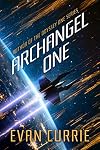
An unadulterated fun action romp in space with more snark than any military could ever allow. Sympathetic characters on all sides, no one (important) dies. The lines between good guys and bad guys are clearly defined, even as the bad guys are not quite as bad as they could be. Only downside: This first part of a trilogy is not a stand-alone novel and ends basically after the conflict is squarely established, but with no solution in sight. Be prepared to hunt down the next parts if you want a show more satisfying reading experience. show less
Lists
You May Also Like


Associated Authors
Statistics
- Works
- 46
- Also by
- 1
- Members
- 2,449
- Popularity
- #10,468
- Rating
- 3.9
- Reviews
- 120
- ISBNs
- 116
- Languages
- 2
- Favorited
- 3