
Robert Burch (1) (1925–2007)
Author of Ida Early Comes over the Mountain
For other authors named Robert Burch, see the disambiguation page.
About the Author
Image credit: University of Georgia Libraries
Series
Works by Robert Burch
Tagged
Common Knowledge
- Birthdate
- 1925-06-26
- Date of death
- 2007-12-25
- Gender
- male
- Education
- University of Georgia
Hunter College - Awards and honors
- Georgia Writers Hall of Fame
- Nationality
- USA
- Birthplace
- Inman, Georgia, USA
- Place of death
- Fayetteville, Georgia, USA
- Associated Place (for map)
- Georgia, USA
Members
Discussions
Young girl, father on chain gang, South, depression? in Name that Book (January 2012)
Reviews

The story of Queenie Peavy will stick with you. Poor Queenie has a father in the penitentiary and a mother slaving away at the local cannery. Queenie herself can barely stay out of trouble. Times are hard in Cotton Junction, Georgia so she protects herself by carrying a large chip on her shoulder. Anger constantly bubbles beneath her tough-as-nails exterior. Papa was found guilty of armed robbery and despite the truth behind the taunting, Queenie wants to hurt anyone who speaks of her dad. show more To further hide her pain she aims and shoots her hatred as easily and quickly as the rocks she is constantly throwing. She can hit any target without remorse. It takes the threat of being sent to a reformatory school to set Queenie down a different path. For one day she is determined to be a good girl, but how can she stay on that path when she has been the tough-as-mails girl for so long? Is she destined to always be a trouble maker? Burch paints a realistic picture of a girl trying to make her way during the Great Depression. I thought this would make a great movie! show less

When the other witches in her coven trade her to a peddlar for a box of snakes and two iron kettles, because her pretty face and jolly nature make her unacceptable to them, Cluny finds herself taken to the farm of a dour, mean-spirited old woman. Here she soon learns to cook and clean in more conventional ways, using flying lessons to convince the cantankerous old woman to keep her. Her presence has a good effect on the handsome but sad-faced Harmon, the whining cat, and the silent canary show more who all live with the old woman, but will Cluny be forced to return to the other witches, once the old woman has learned to fly...?
Published in 1975 and long out-of-print, The Jolly Witch is a book I would probably never have come across, were it not for my ongoing "witchy witches" project, examining how these magical practitioners are depicted in picture-books and early readers. The Jolly Witch is a bit of both, being fairly text-heavy for a picture-book and too complex for an early reader, but not quite long enough for a chapter-book. Perhaps it is best described as an illustrated short story, in book format. However that may be, it was an interesting example of the "pretty and/or happy witch who doesn't really fit in with her community" tale type. The tale encourages the reader to think that Cluny will stay on with Harmon, leading a more human life, although there is no implication that she has stopped being a witch. She can still fly, after all.
Although I did find this one interesting, as a witchy tale, I didn't find either story or artwork appealing enough to strongly recommend it to other readers, unless they are, like me, interested in the subject of witches in children's books. show less
Published in 1975 and long out-of-print, The Jolly Witch is a book I would probably never have come across, were it not for my ongoing "witchy witches" project, examining how these magical practitioners are depicted in picture-books and early readers. The Jolly Witch is a bit of both, being fairly text-heavy for a picture-book and too complex for an early reader, but not quite long enough for a chapter-book. Perhaps it is best described as an illustrated short story, in book format. However that may be, it was an interesting example of the "pretty and/or happy witch who doesn't really fit in with her community" tale type. The tale encourages the reader to think that Cluny will stay on with Harmon, leading a more human life, although there is no implication that she has stopped being a witch. She can still fly, after all.
Although I did find this one interesting, as a witchy tale, I didn't find either story or artwork appealing enough to strongly recommend it to other readers, unless they are, like me, interested in the subject of witches in children's books. show less
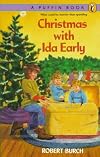
I really enjoyed Ida in this one; she's very stubborn and doesn't back down when Brother Preston starts to go after her for not being ladylike or not being properly Christian. But neither does she go out of her way to antagonize him; clearly her goal is not to cause trouble, but she's also not going to change who she is or what she believes. That's a good quality to have.
I also like that the book shows the subtle growth of Aunt Ernestine, who is initially shown as quite stereotypical and show more severe; as the kids learn more about her from their father and as Ernestine gets more exposure to Ida, she really changes, in their eyes, and in reality. It was a nice sidebar to the story. show less
I also like that the book shows the subtle growth of Aunt Ernestine, who is initially shown as quite stereotypical and show more severe; as the kids learn more about her from their father and as Ernestine gets more exposure to Ida, she really changes, in their eyes, and in reality. It was a nice sidebar to the story. show less

Life in rural Georgia is tough for the Suttons. Their mother has passed away, and the country is in the midst of the Great Depression . But things take a turn for the better when Ida Early comes over the mountain. She offers to help Mr. Sutton with the children, and entertains them with her tall tales of lion taming, working as a cook on a pirate ship, and even a stunt pilot!
Lists
Awards


You May Also Like


Associated Authors
Statistics
- Works
- 18
- Members
- 1,611
- Popularity
- #15,998
- Rating
- 3.8
- Reviews
- 19
- ISBNs
- 71