
Mike Nicol
Author of Payback
About the Author
Series
Works by Mike Nicol
Monkey Business - the murder of Anni Dewani: the facts, the fiction, the spin (2011) 1 copy, 1 review
Associated Works
Tagged
Common Knowledge
- Birthdate
- 1951
- Gender
- male
- Education
- Rondebosch Boys' High School
University of the Witwatersrand - Organizations
- The Star, Johannesburg
- Short biography
- Mike Nicol lebt als Autor, Journalist und Herausgeber in Kapstadt, wo er geboren wurde, und unterrichtet an der dortigen Universität. Er ist der preisgekrönte Autor international gefeierter Romane, Gedichtbände und Sachbücher, zuletzt einer autorisierten Biografie über Nelson Mandela, mit einem Vorwort von Kofi Annan. Vor einigen Jahren begann er sich intensiv für die südafrikanische Kriminalliteratur einzusetzen und beschloss, selbst Thriller zu schreiben. 1997 verbrachte er ein Jahr als Stipendiat des renommierten Berliner Künstlerprogramms in Deutschland, 2002 hatte er eine Gastprofessur als poet in residence an der Universität Essen inne.
- Nationality
- South Africa
- Birthplace
- Cape Town, South Africa
- Places of residence
- Cape Town, South Africa
Johannesburg, South Africa - Associated Place (for map)
- South Africa
Members
Reviews

Rating: 3* of five
The Publisher Says: An audacious departure for the internationally acclaimed South African novelist--a thriller with all the searing immediacy of today's headlines.
Who was Christo Mercer, and why was he brutally stabbed to death in a remote Saharan town? For Robert Poley, an unhappy writer of political thrillers, the welcome distraction posed by this question has become an obsession. With the mysterious delivery of a laptop computer and a cryptic email message, he finds show more himself slowly entwined in the vagaries that constituted Mercer's life and death. An illegal-arms trader haunted by his nightmares, his past, and his clandestine involvement with a ruthless rebel-- and with Christopher Marlowe's Tamburlaine the Great --Mercer lived on the grand stage of history, yet remained obscured by shadows until his seemingly fated demise. Now, piece by piece, in a complex web of social, political, personal, and fictional disclosures, the intricacies of Mercer's troubled psyche begin to reveal a pattern as corrupt as South Africa's in the aftermath of apartheid--years of judicial inquiry, the Truth Commission, and continued social unrest.
With alchemical bravura, Mike Nicol turns history into fiction and fiction into history, bringing to allegorical life the haunting story of a murder emblematic of South Africa's recent past.
My Review: Well...that piece of publisher puffery isn't, in my opinon, supported by this highly literary and relatively suspenseless, badly miscategorized "thriller." There is nothing thrilling about the narrator's life. The thrilling subject of the narrator's research project is all flashback and invention, barnacled with notes, digressions, irrelevant faux-research-paper citations...it gets tedious.
But what makes this read a good one for me is the thing that I suspect would turn off the mass of American readers: Untranslated Afrikaans words, unexplained geography, facets of South Africa's rich and complex culture that will be unfamiliar. I am a little better versed in these things, as I dated a South African for a good while; but I would hope that avid readers would find it an interesting chance to learn about this amazing place.
Mike Nicol has a considerable reputation as a thriller writer. A novel of his, HORSEMAN, was hugely and internationally acclaimed. As THE IBIS TAPESTRY is the first of his works I've read, I think I'll try it before reaching a conclusion about Mr. Nicol's readerly chemistry with me. Based on this book alone, I don't think I'd be a fan. But there's a lot to be interested in here.
The arms trade is a scourge on the world. South Africa, after an arms-sale embargo was put in place by the UN in 1963, developed a gigantic and sophisticated war-machinery manufacturing sector. Industries require sales and sales require customers and customers are thick on the ground among the hate-fueled warriors infesting Africa. So it's only logical that a well-connected "Englishman" with a serious psychological problem...what we'd call in the here and now PTSD...that fixates him on the world of power players and influence peddlers in his native South Africa. The Marlowe play he obsessively reads, analyzes, revises in his own words is the epitome of England's 16th-century expansionist, imperialist self-image building. It's not too much of a leap to see this man's fascination for our narrator, a writer of thrillers in the airport-book mode. His own life and family have blown up in his face and he badly needs a complex puzzle to work out.
The complexity of the puzzle is a big part of the book's appeal for me. As our narrator moves through the steps of solving his subject's murder, he takes steps that lead him into contact with the underside of South Africa's arms trade, supplying warlords with destructive capacity and to hell with the consequences. The South African arms trade is global, but by focusing on Africa and its warring factions, Nicol manages the tough trick of illuminating the horrors and consequences of war with the minimum of gore. It is the gift of the talented storyteller to make a subtext of violence. I see the gift in Nicol's story of THE IBIS TAPESTRY. But it takes a love of puzzles to get the most from this book's complicated world. show less
The Publisher Says: An audacious departure for the internationally acclaimed South African novelist--a thriller with all the searing immediacy of today's headlines.
Who was Christo Mercer, and why was he brutally stabbed to death in a remote Saharan town? For Robert Poley, an unhappy writer of political thrillers, the welcome distraction posed by this question has become an obsession. With the mysterious delivery of a laptop computer and a cryptic email message, he finds show more himself slowly entwined in the vagaries that constituted Mercer's life and death. An illegal-arms trader haunted by his nightmares, his past, and his clandestine involvement with a ruthless rebel-- and with Christopher Marlowe's Tamburlaine the Great --Mercer lived on the grand stage of history, yet remained obscured by shadows until his seemingly fated demise. Now, piece by piece, in a complex web of social, political, personal, and fictional disclosures, the intricacies of Mercer's troubled psyche begin to reveal a pattern as corrupt as South Africa's in the aftermath of apartheid--years of judicial inquiry, the Truth Commission, and continued social unrest.
With alchemical bravura, Mike Nicol turns history into fiction and fiction into history, bringing to allegorical life the haunting story of a murder emblematic of South Africa's recent past.
My Review: Well...that piece of publisher puffery isn't, in my opinon, supported by this highly literary and relatively suspenseless, badly miscategorized "thriller." There is nothing thrilling about the narrator's life. The thrilling subject of the narrator's research project is all flashback and invention, barnacled with notes, digressions, irrelevant faux-research-paper citations...it gets tedious.
But what makes this read a good one for me is the thing that I suspect would turn off the mass of American readers: Untranslated Afrikaans words, unexplained geography, facets of South Africa's rich and complex culture that will be unfamiliar. I am a little better versed in these things, as I dated a South African for a good while; but I would hope that avid readers would find it an interesting chance to learn about this amazing place.
Mike Nicol has a considerable reputation as a thriller writer. A novel of his, HORSEMAN, was hugely and internationally acclaimed. As THE IBIS TAPESTRY is the first of his works I've read, I think I'll try it before reaching a conclusion about Mr. Nicol's readerly chemistry with me. Based on this book alone, I don't think I'd be a fan. But there's a lot to be interested in here.
The arms trade is a scourge on the world. South Africa, after an arms-sale embargo was put in place by the UN in 1963, developed a gigantic and sophisticated war-machinery manufacturing sector. Industries require sales and sales require customers and customers are thick on the ground among the hate-fueled warriors infesting Africa. So it's only logical that a well-connected "Englishman" with a serious psychological problem...what we'd call in the here and now PTSD...that fixates him on the world of power players and influence peddlers in his native South Africa. The Marlowe play he obsessively reads, analyzes, revises in his own words is the epitome of England's 16th-century expansionist, imperialist self-image building. It's not too much of a leap to see this man's fascination for our narrator, a writer of thrillers in the airport-book mode. His own life and family have blown up in his face and he badly needs a complex puzzle to work out.
The complexity of the puzzle is a big part of the book's appeal for me. As our narrator moves through the steps of solving his subject's murder, he takes steps that lead him into contact with the underside of South Africa's arms trade, supplying warlords with destructive capacity and to hell with the consequences. The South African arms trade is global, but by focusing on Africa and its warring factions, Nicol manages the tough trick of illuminating the horrors and consequences of war with the minimum of gore. It is the gift of the talented storyteller to make a subtext of violence. I see the gift in Nicol's story of THE IBIS TAPESTRY. But it takes a love of puzzles to get the most from this book's complicated world. show less
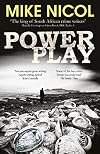
‘one of the best crime writers around’ according to the publisher. The usual hyperbole, I'm afraid... What I like about Nicol’s stunted writing is the setting of Cape Town (though it is clear he prefers action in the CBD and touristy zones and not in the Cape Flats, where most of his characters are likely to live). The plot is fast and reasonably predictable. And if you like. Stunted. Quick sentences. From the POV of five different characters. Spot on. You like.
Most characters are show more emotionally rather stunted, and prefer hard, raw sex (all heterosexual, with stereotypical big titted beauties and BBCs, no worries!). Lots of people die a violent death and there is a clear distinction between ‘good and bad’ guys n girls.
The plot engages basically with a set of ‘gang lords turned businessmen’ called the Untouchables, whose illicit value-chain on abalone is taken over by a combination of ANC chefs and their government spooks and a group of Chinese businessmen. To facilitate the transition one of the three untouchables sells-out; one gang gets hired to do the dirty job (involving one Russian hired gun who keeps spraying bullets, but killing no one; and several gang members who engage in gang rapes, torture, bodily mutilation and public shoot-outs, testimony of which is provided by one hard-assed McDonald burger); and one government spook cleans up those who are somehow left behind and kills those in a clinical manner. So far for the baddies.
On the good cause side there is a 'deep throat' kinda person (the Voice) who runs an ‘invisible’ spook (Velaze) who bears witness and helps the reader unravel what is going on (and occasionally he also helps the real plot a bit) and there is Krista and Tami, who run a private security outfit.
I think this thriller writer is exceptional in the sense that he provides good insight into the psyche of a male, coloured, South African inhabitant of Cape Town both in lingo, mind-set, popular (masculine) culture and political views (the ANC government is rotten and sells-out SA’s assets to the Chinese). This thriller is heavily populated with coloured characters and a few black guys and girls (Tami, Gumede) and only one whitie (the unfortunate hired gun from Russia). That is refreshing compared with Deon Meyer, the other crime thriller writer who situates his stories in CPT but mainly operates in an environment populated by whites. show less
Most characters are show more emotionally rather stunted, and prefer hard, raw sex (all heterosexual, with stereotypical big titted beauties and BBCs, no worries!). Lots of people die a violent death and there is a clear distinction between ‘good and bad’ guys n girls.
The plot engages basically with a set of ‘gang lords turned businessmen’ called the Untouchables, whose illicit value-chain on abalone is taken over by a combination of ANC chefs and their government spooks and a group of Chinese businessmen. To facilitate the transition one of the three untouchables sells-out; one gang gets hired to do the dirty job (involving one Russian hired gun who keeps spraying bullets, but killing no one; and several gang members who engage in gang rapes, torture, bodily mutilation and public shoot-outs, testimony of which is provided by one hard-assed McDonald burger); and one government spook cleans up those who are somehow left behind and kills those in a clinical manner. So far for the baddies.
On the good cause side there is a 'deep throat' kinda person (the Voice) who runs an ‘invisible’ spook (Velaze) who bears witness and helps the reader unravel what is going on (and occasionally he also helps the real plot a bit) and there is Krista and Tami, who run a private security outfit.
I think this thriller writer is exceptional in the sense that he provides good insight into the psyche of a male, coloured, South African inhabitant of Cape Town both in lingo, mind-set, popular (masculine) culture and political views (the ANC government is rotten and sells-out SA’s assets to the Chinese). This thriller is heavily populated with coloured characters and a few black guys and girls (Tami, Gumede) and only one whitie (the unfortunate hired gun from Russia). That is refreshing compared with Deon Meyer, the other crime thriller writer who situates his stories in CPT but mainly operates in an environment populated by whites. show less
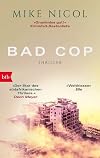
Mike Nicol is always a joy to read and his latest noir thriller is his best yet, with thinly veiled references to past crimes and present criminals as well as new characters in the form of PI ‘Fish’ Pescada, a hunky bronzed surfer, and his gorgeous girlfriend Vicki Kahn.
Nicol traces the activities of an apartheid death squad known as ‘The Icing Unit’ from the 1977 killing of a politician and his wife in Springs [Robert and Cora Smit, anyone?] to forced car accidents in the Eastern show more Cape, murder in an ANC safe house in Swaziland and the assassination of a female anti-apartheid activist in Paris.
In addition to these ‘fictional’ slaughters, we have a former police commissioner with links to organized crime, prowling Cape Town in his Hummer and his fancy clothes. Surely a case of art imitating life?
Rhino horns, revenge killers, Apartheid regime dirty tricks, endemic corruption, gangsters, illegal drag races and an engaging anti-hero combine with the surf off Muizenberg to create a delightful hard-boiled fantasy. show less
Nicol traces the activities of an apartheid death squad known as ‘The Icing Unit’ from the 1977 killing of a politician and his wife in Springs [Robert and Cora Smit, anyone?] to forced car accidents in the Eastern show more Cape, murder in an ANC safe house in Swaziland and the assassination of a female anti-apartheid activist in Paris.
In addition to these ‘fictional’ slaughters, we have a former police commissioner with links to organized crime, prowling Cape Town in his Hummer and his fancy clothes. Surely a case of art imitating life?
Rhino horns, revenge killers, Apartheid regime dirty tricks, endemic corruption, gangsters, illegal drag races and an engaging anti-hero combine with the surf off Muizenberg to create a delightful hard-boiled fantasy. show less

“Dewani tours – treat your wife to a killer holiday”: this t-shirt slogan made me laugh when I saw it but together with Police Commissioner Cele’s embarrassing monkey comment, the excellent “Papa wag vir jou” TV advertisement, Director of Public Prosecutions Advocate Menzi Simelane charging Dewani of being guilty of “committing a heinous crime”, not to mention the disciplinary record of controversial Western Cape Judge President John Hlophe, it’s no wonder Shrien is show more vehemently opposed to extradition to our country.
Most South Africans and Britons – and no doubt Swedes too – are familiar with the sequence of events in the Dewani case: the driver Zola Tongo’s ‘suggestion’ that the couple visit Gugulethu and his later admission of guilt, accused Xolile Mngeni’s brain tumour, charges of police torture, rumours that Shrien is gay, and most recently the Dewani team’s apeal aginst the extradixction order granted by the Home Secretary.
Mike Nicol collocates everything published about the case, whether it appeared in conventional media like newspapers or on social networks like Facebook and twitter, and presents it, without editorial comment, in a logical sequence and chronological order, enabling the reader to follow the case from the very beginning when the murder was first reported to Theresa May signing the extradition order in September.
Is he guilty? Did Shrien commission the murder of his new bride Anni the moment he landed in Cape Town? Was Anni raped? Can credence be given to the accused’s claims that they confessed only under physical co-ercion by an unscrupulous police force desperate to retain some of the international good will garnered by the FIFA World Cup? Did Zola Tongo hope to get a lesser sentence by claiming he was co-erced by Dewani?
As one of South Africa’s best crime writers Nicol no doubt has his own opinion of what happened in Gugulthu last November, and could effortlessly concoct a credible and highly convincing hypothesis explaining away all the inconsistencies and niggling questions – the prime one being that of motive – but he does not.
Instead we are given an enormously wide range of reports and opinions, many of which are new to most South Africans since they are garnered from foreign media, together with a fair amount of background. We meet Anni’s family as well as relations of the men charged with the murder, and we are reminded about the myserious Eastern Cape murder of a doctor connected with the Dewani family…
Were the Dewani’s connected with the old murder? If not, why did the driver indicate they were? Why did Shrien retain the services of the high-flying and high-priced lawyer Billy Gundelfinger well before there was any suggestion that he was more than a grieving widoer? Why did Gundelfinger drop Dewani as a client and why did Shrien leave the country so precipitously and refuse to return?
But if Anni was indeed murderd on the orders of her husband of only two weeks, what was the motive? There seem to have been no life insurance policies, Anni had not changed her will and because the couple was not legally married – the three day wedding was purely religious – he was not her next of kin and had no claims on her estate. There were rumours of dodgy dealings in the Dewani family Health Care Empire, but that’s all they were, rumours – as was the gossip regarding Shrien’s sexuality, especially after the revelations for cash by a leatherclad rentboy calling himself ‘The German Master’.
But what are we to make of the CCTV footage showing an estrangement between the newly weds, if body-language is anything to go by? Or the clandestine meeting between Shrien and the driver? Or the aircrew’s testimony that a tearful Anni sat apart from her husband on the flight to South Africa? And what was it she was so anxious to tell her father on the day of her death?
So many questions, so many theories, all of which Mike Nicol exposes along with the fact that, for all the hypotheses, very little about the murder or even the condition of Anni’s body is known for sure nor will it be until the case comes to trial and all the certainties and all the stories are carefully examined.
Was Anni Dewani the victim of a random carjacking, killing by accident during the commission of an attempted rape? Or was she indeed bought to South Africa by her husband for a ‘Killer Holiday’? All we know for sure is that Shrien is in no hurry to come to Cape Town for us to find out… show less
Most South Africans and Britons – and no doubt Swedes too – are familiar with the sequence of events in the Dewani case: the driver Zola Tongo’s ‘suggestion’ that the couple visit Gugulethu and his later admission of guilt, accused Xolile Mngeni’s brain tumour, charges of police torture, rumours that Shrien is gay, and most recently the Dewani team’s apeal aginst the extradixction order granted by the Home Secretary.
Mike Nicol collocates everything published about the case, whether it appeared in conventional media like newspapers or on social networks like Facebook and twitter, and presents it, without editorial comment, in a logical sequence and chronological order, enabling the reader to follow the case from the very beginning when the murder was first reported to Theresa May signing the extradition order in September.
Is he guilty? Did Shrien commission the murder of his new bride Anni the moment he landed in Cape Town? Was Anni raped? Can credence be given to the accused’s claims that they confessed only under physical co-ercion by an unscrupulous police force desperate to retain some of the international good will garnered by the FIFA World Cup? Did Zola Tongo hope to get a lesser sentence by claiming he was co-erced by Dewani?
As one of South Africa’s best crime writers Nicol no doubt has his own opinion of what happened in Gugulthu last November, and could effortlessly concoct a credible and highly convincing hypothesis explaining away all the inconsistencies and niggling questions – the prime one being that of motive – but he does not.
Instead we are given an enormously wide range of reports and opinions, many of which are new to most South Africans since they are garnered from foreign media, together with a fair amount of background. We meet Anni’s family as well as relations of the men charged with the murder, and we are reminded about the myserious Eastern Cape murder of a doctor connected with the Dewani family…
Were the Dewani’s connected with the old murder? If not, why did the driver indicate they were? Why did Shrien retain the services of the high-flying and high-priced lawyer Billy Gundelfinger well before there was any suggestion that he was more than a grieving widoer? Why did Gundelfinger drop Dewani as a client and why did Shrien leave the country so precipitously and refuse to return?
But if Anni was indeed murderd on the orders of her husband of only two weeks, what was the motive? There seem to have been no life insurance policies, Anni had not changed her will and because the couple was not legally married – the three day wedding was purely religious – he was not her next of kin and had no claims on her estate. There were rumours of dodgy dealings in the Dewani family Health Care Empire, but that’s all they were, rumours – as was the gossip regarding Shrien’s sexuality, especially after the revelations for cash by a leatherclad rentboy calling himself ‘The German Master’.
But what are we to make of the CCTV footage showing an estrangement between the newly weds, if body-language is anything to go by? Or the clandestine meeting between Shrien and the driver? Or the aircrew’s testimony that a tearful Anni sat apart from her husband on the flight to South Africa? And what was it she was so anxious to tell her father on the day of her death?
So many questions, so many theories, all of which Mike Nicol exposes along with the fact that, for all the hypotheses, very little about the murder or even the condition of Anni’s body is known for sure nor will it be until the case comes to trial and all the certainties and all the stories are carefully examined.
Was Anni Dewani the victim of a random carjacking, killing by accident during the commission of an attempted rape? Or was she indeed bought to South Africa by her husband for a ‘Killer Holiday’? All we know for sure is that Shrien is in no hurry to come to Cape Town for us to find out… show less
Awards

You May Also Like


Associated Authors
Statistics
- Works
- 31
- Also by
- 1
- Members
- 394
- Popularity
- #61,533
- Rating
- 3.7
- Reviews
- 10
- ISBNs
- 90
- Languages
- 6
- Favorited
- 1
