
Minette Walters
Author of The Ice House
About the Author
British mystery writer Minette Walters began her literary career as a sub-editor at a romance publishing company. She wrote short stories and romance novels for a time before turning to writing mysteries. Her first mystery novel, The Ice House (1992), won the John Creasy Award for Best First Novel. show more Later novels have also been award winners. Scold's Bridle won a CWA Gold Dagger and The Sculptress (which was made into a BBC television play) won an Edgar Award. (Bowker Author Biography) show less
Image credit: Courtesy of Allen and Unwin
Series
Works by Minette Walters
The Echo, Part 2 3 copies
Der Au enseiter : Roman 2 copies
Appointed to Die 2 copies
How to be Lost 1 copy
Disordered Minds 1 copy
Associated Works
A Moment on the Edge : 100 Years of Crime Stories by Women (2002) — Contributor — 295 copies, 6 reviews
Great Stories of Crime and Detection, Volumes I-IV: Beginnings to the Present (2002) — Contributor — 73 copies
The World's Finest Mystery and Crime Stories: First Annual Collection (2000) — Contributor — 67 copies, 1 review
Mysteries by Female Authors: Margin of Error / The Dark Room / The Cereal Murders [Abridged Audio Book] (2002) — Contributor — 5 copies
Goed fout : fragmenten uit misdaadverhalen van bekroonde auteurs — Contributor — 2 copies
Tagged
Common Knowledge
- Birthdate
- 1949-09-26
- Gender
- female
- Education
- Durham University(Trevelyan)
Abbey School, Reading
Godolphin School, Salisbury - Occupations
- author
editor(Woman's Weekly Library)
sub-editor(IPC Magazines)
crime novelist
short story writer
freelance writer - Agent
- Gregory and Company
- Nationality
- UK
- Birthplace
- Bishop’s Stortford, Hertfordshire, England, UK
- Places of residence
- Bishop’s Stortford, Hertfordshire, England, UK
Salisbury, Wiltshire, England, UK
Jerusalem, Israel
Durham, England, UK
Dorset, England, UK - Map Location
- England, UK
Members
Reviews
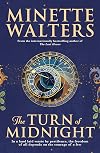
One of my favourite books of 2017 was Minette Walters’ The Last Hours, an engrossing story of the Black Death in England. (Before you start to wonder, yes it’s THAT Minette Walters of spooky crime novels.) The novel was a meticulously researched novel that brought the 1300s to life with a rich plot and memorable characters. The story ended on a fantastic cliff-hanger, but fortunately we now have what is likely to be the finale in The Turn of Midnight.
This novel comes with a handy catch show more up of characters and events of The Last Hours to refresh your memory. You could read it as a standalone novel, but your experience will be much richer if you read both the books. The Turn of Midnight opens at the exact point where its predecessor left off, as Lady Anne has banished her daughter Eleanor to a serf’s hut after a night of extraordinary events. But it doesn’t end there for our heroine, as the men on watch note that there are bandits coming towards the safety of the moated manor house. Fortunately though, they are mistaken and it is Thaddeus Thurkell, returning to report on what little life is left outside the demesne. It appears that the Black Death has done its worst and is coming to an end. Dorseteshire is in ruins as the population has dwindled and the labour that would normally plant the crops and work is decimated. Lords have fled or died and there is little direction for the people left. Both Lady Anne and Thaddeus know that change is in the air, which could mean freedom for the people of Develish. But who will listen to a woman and a bastard serf? A plot is hatched from a fortuitous battle in the woods but has the potential to go awry as their enemies appear in strange places…
The book deals primarily with the aftermath of the Black Death and the slow rebuilding of the world around the people of Develish. It’s an excellent insight into the downfall of a civilization and an exciting glimpse into the rebuilding of one, where there are no rules but to use your wits to gain the best for yourself (and for caring people like Lady Anne, the best for her community). Thaddeus’ quick witted thinking and ability to adapt move to a new level as he must pass for the unknown to grant the people of Develish their freedom. Lady Anne doesn’t have quite as many life or death decisions to make in this book, but she too needs to think quickly and use some knowledge that hasn’t been exercised for some time. The enemies of Develish are both known and unknown. Old foes like Father Anselm and Eleanor don’t have the potency that they once did. Hugh de Courtesmain is despatched away from Develish to work his evil somewhere else. But Lord Bourne is an initial problem, wanting Develish for himself and others move out of the shadows. There are also issues closer to home when some displaced people are brought to live within Develish and their methods of living are shocking. Although most of the characters are familiar, they are as finely detailed as in the first book.
The Turn of Midnight again excels in creating a wonderful sense of place and enveloping the reader in the time period. I tend to read little fiction set in this time period, simply because it feels too distant. But Minette Walters has brought the time period to life, demonstrating that these people had the same essential struggles and emotions as people living today. It’s also easy to understand the way the characters speak and unfamiliar rituals and names are explained as part of the story. Despite the fact that the battle scenes involve arrows and not high powered weapons, they are gripping. It’s an action packed story that you can’t put down (I read the second half in one setting).
Thank you to Allen & Unwin for the copy of this book. My review is honest.
http://samstillreading.wordpress.com show less
This novel comes with a handy catch show more up of characters and events of The Last Hours to refresh your memory. You could read it as a standalone novel, but your experience will be much richer if you read both the books. The Turn of Midnight opens at the exact point where its predecessor left off, as Lady Anne has banished her daughter Eleanor to a serf’s hut after a night of extraordinary events. But it doesn’t end there for our heroine, as the men on watch note that there are bandits coming towards the safety of the moated manor house. Fortunately though, they are mistaken and it is Thaddeus Thurkell, returning to report on what little life is left outside the demesne. It appears that the Black Death has done its worst and is coming to an end. Dorseteshire is in ruins as the population has dwindled and the labour that would normally plant the crops and work is decimated. Lords have fled or died and there is little direction for the people left. Both Lady Anne and Thaddeus know that change is in the air, which could mean freedom for the people of Develish. But who will listen to a woman and a bastard serf? A plot is hatched from a fortuitous battle in the woods but has the potential to go awry as their enemies appear in strange places…
The book deals primarily with the aftermath of the Black Death and the slow rebuilding of the world around the people of Develish. It’s an excellent insight into the downfall of a civilization and an exciting glimpse into the rebuilding of one, where there are no rules but to use your wits to gain the best for yourself (and for caring people like Lady Anne, the best for her community). Thaddeus’ quick witted thinking and ability to adapt move to a new level as he must pass for the unknown to grant the people of Develish their freedom. Lady Anne doesn’t have quite as many life or death decisions to make in this book, but she too needs to think quickly and use some knowledge that hasn’t been exercised for some time. The enemies of Develish are both known and unknown. Old foes like Father Anselm and Eleanor don’t have the potency that they once did. Hugh de Courtesmain is despatched away from Develish to work his evil somewhere else. But Lord Bourne is an initial problem, wanting Develish for himself and others move out of the shadows. There are also issues closer to home when some displaced people are brought to live within Develish and their methods of living are shocking. Although most of the characters are familiar, they are as finely detailed as in the first book.
The Turn of Midnight again excels in creating a wonderful sense of place and enveloping the reader in the time period. I tend to read little fiction set in this time period, simply because it feels too distant. But Minette Walters has brought the time period to life, demonstrating that these people had the same essential struggles and emotions as people living today. It’s also easy to understand the way the characters speak and unfamiliar rituals and names are explained as part of the story. Despite the fact that the battle scenes involve arrows and not high powered weapons, they are gripping. It’s an action packed story that you can’t put down (I read the second half in one setting).
Thank you to Allen & Unwin for the copy of this book. My review is honest.
http://samstillreading.wordpress.com show less
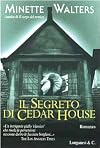
Incredibile contorcimento della mente umana: un medico, un pittore, un poliziotto romantico, una famiglia nobile decaduta e depravata, silenzi, omicidi, pazzia, il tutto in salsa William Shakespeare e Robert Burns. Che dire: la Walters ci tiene col fiato sospeso dall'inizio alla fine con abilità e approfondimento dei personaggi, dei rapporti di coppia, dell'amore giovane, di mezza età e dell'anzianità. Un giallo mai scontato, un omicicdio che ne sottende altri, fisici ma anche morali, il show more banale suicidio di una vecchia artritica che diventa un caso quasi insolubile. show less

For six years, 14-year-old Muna has been a slave of Ebuka and Yetunde Songoli. Having two sons of their own, they claimed Muna from a West African orphanage, then emigrated to England. During her years with the Songolis, Muna suffered much abuse, physical and sexual, but when one of the Songolis' sons, Abiola, disappears, Muna's fortunes change for the better.
To keep the police investigators from discovering their shameful secret, Yetunde claims Muna is their daughter and moves her from the show more cellar where she's been confined to live when she isn't cooking and cleaning for the family, into a spare bedroom upstairs. Yetunde claims the girl is brain damaged and doesn't speak English, but Muna is far more clever than the Songolis know. Muna has a full grasp of English and slowly realizes how much power she now has, power she uses to manipulate the Songolis in order to better her own position. As the family's fortunes continue to take a downward turn following Abiola's disappearance, Muna's improves.
This novella is a bit of a change of pace for Walters, one of my favorite writers. Told in third person from Muna's pov, this isn't so much of a mystery as it is a psychological suspense story. It is also a disturbing one, and one I found compelling. show less
To keep the police investigators from discovering their shameful secret, Yetunde claims Muna is their daughter and moves her from the show more cellar where she's been confined to live when she isn't cooking and cleaning for the family, into a spare bedroom upstairs. Yetunde claims the girl is brain damaged and doesn't speak English, but Muna is far more clever than the Songolis know. Muna has a full grasp of English and slowly realizes how much power she now has, power she uses to manipulate the Songolis in order to better her own position. As the family's fortunes continue to take a downward turn following Abiola's disappearance, Muna's improves.
This novella is a bit of a change of pace for Walters, one of my favorite writers. Told in third person from Muna's pov, this isn't so much of a mystery as it is a psychological suspense story. It is also a disturbing one, and one I found compelling. show less

Unfortunately, a very disappointing outing. I am quite fond of some of Minette Walters' other mysteries, but when held up beside them, The Breaker is extremely weak. The crime, a woman's rape and murder, is brutal and horrifying, and nothing in the rest of the book, including the reveal of the killer and the explanation of his motives, stands up to those first images.
Everything feels quite cursory. We meet a cast of characters, but never quite get to know any on a level which would allow for show more connection and concern for their fates. The three police officers involved bleed into one lump, and at times it's difficult to remember who is who. All of the suspects are pathetic, miserable men who have thrown away their lives, and the child involved is by turns annoying and creepy. (In fact, the only saving grace with regards to the child is that she's barely in the book.) The victim is quickly revealed to be a greedy, grasping woman, and the side plot involving old money women fallen on hard times is fairly by-the-numbers, and while it shows a glimmer of interest here and there, it is ultimately rushed to a quick and unsatisfying conclusion.
There is little detecting going on in this mystery, as the entire trajectory of the story is driven by what the suspects and people who know or have observed them say. Much of the time it feels like a very artificial, "Ok, now we're going to assume this person is the killer, and now him, and now him." When the reveal finally happens, while it is disappointingly the very person the novel appears to be pointing to from the very first pages, it reads very much to me like a last minute rush to conclusion. The reveal comes crashing down in a rush of information, some of which is entirely new and does not appear to fit with what we know from the rest of the story. Without a better foundation of clues laid, the ending falls quite flat.
And as much as I enjoyed the small moments between Nick Ingram and Maggie Jenner, there simply isn't enough room for their relationship within the plot. Walters provides a smattering of moments that are clearly supposed to provide enough for the reader to fill in the details, but some of it (especially Nick's baffling insistence that painting someone's house is a form of courting) simply does not have enough in-text proof to suggest any depth between them. Their resolution, too, is rushed to conclusion.
Ultimately, I was propelled through the novel mostly because I wanted to find out if I was right about the killer, and to watch the romantic sub-plot play out. It isn't a particularly good story, nor is it abysmally bad; it'll kill a few hours, but you may find yourself ultimately unsatisfied by the conclusion. I'd suggest giving it a miss unless you are a huge Walters fan and a completest, and instead read The Ice House, The Sculptress or The Scold's Bridle, all of which are leagues above this particular outing. show less
Everything feels quite cursory. We meet a cast of characters, but never quite get to know any on a level which would allow for show more connection and concern for their fates. The three police officers involved bleed into one lump, and at times it's difficult to remember who is who. All of the suspects are pathetic, miserable men who have thrown away their lives, and the child involved is by turns annoying and creepy. (In fact, the only saving grace with regards to the child is that she's barely in the book.) The victim is quickly revealed to be a greedy, grasping woman, and the side plot involving old money women fallen on hard times is fairly by-the-numbers, and while it shows a glimmer of interest here and there, it is ultimately rushed to a quick and unsatisfying conclusion.
There is little detecting going on in this mystery, as the entire trajectory of the story is driven by what the suspects and people who know or have observed them say. Much of the time it feels like a very artificial, "Ok, now we're going to assume this person is the killer, and now him, and now him." When the reveal finally happens, while it is disappointingly the very person the novel appears to be pointing to from the very first pages, it reads very much to me like a last minute rush to conclusion. The reveal comes crashing down in a rush of information, some of which is entirely new and does not appear to fit with what we know from the rest of the story. Without a better foundation of clues laid, the ending falls quite flat.
And as much as I enjoyed the small moments between Nick Ingram and Maggie Jenner, there simply isn't enough room for their relationship within the plot. Walters provides a smattering of moments that are clearly supposed to provide enough for the reader to fill in the details, but some of it (especially Nick's baffling insistence that painting someone's house is a form of courting) simply does not have enough in-text proof to suggest any depth between them. Their resolution, too, is rushed to conclusion.
Ultimately, I was propelled through the novel mostly because I wanted to find out if I was right about the killer, and to watch the romantic sub-plot play out. It isn't a particularly good story, nor is it abysmally bad; it'll kill a few hours, but you may find yourself ultimately unsatisfied by the conclusion. I'd suggest giving it a miss unless you are a huge Walters fan and a completest, and instead read The Ice House, The Sculptress or The Scold's Bridle, all of which are leagues above this particular outing. show less
Lists
British Mystery (5)
Edgar Award (1)
Awards


You May Also Like


Associated Authors
Statistics
- Works
- 40
- Also by
- 8
- Members
- 19,315
- Popularity
- #1,127
- Rating
- 3.6
- Reviews
- 429
- ISBNs
- 1,122
- Languages
- 21
- Favorited
- 67

