
Sally Odgers
Author of Dog Den Mystery (Jack Russell, Dog Detective #1)
About the Author
Sally Odgers is an Australian author, editor, and manuscript assessor, based in Tasmania. She has been writing for 54 years. She was awarded the 2018 Alice Literary Award by the Society of Women Writers. (Bowker Author Biography)
Image credit: My picture
Series
Works by Sally Odgers
Yaks of the Mountains 3 copies
Eggcitement for Blinky Bill 3 copies
Charms : Volume 3 2 copies
Volunteers Begin At Home 2 copies
Kayak 1 copy
Camping at School 1 copy
Laura's journey to the stars 1 copy
The Proper Unicorn (Pearl) 1 copy
Blinky Bill's Pet 1 copy
Tiddalik (Mór) 1 copy
Crocodiles Swin in the Swamp 1 copy
The Teeny Tiny Woman 1 copy
I Like Being Me! 1 copy
Dead Wrong 1 copy
Keepsakes 1 copy
Tropical dreams 1 copy
Beast Feast 1 copy
Hairy George 1 copy
Associated Works
The Road to Camelot: Tales of the Young Merlin, Arthur, Lancelot and More (2002) — Contributor — 42 copies
Tagged
Common Knowledge
Members
Reviews

Trinity Street is a late-90s Australian YA novel that involves telepathy and time-travel. I first read it in high school, and I remembered clearly the things I liked about it, and the things I found unsatisfying.
So I was surprised by how much I enjoyed the way it was written. (And I don't mean Gerhardt's habit of using phrases in other languages, which appealed to teenaged-me.) I really liked the way Odgers captures Tell's world: her friendship with Camena, and how Tell feels when Gerhardt show more intrudes on that; her relationship with her divorced parents; the way Tell responds when things go wrong.
I've seen YA literature described as as "You mean books about Super Special White Girl and Her Mysterious Brooding Boyfriend?" and that's a criticism that one could throw at Trinity Street. However, I think Trinity Street tries to subvert those tropes. Tell is critical of mysterious brooding and romantic overtures. And there's something affirming about the discovery of her unique talent, because she's grown up comparing herself to Camena, who is academically gifted (and also tragically orphaned), and legitimately feeling ordinary by comparison. Tell's eventual super-special status feels earned, somehow. Perhaps because it veers more towards "everyone has different talents and that's okay!", rather than arguing that some people are more special than others.
If Camena was a moth, [Tell] was an earnest caterpillar, humping grimly along the plath laid out for her by the clash of her parents' oddly assorted genes.
David the perfectionist, cold, clever and abrupt as steel. Maureen the slapdash, mercurial, and untidy. There was enough of David in Tell's make-up to make her impatient with fools, and enough of Maureen to make her goals recede when something more attractive beckoned. Enough of Maureen to make her untidy, enough of David to make her feel guilty about it. Because of her parents, Tell was usually at war with herself, and, unlike her parents, Tell could not file for a divorce and go their separate ways. show less
So I was surprised by how much I enjoyed the way it was written. (And I don't mean Gerhardt's habit of using phrases in other languages, which appealed to teenaged-me.) I really liked the way Odgers captures Tell's world: her friendship with Camena, and how Tell feels when Gerhardt show more intrudes on that; her relationship with her divorced parents; the way Tell responds when things go wrong.
I've seen YA literature described as as "You mean books about Super Special White Girl and Her Mysterious Brooding Boyfriend?" and that's a criticism that one could throw at Trinity Street. However, I think Trinity Street tries to subvert those tropes. Tell is critical of mysterious brooding and romantic overtures. And there's something affirming about the discovery of her unique talent, because she's grown up comparing herself to Camena, who is academically gifted (and also tragically orphaned), and legitimately feeling ordinary by comparison. Tell's eventual super-special status feels earned, somehow. Perhaps because it veers more towards "everyone has different talents and that's okay!", rather than arguing that some people are more special than others.
If Camena was a moth, [Tell] was an earnest caterpillar, humping grimly along the plath laid out for her by the clash of her parents' oddly assorted genes.
David the perfectionist, cold, clever and abrupt as steel. Maureen the slapdash, mercurial, and untidy. There was enough of David in Tell's make-up to make her impatient with fools, and enough of Maureen to make her goals recede when something more attractive beckoned. Enough of Maureen to make her untidy, enough of David to make her feel guilty about it. Because of her parents, Tell was usually at war with herself, and, unlike her parents, Tell could not file for a divorce and go their separate ways. show less

I was surprised at how much I liked this book. It's a romance, and I rarely read romances. It's also, however, a time-travel book, and I found the main characters quite pleasant to read about. The story also kept my interest well enough that I read the book straight through in one sitting. In 1999, Abigail Reed is the glamorous editor of a glamorous woman's magazine in the big city. She's engaged, but her wedding has been unexpectedly postponed at the last moment, which is just as well, show more since she's having second thoughts. Having already arranged for a month off from work for a honeymoon she now won't be taking, she decides, upon impulse, to drive deep into the country to visit her childhood home, in a small town that's now almost a ghost town. It was a gold-mining town, and it failed when the mines failed. A rainstorm drives her to shelter from the rain in an abandoned mine. Once in the mine, she slips, and falls, and hits her head, and awakens in 1858.
In 1858, Matthias Gilchrist is a carpenter and bookbinder. He too was engaged to be married, but his intended's father found a wealthier match for his daughter, and brushed aside the engagement, which had not yet been cried in church. In desperation, Matthias sets out for the goldfields, to try to make his fortune, and make it fast enough to change her father's mind. He digs a mine, and digs it deeply and well, earning the nickname "Mad Matt" for his unrelenting labor. And then, one day, he finds a strange woman in his mine....
There are other likable characters in both times. Henry, Matthias' partner, is a temperance advocate who, when not working their claim, makes and sells lemonade to the other miners. Zachary, Abbie's cousin, is a resourceful and witty landscape painter who controls his Type 1 diabetes very well. Even Jemima, Matthias' former fiancee, despite being such a dutiful daughter, turns out to be spunky and resilient in the end.
Four stars, not five, because on LibraryThing I only give five stars to books I have read and reread. But I did like the book. I received a free copy from the author, who did not even ask me to review the book; I just liked it enough to want to do so. show less
In 1858, Matthias Gilchrist is a carpenter and bookbinder. He too was engaged to be married, but his intended's father found a wealthier match for his daughter, and brushed aside the engagement, which had not yet been cried in church. In desperation, Matthias sets out for the goldfields, to try to make his fortune, and make it fast enough to change her father's mind. He digs a mine, and digs it deeply and well, earning the nickname "Mad Matt" for his unrelenting labor. And then, one day, he finds a strange woman in his mine....
There are other likable characters in both times. Henry, Matthias' partner, is a temperance advocate who, when not working their claim, makes and sells lemonade to the other miners. Zachary, Abbie's cousin, is a resourceful and witty landscape painter who controls his Type 1 diabetes very well. Even Jemima, Matthias' former fiancee, despite being such a dutiful daughter, turns out to be spunky and resilient in the end.
Four stars, not five, because on LibraryThing I only give five stars to books I have read and reread. But I did like the book. I received a free copy from the author, who did not even ask me to review the book; I just liked it enough to want to do so. show less
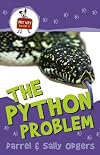
"I'm Trump, Animal Liaison Officer at Pet Vet Clinic." It's Trump's job to help sick animals, and while all of the patients who come to Pet Vet clinic are interesting, some are more interesting than others...
Take Diamond the python for example.
When Diamond escapes from a moving van, all the animals panic. It's up to Trump, Dr. Jeanie's Jack Russell terrier, to calm them down, and to help find Diamond.
Take Diamond the python for example.
When Diamond escapes from a moving van, all the animals panic. It's up to Trump, Dr. Jeanie's Jack Russell terrier, to calm them down, and to help find Diamond.
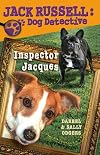
Jack has always been top dog detective in Doggeroo, but suddenly there's a newcomer trying to claim his title. Inspector Jacques is a French bulldog with attitude, and a fang-resistant collar, as Jack discovers. Meanwhile, poor Preacher has run afowl of the terrible dog-boggarts.
Lists
Sonlight Books (2)
Awards


You May Also Like


Associated Authors
Statistics
- Works
- 259
- Also by
- 5
- Members
- 5,230
- Popularity
- #4,767
- Rating
- 3.8
- Reviews
- 31
- ISBNs
- 617
- Languages
- 6