
Margaret Wild
Author of Kiss Kiss!
About the Author
Margaret Wild was born in South Africa and moved to Australia in 1972. She has been a journalist on newspapers and magazines, and worked as a book editor in children's publishing for sixteen years. She eventually quit to write fulltime. Wild has written more than 40 books for children. Some titles show more include The House of Narcissus, Jenny Angel, Tom Goes to Kindergarten, Nighty Night!, The Pocket Dogs and The Very Best of Friends. Her books are published around the world and have won numerous awards, including the Young Australian Best Book Award (YABBA) - Picture Book Shortlisted in 2001 for Jenny Angel; the New South Wales State Literary Award - Young Reader Shortlisted in 2000 for Jenny Angel; the CBC Book of the Year - Picture Book Winner in 2000 for Jenny Angel; the Young Australian Best Book Award (YABBA) - Picture Book listed in 2000 for Miss Lily's Fabulous Pink Feather Boa; the Australian Publishers Association - Design Shortlisted in 1999 for Jenny Angel; the Family Award for Children's Books - Picture Book shortlisted in 1999 for Jenny Angel; the Young Australian Best Book Award (YABBA) - Picture Book Shortlisted in 1999 for Miss Lily's Fabulous Pink Feather Boa; and the CBC Book of the Year - Picture Book Shortlisted in 1985 for There's a Sea in My Bedroom. In 2015 she had an Honour Book at the 2015 Children's Book Council (CBCA) Book of the Year Awards with her title, The Stone Lion. (Bowker Author Biography) show less
Series
Works by Margaret Wild
Associated Works
Tagged
Common Knowledge
- Birthdate
- 1948
- Gender
- female
- Education
- Australian National University
- Occupations
- journalist
editor
author - Awards and honors
- Nan Chauncy Award (2008)
- Nationality
- South Africa (birth)
Australia - Birthplace
- Eshowe, South Africa
- Places of residence
- Sydney, New South Wales, Australia
Johannesburg, South Africa - Associated Place (for map)
- South Africa
Members
Reviews

Well! This brilliantly disturbing picture-book is something a little different! Dystopian fiction for the school set? Yes. Or, perhaps no. An award-winning Australian import - it was given an Aurealis Award (Australia's science-fiction, fantasy and horror prize) in 2007, and chosen as a CBC (Children's Book Council) Honour Book - Woolvs in the Sitee is the story of Ben, a terrified young boy living in what appears to be a post-apocalyptic world. Hiding in his basement room, emerging every show more once in a while to seek water, and companionship with his neighbor, the kind "Missus" Radinski, Ben worries about the hateful "woolvs" that haunt the "sitee," and longs to see a blue sky again, rather than the bleak gray and black skies that hang over the mostly abandoned city outside. When Missus Radinski disappears, however, Ben must put aside his fear and go in search of his only friend and companion...
Who, or what, are these woolvs? This is never made entirely clear in Margaret Wild's eerie story, and that ambiguity gives the narrative an immense power, as fear is so often accentuated when it is vague, and the unknown danger can feel far more threatening than the specific one. If this truly is a post-apocalyptic dystopia, than the woolvs might be some sort of horrific creatures, or perhaps bands of roving humans, transformed into marauding gangs by whatever disaster overtook their society. On the other hand, if - as has been suggested by some reviewers - this is a story of mental illness, with the bleak world around Ben reflecting his illness, or being a depiction of the world as viewed through the distorted lens of his illness, then perhaps the woolvs are his own personal demons - the emblems of his disease. Although I lean toward the former, I think either interpretation works pretty well. show less
Who, or what, are these woolvs? This is never made entirely clear in Margaret Wild's eerie story, and that ambiguity gives the narrative an immense power, as fear is so often accentuated when it is vague, and the unknown danger can feel far more threatening than the specific one. If this truly is a post-apocalyptic dystopia, than the woolvs might be some sort of horrific creatures, or perhaps bands of roving humans, transformed into marauding gangs by whatever disaster overtook their society. On the other hand, if - as has been suggested by some reviewers - this is a story of mental illness, with the bleak world around Ben reflecting his illness, or being a depiction of the world as viewed through the distorted lens of his illness, then perhaps the woolvs are his own personal demons - the emblems of his disease. Although I lean toward the former, I think either interpretation works pretty well. show less

When the enemy bombs the library, all of the books are destroyed except for the one Peter's father has checked out. A true treasure, the book tells the story of their people, and when the father and son must flee, they take it with them. The travails of the road prove too much for Peter's father, and the young boy must bury him by the wayside, and carry on alone. Eventually the box with the book in it grows too heavy for him, and he buries it underneath a linden tree, intending to return for show more it one day...
A moving exploration of the hardships of war, and the importance of keeping one's traditions and culture alive, even in the most difficult times, The Treasure Box is just the latest thought-provoking book I have read from Australian author Margaret Wild, who seems to specialize in children's stories that explore difficult concepts, from the necessity of both joy and sorrow for a true sense of being alive (The Stone Lion) to the intersection of mental illness and dystopian futures (Woolvs In the Sitee). The illustrations by Freya Blackwood, an artist whose work I absolutely love - The Selkie and the Fisherman is possibly my favorite, although all of her books are lovely - are simply beautiful, and something a little bit different from many of her earlier titles. I seem to recall that her artwork in earlier works is painted (watercolor, I think?), whereas here there are both painted and collage elements, with bits of text worked in to each scene. Some of this text, according to information on the colophon, is taken from foreign-language editions of Australian author Morris Gleitzman's books, but some is in English, and is apropos to the scene in question. When bits of paper rain down, after the library has been bombed, they contain words like "ever forget," "hope," "sang," and "great empty."
A powerful and poignant book, with a moving story and gorgeous artwork, The Treasure Box is one I would highly recommend to anyone searching for children's tales addressing themes of war, loss, survival, and keeping hope and tradition alive. show less
A moving exploration of the hardships of war, and the importance of keeping one's traditions and culture alive, even in the most difficult times, The Treasure Box is just the latest thought-provoking book I have read from Australian author Margaret Wild, who seems to specialize in children's stories that explore difficult concepts, from the necessity of both joy and sorrow for a true sense of being alive (The Stone Lion) to the intersection of mental illness and dystopian futures (Woolvs In the Sitee). The illustrations by Freya Blackwood, an artist whose work I absolutely love - The Selkie and the Fisherman is possibly my favorite, although all of her books are lovely - are simply beautiful, and something a little bit different from many of her earlier titles. I seem to recall that her artwork in earlier works is painted (watercolor, I think?), whereas here there are both painted and collage elements, with bits of text worked in to each scene. Some of this text, according to information on the colophon, is taken from foreign-language editions of Australian author Morris Gleitzman's books, but some is in English, and is apropos to the scene in question. When bits of paper rain down, after the library has been bombed, they contain words like "ever forget," "hope," "sang," and "great empty."
A powerful and poignant book, with a moving story and gorgeous artwork, The Treasure Box is one I would highly recommend to anyone searching for children's tales addressing themes of war, loss, survival, and keeping hope and tradition alive. show less

Sitting outside of a great library, the eponymous stone lion in Margaret Wild's poignant tale is as frozen in heart as he is in body. He gazes upon the world and is unmoved by its suffering, and indifferent to its joys. Longing to come alive and explore the park across the street, the lion is counseled by a wise gargoyle that only the most generous of hearts is granted such a wish. When a homeless little girl named Sara collapses in front of him, after laying her infant brother before him, show more the lion is finally moved, and longs with all his being to be able to bring the children into the warmth of the library...
Australian author Margaret Wild seems to have a knack for telling thoughtful and thought-provoking stories. I vividly recall reading her Woolvs In the Sitee and finding it incredibly interesting and haunting, so I am glad to have found another winner from her pen. The messages highlighted here - that feeling and accepting both sorrow and joy is intrinsically linked to being alive, that the generous heart can accomplish miracles - are worked seamlessly into the narrative, which stands on its own, separate from any didactic purpose, as an engaging story. The artwork by Ritva Voutila is likewise immensely appealing, depicting a grey and sepia-toned Depression-era world, one that feels both historical and timeless. The use of subtle color, and of light and shadow here, is very skilled. It's easy to see why this was shortlisted for The Children's Book of the Year Awards, handed out by The Children's Book Council of Australia. Recommended to anyone looking for children's stories that address issues of homelessness, poverty, generosity, and the central role of emotion is being alive. show less
Australian author Margaret Wild seems to have a knack for telling thoughtful and thought-provoking stories. I vividly recall reading her Woolvs In the Sitee and finding it incredibly interesting and haunting, so I am glad to have found another winner from her pen. The messages highlighted here - that feeling and accepting both sorrow and joy is intrinsically linked to being alive, that the generous heart can accomplish miracles - are worked seamlessly into the narrative, which stands on its own, separate from any didactic purpose, as an engaging story. The artwork by Ritva Voutila is likewise immensely appealing, depicting a grey and sepia-toned Depression-era world, one that feels both historical and timeless. The use of subtle color, and of light and shadow here, is very skilled. It's easy to see why this was shortlisted for The Children's Book of the Year Awards, handed out by The Children's Book Council of Australia. Recommended to anyone looking for children's stories that address issues of homelessness, poverty, generosity, and the central role of emotion is being alive. show less
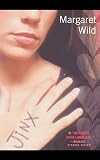
Jinx is the best book I have read in ages. It is written in verse, which I absolutely love. It is the story of Jen, who seems somehow cursed, as all of her boyfriends seem to die. She changes her name from Jen to Jinx in her bitterness.
Jen lives with her mother and her sister, Grace, who is special needs. Her father, whom she class The Rat, abandoned them, and remarried Sheila. Jen begins dating Charlie, who she falls very deeply for. He is a troubled young man who commits suicide. Jen show more struggles to deal with his loss, and watches his family crumble from the grief. She spends the evenings in the park getting drunk with boys. One boy helps her when she blacks out. His name is Ben, and he suffers from short man complex. He gets into a fight with another boy, Hal, who calls him short, hits his head on the ground and dies. Jen hears the whispers around her that she is a jinx, and decides the name is apt. She begins torturing Hal and his family with crank phone calls.
Jinx learns a bit more about life as she begins to try to see things through a different perspective. She opens her mind and heart to those she kept at a distance for so long, her mother, father, Sheila, and even Hal. She comes clean to Hal, and they begin a tentative relationship. She comes good and is able to start anew, as Jen.
This book has some fantastic characters, and many of the chapters/ poems are told from their differing points of view, adding to the richness of omniscience for the reader. Jen is the primary character, but we are able to see into all of the other character’s minds as well. We see the pain and loneliness of her single mother, the pain and suffering of her boyfriends, Charlie and Ben, the grief and loss suffered by their families at their demise. We see into the minds of her friends as well, and understand the pain and frustration of feeling abandoned by family, the horror of clinical depression, and the isolation of teenage sexuality, specifically homosexuality, and the difficulties of being different. This is a book that is both dark and funny, poignant and brutally honest.
I think books in verse may be my favorite genre, and something I am going to attempt in my own writing. It takes an incredible writer to convey such meaning in so few words, and this book has so much under the surface. Each poem is a window into the mind and heart of the speaker, and it is extremely powerful. Six Stars. Ages 13-20. show less
Jen lives with her mother and her sister, Grace, who is special needs. Her father, whom she class The Rat, abandoned them, and remarried Sheila. Jen begins dating Charlie, who she falls very deeply for. He is a troubled young man who commits suicide. Jen show more struggles to deal with his loss, and watches his family crumble from the grief. She spends the evenings in the park getting drunk with boys. One boy helps her when she blacks out. His name is Ben, and he suffers from short man complex. He gets into a fight with another boy, Hal, who calls him short, hits his head on the ground and dies. Jen hears the whispers around her that she is a jinx, and decides the name is apt. She begins torturing Hal and his family with crank phone calls.
Jinx learns a bit more about life as she begins to try to see things through a different perspective. She opens her mind and heart to those she kept at a distance for so long, her mother, father, Sheila, and even Hal. She comes clean to Hal, and they begin a tentative relationship. She comes good and is able to start anew, as Jen.
This book has some fantastic characters, and many of the chapters/ poems are told from their differing points of view, adding to the richness of omniscience for the reader. Jen is the primary character, but we are able to see into all of the other character’s minds as well. We see the pain and loneliness of her single mother, the pain and suffering of her boyfriends, Charlie and Ben, the grief and loss suffered by their families at their demise. We see into the minds of her friends as well, and understand the pain and frustration of feeling abandoned by family, the horror of clinical depression, and the isolation of teenage sexuality, specifically homosexuality, and the difficulties of being different. This is a book that is both dark and funny, poignant and brutally honest.
I think books in verse may be my favorite genre, and something I am going to attempt in my own writing. It takes an incredible writer to convey such meaning in so few words, and this book has so much under the surface. Each poem is a window into the mind and heart of the speaker, and it is extremely powerful. Six Stars. Ages 13-20. show less
Lists
Awards


You May Also Like


Associated Authors
Statistics
- Works
- 123
- Also by
- 3
- Members
- 7,844
- Popularity
- #3,101
- Rating
- 3.9
- Reviews
- 227
- ISBNs
- 537
- Languages
- 14
- Favorited
- 3