
Lloyd I. Rudolph (1927–2016)
Author of The Modernity of Tradition: Political Development in India
About the Author
Works by Lloyd I. Rudolph
Making U.S. Foreign Policy toward South Asia: Regional Imperatives and the Imperial Presidency (2008) 3 copies
Romanticism's Child: An Intellectual History of James Tod's Influence on Indian History and Historiography (2017) 3 copies
The regional imperative: The administration of U.S. foreign policy towards South Asian states under Presidents Johnson a (1980) 1 copy
Cultural policy in India 1 copy
Tagged
Common Knowledge
- Birthdate
- 1927-11-01
- Date of death
- 2016-01-16
- Gender
- male
- Education
- Harvard University (B.A.|1948)
Harvard University John F. Kennedy School of Government (Ph.D.|1956) - Occupations
- teacher
- Awards and honors
- Padma Bhushan
- Relationships
- Rudolph, Susanne Hoeber (wife)
- Nationality
- USA
- Birthplace
- Chicago, Illinois, USA
- Places of residence
- Chicago, Illinois, USA
Jaipur, Rajasthan, India
Cambridge, Massachusetts, USA - Place of death
- Oakland, California, USA
- Associated Place (for map)
- USA
Members
Reviews
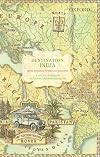
The book is almost a little gem. Lloyd and Susanne Rudolph drove from London to India in 1956, embarking on a long academic journey to study India. They divided the book into two parts, devoting the first to their journey across Europe and Asia into South Asia. The second part has two articles written about India.
I don't understand why they used a semi-cursive font for the book's first part. The font made the reading challenging but forced you to read slowly. The descriptions, with dates show more from their journal, are sparse but perfectly convey the spirit of adventure. Not much is unexplored today, and technology simplifies travel. We forget that, a few decades ago, people went out to explore, and circumstances often placed them in tough spots. You needed ingenuity to solve the hurdles that always cropped up.
Lloyd and Susanne Rudolph remind us that people are the same, yet different, and you cannot judge people by one standard.
The book's second part includes two articles that challenge the reader but provide enough material for further research. This section will appeal to a narrow group of readers who wish to explore unknown facets of India and seek additional reading material. Many of us (Indians) are unfamiliar with our country's complexity. We are guilty of judging different aspects of society according to our standards: the West alone is not guilty of prejudiced behavior.
Why do I call the book 'almost a little gem'? Why don't I drop the word 'almost'? The book is fascinating for a small section of society and readers but may not appeal to the majority as a tragedy. If the authors had included a summary of their research and findings, they would have placed the book in a proper context. show less
I don't understand why they used a semi-cursive font for the book's first part. The font made the reading challenging but forced you to read slowly. The descriptions, with dates show more from their journal, are sparse but perfectly convey the spirit of adventure. Not much is unexplored today, and technology simplifies travel. We forget that, a few decades ago, people went out to explore, and circumstances often placed them in tough spots. You needed ingenuity to solve the hurdles that always cropped up.
Lloyd and Susanne Rudolph remind us that people are the same, yet different, and you cannot judge people by one standard.
The book's second part includes two articles that challenge the reader but provide enough material for further research. This section will appeal to a narrow group of readers who wish to explore unknown facets of India and seek additional reading material. Many of us (Indians) are unfamiliar with our country's complexity. We are guilty of judging different aspects of society according to our standards: the West alone is not guilty of prejudiced behavior.
Why do I call the book 'almost a little gem'? Why don't I drop the word 'almost'? The book is fascinating for a small section of society and readers but may not appeal to the majority as a tragedy. If the authors had included a summary of their research and findings, they would have placed the book in a proper context. show less
You May Also Like
Associated Authors
Statistics
- Works
- 11
- Members
- 95
- Popularity
- #197,645
- Rating
- 4.0
- Reviews
- 2
- ISBNs
- 22