

Nathan Johnson
Author of Ghostbusters: Ghost Busted (v. 1)
About the Author
Nathan Johnson is a member of the Pine County Historical Society and the city planner for the city of Pine City. It is said that a picture is worth a thousand words, and pictures of Pine City provoke a plethora of memories for Johnson, who grew up here!
Image credit: By Farrah Fossum - She emailed it to me., CC BY-SA 3.0, https://commons.wikimedia.org/w/index.php?curid=24128942
Works by Nathan Johnson
Contact High 4 copies
Associated Works
Tagged
Common Knowledge
- Gender
- male
Members
Reviews
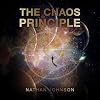
If you're worried about where society might be heading as it becomes ever more reliant on digital technologies, this is the book for you. It is extremely well written, if a little disjointed in parts, and dark, very in some places. It will be interesting to see of the Author can keep this level of writing and world making on point, as the series progresses.
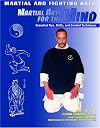
The nature and origin of the world's martial arts differ greatly, yet all have one thing in common-mental strength. Each martial art insists that its students train to utilize the power of the mind to maximum effect. Indeed, Oriental martial arts (like kung fu and karate) are well known for the great emphasis they put on the training of the mind as well as the body.
Courage and bravery are qualities everyone expects to be associated with martial arts, but there are many subtle qualities that show more can be nurtured through proper study and practice such as courtesy, tolerance, confidence, dignity, and loyalty. Because training unfolds in a physical way, martial artists are able to encourage a 'healthy body, healthy mind' attitude within their chosen discipline.
Contents
Introduction
The nonphysical aims of martial arts
Inteligence grows in a healthy mind
Moving meditation: Solo forms
Pushing-hands
Glossary
Clothing and equipment
Further reading (bibliography)
Useful web sites/About the author
Index show less
Courage and bravery are qualities everyone expects to be associated with martial arts, but there are many subtle qualities that show more can be nurtured through proper study and practice such as courtesy, tolerance, confidence, dignity, and loyalty. Because training unfolds in a physical way, martial artists are able to encourage a 'healthy body, healthy mind' attitude within their chosen discipline.
Contents
Introduction
The nonphysical aims of martial arts
Inteligence grows in a healthy mind
Moving meditation: Solo forms
Pushing-hands
Glossary
Clothing and equipment
Further reading (bibliography)
Useful web sites/About the author
Index show less
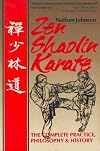
Kata, the preset movements forming the backbone of all karate styles, have been a sourch of endless confusion for the vast majority of karate students. All students learn how to perform the kata, but there as never been an effective explanation of how they are applied. Until now!
Nathan Johnson, a third-degree black belt in karate and a fourth-degree black belt in kung fu, has spent two decades on his quest to find the true meaning of kata. In Zen Shaolin Karate, Johnson explains and show more illustrates in precise detail every subtle movement of two of karate's most common kata, and provides historical testimony for his explanations by integrating his findings with Zen philosophy. The author's unique interpretations of the Nai Fuan chin and Saam Chin (sanchin) kata will destroy the barriers separating karate, kung fu, and aikido, and will revolutionize how kata are applied in all karate styles
Nathan Johnson teaches karate at the universities of Southampton and Portmouth in England, and is a regular contibutor to Traditional Karate, Fighting Arts, and Shotokan Karate Magazine. During his 20 years of martial arts training, he has studied Goju-ryu, Shotokan, Shotokai, and Wado-ryu karate, as well as Wing Chkun, Fukienese Crane, and Southern-style kung fu.
Contents
Acknowledgments
Foreword by Steve Rowe
Introduction
Chapter One Philosophy and history
The shaolin way
What is zen (as related to karate-do)?
Okinawan karate history
Japanese karate istory
The ancient kata
Function dictated form
Chapter Two Basics
Warming up-Auxiliary warm-up exercises (Exercise one-stretching the neck; Exercise Two-Circling and stretching the arms; Exercise Three-Swinging the arms and twisting the hips; Exercise Four-Circling the hips; Exercise Five-Bending at the waist and stretching the hamstring muscles)
Stances-Neutral stance; Offensive stance; Saam chin stance; Cat stance; Straddle-leg stance; Crossed-leg stance
Basic techniques-Hand techniques (Lead-hand straight punch; Rear-hand straight punch; Lead-hand back-fist strike; Rear-hand back-fist strike; Lead-hand hook punch; Rear-hand hook punch; Vertical elbow strike; Horizontal elbow strike; Palm-down knife-hand strike; Palm-up knife-hand strike); Leg techniques (Front kick; Foot sweep; Low side kick)
Rolling-Forward roll; Backward roll
Chapter Three Saam Chin (sanchin)
Samadhi
Achieving samadhi through the saam chin kata
Saam chin breathing
Saam chin theory-The saam chin stance; The unbendable arm; Coordination of and and arm movements; The immpassable ring; Coordination in saam chin; Merging with an attack; The palm-heel strike
Saam chin solo sequence: Section One
Saam chin solo sequence: Section Two
Saam chin solo sequence: Section Three
Saam chin applications-Using the palm-heel strike; The midline; The significating hand; Evasion and stepping; Defense against a back-fist; defense against a lead-hand straight punch; Rear-hand straight punch combination; defense against a front kick, rear-hand straight; punch, lead-hand hook punch combination
Chapter Four Nai Fuan Chin
Nai fuan chin grapping-The nai fuan chin fist; The nai fuan chin grips (The reverse-hand grip; The overhand grip; The underhand grip; The combined reverse-hand grip and overhand grip; The combined underhand grip and overhand grip; the double underhand ggrip); The straddle-leg stance
Nai faun chin section one solo sequence
Nai faun chin section one application
Nai faun chin section two solo sequence
Nai faun chin section Two application
Nai faun chin section three solo sequence
Nai faun chin section three application
Chapter Five Pushing Hands
Theories and concepts
Pracitcing pushing hands-The fixed ushing hands ddrill; Changing sides; Basic changes (Change One, Two, Three); Introducing saam chin boxing into pushing hands (Defense against a lead-hand back-fist strike; Defense against an upper-level rear-and straight punch; Defense against a rear-hand back-fist strike; Defense against an upper-level lead-hand; Straight punch from a crossed poistion; Defense against a middle-level hook punch from a crossed position; Defense against a foot sweep; defense against a front kick, lead-hand straight punch combination); Introducing hai fuan chin grappling inot pushing hands (Set One, Two, Three)
Chapter Six Final thoughts
Some maxims
Chu and the watermelon
Conclusion show less
Nathan Johnson, a third-degree black belt in karate and a fourth-degree black belt in kung fu, has spent two decades on his quest to find the true meaning of kata. In Zen Shaolin Karate, Johnson explains and show more illustrates in precise detail every subtle movement of two of karate's most common kata, and provides historical testimony for his explanations by integrating his findings with Zen philosophy. The author's unique interpretations of the Nai Fuan chin and Saam Chin (sanchin) kata will destroy the barriers separating karate, kung fu, and aikido, and will revolutionize how kata are applied in all karate styles
Nathan Johnson teaches karate at the universities of Southampton and Portmouth in England, and is a regular contibutor to Traditional Karate, Fighting Arts, and Shotokan Karate Magazine. During his 20 years of martial arts training, he has studied Goju-ryu, Shotokan, Shotokai, and Wado-ryu karate, as well as Wing Chkun, Fukienese Crane, and Southern-style kung fu.
Contents
Acknowledgments
Foreword by Steve Rowe
Introduction
Chapter One Philosophy and history
The shaolin way
What is zen (as related to karate-do)?
Okinawan karate history
Japanese karate istory
The ancient kata
Function dictated form
Chapter Two Basics
Warming up-Auxiliary warm-up exercises (Exercise one-stretching the neck; Exercise Two-Circling and stretching the arms; Exercise Three-Swinging the arms and twisting the hips; Exercise Four-Circling the hips; Exercise Five-Bending at the waist and stretching the hamstring muscles)
Stances-Neutral stance; Offensive stance; Saam chin stance; Cat stance; Straddle-leg stance; Crossed-leg stance
Basic techniques-Hand techniques (Lead-hand straight punch; Rear-hand straight punch; Lead-hand back-fist strike; Rear-hand back-fist strike; Lead-hand hook punch; Rear-hand hook punch; Vertical elbow strike; Horizontal elbow strike; Palm-down knife-hand strike; Palm-up knife-hand strike); Leg techniques (Front kick; Foot sweep; Low side kick)
Rolling-Forward roll; Backward roll
Chapter Three Saam Chin (sanchin)
Samadhi
Achieving samadhi through the saam chin kata
Saam chin breathing
Saam chin theory-The saam chin stance; The unbendable arm; Coordination of and and arm movements; The immpassable ring; Coordination in saam chin; Merging with an attack; The palm-heel strike
Saam chin solo sequence: Section One
Saam chin solo sequence: Section Two
Saam chin solo sequence: Section Three
Saam chin applications-Using the palm-heel strike; The midline; The significating hand; Evasion and stepping; Defense against a back-fist; defense against a lead-hand straight punch; Rear-hand straight punch combination; defense against a front kick, rear-hand straight; punch, lead-hand hook punch combination
Chapter Four Nai Fuan Chin
Nai fuan chin grapping-The nai fuan chin fist; The nai fuan chin grips (The reverse-hand grip; The overhand grip; The underhand grip; The combined reverse-hand grip and overhand grip; The combined underhand grip and overhand grip; the double underhand ggrip); The straddle-leg stance
Nai faun chin section one solo sequence
Nai faun chin section one application
Nai faun chin section two solo sequence
Nai faun chin section Two application
Nai faun chin section three solo sequence
Nai faun chin section three application
Chapter Five Pushing Hands
Theories and concepts
Pracitcing pushing hands-The fixed ushing hands ddrill; Changing sides; Basic changes (Change One, Two, Three); Introducing saam chin boxing into pushing hands (Defense against a lead-hand back-fist strike; Defense against an upper-level rear-and straight punch; Defense against a rear-hand back-fist strike; Defense against an upper-level lead-hand; Straight punch from a crossed poistion; Defense against a middle-level hook punch from a crossed position; Defense against a foot sweep; defense against a front kick, lead-hand straight punch combination); Introducing hai fuan chin grappling inot pushing hands (Set One, Two, Three)
Chapter Six Final thoughts
Some maxims
Chu and the watermelon
Conclusion show less
You May Also Like
Associated Authors
Statistics
- Works
- 15
- Also by
- 4
- Members
- 94
- Popularity
- #199,201
- Rating
- 3.9
- Reviews
- 3
- ISBNs
- 27
- Languages
- 1