
Tuli Kupferberg (1923–2010)
Author of As They Were: Celebrated People's Pictures
About the Author
Image credit: family photo, 2000
Works by Tuli Kupferberg
Newspoems 3 copies
Don't Make Trouble. 2 copies
The Book of the Body. 2 copies
Kill for Peace 1 copy
The Rub Ya Out of Omore Diem 1 copy
Swing, Nos. 3 & 4 1 copy
Seclusion; The Food Farm; 1 copy
O God!: A collation 1 copy
"W-A-V-E-R" (in SF 12) 1 copy
Associated Works
War No More: Three Centuries of American Antiwar and Peace Writing (2016) — Contributor — 109 copies, 2 reviews
The Kronstadt Revolt: The Flower of the Revolution Crushed by the Bolsheviks (2021) — Contributor — 1 copy, 1 review
Tagged
Common Knowledge
- Legal name
- Kupferberg, Naftali
- Birthdate
- 1923-09-28
- Date of death
- 2010-07-12
- Gender
- male
- Education
- Brooklyn College
- Occupations
- poet
musician
cartoonist
singer - Organizations
- The Fugs
- Nationality
- USA
- Places of residence
- New York, New York, USA
- Associated Place (for map)
- New York, USA
Members
Reviews
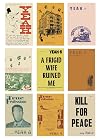
Originally published between 1961 and 1965 by Tuli Kupferberg and Sylvia Topp’s Birth Press, this volume reproduces all ten issues of YEAH magazine as individual facsimile editions, housed in a single box. Kupferberg described the magazine as “a satyric excursion; a sardonic review; a sarcastic epitome; a chronical of the last days,” and throughout its pages he acts as both editor and artist, threading the needle of leftist politics with the sarcasm and sharp creative wit for which he show more became known as one of the founders of the countercultural rock band The Fugs.
YEAH magazine began under the shadow of the Cold War, with Kupferberg and fellow poets contributing poetry, drawings, and collages that protested a number of social issues of the time, including nuclear war, racism, white supremacy, and the conservative, middle-class values that have become the hallmark of 1950s America. By issue 8, Kupferberg dispensed with contributors, choosing instead to feature only his own work. These later issues resemble magazine-length collages, consisting of images, illustrations, and articles appropriated from magazines and newspapers compiled in an aesthetic akin to the punk, cut-and-past zine that later took shape in the ‘70s and ‘80s.
Several of the issues were published with bonus features. Issues 7 and 9 include small YEAH EXTRAs devoted to police dogs and satire, respectively. Others include Birth Press ephemera and loose-leaf flyers, such as the infamous “Fuck for Peace” poster in both issues 8 and 10. Similarly, issue 4 contains a second smaller magazine called Kill Magazine stapled into the spine. This insert provides a bracing parody of the white American male belief system and is “dedicated to the annihilation of the enemies of the white people. . . .” Throughout the magazine’s run, Kupferberg would take up the absurd and grotesque voice of the oppressor in an attempt to deflate and undermine the racist, sexist, and anti-communist views that dominated the American perspective of the time, a period in which the Civil Rights Act and the Voting Rights Act had yet to be passed into law.
Tuli Kupferberg (1923–2010) was a New York City-based poet, author, cartoonist, publisher, and musician. In 1958, Kupferberg started Birth Press with Sylvia Topp, which published a number of beat and anarchist-influenced magazines and pamphlets, including Birth, Swing, and YEAH. His work was included in several hundred magazines and books, including three volumes of writings published by Grove Press in the late 1960s. Kupferberg’s work often attracted controversy; he was a dedicated activist around issues including racism, censorship, and police brutality. As a lifelong member of the seminal counterculture band, The Fugs, which he co-founded with Ed Sanders, Kupferberg released more than a dozen studio and live albums spanning from 1965 until his death. show less
YEAH magazine began under the shadow of the Cold War, with Kupferberg and fellow poets contributing poetry, drawings, and collages that protested a number of social issues of the time, including nuclear war, racism, white supremacy, and the conservative, middle-class values that have become the hallmark of 1950s America. By issue 8, Kupferberg dispensed with contributors, choosing instead to feature only his own work. These later issues resemble magazine-length collages, consisting of images, illustrations, and articles appropriated from magazines and newspapers compiled in an aesthetic akin to the punk, cut-and-past zine that later took shape in the ‘70s and ‘80s.
Several of the issues were published with bonus features. Issues 7 and 9 include small YEAH EXTRAs devoted to police dogs and satire, respectively. Others include Birth Press ephemera and loose-leaf flyers, such as the infamous “Fuck for Peace” poster in both issues 8 and 10. Similarly, issue 4 contains a second smaller magazine called Kill Magazine stapled into the spine. This insert provides a bracing parody of the white American male belief system and is “dedicated to the annihilation of the enemies of the white people. . . .” Throughout the magazine’s run, Kupferberg would take up the absurd and grotesque voice of the oppressor in an attempt to deflate and undermine the racist, sexist, and anti-communist views that dominated the American perspective of the time, a period in which the Civil Rights Act and the Voting Rights Act had yet to be passed into law.
Tuli Kupferberg (1923–2010) was a New York City-based poet, author, cartoonist, publisher, and musician. In 1958, Kupferberg started Birth Press with Sylvia Topp, which published a number of beat and anarchist-influenced magazines and pamphlets, including Birth, Swing, and YEAH. His work was included in several hundred magazines and books, including three volumes of writings published by Grove Press in the late 1960s. Kupferberg’s work often attracted controversy; he was a dedicated activist around issues including racism, censorship, and police brutality. As a lifelong member of the seminal counterculture band, The Fugs, which he co-founded with Ed Sanders, Kupferberg released more than a dozen studio and live albums spanning from 1965 until his death. show less

This a pretty funny bk. Why don't I give it a better rating? Probably because, in the end, I find most slackers who don't work for a living to be boring. Still, this is a good bk. Kupferberg does a great job of laying this out creatively w/ alotof found clip art, ironically presented ads, & drawings. The suggestions for not working include such things as: "Find a million dollar in a toilet bowl you the only one dares to fish it out".

Very funny and for people who find the Missionary position boring, instructive too !
Nov 29, 2009Dutch
You May Also Like
Associated Authors
Statistics
- Works
- 28
- Also by
- 7
- Members
- 150
- Popularity
- #138,699
- Rating
- 4.0
- Reviews
- 3
- ISBNs
- 8
- Languages
- 1