

Ginjer L. Clarke
Author of BLACK OUT! Animals That Live in the Dark
About the Author
Works by Ginjer L. Clarke
The Fascinating Animal Book for Kids: 500 Wild Facts! (Fascinating Facts) (2020) 140 copies, 3 reviews
Associated Works
Tagged
Common Knowledge
- Gender
- female
- Education
- James Madison University
- Nationality
- USA
- Places of residence
- Richmond, Virginia, USA
- Associated Place (for map)
- Virginia, USA
Members
Reviews
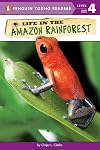
Technically, this is an easy reader, however Penguin level 4 is generally too high for my easy reader section. I usually place them in the juvenile nonfiction and consider them part of the beginning chapters.
This nonfiction title starts with a brief introduction to the rainforest, a map, general description of the weather, and the layers from forest floor to emergent trees.
Each chapter in the main section focuses on selected animals from a different area; dolphins, capybara and caimans in show more the river, jaguar and tapir on the forest floor, and so forth. Some of the animals are familiar - boas, bats, spider monkeys, and sloths. Others are more unusual like the hoatzin (a bird), harpy eagles, and ocelots.
The final chapter briefly addresses the destruction of the rainforest and ways readers can recycle and otherwise help. Back matter consists of a small glossary.
The book is illustrated with photographs, many of them set in frames, with a few full-page photos. This is a nice introduction to the rainforest, which would also work well as a supplemental resource. However, I feel there is a major gap in this story; there is no mention of the approximately twenty million people who live in the rainforest and are as much a part of it as the fascinating creatures that also call it home. The only reference to the inhabitants are a mention of the use of poison dart frogs in blow darts and a photo of said dart guns. I've noticed that many calls for "saving the rainforest" seem to ignore the people who live there and should be part of any conversation involving its current and future use and preservation.
Verdict: This serves as an introduction for rainforest animals, but should be supplemented with more materials that include all aspects of the rainforest.
ISBN: 9781524784881; Published 2018 by Penguin; Review copy provided by publisher; Donated to the library show less
This nonfiction title starts with a brief introduction to the rainforest, a map, general description of the weather, and the layers from forest floor to emergent trees.
Each chapter in the main section focuses on selected animals from a different area; dolphins, capybara and caimans in show more the river, jaguar and tapir on the forest floor, and so forth. Some of the animals are familiar - boas, bats, spider monkeys, and sloths. Others are more unusual like the hoatzin (a bird), harpy eagles, and ocelots.
The final chapter briefly addresses the destruction of the rainforest and ways readers can recycle and otherwise help. Back matter consists of a small glossary.
The book is illustrated with photographs, many of them set in frames, with a few full-page photos. This is a nice introduction to the rainforest, which would also work well as a supplemental resource. However, I feel there is a major gap in this story; there is no mention of the approximately twenty million people who live in the rainforest and are as much a part of it as the fascinating creatures that also call it home. The only reference to the inhabitants are a mention of the use of poison dart frogs in blow darts and a photo of said dart guns. I've noticed that many calls for "saving the rainforest" seem to ignore the people who live there and should be part of any conversation involving its current and future use and preservation.
Verdict: This serves as an introduction for rainforest animals, but should be supplemented with more materials that include all aspects of the rainforest.
ISBN: 9781524784881; Published 2018 by Penguin; Review copy provided by publisher; Donated to the library show less
This book is absolutely delightful. Bright, bold, and vibrant, it is filled with hundreds of full-color pictures of various animals and tons of animal facts. Its appeal will be universal. Children with the smallest interest in animals will not be able to resist flipping through its pages and I am certain parents will also enjoy it.
Each section is color-coded, making it easy for youngsters to find their favorite animals just by looking at the fore-edge of the book. It is listed for the 9-12 show more crowd and the facts are written with that level of reading in mind. The largish softcover book will probably work best with that age group as well. I would, however, go so far as to say that it is appropriate for any school-aged kids. With help, younger kids will enjoy learning about new animals and beginning readers will be motivated to read and learn the facts.
It would be a great addition to any private collection, and also to any classroom or homeschool library shelf. With its multicolor, multi-font text, it is perfect for silent reading time or class discussion. The facts are fun and easy to memorize and would also provide a jumping-off point for any in-depth unit study or research project about animals. show less
Each section is color-coded, making it easy for youngsters to find their favorite animals just by looking at the fore-edge of the book. It is listed for the 9-12 show more crowd and the facts are written with that level of reading in mind. The largish softcover book will probably work best with that age group as well. I would, however, go so far as to say that it is appropriate for any school-aged kids. With help, younger kids will enjoy learning about new animals and beginning readers will be motivated to read and learn the facts.
It would be a great addition to any private collection, and also to any classroom or homeschool library shelf. With its multicolor, multi-font text, it is perfect for silent reading time or class discussion. The facts are fun and easy to memorize and would also provide a jumping-off point for any in-depth unit study or research project about animals. show less
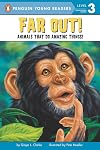
This book is fascinating because it is divided into chapters that show the different jobs that animals have, how animals communicate, and how they work together. It makes students think about animals in ways that they might not have thought of before.
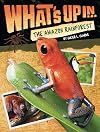
I really wanted to like this book - I'm in the market for more chapter-book-like nonfiction and Ginjer Clarke has done some very serviceable nonfiction series before. However, there were some layout decisions and other elements that made me take this off the list, for my library at least.
The rainforest and general terms and concepts are covered in the introduction, then the book is divided into sections covering the Amazon river and the different levels of the rainforest. There are chapters show more on the native peoples of the Amazon, different products and medicines we get from the rainforest, and how readers can participate in conserving the rainforest. Back matter includes a brief bibliography, lengthy index, and fold-out map.
The book is a small paperback size, 140 pages. I like the glossary included directly into the pages and the many photographs and additional information breaking up the text. However, there were a couple things that annoyed me. First, the book is formatted like a journal, complete with water stains, highlighting, and areas on maps and photographs are circled by what looks like red marker. I don't know about other libraries, but this type of book in my library inspires an endless stream of kids to the desk "Ms. Jennifer, someone WROTE in this book!" and those who don't join that stream are busily scribbling on the book themselves, since "someone wrote on it already."
I found several typos; one on page 27 "One night, a water lily blooms a giant white flower that smells like pineapple." and some turns of phrase that I just didn't appreciate, like the anaconda's "fangs" on page 32. Now, it's true that all snakes have teeth of some kind, but I think it would have been better to explain how the anaconda's fangs are used, rather than inadvertently joining in with the "all snakes are venomous and will attack you" sensationalist view. Again on page 40, when talking about piranhas, it labels them "deadly" and mentions that the native people tell stories about them attacking humans, but it's my understanding that piranhas do not attack large prey and only eat humans and other large mammals if they are dead or dying. I'm skeptical about the claim of poison dart frogs having the "strongest poison in the world!" on page 93. Maybe, maybe not, but there's no source to prove it either way.
Verdict: So, basically, I liked the idea of the book and the chapter book size, but the journalistic details bothered me and I found myself reading skeptically the information included. It would probably be fine as an introduction for kids who just want to read about the rainforest, but I can't quite bring myself to recommend it.
ISBN: 9780448481036; Published 2015 by Grosset & Dunlap/Penguin; Review copy provided by publisher show less
The rainforest and general terms and concepts are covered in the introduction, then the book is divided into sections covering the Amazon river and the different levels of the rainforest. There are chapters show more on the native peoples of the Amazon, different products and medicines we get from the rainforest, and how readers can participate in conserving the rainforest. Back matter includes a brief bibliography, lengthy index, and fold-out map.
The book is a small paperback size, 140 pages. I like the glossary included directly into the pages and the many photographs and additional information breaking up the text. However, there were a couple things that annoyed me. First, the book is formatted like a journal, complete with water stains, highlighting, and areas on maps and photographs are circled by what looks like red marker. I don't know about other libraries, but this type of book in my library inspires an endless stream of kids to the desk "Ms. Jennifer, someone WROTE in this book!" and those who don't join that stream are busily scribbling on the book themselves, since "someone wrote on it already."
I found several typos; one on page 27 "One night, a water lily blooms a giant white flower that smells like pineapple." and some turns of phrase that I just didn't appreciate, like the anaconda's "fangs" on page 32. Now, it's true that all snakes have teeth of some kind, but I think it would have been better to explain how the anaconda's fangs are used, rather than inadvertently joining in with the "all snakes are venomous and will attack you" sensationalist view. Again on page 40, when talking about piranhas, it labels them "deadly" and mentions that the native people tell stories about them attacking humans, but it's my understanding that piranhas do not attack large prey and only eat humans and other large mammals if they are dead or dying. I'm skeptical about the claim of poison dart frogs having the "strongest poison in the world!" on page 93. Maybe, maybe not, but there's no source to prove it either way.
Verdict: So, basically, I liked the idea of the book and the chapter book size, but the journalistic details bothered me and I found myself reading skeptically the information included. It would probably be fine as an introduction for kids who just want to read about the rainforest, but I can't quite bring myself to recommend it.
ISBN: 9780448481036; Published 2015 by Grosset & Dunlap/Penguin; Review copy provided by publisher show less
Awards


You May Also Like


Associated Authors
Statistics
- Works
- 44
- Also by
- 1
- Members
- 5,169
- Popularity
- #4,810
- Rating
- 4.1
- Reviews
- 33
- ISBNs
- 190
- Languages
- 1