
Dina L. Sleiman
Author of Dauntless (Valiant Hearts) (Volume 1)
About the Author
Image credit: My photo
Series
Works by Dina L. Sleiman
Tagged
Common Knowledge
- Awards and honors
- Winner of the 2009 Touched by Love contest for unpublished novelists
- Agent
- Tamela Hancock Murray
- Short biography
- Dina Sleiman writes lyrical stories that dance with light. Most of the time you will find this Virginia Beach resident reading, biking, dancing, or hanging out with her husband and three children, preferably at the oceanfront. Since finishing her Professional Writing MA in 1994, she has enjoyed many opportunities to teach literature, writing, and the arts. She was the Overall Winner in the 2009 Touched by Love contest for unpublished authors. Her first novel, Dance of the Dandelion, will release with Whitefire Publishing in 2011. Dina is represented by Tamela Hancock Murray of The Steve Laube Agency. She has recently become an acquisitions editor for WhiteFire as well. Join her as she discovers the unforced rhythms of grace. For more info visit her at http://dinasleiman.com/
- Nationality
- USA
- Places of residence
- Virginia Beach, Virginia, USA
- Associated Place (for map)
- Virginia, USA
Members
Reviews
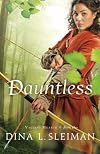
Merrie Olde England is not so merry during the time of King John. Many know the Robin Hood legend in which the noble Robin robs from the rich in order to take care of the poor oppressed by John and his sheriffs. Building on this framework, but with a fresh voice, Dina Sleiman’s Dauntless takes the reader into a time of chivalry and honor, with an endearing young heroine determined to protect the most vulnerable. The first book in her Valiant Hearts series, Dauntless presents the story of show more Lady Merrie Ellison and her Ghosts, the children of her village left orphaned by the ruthlessness of King John. They live by their wits in the forest hoping to one day re-enter society.
Dauntless is a YA novel that will appeal to high school girls. Main character Merrie Ellison is a courageous and determined young woman who doesn’t let her weaker sex keep her from protecting those she loves. Smart and talented in the ways of defense, she leads her band while eluding detection from the kings’s men. There certainly is danger in the forest, and Merrie must use her wits and her loyal men to escape from her childhood friend Timothy. The characters are wonderful, and the romantic thread is just right. The adventures of the group keep the pages turning. Historical details abound and add a depth of authenticity. Merrie wrestles with injustice leading her to reject God as impotent or cruel. That struggle is the main thrust of the spiritual thread woven throughout the novel.
I liked Dauntless and would not hesitate to recommend it. There are two more novels in the series as well — lots of reading adventures!
Recommended.
Audience: young adults.
(Thanks to Bethany House for a complimentary copy. All opinions expressed are mine alone.) show less
Dauntless is a YA novel that will appeal to high school girls. Main character Merrie Ellison is a courageous and determined young woman who doesn’t let her weaker sex keep her from protecting those she loves. Smart and talented in the ways of defense, she leads her band while eluding detection from the kings’s men. There certainly is danger in the forest, and Merrie must use her wits and her loyal men to escape from her childhood friend Timothy. The characters are wonderful, and the romantic thread is just right. The adventures of the group keep the pages turning. Historical details abound and add a depth of authenticity. Merrie wrestles with injustice leading her to reject God as impotent or cruel. That struggle is the main thrust of the spiritual thread woven throughout the novel.
I liked Dauntless and would not hesitate to recommend it. There are two more novels in the series as well — lots of reading adventures!
Recommended.
Audience: young adults.
(Thanks to Bethany House for a complimentary copy. All opinions expressed are mine alone.) show less
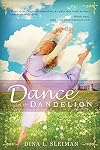
I have finally found the perfect novel. Seriously! This is the best book I have read in a very long time and I've read over 200 books in the last two years.
For me the most emotional and touching part of the story had to do with Dandelion's fear of her own passion. God made her that way and she knew that deep inside. When she tried to squelch it, the effect never lasted. She longed for love and a better life, but her passion was misdirected so many times. She thought maybe choosing someone show more who was stable and secure was what she needed to control that passion that frightened her so many times, but that didn't work. Often women are drawn to men who have self-serving and selfish desires because they are so charming and passionate as well, but not in a way that shows love. That initial bond quickly shatters when the true colors of the person doing the abusing comes out and then the woman is trapped. Dandelion was strong in so many ways, but at the same time she was so very human. I loved her dearly as if she were a real person. Dance of the Dandelion inspired me in a place deep inside my heart that books rarely touch. I highly recommend this story for anyone who has looked for love and satisfaction in the wrong places and thus made poor choices in this life. The book illustrates through well-written characterization how you can experience the freedom to worship God with passion and fulfill that desire to know Him more. That's what Dandelion's story did for me. show less
For me the most emotional and touching part of the story had to do with Dandelion's fear of her own passion. God made her that way and she knew that deep inside. When she tried to squelch it, the effect never lasted. She longed for love and a better life, but her passion was misdirected so many times. She thought maybe choosing someone show more who was stable and secure was what she needed to control that passion that frightened her so many times, but that didn't work. Often women are drawn to men who have self-serving and selfish desires because they are so charming and passionate as well, but not in a way that shows love. That initial bond quickly shatters when the true colors of the person doing the abusing comes out and then the woman is trapped. Dandelion was strong in so many ways, but at the same time she was so very human. I loved her dearly as if she were a real person. Dance of the Dandelion inspired me in a place deep inside my heart that books rarely touch. I highly recommend this story for anyone who has looked for love and satisfaction in the wrong places and thus made poor choices in this life. The book illustrates through well-written characterization how you can experience the freedom to worship God with passion and fulfill that desire to know Him more. That's what Dandelion's story did for me. show less
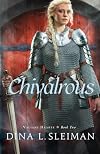
A trilogy, that common animal in Fiction, can be a mixed bag. The first book can be wonderful, whilst others fail to please, or vice versa. Such was the case for me with Chivalrous. I did genuinely like Dauntless, the first book and the series- and that is high praise from me, who sets my standards for Medieval Fiction very high indeed.
In such cases, it’s best to start with the positive. Chivalrous was a tight, well-told story, with some important messages, and delivered its main show more religious theme about trusting God in difficult and seemingly impossible circumstances well, without being too preachy. Readers of the first book might also enjoy seeing Allen of Ellsworth, an important character from the first book, come into his own. There is also plenty of action, adventure and intrigue to keep young adult readers enthralled- as well as plenty of romance.
However, for me there some major deficiencies. One thing was that I never really warmed to the female protagonist, Gwendolyn. Like Merry from the first book she adopts a traditionally male role, that of a wannabe knight- but unlike Merry, her wish to do this seems to result more from rebellious obstinacy, and a refusal to conform to social norms than anything else-at least at the beginning of the story.
In the early part of the book, she just seemed like a brat with a chip on her shoulder because she was not allowed to play with swords and was expected to stay in her family’s castle, and do ‘boring’ things she did not want to do.
Okay, so the idea of a medieval woman fighting is not so implausible. Yet the notion of a teenage girl with no direct military experience being able to best trained soldiers, or even kill fully armoured knights on the battlefield when not even wearing a helmet (essential for preventing serious head injuries, or death) and escape unscathed is a bit much. Even for men, failure to use the proper armour or equipment in battle proved fatal, so how could she manange without it?
Again, I had no problem with the issue of domestic abuse in this story. These things do happen and its necessary to explore them at times. However, I do object to the idea that Gwen’s situation- that of having a father who abuses her mother, and even his children, was common in medieval times, and such actions were generally considered acceptable. Nor do I accept the idea that Gwen’s father’s attitude towards women and their roles were normal for the period. For instance, he believes women should not ride horses, as it could damage their reproductive organs. I have heard the Victorians believed something along those lines about riding bicycles, but know of no evidence for such an idea in the medieval times. Indeed, there are plenty of images of women riding horses from the period.
Oh, and he also wants to force her to marry a horrid, cruel man. A bit of a cliché, but forced marriage is very much prevalent in this story. It is something else I have a problem with in fiction- mostly because the church actually banned it in the eleventh century, and for a marriage to be valid the free consent of both parties had to be given willingly. Despite this, many authors seem to ignore or discount the ban, and make out that it was the norm-even though the evidence shows many noblewomen chose their own husbands. One of those ‘don’t let the facts get in the way of the story’ situations.
Even the notion of North Britannia being a ‘progressive’ state got to me, because of the way this was treated. Basically, it’s supposed to be some paragon of medieval chivalric ideals, and Christian virtues in the midst of the universally corrupt society around it. I can accept that this is meant to be ‘dystopian’ fiction- but it’s almost too dystopian. The characters constantly harping on about how ‘progressive’ they were, whilst pointing the accusing finger at anyone who did not share their ideals smacks too much of modern liberalism.
Seemingly most other societies, including their neighbour England (which they are actually meant to be part of) were in danger of being regarded as backwards, repressive and their customs and ideas often treated with scorn.
The villain is opposed to this ‘progress’ and wants a return to ‘traditional feudalism’ (which is regarded as bad, bad, bad) like they supposedly had in backwards England, and scorn such notions as rule of Law, rule by council, democracy and equality. The problem this representation in inaccurate- and such notions were not alien and repugnant to Medieval Englishmen. The notion of rule of law existed in English society before the Magna Carta, most Medieval Kings had councils, and it was a nobleman who established the British parliament including the House of Commons, in the same century as this book is set.
More generally, I was concerned with the attitude towards authority that was held by some of the characters. The most progressive North Britannians seem to have little time for the idea that fathers should be able to ‘rule their household’ and have a legal right to authority over their wives and underage children. Yet this concept is supported in scripture- although not in the way that Gwen’s father uses it, but the characters in question seem to consider the notion itself to be wrong and unjust.
Allen and his fellows seemed to think that if the political authorities, in this case the Council that he was meant to be leading, supported something which that regarded as tyrannical, unfair or unjust, they should ‘follow their own heart’, and the alleged leading of the Holy Spirit- instead of being ‘ruled by men’. At one point he condemns said council as ‘tyrannical’- basically because it would not let him run off and rescue and damsel in distress, instead of facing his responsibilities and running the Dukedom.
The New Testament contains a number of passages which expressly state we should obey those in authority, for God puts them in that place, and even be subject to Kings and rulers. Only if they require us to do something which is expressly against Christian teaching is there any precedent for refusal to obey. Not just because we don’t like or think it’s right. Not just because they will not let us do what we want.
Now, I do not in any way condone the abuse of this power that Gwen’s father represents- but nor do I believe we should pick and choose which parts of the Bible we want to believe, and reject that which does not fit in with our ideas. The idea that you can reject anything in mainstream religious teaching, or that any authority figure tells you that conflicts with your innate idea of ‘doing what is right’, as the characters often seem to do, is one that is worrying. Especially when encountered by teenagers who might already have a problem with authority.
I almost think ‘Rebellious’ could have been a fitting title for this novel, which would really have worked better as fantasy than historical fiction. I would consider reading the next title in this series, and I’m not meaning to imply the author is deliberately misrepresenting anything, but just to proceed with caution.
I recieved an e-galley of this book, from the publisher via Netgalley for review. No other renumeration was given and all opinions expressed are my own. show less
In such cases, it’s best to start with the positive. Chivalrous was a tight, well-told story, with some important messages, and delivered its main show more religious theme about trusting God in difficult and seemingly impossible circumstances well, without being too preachy. Readers of the first book might also enjoy seeing Allen of Ellsworth, an important character from the first book, come into his own. There is also plenty of action, adventure and intrigue to keep young adult readers enthralled- as well as plenty of romance.
However, for me there some major deficiencies. One thing was that I never really warmed to the female protagonist, Gwendolyn. Like Merry from the first book she adopts a traditionally male role, that of a wannabe knight- but unlike Merry, her wish to do this seems to result more from rebellious obstinacy, and a refusal to conform to social norms than anything else-at least at the beginning of the story.
In the early part of the book, she just seemed like a brat with a chip on her shoulder because she was not allowed to play with swords and was expected to stay in her family’s castle, and do ‘boring’ things she did not want to do.
Okay, so the idea of a medieval woman fighting is not so implausible. Yet the notion of a teenage girl with no direct military experience being able to best trained soldiers, or even kill fully armoured knights on the battlefield when not even wearing a helmet (essential for preventing serious head injuries, or death) and escape unscathed is a bit much. Even for men, failure to use the proper armour or equipment in battle proved fatal, so how could she manange without it?
Again, I had no problem with the issue of domestic abuse in this story. These things do happen and its necessary to explore them at times. However, I do object to the idea that Gwen’s situation- that of having a father who abuses her mother, and even his children, was common in medieval times, and such actions were generally considered acceptable. Nor do I accept the idea that Gwen’s father’s attitude towards women and their roles were normal for the period. For instance, he believes women should not ride horses, as it could damage their reproductive organs. I have heard the Victorians believed something along those lines about riding bicycles, but know of no evidence for such an idea in the medieval times. Indeed, there are plenty of images of women riding horses from the period.
Oh, and he also wants to force her to marry a horrid, cruel man. A bit of a cliché, but forced marriage is very much prevalent in this story. It is something else I have a problem with in fiction- mostly because the church actually banned it in the eleventh century, and for a marriage to be valid the free consent of both parties had to be given willingly. Despite this, many authors seem to ignore or discount the ban, and make out that it was the norm-even though the evidence shows many noblewomen chose their own husbands. One of those ‘don’t let the facts get in the way of the story’ situations.
Even the notion of North Britannia being a ‘progressive’ state got to me, because of the way this was treated. Basically, it’s supposed to be some paragon of medieval chivalric ideals, and Christian virtues in the midst of the universally corrupt society around it. I can accept that this is meant to be ‘dystopian’ fiction- but it’s almost too dystopian. The characters constantly harping on about how ‘progressive’ they were, whilst pointing the accusing finger at anyone who did not share their ideals smacks too much of modern liberalism.
Seemingly most other societies, including their neighbour England (which they are actually meant to be part of) were in danger of being regarded as backwards, repressive and their customs and ideas often treated with scorn.
The villain is opposed to this ‘progress’ and wants a return to ‘traditional feudalism’ (which is regarded as bad, bad, bad) like they supposedly had in backwards England, and scorn such notions as rule of Law, rule by council, democracy and equality. The problem this representation in inaccurate- and such notions were not alien and repugnant to Medieval Englishmen. The notion of rule of law existed in English society before the Magna Carta, most Medieval Kings had councils, and it was a nobleman who established the British parliament including the House of Commons, in the same century as this book is set.
More generally, I was concerned with the attitude towards authority that was held by some of the characters. The most progressive North Britannians seem to have little time for the idea that fathers should be able to ‘rule their household’ and have a legal right to authority over their wives and underage children. Yet this concept is supported in scripture- although not in the way that Gwen’s father uses it, but the characters in question seem to consider the notion itself to be wrong and unjust.
Allen and his fellows seemed to think that if the political authorities, in this case the Council that he was meant to be leading, supported something which that regarded as tyrannical, unfair or unjust, they should ‘follow their own heart’, and the alleged leading of the Holy Spirit- instead of being ‘ruled by men’. At one point he condemns said council as ‘tyrannical’- basically because it would not let him run off and rescue and damsel in distress, instead of facing his responsibilities and running the Dukedom.
The New Testament contains a number of passages which expressly state we should obey those in authority, for God puts them in that place, and even be subject to Kings and rulers. Only if they require us to do something which is expressly against Christian teaching is there any precedent for refusal to obey. Not just because we don’t like or think it’s right. Not just because they will not let us do what we want.
Now, I do not in any way condone the abuse of this power that Gwen’s father represents- but nor do I believe we should pick and choose which parts of the Bible we want to believe, and reject that which does not fit in with our ideas. The idea that you can reject anything in mainstream religious teaching, or that any authority figure tells you that conflicts with your innate idea of ‘doing what is right’, as the characters often seem to do, is one that is worrying. Especially when encountered by teenagers who might already have a problem with authority.
I almost think ‘Rebellious’ could have been a fitting title for this novel, which would really have worked better as fantasy than historical fiction. I would consider reading the next title in this series, and I’m not meaning to imply the author is deliberately misrepresenting anything, but just to proceed with caution.
I recieved an e-galley of this book, from the publisher via Netgalley for review. No other renumeration was given and all opinions expressed are my own. show less
I was not sure I would make of this novel before I read it. Dance of the Dandelion, the author’s debut novel published a few years ago really was not my cup of tea, but this one sounded promising and I had heard good things about it. I have to say I was pleased with what I read. It is a well written, Robin Hood like story plenty of action, adventure and romance, with a strong female lead, and a host of memorable and lovable supporting characters. I warmed to Allen- who I believe is the show more hero of the next story, and sweet little Wrenny.
The girl in a traditionally male role in the medieval period had the potential to be problematic- yet I felt that Merry Ellison’s personality and characteristics were generally plausible and fitted in with the time period. There is evidence that women could use bows, and even on occasion led forces of soldiers into battle. She is strong, independent and a leader, but it not too militant or feministic. Nor is she confident in her abilities to the point of conceit- but worked with men and was prepared to accept help.
I also felt that Mrs Sleiman carried off the English setting well. Some novel in this genre written by Americans tend to be peopled by ostensibly British characters who just don’t cut the mustard, because they are very Americanized in their speech or attitudes. Or else some writers just display an obvious lack of knowledge for British culture or geography. Yet this Brit can confidently assert that this was not the case here.
The romance was clean without being overly mushy, and the plot was straightforward enough for the genre without being too predictable or simplistic. Generally, the story also seemed to be historically accurate and authentic- though I was a little concerned by the reference to the works of Terry Jones in the historical note, who is not considered the most accurate or reliable source by many historians.
I did spot a few issues, however. One was the frequent mention of ‘Divine Right of Kings’, a concept which was actually invented by the Stuart Kings in the 1600s and did not exist in the Middle - Ages.
I also felt that Merry’s religious doubts seemed rather too modern- and I do think the character who has ceased to believe in God because bad things happened to them is something of a cliché of the Christian Fiction genre.
Her beliefs about equality of the classes and monarchy also seemed to owe more to the modern age than the medieval age. Having a Medieval character who cares for the poor is one thing, but a medieval person expecting their fellows to espouse democratic and egalitarian ideals is a bit much.
Also, I did think the idea that nobles could just have criminals sumarily hanged didn't seem whoolly plausible- I thought that even peasants were supposed to have some sort of trial in the local courts that existed at that tme.
Generally, however, I really enjoyed this story and would happily read again and share it with a teenage reader. Thoroughly recommended.
I received an electronic version of this book free from the publisher and Netgalley for review. I was not required to write a positive one and all opinions expressed are my own. show less
The girl in a traditionally male role in the medieval period had the potential to be problematic- yet I felt that Merry Ellison’s personality and characteristics were generally plausible and fitted in with the time period. There is evidence that women could use bows, and even on occasion led forces of soldiers into battle. She is strong, independent and a leader, but it not too militant or feministic. Nor is she confident in her abilities to the point of conceit- but worked with men and was prepared to accept help.
I also felt that Mrs Sleiman carried off the English setting well. Some novel in this genre written by Americans tend to be peopled by ostensibly British characters who just don’t cut the mustard, because they are very Americanized in their speech or attitudes. Or else some writers just display an obvious lack of knowledge for British culture or geography. Yet this Brit can confidently assert that this was not the case here.
The romance was clean without being overly mushy, and the plot was straightforward enough for the genre without being too predictable or simplistic. Generally, the story also seemed to be historically accurate and authentic- though I was a little concerned by the reference to the works of Terry Jones in the historical note, who is not considered the most accurate or reliable source by many historians.
I did spot a few issues, however. One was the frequent mention of ‘Divine Right of Kings’, a concept which was actually invented by the Stuart Kings in the 1600s and did not exist in the Middle - Ages.
I also felt that Merry’s religious doubts seemed rather too modern- and I do think the character who has ceased to believe in God because bad things happened to them is something of a cliché of the Christian Fiction genre.
Her beliefs about equality of the classes and monarchy also seemed to owe more to the modern age than the medieval age. Having a Medieval character who cares for the poor is one thing, but a medieval person expecting their fellows to espouse democratic and egalitarian ideals is a bit much.
Also, I did think the idea that nobles could just have criminals sumarily hanged didn't seem whoolly plausible- I thought that even peasants were supposed to have some sort of trial in the local courts that existed at that tme.
Generally, however, I really enjoyed this story and would happily read again and share it with a teenage reader. Thoroughly recommended.
I received an electronic version of this book free from the publisher and Netgalley for review. I was not required to write a positive one and all opinions expressed are my own. show less
Awards

You May Also Like


Statistics
- Works
- 6
- Members
- 351
- Popularity
- #68,158
- Rating
- 3.7
- Reviews
- 33
- ISBNs
- 11
