
Eric Williams (2) (1911–1981)
Author of Capitalism and Slavery
For other authors named Eric Williams, see the disambiguation page.
Eric Williams (2) has been aliased into Eric Eustace Williams.
Works by Eric Williams
Works have been aliased into Eric Eustace Williams.
Associated Works
Works have been aliased into Eric Eustace Williams.
Tagged
Common Knowledge
- Legal name
- Williams, Eric Eustace
- Birthdate
- 1911-09-25
- Date of death
- 1981-03-29
- Gender
- male
- Education
- University of Oxford (St Catherine's College)
- Occupations
- politician
prime minister
professor
non-fiction author - Organizations
- People’s National Movement (Founder)
Howard University - Nationality
- Trinidad and Tobago
- Birthplace
- Port of Spain, Trinidad and Tobago
- Place of death
- Port of Spain, Trinidad and Tobago
- Associated Place (for map)
- Port of Spain, Trinidad and Tobago
Members
Reviews
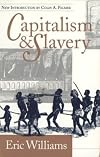
Eric Williams was prime minister of Trinidad and Tobago from 1961 until his death in 1981. Before that, he was a professor of political and social science at Howard University. His book, Capitalism and Slavery was published in 1944 and, as per Colin Palmer's introduction to the 1994 UNC Press edition I read, met with mixed reactions due to the new perspective it provided. As a West Indian, Williams' focus was slavery in the British Empire, and especially in the West Indies sugar colonies. show more General belief had it that the abolition of slavery in the Empire had been driven primarily by humanitarian movements in England.
Williams' thesis was that the proliferation of slavery was driven by the mercantile system, in which British colonies could only trade with the mother country, and protective tariffs made it prohibitively expensive for British companies to buy raw materials from anyone but those colonies. However, the capital accumulated in England via this system became substantial enough to fund inventions like the steam engine that eventually rendered this protective system obsolete, creating a clamor for free trade instead. Once this happened, the West Indian sugar plantations, were doomed. Sources of raw material, such as India, where slavery was not in widespread, or at least universal, practice, made it impossible for the slave colonies to compete. The industrialists in England no longer wanted to pay high tariffs to protect the trade of slave colonies. They no longer wanted to build ships for slavers because, Williams shows that the slave trade was a high risk proposition for ship owners and for sailors, whose death rate on slave ship duty was significantly higher than on other sort of merchant duty. (Williams never expressly says why that was.) Also, once the American colonies had won their independence, new markets were opened up for British importers. Finally, slave uprisings in the West Indies, in one colony or another, were relatively frequent, adding to the sense of unease and the reluctance of the English public to continue to countenance slavery. It's not that Williams didn't think the abolitionists were important. He devotes an entire chapter to their work. But the theme of his book was that they were not the primary drivers of slavery's end in the British Empire. Slavery ended, said Williams, when it was no longer economically viable. Members of Parliament who were supporters of slavery in one decade attacked the slave trade in the next. But when it came to the economic prosperity of the Empire, most British lawmakers and influential citizens were willing and able to shrug off slavery's injustices and horrors. Humanitarianism simply wasn't their brief.
Williams does a great job of illustrating the ways in which, during British slavery's heyday, the entire economy of the Empire was tied up in the practice. Slaves had to bought and transported (slavers and ship builders), they had to be clothed (cotton and wool manufacturers) and they had to be restrained (miners and forgers of handcuffs and other such devices). Food had to be imported, as well, because most of the islands, such as Barbados, crammed sugar cane into every arable acre.
The ideas behind the book are fascinating. Unfortunately, as a historian, Williams could not ask his readers to take his word regarding his research. He had to provide details about the rise and fall of mercantilism and slavery and then the free trade movement. There are a lot of such details, numbers regarding exports and imports of a wide range of colonies and industries, etc. One can understand Williams' need to include them, especially as he was proposing a new theory of events, but they can be slow in the reading.
Again, this book was first published in 1944. Palmer, in his introduction, tells us that subsequent research has in most cases confirmed Williams' thesis, but in some cases has contradicted some of Williams' ideas. He doesn't specify, however. So we read this book with the thought that, while Williams was creating a new and mostly valid framework for understanding the history he's dealing with, not every detail held up to the research done over the next half century. show less
Williams' thesis was that the proliferation of slavery was driven by the mercantile system, in which British colonies could only trade with the mother country, and protective tariffs made it prohibitively expensive for British companies to buy raw materials from anyone but those colonies. However, the capital accumulated in England via this system became substantial enough to fund inventions like the steam engine that eventually rendered this protective system obsolete, creating a clamor for free trade instead. Once this happened, the West Indian sugar plantations, were doomed. Sources of raw material, such as India, where slavery was not in widespread, or at least universal, practice, made it impossible for the slave colonies to compete. The industrialists in England no longer wanted to pay high tariffs to protect the trade of slave colonies. They no longer wanted to build ships for slavers because, Williams shows that the slave trade was a high risk proposition for ship owners and for sailors, whose death rate on slave ship duty was significantly higher than on other sort of merchant duty. (Williams never expressly says why that was.) Also, once the American colonies had won their independence, new markets were opened up for British importers. Finally, slave uprisings in the West Indies, in one colony or another, were relatively frequent, adding to the sense of unease and the reluctance of the English public to continue to countenance slavery. It's not that Williams didn't think the abolitionists were important. He devotes an entire chapter to their work. But the theme of his book was that they were not the primary drivers of slavery's end in the British Empire. Slavery ended, said Williams, when it was no longer economically viable. Members of Parliament who were supporters of slavery in one decade attacked the slave trade in the next. But when it came to the economic prosperity of the Empire, most British lawmakers and influential citizens were willing and able to shrug off slavery's injustices and horrors. Humanitarianism simply wasn't their brief.
Williams does a great job of illustrating the ways in which, during British slavery's heyday, the entire economy of the Empire was tied up in the practice. Slaves had to bought and transported (slavers and ship builders), they had to be clothed (cotton and wool manufacturers) and they had to be restrained (miners and forgers of handcuffs and other such devices). Food had to be imported, as well, because most of the islands, such as Barbados, crammed sugar cane into every arable acre.
The ideas behind the book are fascinating. Unfortunately, as a historian, Williams could not ask his readers to take his word regarding his research. He had to provide details about the rise and fall of mercantilism and slavery and then the free trade movement. There are a lot of such details, numbers regarding exports and imports of a wide range of colonies and industries, etc. One can understand Williams' need to include them, especially as he was proposing a new theory of events, but they can be slow in the reading.
Again, this book was first published in 1944. Palmer, in his introduction, tells us that subsequent research has in most cases confirmed Williams' thesis, but in some cases has contradicted some of Williams' ideas. He doesn't specify, however. So we read this book with the thought that, while Williams was creating a new and mostly valid framework for understanding the history he's dealing with, not every detail held up to the research done over the next half century. show less

I read the first couple of chapters, which were great, but after page 80 my pdf is damaged and I can't read anymore. I will return! This seems to be an essential book for understanding why slavery happened.
A self-serving, yet still important memoir. Williams never does anything wrong, his critics never do anything right.

A short history, written to mark the country's independence. Could be better, but valuable as a guide to Williams's political thought.
Lists
Awards


You May Also Like
Associated Authors
Statistics
- Works
- 12
- Also by
- 1
- Members
- 1,147
- Popularity
- #22,390
- Rating
- 3.9
- Reviews
- 8
- ISBNs
- 166
- Languages
- 10