
Alan Rickman (1946–2016)
Author of Madly, Deeply: The Diaries of Alan Rickman
About the Author
Image credit: David Shankbone
Works by Alan Rickman
Snow Cake 2 copies
Associated Works
Die Hard Legacy Collection [Die Hard / Die Hard 2 / Die Hard with a Vengeance / Live Free or Die Hard / A Good Day to Die Hard] (2017) — Actor — 123 copies
Harry Potter and the Deathly Hallows: Parts 1 & 2 [Double Feature] (2012) — Actor — 113 copies, 1 review
HP Double Feature: Harry Potter and the Sorcerer's Stone [and] Harry Potter and the Chamber of Secrets (Year 1 and Year 2) (2011) — Actor — 72 copies, 1 review
Harry Potter and the Order of the Phoenix [and] Harry Potter and the Half-Blood Prince (Double Feature Video) (2011) — Actor — 56 copies
Sweeney Todd, the Demon Barber of Fleet Street: The 2007 Motion Picture Soundtrack (2007) — Preformer — 18 copies
Tagged
Common Knowledge
- Legal name
- Rickman, Alan Sidney Patrick
- Birthdate
- 1946-02-21
- Date of death
- 2016-01-14
- Gender
- male
- Education
- Chelsea College of Art and Design (1968)
Royal Academy of Dramatic Art (1974) - Occupations
- actor
film director - Organizations
- Royal Shakespeare Company
Royal Academny of Dramatic Art - Nationality
- UK
- Birthplace
- Hammersmith, London, England, UK
- Places of residence
- London, England, UK
- Place of death
- London, England, UK
- Associated Place (for map)
- London, England, UK
Members
Discussions
Alan Rickman in Legacy Libraries (April 2022)
Reviews

I would not have imagined reading someone else’s notes about their days would be fascinating, but Rickman led an interesting life filled with compelling work, travel, and dinners. He is critical, witty, and acidic in his observations. But through all of that is an underlying passion and curiosity about the world. He is generous with praise, when it is earned, and willing to take criticism just as he dishes it out and holds himself to the same high standard he holds everyone else to.
“The show more work is the pleasure but then always the judgment that can strip the pleasure like turpentine.” show less
“The show more work is the pleasure but then always the judgment that can strip the pleasure like turpentine.” show less
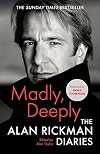
At one point, Alan Rickman looks back over his diary entries and wonders if, at some point, he won’t be able to decode them and recall “the sharp thoughts hidden between the safer lines.” If he, the author, worried about this, what hope have we, the reader? Which is to say, I didn’t get every cryptic reference.
I did catch enough to get a picture of the man. The persona in these pages is not as different from the public perception of him as Emma Thompson’s affectionate Foreword show more would have us believe; even she concedes he was “blissfully contradictory.” He demanded much from himself and others and could be distant and sardonic when it wasn’t forthcoming. But there was much more to him, or he wouldn’t have had the lifelong friendships so important to him. He was not really Hans Gruber or the Sheriff of Nottingham. More like Snape, perhaps, if any of the roles he was famed for express the person underneath.
Those looking for a Hollywood tell-all will be disappointed to know there is nothing about who slept with whom. Instead, we find someone passionate about the craft of acting, which, at its best, can be a “portal to a greater understanding of what it means to be human,” as Alan Taylor notes in his Introduction. Rickman could admire his colleagues yet be critical of poor preparation, upstaging, and not giving enough of oneself that the others in a scene had something to play off.
In general, he seems to enjoy working on stage more than film, with its emphasis on the shot rather than the scene. The word “process” appears frequently. Yet his notes on his stage experiences are full of critical remarks about directors who either dictate what they want and stifle the imagination of the cast or are so indecisive they fail to direct. Worse are the moneymen—the producers and distributors—who tinker with the script before and during production and fiddle with the finished product to make it more marketable (that is, more like dozens of other films). Other irritations are press conferences, where he is asked the same six questions worldwide, and reviews, particularly those that seem to have been written before seeing the show.
Rickman’s interest in theater dates back to his school days, an interest he shared with his longtime partner, Rima Horton. She employed her acting skills on a different stage, politics, while Rickman went to art school. One of the delights of this book is the reproduction of sample pages, more illustration than text.
The diary also reflects a life of too much alcohol, too little sleep, and a globe-trotting itinerary that sounds glamorous to those who don’t have to live through it. Add in on-set injuries and haphazard meals. It’s no wonder that as the book progresses, it becomes increasingly a necrology until Rickman, too, receives the diagnosis that initiates his final months. The poignant conclusion of the story is left to Rima Horton to recount.
Now to find out where I can see The Winter Guest, Galaxy Quest, In Search of John Gissing, and some other Rickman performances I’ve failed to catch. show less
I did catch enough to get a picture of the man. The persona in these pages is not as different from the public perception of him as Emma Thompson’s affectionate Foreword show more would have us believe; even she concedes he was “blissfully contradictory.” He demanded much from himself and others and could be distant and sardonic when it wasn’t forthcoming. But there was much more to him, or he wouldn’t have had the lifelong friendships so important to him. He was not really Hans Gruber or the Sheriff of Nottingham. More like Snape, perhaps, if any of the roles he was famed for express the person underneath.
Those looking for a Hollywood tell-all will be disappointed to know there is nothing about who slept with whom. Instead, we find someone passionate about the craft of acting, which, at its best, can be a “portal to a greater understanding of what it means to be human,” as Alan Taylor notes in his Introduction. Rickman could admire his colleagues yet be critical of poor preparation, upstaging, and not giving enough of oneself that the others in a scene had something to play off.
In general, he seems to enjoy working on stage more than film, with its emphasis on the shot rather than the scene. The word “process” appears frequently. Yet his notes on his stage experiences are full of critical remarks about directors who either dictate what they want and stifle the imagination of the cast or are so indecisive they fail to direct. Worse are the moneymen—the producers and distributors—who tinker with the script before and during production and fiddle with the finished product to make it more marketable (that is, more like dozens of other films). Other irritations are press conferences, where he is asked the same six questions worldwide, and reviews, particularly those that seem to have been written before seeing the show.
Rickman’s interest in theater dates back to his school days, an interest he shared with his longtime partner, Rima Horton. She employed her acting skills on a different stage, politics, while Rickman went to art school. One of the delights of this book is the reproduction of sample pages, more illustration than text.
The diary also reflects a life of too much alcohol, too little sleep, and a globe-trotting itinerary that sounds glamorous to those who don’t have to live through it. Add in on-set injuries and haphazard meals. It’s no wonder that as the book progresses, it becomes increasingly a necrology until Rickman, too, receives the diagnosis that initiates his final months. The poignant conclusion of the story is left to Rima Horton to recount.
Now to find out where I can see The Winter Guest, Galaxy Quest, In Search of John Gissing, and some other Rickman performances I’ve failed to catch. show less
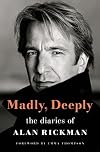
Wow, what an odd read. I've mainly only read memoirs or biographies for celebrities/public figures and Rickman's journals are so unlike any I've come across. His entries are short and often vague, overall adding more mystery to him as a person. But there are also plenty of entries that, while brief, give an intimate insight into his feelings at the time - whether about politics, projects he's working on, or people he's interacting with. It made me feel both close to and distant from him, if show more that makes sense.
There is significantly less detail about the films he worked on than I expected. Oftentimes there were just a few sentences about a whole film. Harry Potter obviously had the most page-time, given there were 7 movies or whatever. I did get the sense he was somewhat sick of them by the time the franchise wrapped, but aside from his affection for Daniel, not much else.
It was also strange to read someone's journals published after their death. I trust the estate wouldn't have published them if they felt Alan really didn't want them shared, but there's no way to know for sure. His wife's afterward regarding his final days left me both feeling joyful and sad.
Just a strange experience overall, but since I've been a big fan of his work for quite some time, it was well worth reading. If you're not a fan of his, I'm not quite sure what you'll gain from this, as it's nothing like a straightforward memoir. show less
There is significantly less detail about the films he worked on than I expected. Oftentimes there were just a few sentences about a whole film. Harry Potter obviously had the most page-time, given there were 7 movies or whatever. I did get the sense he was somewhat sick of them by the time the franchise wrapped, but aside from his affection for Daniel, not much else.
It was also strange to read someone's journals published after their death. I trust the estate wouldn't have published them if they felt Alan really didn't want them shared, but there's no way to know for sure. His wife's afterward regarding his final days left me both feeling joyful and sad.
Just a strange experience overall, but since I've been a big fan of his work for quite some time, it was well worth reading. If you're not a fan of his, I'm not quite sure what you'll gain from this, as it's nothing like a straightforward memoir. show less
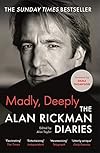
Terribly more-ish, but sometimes just terrible.
This is breezily readable, but in the beginning (1993) references too many esoteric films and theatrical names for me.
Moving further into the diary I begin to realise my age (Rickman goes to a Picasso exhibition which we went to when my wife was first pregnant).
From a 1994 entry about attending Glenys Kinnock's birthday party:
At one point I saw Michael Foot with his stick walking past the very uptight Tony Blair in a beige suit. Labour Party show more bookends.
But it goes on and the self important thespian grates when referencing political events and meetings with politicians with an apparently blinkered naïveté about politics. The left wing politics jars with the hedonistic jetset lifestyle (truly a champagne socialist).
But Rickman was also committed to RADA (Royal Academy of Dramatic Art) and his many friends.
I admittedly read the diary mainly for the references to the filming of the Harry Potter movies and there are a reasonable number of entries across the years from 2000 to 2011. I also enjoyed the entries for Galaxy Quest and A Little Chaos (script first mentioned in 2001 but not screened until 2014). show less
This is breezily readable, but in the beginning (1993) references too many esoteric films and theatrical names for me.
Moving further into the diary I begin to realise my age (Rickman goes to a Picasso exhibition which we went to when my wife was first pregnant).
From a 1994 entry about attending Glenys Kinnock's birthday party:
At one point I saw Michael Foot with his stick walking past the very uptight Tony Blair in a beige suit. Labour Party show more bookends.
But it goes on and the self important thespian grates when referencing political events and meetings with politicians with an apparently blinkered naïveté about politics. The left wing politics jars with the hedonistic jetset lifestyle (truly a champagne socialist).
But Rickman was also committed to RADA (Royal Academy of Dramatic Art) and his many friends.
I admittedly read the diary mainly for the references to the filming of the Harry Potter movies and there are a reasonable number of entries across the years from 2000 to 2011. I also enjoyed the entries for Galaxy Quest and A Little Chaos (script first mentioned in 2001 but not screened until 2014). show less
Lists
Awards


You May Also Like


Associated Authors
Statistics
- Works
- 10
- Also by
- 57
- Members
- 1,296
- Popularity
- #19,806
- Rating
- 4.0
- Reviews
- 31
- ISBNs
- 32
- Languages
- 4
- Favorited
- 1