
Pavel Florensky (1882–1937)
Author of Iconostasis
About the Author
Series
Works by Pavel Florensky
The Pillar and Ground of the Truth: An Essay in Orthodox Theodicy in Twelve Letters (1994) 102 copies, 2 reviews
Non dimenticatemi. Le lettere dal gulag del grande matematico, filosofo e sacerdote russo (2000) 31 copies, 2 reviews
At the Crossroads of Science & Mysticism: On the Cultural-Historical Place and Premises of the Christian World-Understanding (2014) 19 copies
La Perspectiva invertida/ The Inverted Perspective (Minima/ Minimum) (Spanish Edition) (2005) 6 copies
Gli immaginari in geometria. Estensione del dominio delle immagini bidimensionali nella geometria (2021) 4 copies
У водоразделов мысли. Том 2 2 copies
Mnimosti v geometrii. Nachdruck der Ausgabe Moskva 1922 nebst einer einführenden Studie von Michael Hagemeister (1985) 1 copy
Florenskij, Pavel, Werke in zehn Lieferungen, 2. Lieferung, 2. Teilband: Christentum und Kultur (2004) 1 copy
Mhumocmu 1 copy
Ai miei figli 1 copy
Al confine dei mondi 1 copy
Оправдание Космоса [Сборник] 1 copy
Poesie. Pavel A. Florenski 1 copy
Tagged
Common Knowledge
- Canonical name
- Florensky, Pavel
- Legal name
- Florensky, Pavel Aleksandrovich
- Birthdate
- 1882-01-21
- Date of death
- 1937-12-08
- Gender
- male
- Education
- Moscow State University
Moscow Theological Academy
Tbilisi Classical Lyceum - Occupations
- philosopher
poet
folklorist
editor
professor
theologian (show all 10)
priest
mathematician
physicist
electrical engineer - Organizations
- Russian Orthodox Church
- Nationality
- Russia
- Birthplace
- Yevlakh, Elisabethpol Governorate, Russian Empire (now Azerbaijan)
- Places of residence
- Moscow, Russia, USSR
Leningrad, Russia, USSR - Associated Place (for map)
- Russia, USSR
Members
Reviews
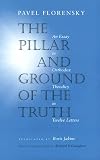
This is an amazing book - and do please bear with it, and let it start to do its magic in your subconscious. The author, Pavel Florensky, published it in 1924, although most of it had been written before the Revolution: he is a striking example of Russian Symbolism, and in this book, it shows. It is conceived as a sequence of Twelve Letters to a 'friend', who may be Christ.
He begins with an assertion that 'the "Trihypostatic Unity", the subject of all theology, the theme of the whole show more liturgy, and the commandment of all life, is also the root of reason' - which I quote because it is the same place that Christos Yannaras begins in his book, 'Postmodern Metaphysics' (Greek text, 1993; English version 2004): this might alert us to the fact that Florensky isn't quite as nuts as his more fanciful musings make him seem. He goes on to give an account of the way in which ascetic faith defeats and overturns what he calls the 'rationalistic "absurdity" of dogma' [Letter 3]; and he writes about the Russian perception of the 'homoousion' as the 'light' which contrasts with the western disintegrative sense of 'homoiousion' [Letter 4]. Bear with it - because these are important distinctions on which hinge the entirely different nuances of Eastern and Western Christianity, and it is not only a Greek Orthodox thinker like Christos Yannaras who thinks these things still pertinent today. In Letter 5, Florensky outlines his concept of 'sophiology' (which many people will know far better from the much more measured work of Sergii Bulgakov) - he believes that even the Cappadocian Fathers were unable to define the precise content of the Holy Spirit's 'procession' (that fixed-point of contest between east and west); rather, it is something which becomes known in Orthodox (specifically pneumatological, that is 'Spirit-filled') experience. He traces this through the theology of St Symeon the New, St Seraphim of Sarov, and the startsy at Optina as the great charisms of spiritual alertness. Florensky considers doctrine not as a rational system of dialectical propositions (another western misconception), but as 'indescribable experiences which cannot be put into words except in the form of contradictions' - theology being the 'apprehension' of an 'encounter' which requires the apophatic as well as the cataphatic to make accurate sense. Please do not think that any of this is written in a spirit of hostility against western patterns of thought: rather, this is a positive paraphrase of Orthodox heritage as it continues to give life and inspiration. Letter 9 considers the relationship between 'Spirit-bearing', 'asceticism', and 'being-in-love with creation', and contains the remarkable and beautiful 'idea of the body as an absolutely valuable principle in the liturgical literature' - which is to say that this theology is entirely life- and creation-affirming, and that being a 'bearer of the Spirit' is itself, fundamentally about the encounter with God in and through a positive moral engagement with the whole creation. In other words - this is the focus of the tenth Letter, which is possibly the core of the whole book - 'Sophia' is the basic principle of all-that-is, and the means of its 'integration': in another aside to the abstract and speculative tendencies of the west, Florensky writes this - 'The more direct and inspired is the life of the believer, the more integral and homogenous will his faith be. Separate aspects of faith disintegrate atomistically only for scholastic theology'. Letter 11, meanwhile, is a thorough exposition of a theology of 'friendship' as the central category of Christian practice. (Let us not even start on his proposal - a hundred years ago - of same-sex marriage as an embodiment of this!)
What ought we to make of all this? Much of it reads like a half-digested stream-of-consciousness, and it completely betrays its date and generation. But the more I read both of postmodern theology, and, increasingly, of 'emergent' theology in the post-evangelical churches of the west - with their reactions against abstraction and judgementalism, their repudiation of the totalizing tendencies of western dogmatic and speculative theology (and not least its incapacity in the face of the Holocaust), their tentative explorations of 'relational' and apophatic theology, and - strikingly - their 'Spirit-led', ecological and 'friendship'-focused self-articulation - the more I am intrigued by their parallels with a lot of what is written here: this book is the beginning - only a beginning, and a self-evidently scatter-brained beginning - of the tracing of a place of conversation between the 'classic Christianity' of the Patristic Greeks and the postmodern Christianity of today.
At the whacky end of Orthodoxy, Pavel Florensky is one-part bonkers, two-parts inspired - and this book opens up all sorts of lines of thought which nourish new ways of formulating 'Tradition' in an imaginative interplay between inheritance on the one hand, and contemporary actuality on the other. show less
He begins with an assertion that 'the "Trihypostatic Unity", the subject of all theology, the theme of the whole show more liturgy, and the commandment of all life, is also the root of reason' - which I quote because it is the same place that Christos Yannaras begins in his book, 'Postmodern Metaphysics' (Greek text, 1993; English version 2004): this might alert us to the fact that Florensky isn't quite as nuts as his more fanciful musings make him seem. He goes on to give an account of the way in which ascetic faith defeats and overturns what he calls the 'rationalistic "absurdity" of dogma' [Letter 3]; and he writes about the Russian perception of the 'homoousion' as the 'light' which contrasts with the western disintegrative sense of 'homoiousion' [Letter 4]. Bear with it - because these are important distinctions on which hinge the entirely different nuances of Eastern and Western Christianity, and it is not only a Greek Orthodox thinker like Christos Yannaras who thinks these things still pertinent today. In Letter 5, Florensky outlines his concept of 'sophiology' (which many people will know far better from the much more measured work of Sergii Bulgakov) - he believes that even the Cappadocian Fathers were unable to define the precise content of the Holy Spirit's 'procession' (that fixed-point of contest between east and west); rather, it is something which becomes known in Orthodox (specifically pneumatological, that is 'Spirit-filled') experience. He traces this through the theology of St Symeon the New, St Seraphim of Sarov, and the startsy at Optina as the great charisms of spiritual alertness. Florensky considers doctrine not as a rational system of dialectical propositions (another western misconception), but as 'indescribable experiences which cannot be put into words except in the form of contradictions' - theology being the 'apprehension' of an 'encounter' which requires the apophatic as well as the cataphatic to make accurate sense. Please do not think that any of this is written in a spirit of hostility against western patterns of thought: rather, this is a positive paraphrase of Orthodox heritage as it continues to give life and inspiration. Letter 9 considers the relationship between 'Spirit-bearing', 'asceticism', and 'being-in-love with creation', and contains the remarkable and beautiful 'idea of the body as an absolutely valuable principle in the liturgical literature' - which is to say that this theology is entirely life- and creation-affirming, and that being a 'bearer of the Spirit' is itself, fundamentally about the encounter with God in and through a positive moral engagement with the whole creation. In other words - this is the focus of the tenth Letter, which is possibly the core of the whole book - 'Sophia' is the basic principle of all-that-is, and the means of its 'integration': in another aside to the abstract and speculative tendencies of the west, Florensky writes this - 'The more direct and inspired is the life of the believer, the more integral and homogenous will his faith be. Separate aspects of faith disintegrate atomistically only for scholastic theology'. Letter 11, meanwhile, is a thorough exposition of a theology of 'friendship' as the central category of Christian practice. (Let us not even start on his proposal - a hundred years ago - of same-sex marriage as an embodiment of this!)
What ought we to make of all this? Much of it reads like a half-digested stream-of-consciousness, and it completely betrays its date and generation. But the more I read both of postmodern theology, and, increasingly, of 'emergent' theology in the post-evangelical churches of the west - with their reactions against abstraction and judgementalism, their repudiation of the totalizing tendencies of western dogmatic and speculative theology (and not least its incapacity in the face of the Holocaust), their tentative explorations of 'relational' and apophatic theology, and - strikingly - their 'Spirit-led', ecological and 'friendship'-focused self-articulation - the more I am intrigued by their parallels with a lot of what is written here: this book is the beginning - only a beginning, and a self-evidently scatter-brained beginning - of the tracing of a place of conversation between the 'classic Christianity' of the Patristic Greeks and the postmodern Christianity of today.
At the whacky end of Orthodoxy, Pavel Florensky is one-part bonkers, two-parts inspired - and this book opens up all sorts of lines of thought which nourish new ways of formulating 'Tradition' in an imaginative interplay between inheritance on the one hand, and contemporary actuality on the other. show less
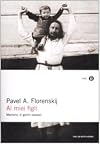
Decisamente più solare di “Non dimenticatemi”, questa serie di “Memorie” raccolte da Florenskij per i figli è un inno alla vita e alla conoscenza, a loro volta dimensioni inscindibili dell’uomo, che mentre sente pensa e ama.“La superficie misteriosa e infinita del mare è infinita anche per quel che contiene, per il suo suono, così come è infinita per la granulosità, la granulosità finissima della sua luminescenza. Il mormorio del mare è un’orchestra di un’infinità di show more strumenti. C’è un suono che è simile a questo mormorio quanto a ricchezza e che sorge anch’esso dalle viscere dell’essere. È la trina dei ritmi che si inseguono e si scavalcano l’uno con l’altro quando cadono le gocce - ancora gocce! - nelle caverne in cui l’acqua cola dalle volte e dalle pareti. E anche in quei ritmi si odono altri ritmi, e ancora una volta all’infinito. Pulsano come tanti pendoli che fissano il tempo della vita del mondo, i tempi diversi e i diversi battiti degli innumerevoli esseri umani. Quando si entra nel laboratorio di un orologiaio si sente il rumore analogo di una quantità di pendoli, anch’esso familiare, anch’esso a ricordarci le viscere della terra e le profondità del mare.” show less
Questo saggio propone una elegante e stringente disamina del rapporto esistente tra linguaggio, filosofia e scienza, con una breve incursione sul simbolo, tema costante della riflessione di padre Pavel.
Rispetto ad altri lavori di Florenskij mi pare che qui, forse anche per il carattere di abbozzo di lezione, la sobrietà - pur nella profondità e nella articolazione - permetta di cogliere meglio che altrove il discorso sul metodo e la sua genesi.
“[…] La filosofia ha per suo oggetto non show more un unico e solo punto di vista consolidato sulla vita, bensì un punto di vista mutevole, la superficie mobile della sezione del mondo. Non perché costretta dalla storia ma grazie alla libertà di cui gode, essa si sceglie un punto di vista mutevole. Un giro dopo l’altro la filosofia si avvita nella realtà, vi si conficca e penetra sempre più nell’intimo. Essa è un’arguta meditazione della vita trasformata in parola corrente, poiché per essere arguto ogni movimento dello spirito che contempla dà allo spirito una propria immagine verbale, che sorge necessariamente come l’onda che avvolge la nave. […] La dialettica è un esperimento ininterrotto sulla realtà per giungere nell’intimo dei suoi strati più profondi. […]” show less
Rispetto ad altri lavori di Florenskij mi pare che qui, forse anche per il carattere di abbozzo di lezione, la sobrietà - pur nella profondità e nella articolazione - permetta di cogliere meglio che altrove il discorso sul metodo e la sua genesi.
“[…] La filosofia ha per suo oggetto non show more un unico e solo punto di vista consolidato sulla vita, bensì un punto di vista mutevole, la superficie mobile della sezione del mondo. Non perché costretta dalla storia ma grazie alla libertà di cui gode, essa si sceglie un punto di vista mutevole. Un giro dopo l’altro la filosofia si avvita nella realtà, vi si conficca e penetra sempre più nell’intimo. Essa è un’arguta meditazione della vita trasformata in parola corrente, poiché per essere arguto ogni movimento dello spirito che contempla dà allo spirito una propria immagine verbale, che sorge necessariamente come l’onda che avvolge la nave. […] La dialettica è un esperimento ininterrotto sulla realtà per giungere nell’intimo dei suoi strati più profondi. […]” show less
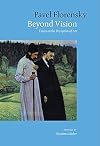
A very interesting series of essays related to how we view the role of museums, the theory of perspective and its shortcomings when it comes to portraying "realism" as well as many other art related themes. Despite the fact it was written int eh early 20th century, his words are as thought provoking and relevant today as they were then. Many very involved concepts related to the art world are nonetheless presented in a way that is engaging and understandable by both art experts and novices show more alike. show less
Lists
Caucasus (1)
Awards


You May Also Like


Associated Authors
Statistics
- Works
- 78
- Members
- 731
- Popularity
- #34,740
- Rating
- 3.9
- Reviews
- 8
- ISBNs
- 122
- Languages
- 12
- Favorited
- 3