
Kristen Simmons
Author of Article 5
About the Author
Kristen Simmons received a B.A. in psychology and a master's degree in social work from the University of Nevada. She is an advocate for mental health and an author. Her books include Article 5, Breaking Point, Three, and The Glass Arrow. (Bowker Author Biography)
Image credit: via author's website
Series
Works by Kristen Simmons
The Deceivers Sneak Peek 1 copy
The Price of Admission 1 copy
Mistress Of Justice 1 copy
Tagged
Common Knowledge
- Gender
- female
- Occupations
- social worker
- Agent
- Joanna MacKenzie
- Places of residence
- Cinncinnati, Ohio, USA
- Associated Place (for map)
- Ohio, USA
Members
Reviews
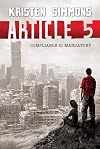
Ahh, what would dystopias be without sexism, misogyny, and heteronormativity?
(3.5 stars)
Content warnings:
ableist language
sexism
misogyny
violence against women
slut-shaming
heteronormativity
My opinion of this book keeps going back and forth from positive to negative. I just can't make up my mind . . .
On one hand, I hate that authors think dystopias and oppressing women/traditional gender roles go hand in hand. It's a mindset and a trend I want to kill with fire. On the other hand, Kristen show more Simmons really tries to turn a few annoying (and sexist) cliches around, which is refreshing.
The beginning of this book is pretty sickening. Ember and several other girls are shoved into a bus by all-male soldiers who laugh at their pain and take enjoyment from teasing and mocking them. I get that this is to milk the atmosphere here, but I wish it didn't have to be done by using male dominance over women. Because why would I want to read a book where all the women are treated so horribly? Ember's mother is subjected to slut-shaming because of her free spirit and was treated badly by many of her boyfriends for that same reason. Like, okay, I get the book's dark. But is it too much to ask for a book that doesn't also create an unsafe place for women?
Speaking of, I'm incredibly FURIOUS about what happened to Rosa's character. How dare she be used as a prop to show off the reform school's (and the soldiers') cruelty? With her being the only explicitly-described woman of color, it's even more awful. Her vibrant character was only written that way so it could be beaten down and defeated.
Despite that I really don't like the whole (very intentional) misogynistic tone of the story, I do appreciate some of the messages presented, such as when Rosa tried to escape at the beginning. The soldier hit her, and Ember was horrified. Another girl said, "She's crazy." And Ember said, "She's crazy? Did you just see that he just--"
I can't begin to explain how much I loved those two little lines, because in real life victim-blaming happens all the time. Having the main character acknowledge and call out this behavior is amazing. It made me want to cheer (also, how sad is it that it's so rare for this to happen that it needs celebration?).
The "Whole Family - 1 man, 1 woman, & children" thing really shouldn't have surprised me, as it's kind of a standard for dystopias, but I wish authors wouldn't just forget about queer people when they write. I guess LGBTQIA+ folk just don't exist in this book/version of the USA. I'm also wondering about people who can't conceive. The Whole Family includes children, after all. Are those people violators?
The book's strongest point, by far, is Ember. I loved her more and more as the story progressed. She is so incredibly brave and strong and proactive, but she also reacts to things in very realistic ways--so much so that there were times I needed to pause and get myself back together (such as when she dropped the baton in the truck after the two men attacked them). I was SO invested in Ember and her mother's story.
It was when Ember made the plan to leave Chase because he seemed dangerous and frightening that I fell in love with her. This woman is amazing. A female YA protagonist sticking up for herself and putting HER SAFETY before her love interest? I wanted to jump up and cheer for her. I know things didn't end up like she planned, but she made that choice herself. Also, my FAVORITE LINES (which may be more Kristen Simmons than Ember): Chase: "But while we're together, you don't have to be afraid of me. I won't hurt you. I promise I will never hurt you." And Ember thinks, there were plenty of ways to hurt someone without using your fists. Either way, it's one example of the way Kristen Simmons tries to fix some troublesome cliches that run rampant in so many YA books.
Chase is . . . more complicated (although, a leading MoC! I may have screamed). He's another rough love interest with a heart of gold that comes standard to YA fiction these days, and it wasn't long before I got really tired of the way he was written. Specifically, "his face darkened," "his eyes darkened," etc. I think they made up 80 percent of his facial descriptions. He was surrounded by a lot of vague descriptors in general (i.e., "Chase cradled my name as though it was an injured bird." ?).
I'm also FURIOUS that the whole plot ended up being about him. With such a great MC like Ember, this turn came like a physical blow. I'm trying to keep this from being too spoilery, but Chase keeps important information from Ember to "protect" her. What's revealed basically makes the plot's catalyst all about him and not about Ember or her mother. I'm furious. Screw women's pain being used to motivate men or punish men. Readers should feel for women and their stories without them needing to motivate a man's story. This is saying far too much already, so I'll stop here.
I'm being unfairly cranky, maybe.
I LOVE Ember. And I LOVE her mother.
And my very favorite moments were when Chase and Ember encountered people along their journey to the carrier--the way each person reacted to Ember and Chase, their situations, and the whole dystopian country in general. There was a lot of thought behind the way those different people reacted to the same events, and it was really wonderful to read.
There were just too many YA dystopian cliches (sexism, heteronormativity, child regulation, heavy romance, missing parent, and a resistance group called The Resistance thrown in the last 1/4 to top it all off), and too few original elements to spice these tropes up for me to enjoy it more. show less
(3.5 stars)
Content warnings:
ableist language
sexism
misogyny
violence against women
slut-shaming
heteronormativity
My opinion of this book keeps going back and forth from positive to negative. I just can't make up my mind . . .
On one hand, I hate that authors think dystopias and oppressing women/traditional gender roles go hand in hand. It's a mindset and a trend I want to kill with fire. On the other hand, Kristen show more Simmons really tries to turn a few annoying (and sexist) cliches around, which is refreshing.
The beginning of this book is pretty sickening. Ember and several other girls are shoved into a bus by all-male soldiers who laugh at their pain and take enjoyment from teasing and mocking them. I get that this is to milk the atmosphere here, but I wish it didn't have to be done by using male dominance over women. Because why would I want to read a book where all the women are treated so horribly? Ember's mother is subjected to slut-shaming because of her free spirit and was treated badly by many of her boyfriends for that same reason. Like, okay, I get the book's dark. But is it too much to ask for a book that doesn't also create an unsafe place for women?
Speaking of, I'm incredibly FURIOUS about what happened to Rosa's character. How dare she be used as a prop to show off the reform school's (and the soldiers') cruelty? With her being the only explicitly-described woman of color, it's even more awful. Her vibrant character was only written that way so it could be beaten down and defeated.
Despite that I really don't like the whole (very intentional) misogynistic tone of the story, I do appreciate some of the messages presented, such as when Rosa tried to escape at the beginning. The soldier hit her, and Ember was horrified. Another girl said, "She's crazy." And Ember said, "She's crazy? Did you just see that he just--"
I can't begin to explain how much I loved those two little lines, because in real life victim-blaming happens all the time. Having the main character acknowledge and call out this behavior is amazing. It made me want to cheer (also, how sad is it that it's so rare for this to happen that it needs celebration?).
The "Whole Family - 1 man, 1 woman, & children" thing really shouldn't have surprised me, as it's kind of a standard for dystopias, but I wish authors wouldn't just forget about queer people when they write. I guess LGBTQIA+ folk just don't exist in this book/version of the USA. I'm also wondering about people who can't conceive. The Whole Family includes children, after all. Are those people violators?
The book's strongest point, by far, is Ember. I loved her more and more as the story progressed. She is so incredibly brave and strong and proactive, but she also reacts to things in very realistic ways--so much so that there were times I needed to pause and get myself back together (such as when she dropped the baton in the truck after the two men attacked them). I was SO invested in Ember and her mother's story.
It was when Ember made the plan to leave Chase because he seemed dangerous and frightening that I fell in love with her. This woman is amazing. A female YA protagonist sticking up for herself and putting HER SAFETY before her love interest? I wanted to jump up and cheer for her. I know things didn't end up like she planned, but she made that choice herself. Also, my FAVORITE LINES (which may be more Kristen Simmons than Ember): Chase: "But while we're together, you don't have to be afraid of me. I won't hurt you. I promise I will never hurt you." And Ember thinks, there were plenty of ways to hurt someone without using your fists. Either way, it's one example of the way Kristen Simmons tries to fix some troublesome cliches that run rampant in so many YA books.
Chase is . . . more complicated (although, a leading MoC! I may have screamed). He's another rough love interest with a heart of gold that comes standard to YA fiction these days, and it wasn't long before I got really tired of the way he was written. Specifically, "his face darkened," "his eyes darkened," etc. I think they made up 80 percent of his facial descriptions. He was surrounded by a lot of vague descriptors in general (i.e., "Chase cradled my name as though it was an injured bird." ?).
I'm also FURIOUS that the whole plot ended up being about him. With such a great MC like Ember, this turn came like a physical blow. I'm trying to keep this from being too spoilery, but Chase keeps important information from Ember to "protect" her. What's revealed basically makes the plot's catalyst all about him and not about Ember or her mother. I'm furious. Screw women's pain being used to motivate men or punish men. Readers should feel for women and their stories without them needing to motivate a man's story. This is saying far too much already, so I'll stop here.
I'm being unfairly cranky, maybe.
I LOVE Ember. And I LOVE her mother.
And my very favorite moments were when Chase and Ember encountered people along their journey to the carrier--the way each person reacted to Ember and Chase, their situations, and the whole dystopian country in general. There was a lot of thought behind the way those different people reacted to the same events, and it was really wonderful to read.
There were just too many YA dystopian cliches (sexism, heteronormativity, child regulation, heavy romance, missing parent, and a resistance group called The Resistance thrown in the last 1/4 to top it all off), and too few original elements to spice these tropes up for me to enjoy it more. show less
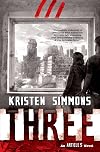
I've had a bit of a love/hate relationship with this series. I seriously love Kristen's writing. She creates and develops complex characters. Her minor characters are often more developed than the main characters from other series. She has a great style of being descriptive without being wordy. This is really appreciated during action scenes.
I personally always wished that the series was more action, less romance but Three achieved a good balance. Ember and Chase have been traveling around show more the east coast trying to rescue each other, find their family, and get to safety. Now that they have each other and it doesn't look like a safe haven will be happening, they turn their attention to joining up with Three. They are able to use their skills and their experience to help fight back.
On another note, does anyone else notice that on the cover it really looks like Ember and Chase are grabbing each other's butts while looking out the window? show less
I personally always wished that the series was more action, less romance but Three achieved a good balance. Ember and Chase have been traveling around show more the east coast trying to rescue each other, find their family, and get to safety. Now that they have each other and it doesn't look like a safe haven will be happening, they turn their attention to joining up with Three. They are able to use their skills and their experience to help fight back.
On another note, does anyone else notice that on the cover it really looks like Ember and Chase are grabbing each other's butts while looking out the window? show less
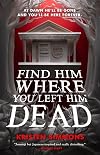
Kristen Simmons’ Find Him Where You Left Him Dead is a chilling and emotionally charged YA horror novel that blends Japanese mythology, psychological trauma, and the haunting power of unresolved grief into one eerie, fast-paced story.
Four years ago, five friends played a mysterious game called Meido—but only four made it out alive. Now, as high school seniors, Dax, Maddy, Emerson, and Owen are forced back together when they begin receiving strange signs that their lost friend, Ian, may show more not be gone after all. Drawn back to the place where their friendship—and innocence—ended, the group restarts the deadly game, only to be dragged into a nightmarish underworld inspired by Japanese folklore. There, they face seven challenges that test not only their courage but the strength of their fractured bond.
Simmons excels at creating tension and atmosphere. The setting of Meido feels vividly unsettling—part myth, part nightmare—and the tasks the characters endure carry both physical and emotional weight. Each of the four survivors is deeply scarred, and their interactions reveal layers of guilt, denial, and loss that make them feel believable and raw. While the story is geared toward a younger YA audience, its themes of grief, friendship, and redemption resonate universally.
The novel’s biggest strength lies in how it feels like a game come to life—quick-moving, visually intense, and emotionally charged. While Find Him Where You Left Him Dead ends on a satisfying note, it also leaves enough threads open for the sequel—without making it feel necessary to continue. Simmons delivers a self-contained story that’s dark, heartfelt, and surprisingly fun to read.A fast-paced, eerie blend of friendship, trauma, and Japanese folklore. Perfect for fans of Stranger Things or Anna Dressed in Blood. show less
Four years ago, five friends played a mysterious game called Meido—but only four made it out alive. Now, as high school seniors, Dax, Maddy, Emerson, and Owen are forced back together when they begin receiving strange signs that their lost friend, Ian, may show more not be gone after all. Drawn back to the place where their friendship—and innocence—ended, the group restarts the deadly game, only to be dragged into a nightmarish underworld inspired by Japanese folklore. There, they face seven challenges that test not only their courage but the strength of their fractured bond.
Simmons excels at creating tension and atmosphere. The setting of Meido feels vividly unsettling—part myth, part nightmare—and the tasks the characters endure carry both physical and emotional weight. Each of the four survivors is deeply scarred, and their interactions reveal layers of guilt, denial, and loss that make them feel believable and raw. While the story is geared toward a younger YA audience, its themes of grief, friendship, and redemption resonate universally.
The novel’s biggest strength lies in how it feels like a game come to life—quick-moving, visually intense, and emotionally charged. While Find Him Where You Left Him Dead ends on a satisfying note, it also leaves enough threads open for the sequel—without making it feel necessary to continue. Simmons delivers a self-contained story that’s dark, heartfelt, and surprisingly fun to read.A fast-paced, eerie blend of friendship, trauma, and Japanese folklore. Perfect for fans of Stranger Things or Anna Dressed in Blood. show less
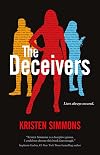
I was lucky enough to win a contest Kristen Simmons had going on a few months ago involving Vale Hall acceptance letters for a handful of winners and one signed ARC for some unsuspecting fan, me. The fact that I received an ARC in no way influenced this review (I'd already sent in an order for a copy for my kindle!) but the FTC requires us to tell you if we receive review copies. I WAS GOING TO REVIEW THIS ANYWAY, FTC! But, look at my cute photo of the ARC and the promotional Vale Hall show more patch.
I honestly didn’t want to finish The Deceivers, I didn’t want to say goodbye to the characters or leave Vale Hall. So, I procrastinated and made Manatee a Vale Hall bandana to wear while he’s working using a promotional Vale Hall patch that I was sent for the book’s publishing day.
I first learned about The Deceivers when I stumbled across a tweet by Kristen Simmons about some ill-informed reviewer who accused her of pandering to the people and overloading her book with diverse characters for “diversity brownie points”. I swore then and there, I was going to buy a copy and scream about all the diversity brownie points that I love. And look, here I am, with a virtual bullhorn.
I thoroughly enjoyed my time reading The Deceivers, this entire book centres around The Con and is a veritable Gordian’s Knot of cons. From the opening scene where our protagonist executes a simple 5-minute con on three dance students and comes away two hundred dollars richer, to the humdinger of a con that made me exclaim “what the hell, dude?!” at 2AM and the cons the students of Vale Hall learn in class and apply on their assignments, you will not be bored reading this.
Brynn is a mixed girl from Devon Park, a no-income area of Sikawa City. She has a plastic pencil case box in her hollowed-out mattress that she stashes away cash that she earns conning people uptown, all of it’s for college and getting the hell out of Devon Park. As someone who lives the Devon Park lifestyle, I know exactly where Brynn is coming from except, I stash my money in my bookcase. I’ll be honest, if some random arsed old white guy offered me a golden ticket to a bright shiny future and freedom from my past, I wouldn’t even question those nasty little puppet strings he’s tying onto my limbs. But Brynn’s moral compass isn’t as charcoal grey as my own, that girl questions everybody and everything.
I was in love with the concept of a private boarding school for budding young con artists because, like I’ve mentioned before, half of my childhood dream jobs were not very law-abiding in nature. I was, however, a tad disappointed that there weren't more Con 101 lessons, but I understand why from the Responsible Adult viewpoint. If y'all want more Crime 101, watch Leverage and White Collar re-runs or something. Don't lie, I know you love them as much as I do.
Brynn is assigned the task of getting close to a Senator’s son and finding some dirt, any dirt. And as the con goes on, the lines start to blur for Brynn who’s used to running short cons, not long cons. She struggles with maintaining her multiple covers as Sarah, the bad girl who’s caught Grayson Sterling’s roving eye at a party, Brynn Hilder, the newest student at the prestigious boarding school who left Devon Park behind, Brynn Hilder, the girl being hunted down by her mom’s drug dealer boyfriend, and just Brynn. Y’all. I'm pretty much here for Brynn and her ability to balance The Con, starting a new life and trying to keep track of her old life and all its drama and still remembering that she is not a bad person at her core. I can barely remember to put on pants before walking the dogs in the morning. Two words, readers, door pants.
The Vale Hall Ravens are comprised of no more than twenty students at one time, but the story centres around the newest addition the Vale Hall, Brynn Hilder, as she goes about acclimating herself to her new life as a Raven. She forms friendships with a few of her new classmates/teammates but she's also wary of fully trusting any of them as she knows that if her past catches up with her and her cover as a student at a prestigious prep school is blown, she's screwed with nowhere to land since she burned her bridges back in Devon Park. And I can understand it, she doesn't want to go back to her dead-end school in her dead-end life and end up working at the sports bar with her mom for tips and go to a dead-end community college for a less-than-stellar diploma that won't hold up against someone else's fancy uni degree. Oh, look, that leads us to characters! I do love dishing about characters!
I found the central characters of The Deceivers well-developed and I had separation issues when it came to the end of the book. I just didn’t want to say goodbye to them. Brynn was your not-so-typical scrappy mixed-race protagonist with a burning desire to get the hell out of her neighbourhood and go to college and never come back. I totally related with her. My favourite character after Brynn was Henry, I love puppy dogs and Henry is the loyal pup you rescue from the pound and he smothers you with love and affection no matter what. He’s loyal to Caleb and loyal to Brynn and he’s ecstatic when he sees a smidgen of a connection between the two and will play cupid any chance he gets – any. Speaking of Caleb, Caleb is another mixed-race character and a pretty good chameleon. He goes from adorkable to not-bad boy hottie in seconds and I’m still not sure which I like better. Either way, that boy is Campbell’s Soup. (Yes, I did put that. Judge away. I never said I was cool.) Next, we have Charlotte. Charlotte is Brynn’s friend, dorm neighbour, and a mentor of sorts for her as well as she struggles to get her feet under her at Vale Hall. And I just want to make Charlotte some of my Chocolate Addict Cookies and set her in front of the telly for a Gilmore Girls session, okay?
My least favourite characters in The Deceivers were Geri, Dr Odin, and Pete. Geri is Vale Hall’s resident Mean Girl, she could have made Regina George cry. She was just flat-out horrid to Brynn from the get-go. And Dr Odin was a shark disguising himself as a friendly dolphin. He acts friendly, but time and time again, there were little hints of the teeth. And what kind of grown man sends kids out into dangerous situations with sketchy people to find dirt for him in exchange for whatever the kid desperately wants or needs? This is classic abuser grooming behaviour and I'm honestly afraid for the Ravens' and how Dr Odin would react if they were to fail him in a major fashion. Pete is Brynn’s mom’s abusive dirtbag boyfriend who’s a drug dealer and he’s all sorts of nasty and I would just really enjoy setting that offal-masquerading-as-a-human-being on fire.
I did love the diversity we saw in the characters and in some of the scenes (you’ll know when you read!). There are POC and culture and it isn’t a ‘trying too hard’ thing. It is having characters of colour and letting them be themselves. This book is colourful, and I love it for that! Kids like myself and the author need books that have main characters that are like ourselves, just like everybody else, mixed and living their lives, some of us basking in our various cultures and others just acknowledging their heritage occasionally. It’s all good and that’s some representation I adore. And that’s my little soapbox moment.
Now, The Deceivers was born from Norse mythology (it is not a retelling, people, listen!) and there are so many obvious nods to the lore throughout the book. The biggest nod of all is, of course, The Con, since Norse deities were famous for tricking one another. Okay, they were famous for the bloodshed too, but we’re talking cons. The Con is the theme, okay. Our protagonist is Brynn Hilder and she gets her name from the famed Valkyrie, Brynhildr. The god, Odin, the all-father, would send his ravens, Huginn and Muninn, out to collect information for him so he could become the wisest of all. Likewise, Dr Odin sends Vale Hall’s Ravens out to collect secrets for him to use to make the world a better place. I shan’t go further on this vein though, because I want you to dive into The Deceivers and see if you can spot other nods to the pantheon and the legends surrounding them.
Now, this is a rather long review and I apologise, I apparently had a lot to say and I’ve rewritten this a few dozen times trying to shorten it but we’re over 1400 words (1433!) and I’m saying we’re done before y’all start finding some pitchforks and torches. I’m giving Kristen Simmons’ The Deceivers 5 stars of gloriousness because I loved this book from start to finish and Ms Simmons managed to slip a con past me when I thought I knew everything. So, I tip my hat to her.
I recommend this book to anybody who is looking for a YA read that is a smidgen romantic, a bit of a mystery, a little reminiscent of Leverage (if you haven’t seen Leverage, we need to talk, honey), and is a definite thriller. show less
I honestly didn’t want to finish The Deceivers, I didn’t want to say goodbye to the characters or leave Vale Hall. So, I procrastinated and made Manatee a Vale Hall bandana to wear while he’s working using a promotional Vale Hall patch that I was sent for the book’s publishing day.
I first learned about The Deceivers when I stumbled across a tweet by Kristen Simmons about some ill-informed reviewer who accused her of pandering to the people and overloading her book with diverse characters for “diversity brownie points”. I swore then and there, I was going to buy a copy and scream about all the diversity brownie points that I love. And look, here I am, with a virtual bullhorn.
I thoroughly enjoyed my time reading The Deceivers, this entire book centres around The Con and is a veritable Gordian’s Knot of cons. From the opening scene where our protagonist executes a simple 5-minute con on three dance students and comes away two hundred dollars richer, to the humdinger of a con that made me exclaim “what the hell, dude?!” at 2AM and the cons the students of Vale Hall learn in class and apply on their assignments, you will not be bored reading this.
Brynn is a mixed girl from Devon Park, a no-income area of Sikawa City. She has a plastic pencil case box in her hollowed-out mattress that she stashes away cash that she earns conning people uptown, all of it’s for college and getting the hell out of Devon Park. As someone who lives the Devon Park lifestyle, I know exactly where Brynn is coming from except, I stash my money in my bookcase. I’ll be honest, if some random arsed old white guy offered me a golden ticket to a bright shiny future and freedom from my past, I wouldn’t even question those nasty little puppet strings he’s tying onto my limbs. But Brynn’s moral compass isn’t as charcoal grey as my own, that girl questions everybody and everything.
I was in love with the concept of a private boarding school for budding young con artists because, like I’ve mentioned before, half of my childhood dream jobs were not very law-abiding in nature. I was, however, a tad disappointed that there weren't more Con 101 lessons, but I understand why from the Responsible Adult viewpoint. If y'all want more Crime 101, watch Leverage and White Collar re-runs or something. Don't lie, I know you love them as much as I do.
Brynn is assigned the task of getting close to a Senator’s son and finding some dirt, any dirt. And as the con goes on, the lines start to blur for Brynn who’s used to running short cons, not long cons. She struggles with maintaining her multiple covers as Sarah, the bad girl who’s caught Grayson Sterling’s roving eye at a party, Brynn Hilder, the newest student at the prestigious boarding school who left Devon Park behind, Brynn Hilder, the girl being hunted down by her mom’s drug dealer boyfriend, and just Brynn. Y’all. I'm pretty much here for Brynn and her ability to balance The Con, starting a new life and trying to keep track of her old life and all its drama and still remembering that she is not a bad person at her core. I can barely remember to put on pants before walking the dogs in the morning. Two words, readers, door pants.
The Vale Hall Ravens are comprised of no more than twenty students at one time, but the story centres around the newest addition the Vale Hall, Brynn Hilder, as she goes about acclimating herself to her new life as a Raven. She forms friendships with a few of her new classmates/teammates but she's also wary of fully trusting any of them as she knows that if her past catches up with her and her cover as a student at a prestigious prep school is blown, she's screwed with nowhere to land since she burned her bridges back in Devon Park. And I can understand it, she doesn't want to go back to her dead-end school in her dead-end life and end up working at the sports bar with her mom for tips and go to a dead-end community college for a less-than-stellar diploma that won't hold up against someone else's fancy uni degree. Oh, look, that leads us to characters! I do love dishing about characters!
I found the central characters of The Deceivers well-developed and I had separation issues when it came to the end of the book. I just didn’t want to say goodbye to them. Brynn was your not-so-typical scrappy mixed-race protagonist with a burning desire to get the hell out of her neighbourhood and go to college and never come back. I totally related with her. My favourite character after Brynn was Henry, I love puppy dogs and Henry is the loyal pup you rescue from the pound and he smothers you with love and affection no matter what. He’s loyal to Caleb and loyal to Brynn and he’s ecstatic when he sees a smidgen of a connection between the two and will play cupid any chance he gets – any. Speaking of Caleb, Caleb is another mixed-race character and a pretty good chameleon. He goes from adorkable to not-bad boy hottie in seconds and I’m still not sure which I like better. Either way, that boy is Campbell’s Soup. (Yes, I did put that. Judge away. I never said I was cool.) Next, we have Charlotte. Charlotte is Brynn’s friend, dorm neighbour, and a mentor of sorts for her as well as she struggles to get her feet under her at Vale Hall. And I just want to make Charlotte some of my Chocolate Addict Cookies and set her in front of the telly for a Gilmore Girls session, okay?
My least favourite characters in The Deceivers were Geri, Dr Odin, and Pete. Geri is Vale Hall’s resident Mean Girl, she could have made Regina George cry. She was just flat-out horrid to Brynn from the get-go. And Dr Odin was a shark disguising himself as a friendly dolphin. He acts friendly, but time and time again, there were little hints of the teeth. And what kind of grown man sends kids out into dangerous situations with sketchy people to find dirt for him in exchange for whatever the kid desperately wants or needs? This is classic abuser grooming behaviour and I'm honestly afraid for the Ravens' and how Dr Odin would react if they were to fail him in a major fashion. Pete is Brynn’s mom’s abusive dirtbag boyfriend who’s a drug dealer and he’s all sorts of nasty and I would just really enjoy setting that offal-masquerading-as-a-human-being on fire.
I did love the diversity we saw in the characters and in some of the scenes (you’ll know when you read!). There are POC and culture and it isn’t a ‘trying too hard’ thing. It is having characters of colour and letting them be themselves. This book is colourful, and I love it for that! Kids like myself and the author need books that have main characters that are like ourselves, just like everybody else, mixed and living their lives, some of us basking in our various cultures and others just acknowledging their heritage occasionally. It’s all good and that’s some representation I adore. And that’s my little soapbox moment.
Now, The Deceivers was born from Norse mythology (it is not a retelling, people, listen!) and there are so many obvious nods to the lore throughout the book. The biggest nod of all is, of course, The Con, since Norse deities were famous for tricking one another. Okay, they were famous for the bloodshed too, but we’re talking cons. The Con is the theme, okay. Our protagonist is Brynn Hilder and she gets her name from the famed Valkyrie, Brynhildr. The god, Odin, the all-father, would send his ravens, Huginn and Muninn, out to collect information for him so he could become the wisest of all. Likewise, Dr Odin sends Vale Hall’s Ravens out to collect secrets for him to use to make the world a better place. I shan’t go further on this vein though, because I want you to dive into The Deceivers and see if you can spot other nods to the pantheon and the legends surrounding them.
Now, this is a rather long review and I apologise, I apparently had a lot to say and I’ve rewritten this a few dozen times trying to shorten it but we’re over 1400 words (1433!) and I’m saying we’re done before y’all start finding some pitchforks and torches. I’m giving Kristen Simmons’ The Deceivers 5 stars of gloriousness because I loved this book from start to finish and Ms Simmons managed to slip a con past me when I thought I knew everything. So, I tip my hat to her.
I recommend this book to anybody who is looking for a YA read that is a smidgen romantic, a bit of a mystery, a little reminiscent of Leverage (if you haven’t seen Leverage, we need to talk, honey), and is a definite thriller. show less
Lists
mom (1)
Awards


You May Also Like


Associated Authors
Statistics
- Works
- 18
- Members
- 2,599
- Popularity
- #9,880
- Rating
- 3.7
- Reviews
- 146
- ISBNs
- 111
- Languages
- 4
- Favorited
- 1
