
Kelly McWilliams
Author of Mirror Girls
Works by Kelly McWilliams
No One Leaves the Manor 1 copy
Associated Works
Tagged
Common Knowledge
There is no Common Knowledge data for this author yet. You can help.
Members
Reviews

Harriet Douglass is a rising high school senior whose mother died of cancer and whose father runs an enslaved people's museum on the plantation where they live. When a white actress buys the plantation next door and plans to turn it into a wedding venue, Harriet's "rage monster" raises its head. She finds an unlikely ally in the actress' daughter, an influencer Harriet's own age. Harriet isn't sure how much she can trust Layla, but her best friend Sonya - the only other Black girl at their show more tiny private Catholic school - is studying abroad in Italy and only available via text message. Sonya encourages Harriet to open up to their white friends and allies at school, but Harriet remains closed off. Then her old friend Dawn returns and offers to help Harriet with her project to "cancel Belle Grove" by shooting videos to put on TikTok. Meanwhile, St. Anne's announces the prom venue: Belle Grove.
Harriet is grieving and angry, and with good reason. (She also finds out that her mother's doctor ignored her pain, leaving treatment too late, and then she was treated with expired chemo drugs, likely because of her race in both cases.) Her dad is depressed, but hasn't gone to therapy (Harriet sees Dr. Maples, a childhood cancer survivor herself). All these modern elements combine for a quick, absorbing read; the history should convince anyone who needs convincing that no, your plantation prom (or wedding) is not okay.
Quotes
I don't know why I keep letting the rage monster win - except, I guess, that anger feels better than the sadness that yawns beneath. (8)
"You've got to be smart with your anger, Harriet. Or it'll get the best of you." (15)
I want to believe that I'll do better this year, but it's hard to get back to the world after shutting it out for so long. (23)
...all of it depends on some white person, somewhere, doing the right thing. And lately, waiting on white folks to do better feels utterly hopeless. (92)
...I don't want anyone to see how sick I am....Dr. Maples says I shouldn't be ashamed of what's happened to me, but I am. (144)
"But it takes so much effort to present this respectable outside that..."
"They don't always take good care of themselves inside." (Harriet and Dawn, 205)
Some say anger is only sadness by another name. (219)
"Learning to live with the past is part of being human." (Dad, 297)
Author's note: see Clint Smith's How the Word Is Passed show less
Harriet is grieving and angry, and with good reason. (She also finds out that her mother's doctor ignored her pain, leaving treatment too late, and then she was treated with expired chemo drugs, likely because of her race in both cases.) Her dad is depressed, but hasn't gone to therapy (Harriet sees Dr. Maples, a childhood cancer survivor herself). All these modern elements combine for a quick, absorbing read; the history should convince anyone who needs convincing that no, your plantation prom (or wedding) is not okay.
Quotes
I don't know why I keep letting the rage monster win - except, I guess, that anger feels better than the sadness that yawns beneath. (8)
"You've got to be smart with your anger, Harriet. Or it'll get the best of you." (15)
I want to believe that I'll do better this year, but it's hard to get back to the world after shutting it out for so long. (23)
...all of it depends on some white person, somewhere, doing the right thing. And lately, waiting on white folks to do better feels utterly hopeless. (92)
...I don't want anyone to see how sick I am....Dr. Maples says I shouldn't be ashamed of what's happened to me, but I am. (144)
"But it takes so much effort to present this respectable outside that..."
"They don't always take good care of themselves inside." (Harriet and Dawn, 205)
Some say anger is only sadness by another name. (219)
"Learning to live with the past is part of being human." (Dad, 297)
Author's note: see Clint Smith's How the Word Is Passed show less
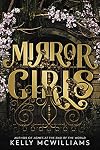
You're pulled into this very quickly by a prologue that intrigues while laying the groundwork for what unfolds throughout the story. Two sisters, twins of a white father and black mother, are torn apart shortly after birth. the parents are murdered and one girl who is very light skinned, is raised to become a white southern belle by her cold, manipulative grandmother. The other twin, dark skinned Charley, ended up living with her other grandmother in New York City. This grandmother, knowing show more death is near, takes Charley back to Eureka, GA, intent upon having her meet her sister Magnolia. It's 1953 and the town is still deeply entrenched in segregation. What happens when the sisters meet is at times painful, at others revealing, and sometimes cringeworthy due to the level of racism. However, it portrays a place and time that was very real and prevalent across the south. It's something teens need to understand in view of how little things in many parts of our country have changed. This is an excellent read and a book deserving of shelf space in most libraries. show less

This is an unusual but riveting story about a girl trying to escape the polygamist cult she grew up in, only to face a weird apocalyptic pandemic in the outside world, and then discovers she has some sort of paranormal gift tied up in her spiritual beliefs. Some reviews call this a religious novel which is a fair judgment I guess but I don't want people to be discouraged in picking up this book because of that. The religious elements play a central role in the story but it's not in any sort show more of preachy way, it's more about how Agnes comes to realize that the environment she grew up in presented a really twisted and abusive view of Christianity and how she forms her own ideas of what faith and God are. And I love the fact that her strength comes from her faith and spirituality, which isn't something you find in YA novels (or many modern novels, I think). I'm not religious myself but I'm really into the idea of girls and women who have a sort of quiet, even understated, strength that comes from the conviction they have in themselves and their own beliefs rather than any sort of physical abilities.
I did think Agnes's transition from being extremely devout to rejecting Red Creek and its cult happened too quickly. It felt unrealistic and clunky, as if the author didn't want to really delve into it and wanted to get to the rest of the story quickly. I'd like to have seen Agnes struggle more with the realization that everything she believed in her entire life was a huge lie. I think I just wanted more from the book in general-- it's a really strange and fascinating mishmash of elements (the sci-fi-ish virus, Agnes's gift, the apocalypse theme) but none of it was really explored all that deeply. I guess because it's not really what the book is about. Overall an enjoyable but kind of a surface-level read. show less
I did think Agnes's transition from being extremely devout to rejecting Red Creek and its cult happened too quickly. It felt unrealistic and clunky, as if the author didn't want to really delve into it and wanted to get to the rest of the story quickly. I'd like to have seen Agnes struggle more with the realization that everything she believed in her entire life was a huge lie. I think I just wanted more from the book in general-- it's a really strange and fascinating mishmash of elements (the sci-fi-ish virus, Agnes's gift, the apocalypse theme) but none of it was really explored all that deeply. I guess because it's not really what the book is about. Overall an enjoyable but kind of a surface-level read. show less
A riveting read for YA and adults. This book is a mishmash of historical fiction, romance, thriller, paranormal, fantasy.
Twin sisters Charlene (“Charlie”) Yates and Magnolia Heathwood were separated as infants. Their parents were killed because they dared to love someone of a different race. Magnolia appeared to be white so was claimed by the Heathwood family. Charlie, having dark skin, was raised in the North by Nana, her maternal grandmother.
The book opens in 1953 with Nana and show more Charlie taking a train to Eureka, Georgia. Nana is dying and wants to be buried where she grew up. Neither Charlie nor Magnolia know she has a twin sister, but that is about to change…with horrific consequences. Each sister will have to make a choice that will change her life.
Charlie organizes Civil Rights protests in Harlem. She is brave and outspoken, something not welcomed in the South. She will soon face the harsh reality of being Black in the South and living under the Jim Crow laws. Magnolia lives on a cotton plantation and is part of the white elite society. Her best friend Annamae is the epitome of the “Southern belle”, and Magnolia is expected to marry Annamae’s brother. She does not know she has lived her life “passing for White.”
This is a dark story with spirits and curses that the sisters struggle to understand. The ghosts of the slaves are demanding to be heard, to be freed. There are strong secondary characters that the sisters will need to help them fight the family curse.
Thank you to The Book Club Cookbook for the review copy. show less
Twin sisters Charlene (“Charlie”) Yates and Magnolia Heathwood were separated as infants. Their parents were killed because they dared to love someone of a different race. Magnolia appeared to be white so was claimed by the Heathwood family. Charlie, having dark skin, was raised in the North by Nana, her maternal grandmother.
The book opens in 1953 with Nana and show more Charlie taking a train to Eureka, Georgia. Nana is dying and wants to be buried where she grew up. Neither Charlie nor Magnolia know she has a twin sister, but that is about to change…with horrific consequences. Each sister will have to make a choice that will change her life.
Charlie organizes Civil Rights protests in Harlem. She is brave and outspoken, something not welcomed in the South. She will soon face the harsh reality of being Black in the South and living under the Jim Crow laws. Magnolia lives on a cotton plantation and is part of the white elite society. Her best friend Annamae is the epitome of the “Southern belle”, and Magnolia is expected to marry Annamae’s brother. She does not know she has lived her life “passing for White.”
This is a dark story with spirits and curses that the sisters struggle to understand. The ghosts of the slaves are demanding to be heard, to be freed. There are strong secondary characters that the sisters will need to help them fight the family curse.
Thank you to The Book Club Cookbook for the review copy. show less
Lists
Awards


You May Also Like


Associated Authors
Statistics
- Works
- 5
- Also by
- 2
- Members
- 609
- Popularity
- #41,275
- Rating
- 3.8
- Reviews
- 16
- ISBNs
- 29