
Lizzy Rockwell
Author of A Nest Full of Eggs
About the Author
Works by Lizzy Rockwell
Associated Works
Don't Go Up Haunted Hill...or Else! (Pictureback(R)) (2008) — Illustrator, some editions — 43 copies
Tagged
Common Knowledge
- Gender
- female
- Relationships
- Rockwell, Harlow (father)
Rockwell, Anne F. (mother)
Members
Reviews
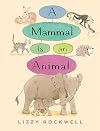
Lizzy Rockwell has written some really excellent nonfiction picture books and this one attracted me on a number of levels.
It's written almost as a conversation with a small child, explaining the classification of animals and mammals in particular. Simple pictures, showing a biracial family (white father, darker-skinned mother), begin the story. As the father and two children take a walk, the discussion begins. A mammal is an animal, but not all animals are mammals. One by one, the definition show more is made more specific - an animal eats, breathes, moves, and grows. Invertebrates are animals, but they are not mammals - they do not have hard parts mostly on the inside, like a skeleton. Fish have skeletons, but don't breathe oxygen, like whales. Frogs and snakes breathe oxygen, but are cold-blooded. Birds keep warm with feathers, breathe oxygen, and have skeletons, but they lay eggs. The dialogue ends with a spread of the family, the mother nursing a baby, as the reader finds out that humans are mammals too.
Back matter includes some unique mammals, like monotremes, more mammal facts, a tree of life diagram, and sources. Rockwell's art is simple and clear, with light colors and defined lines. In addition to the main text, inset sections add more information and vocabulary about specific animals and their bodies.
Verdict: Perfect for use in storytime or classrooms, this well-written explanation of animal and mammal classification might even be useful for helping adults understand the concept (looking at YOU friend who did not know what an amphibian was....)
ISBN: 9780823436705; Published February 2018 by Holiday House; Borrowed from another library in my consortium show less
It's written almost as a conversation with a small child, explaining the classification of animals and mammals in particular. Simple pictures, showing a biracial family (white father, darker-skinned mother), begin the story. As the father and two children take a walk, the discussion begins. A mammal is an animal, but not all animals are mammals. One by one, the definition show more is made more specific - an animal eats, breathes, moves, and grows. Invertebrates are animals, but they are not mammals - they do not have hard parts mostly on the inside, like a skeleton. Fish have skeletons, but don't breathe oxygen, like whales. Frogs and snakes breathe oxygen, but are cold-blooded. Birds keep warm with feathers, breathe oxygen, and have skeletons, but they lay eggs. The dialogue ends with a spread of the family, the mother nursing a baby, as the reader finds out that humans are mammals too.
Back matter includes some unique mammals, like monotremes, more mammal facts, a tree of life diagram, and sources. Rockwell's art is simple and clear, with light colors and defined lines. In addition to the main text, inset sections add more information and vocabulary about specific animals and their bodies.
Verdict: Perfect for use in storytime or classrooms, this well-written explanation of animal and mammal classification might even be useful for helping adults understand the concept (looking at YOU friend who did not know what an amphibian was....)
ISBN: 9780823436705; Published February 2018 by Holiday House; Borrowed from another library in my consortium show less
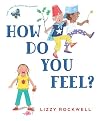
With simple, sparse language, and bright, expressive illustrations, Lizzy Rockwell introduces very young readers to a wide range of emotions. Detailed art encourages identification and discussion of the different characters' emotional reactions, and serves as a springboard for discussion on emotional intelligence, self-regulation, and coping skills.
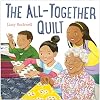
A gentle, lovely story based on the author's own experience making community quilts with Peace by Piece: The Norwalk Community Quilt Project.
A diverse group of kids and adults come together weekly at the community center to make a quilt. So many people have helped make it - but who will get to keep it? "Everyone will have it! It hangs in the library for all to see."
Back matter includes more information about Peace by Piece and a photo of some of the quilters and their quilts; there's also a show more page of classic quilt blocks (bowtie, rail fence, flying geese, pinwheel, nine patch, churn dash, friendship star, shoo fly, split nine patch). This really lends itself to an arts-and-crafts project after a storytime! show less
A diverse group of kids and adults come together weekly at the community center to make a quilt. So many people have helped make it - but who will get to keep it? "Everyone will have it! It hangs in the library for all to see."
Back matter includes more information about Peace by Piece and a photo of some of the quilters and their quilts; there's also a show more page of classic quilt blocks (bowtie, rail fence, flying geese, pinwheel, nine patch, churn dash, friendship star, shoo fly, split nine patch). This really lends itself to an arts-and-crafts project after a storytime! show less
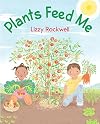
This book is great tool of learning for kids about the things they eat. The pictures are great and are very detailed about what plants are and what vegetables are. The book gives a generalized account of where certain vegetables are grown and where certain fruit are grown. It also distinguishes the different types of fruit and vegetables. I would highly recommend this book at the Pre-k-1st grade level, but anyone can read and learn as I did.
Lists
Awards


You May Also Like


Associated Authors
Statistics
- Works
- 18
- Also by
- 7
- Members
- 4,022
- Popularity
- #6,269
- Rating
- 3.8
- Reviews
- 82
- ISBNs
- 74
- Languages
- 1