
Anthony Peake
Author of Is There Life After Death?
Works by Anthony Peake
Associated Works
Tagged
Common Knowledge
- Birthdate
- 1954-04-12
- Gender
- male
- Education
- The University of Warwick (1973-76)
London School of Economics (1976-77) - Occupations
- human resources management consultant
- Organizations
- Scientific & Medical Network
International Association of Near-Death Studies
Society of Authors - Nationality
- UK
- Places of residence
- Wirral, Merseyside, UK
- Map Location
- England, UK
Members
Reviews
Is There Life After Death? The Extraordinary Science of What Happens When We Die: Why Science Is Taking the Idea of an A by Anthony Peake

This was recommended by the author himself, a fellow member of Library Thing. Although wary at first (was he pushing a religious cult or an expensive new age therapy?) I did purchase Anthony Peake's book in a local Waterstones. I have reluctantly rejected the concept of an afterlife, but after reading Frank Tipler's brilliant but highly speculative 'The Physics Of Immortality' I began to wonder if some where on the stranger shores of science (cosmology, quantum physics, many world's show more interpretation etc) a scientific theory supportive of individual immortality could be discovered. In this regard I was not disappointed with 'Is There Life After Death.'
First of all his publishers have done him a grave disservice by rejecting the original title of his book; 'Cheating The Ferryman.' This is not only a more aesthetically pleasing title but also conveys its contents. 'Is There Life After Death' is not a spiritualist fantasy posing as truth but grounded in known facts even if many of them are of a subjective nature and it deserves more then being relegated to the New Age section. While Tipler's Omega Point theory is based on hard physics with an epic sweep of cosmic proportions, Peake's theory is concerned with inner space, drawing mostly from the 'soft' sciences particularly psychology. If this was science fiction it's more Philip K Dick or early J.G. Ballard then Arthur C Clarke or Isaac Asimov. But like all good science fiction it directs the mind into unusual corners, opening it up to the mysteries of the universe and in this instance to the brain's own marvellous (and sometimes disturbing) properties. Reading this book while on a busy commuter train into London I was transported by this writer's ideas, the dreariness of a dark and wet January morning fading into the background.
Many will say, "that's all well and good but are Anthony Peake's concepts solidly centred on objective experimental proofs?" The answer is no but to this particular reader anyway I don't think it matters. Though at times he makes wild speculative claims, his core evidence is still based on legitimate scientific, psychological and medical research, although admittedly not his own. Some will see this research as hocus-pocus disquised as science, decrying his use of studies into precognition and near-death experiences, others will sneer at the fact that Anthony Peake is not a trained scientist but a humanities graduate. But for those with an open-mind his theory is if nothing else fascinating and certainly worthy of being taken seriously. show less
First of all his publishers have done him a grave disservice by rejecting the original title of his book; 'Cheating The Ferryman.' This is not only a more aesthetically pleasing title but also conveys its contents. 'Is There Life After Death' is not a spiritualist fantasy posing as truth but grounded in known facts even if many of them are of a subjective nature and it deserves more then being relegated to the New Age section. While Tipler's Omega Point theory is based on hard physics with an epic sweep of cosmic proportions, Peake's theory is concerned with inner space, drawing mostly from the 'soft' sciences particularly psychology. If this was science fiction it's more Philip K Dick or early J.G. Ballard then Arthur C Clarke or Isaac Asimov. But like all good science fiction it directs the mind into unusual corners, opening it up to the mysteries of the universe and in this instance to the brain's own marvellous (and sometimes disturbing) properties. Reading this book while on a busy commuter train into London I was transported by this writer's ideas, the dreariness of a dark and wet January morning fading into the background.
Many will say, "that's all well and good but are Anthony Peake's concepts solidly centred on objective experimental proofs?" The answer is no but to this particular reader anyway I don't think it matters. Though at times he makes wild speculative claims, his core evidence is still based on legitimate scientific, psychological and medical research, although admittedly not his own. Some will see this research as hocus-pocus disquised as science, decrying his use of studies into precognition and near-death experiences, others will sneer at the fact that Anthony Peake is not a trained scientist but a humanities graduate. But for those with an open-mind his theory is if nothing else fascinating and certainly worthy of being taken seriously. show less
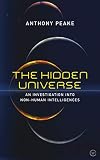
Another fantastic book from Peake:
Every time I read one of Peake's books I learn something new and I find his books are pabulum for the soul.
In this one, he looks at non-human intelligence and how they interact with us. This is the story that those in control of humanity have tried and failed to suppress over the past 500 years here in the occident. People across space and time have had interactions with these entities who are known collectively in esoterica as the Egregores, in Islam, they show more are the Djinn and in Gnosticism, they are the Archons. They are watching us, some argue they are guiding us and others that they manipulate and control us.
I won't give away how Peake thinks what is going on you need to buy the book and read it for yourself it's very intriguing and as always well elucidated in his unique and simple style in which he is able to explain difficult concepts simply. show less
Every time I read one of Peake's books I learn something new and I find his books are pabulum for the soul.
In this one, he looks at non-human intelligence and how they interact with us. This is the story that those in control of humanity have tried and failed to suppress over the past 500 years here in the occident. People across space and time have had interactions with these entities who are known collectively in esoterica as the Egregores, in Islam, they show more are the Djinn and in Gnosticism, they are the Archons. They are watching us, some argue they are guiding us and others that they manipulate and control us.
I won't give away how Peake thinks what is going on you need to buy the book and read it for yourself it's very intriguing and as always well elucidated in his unique and simple style in which he is able to explain difficult concepts simply. show less
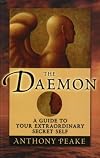
I rarely read books twice, because there are so many good ones out there. On this occasion I made an exception to the rule, because it is so thought provoking and so well put together.
Peake has this brilliant knack of collating information from all over the place and putting it into a coherent system of thought that leaves people intrigued and asking for more.
I have long been fascinated by sports people, artist, musicians and even scientists like Einstein and wondering how they do what they show more do.
This book gives us the answer; The Daemon your higher self steps in and takes over. When a top tennis professional returns a serve at 120 mph he has no time to think about it, he just does it. However, the implications are that subconsciously he knows where the ball is going to land before the server even hits it. Of course this raises interesting questions regarding free will and I am in the camp that says we don't have any. Einstein was asked how do you do what you do, and he replied, he was a conduit for something bigger than himself which worked through him.
And when you ask top sports people, How did you do that, the truth is they don't know. They only know they did it and they know that when they did it there was no conscious thought. Thinking interrupts the doing, and I got plenty out of this book, and I have felt privileged enough to since befriend Tony and discuss his ideas with him and hopefully give him some pointers regarding future research and books. show less
Peake has this brilliant knack of collating information from all over the place and putting it into a coherent system of thought that leaves people intrigued and asking for more.
I have long been fascinated by sports people, artist, musicians and even scientists like Einstein and wondering how they do what they show more do.
This book gives us the answer; The Daemon your higher self steps in and takes over. When a top tennis professional returns a serve at 120 mph he has no time to think about it, he just does it. However, the implications are that subconsciously he knows where the ball is going to land before the server even hits it. Of course this raises interesting questions regarding free will and I am in the camp that says we don't have any. Einstein was asked how do you do what you do, and he replied, he was a conduit for something bigger than himself which worked through him.
And when you ask top sports people, How did you do that, the truth is they don't know. They only know they did it and they know that when they did it there was no conscious thought. Thinking interrupts the doing, and I got plenty out of this book, and I have felt privileged enough to since befriend Tony and discuss his ideas with him and hopefully give him some pointers regarding future research and books. show less
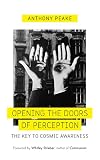
Even if you decide to take everything mentioned in this book with a grain of salt, it will definitely open your eyes to how our version of a "rational science-driven worldview" is dominated by reductionists and behaviorists. Every anecdote and fact is supported with a reference, so you can dig further into the story and see if the relevance to the topic at hand was forced or natural. A truly life-changing read. I don't say that lightly. I found the exploration of the links between migraine, show more epilepsy, schizophrenia, Alzheimer's and autism to be incredibly enlightening, and I dare say it even strengthened my empathy towards a lot of (other) illnesses I did not initially understand. show less
You May Also Like


Associated Authors
Statistics
- Works
- 12
- Also by
- 1
- Members
- 372
- Popularity
- #64,809
- Rating
- 4.0
- Reviews
- 6
- ISBNs
- 39
- Languages
- 7
- Favorited
- 4
