
Gerhard von Rad (1901–1971)
Author of Genesis: A Commentary
About the Author
Gerhard von Rad (1901-71) was Professor of Old Testament at the University of Heidelberg, Germany.
Series
Works by Gerhard von Rad
Old Testament Theology: Volume II: The Theology of Israel's Prophetic Traditions (1960) — Author — 594 copies, 6 reviews
Old Testament Theology: Volume I: The Theology of Israel's Historical Traditions (1962) — Author — 554 copies, 5 reviews
From Genesis to Chronicles: Explorations in Old Testament Theology (Fortress Classics in Biblical Studies) (2005) 37 copies
2: Genesi (capitoli 1-12) 4 copies
Das alte Testament deutsch 4 copies
Gesammelte Studien zum Alten Testament II [Theologische Bcherei, Altes Testament 48] (1986) 3 copies
Teologia dell'Antico Testamento 2 copies
Die Botschaft der Propheten 2 copies
Predigten 2 copies
A história de José do Egito 1 copy
Theologie des Alten Testaments - Band II: Die Theologie der prophetischen Überlieferung Israels 1 copy
Theologie des Alten Testaments - Band I: Die Theologie der geschichtlichen Überlieferung Israels 1 copy
Title Not Given 1 copy
Das erste Buch Mose 1 copy
Sabiduria en Israel 1 copy
Associated Works
Tagged
Common Knowledge
- Canonical name
- von Rad, Gerhard
- Birthdate
- 1901-10-21
- Date of death
- 1971-10-31
- Gender
- male
- Education
- University of Erlangen
University of Tübingen - Occupations
- cleric
professor
theologian - Organizations
- University of Heidelberg
University of Göttingen
University of Jena
University of Leipzig
University of Erlangen
Lutheran Landeskirche (curate 1925) - Awards and honors
- Heidelberg Academy of Sciences
Order pour le merité - Nationality
- Germany
- Birthplace
- Nuremberg, Bavaria, Germany
- Places of residence
- Nuremberg, Bavaria, Germany
- Place of death
- Heidelberg, Baden-Württemberg, Germany
- Burial location
- Friedhof Handschuhsheim, Heidelberg, Baden-Württemberg, Germany
- Associated Place (for map)
- Germany
Members
Reviews

A very important and still useful commentary; research and analysis have qualified both the historical background as von Rad understood it and the theories of composition and redaction which he favoured, but his overall approach and many of his conclusions, and especially his overall way of reading the texts in the light of their sitz im leben remain valuable.

Old Testament Theology represents a vast and thorough work that attempts to make sense of the Old Testament and its perspectives as a whole, and also considers the New Testament and how it perceived the works that came before it.
von Rad comes from the more liberal school of thought, and provides his analyses based on a form-critical and a traditio-historical perspective. In his estimation, Israel really represented a coalition of tribes that had always been in Canaan who were bound together show more in their belief in Yahwism (the "amphictyonic clan league") who developed a "saving history" which involved memories and concepts of the patriarchs and an Exodus narrative. These traditions were eventually wrapped up in monarchical perspectives that came after the accession of the kings. von Rad accepts the documentary hypothesis, three Isaianic authors hypothesis, and the strong hand of the Deuteronomist (or its school) on the works of history, with the Chronicler coming later.
While these operating assumptions make it hard to agree with a lot of what von Rad presents, he provides much food for thought in terms of his understanding of the texts and their relationships. He ends up being an outspoken critic of the methodology of his age and the presupposition that an analysis of the OT really is the analysis of what can be historically ascertained as viable and what must be discarded. von Rad demonstrates well that this is not a study of Old Testament theology-- one must actually approach the texts and try to give Israel the benefit of the doubt.
While I do not agree with all of his conclusions regarding the main element of his argument, I can appreciate some of the lessons one can gain from the approach: the belief that what we have revealed in the Bible is a series of traditions involving YHWH's saving actions in Israel's history. We have traditions regarding Abraham, Isaac, and Jacob; the Exodus; Joshua and the Conquest; Judges; David and the future King; the return from the exile; and so on. von Rad points out how the Old Testament is entirely written with a view to the future: YHWH has acted, and His deliverance awaits. After all, God makes promises to Abraham that are only partially fulfilled in Moses and Joshua. When establishing David as king, God points further to a line of kings, and of course the ultimate King. von Rad then takes this line of thought to its "Christian" conclusion, and provides a nice continuity between the Testaments: the belief that YHWH has enacted a major and groundbreaking saving event through Jesus Christ, representing the fulfillment of prophecy and OT expectations, provides the crescendo for what the OT was always seeking after. We find the ultimate fulfillment of the promises to Abraham; the promise of Moses regarding a prophet; the ultimate conquest; the King of Kings; the true return from exile.
While it is challenging to work with some of the presuppositions in the work, one can mine von Rad's magnum opus and find much that is worthwhile. show less
von Rad comes from the more liberal school of thought, and provides his analyses based on a form-critical and a traditio-historical perspective. In his estimation, Israel really represented a coalition of tribes that had always been in Canaan who were bound together show more in their belief in Yahwism (the "amphictyonic clan league") who developed a "saving history" which involved memories and concepts of the patriarchs and an Exodus narrative. These traditions were eventually wrapped up in monarchical perspectives that came after the accession of the kings. von Rad accepts the documentary hypothesis, three Isaianic authors hypothesis, and the strong hand of the Deuteronomist (or its school) on the works of history, with the Chronicler coming later.
While these operating assumptions make it hard to agree with a lot of what von Rad presents, he provides much food for thought in terms of his understanding of the texts and their relationships. He ends up being an outspoken critic of the methodology of his age and the presupposition that an analysis of the OT really is the analysis of what can be historically ascertained as viable and what must be discarded. von Rad demonstrates well that this is not a study of Old Testament theology-- one must actually approach the texts and try to give Israel the benefit of the doubt.
While I do not agree with all of his conclusions regarding the main element of his argument, I can appreciate some of the lessons one can gain from the approach: the belief that what we have revealed in the Bible is a series of traditions involving YHWH's saving actions in Israel's history. We have traditions regarding Abraham, Isaac, and Jacob; the Exodus; Joshua and the Conquest; Judges; David and the future King; the return from the exile; and so on. von Rad points out how the Old Testament is entirely written with a view to the future: YHWH has acted, and His deliverance awaits. After all, God makes promises to Abraham that are only partially fulfilled in Moses and Joshua. When establishing David as king, God points further to a line of kings, and of course the ultimate King. von Rad then takes this line of thought to its "Christian" conclusion, and provides a nice continuity between the Testaments: the belief that YHWH has enacted a major and groundbreaking saving event through Jesus Christ, representing the fulfillment of prophecy and OT expectations, provides the crescendo for what the OT was always seeking after. We find the ultimate fulfillment of the promises to Abraham; the promise of Moses regarding a prophet; the ultimate conquest; the King of Kings; the true return from exile.
While it is challenging to work with some of the presuppositions in the work, one can mine von Rad's magnum opus and find much that is worthwhile. show less
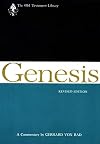
Van Rad does a masterful job at relating the basic story of Genesis, amply annotated with textual analysis, as well as poignant interpretation of the material.
This is an older commentary, and does not reflect some current scholarship, but is still one of the best ones you can find on Genesis.
This is an older commentary, and does not reflect some current scholarship, but is still one of the best ones you can find on Genesis.
Old Testament Theology: The Theology of Israel's Traditions (The Old Testament Library) by Gerhard von Rad
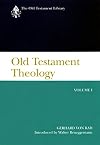
Von Rad argues that the proper way to do Old Testament theology is to describe the faith of ancient Israel as a history of the Saving Acts of God. In other words, to participate (as possible) in Israel retelling of and reflecting on her own Saving History with YHWH
Lists
Awards

You May Also Like


Associated Authors
Statistics
- Works
- 50
- Also by
- 2
- Members
- 4,109
- Popularity
- #6,123
- Rating
- 3.6
- Reviews
- 21
- ISBNs
- 89
- Languages
- 7
- Favorited
- 4