
Sankaracarya (788–820)
Author of Shankara's Crest Jewel of Discrimination
About the Author
Image credit: Priyanath
Series
Works by Sankaracarya
Dakshinamurti stotra of Sri Sankaracharya and Dakshinamurti Upanishad with Sri Sureswaracharya's Manasollasa and Pranava vartika (2001) 7 copies
La joya suprema del discernimiento (viveka churhamoni) y la realización directa (aparoksha anubhuti) (2010) 3 copies, 1 review
Śankara on the Yoga-sutra-s : The vivara sub-commentary to Vyasa-bha on the Yoga-sutra-s of Patañj (1981) 2 copies
Taittiriya Upanisad 2 copies
Isa Upanisad 2 copies
Mundaka Upanisad 2 copies
Aitareya Upanisad 2 copies
Prasna Upanisad 2 copies
The quintessence of Vedanta: A translation of the Sarva-vedanta-siddhanta-sarasangraha of Acharya Sankara (1979) 2 copies
Katha Upanisad 2 copies
Acharya's call : Kanchi Jagatguru's Madras Discourses, 1957-1960. Foreword by P.S. Kailsam. 2 copies
Self-Knowledge (Atmabodha) 2 copies
Readings from Śaṅkarā 1 copy
Srimad Bhagavad gita 1 copy
Shri Dakshinamurti Stotram 1 copy
Upadeshasāhasrī = : a thousand teachings, in two parts, prose and poetry, of Srī Sankarāchārya 1 copy
Sivananda Lahari-Inundation of Divine Bliss-With Text and Transliteration Translation and Notes 1 copy, 1 review
Verses of Wisdom 1 copy
K�en�opanishad. 1 copy
Tripura Sundari Ashtakam 1 copy
Pañcīkaraṇam: Text and the vārttika with word for word translation, English rendering, comments, and the glossary (1972) 1 copy
Dhanyastakam 1 copy
Hymn to Dakshinamurti / 1 copy
Prarthana Satpadi, Elasloki 1 copy
The Taittiriya Upanishad 1 copy
Upadesa Sahasri 1 copy
Siva Manasa Puja 1 copy
Sivanandalahari 1 copy
Sri Vishnu Sahasranama 1 copy
Soundarya Lahari 1 copy
Kena Upanisad 1 copy
Svetasvatara Upanisad 1 copy
Manisha Panchak 1 copy
Self Knowledge: Atma-Bodhi 1 copy
La distinction entre l'observateur et l'observé : Un classique de l'advaita vedânta (2016) 1 copy, 1 review
The Vedānta-sūtras. Part I 1 copy
Zelfkennis zonder omweg 1 copy
Irshadi nav Upanishad 1 copy
Prasna Upanishad 1 copy
Associated Works
God Makes the Rivers To Flow: Sacred Literature of the World (1982) — Contributor — 230 copies, 2 reviews
Tagged
Common Knowledge
- Other names
- Sankara
Shankara
Adi Sankara
Sri Shankara
Samkara
Śaṅkarācārya - Birthdate
- 788
- Date of death
- 820
- Gender
- male
- Occupations
- religious philosopher (Advaitist)
- Organizations
- Dashanami Monastic Order
- Birthplace
- Kalady, Kerala, India
- Map Location
- India
Members
Reviews
Sivananda Lahari-Inundation of Divine Bliss-With Text and Transliteration Translation and Notes by Sri Sankaracarya
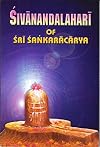
Sivanandalahari, the Inundation of Divine Bliss, is a work noted as mch for its literary beauty, as for its devotional fervour. It is attributed by tradition to the great Acarya Sankara, the commentator on the Vedanta texts and the main architect of the Advaita Vedanta philosophy. Some people find a kind of inconsistency in a great philsopher being the author of a fervently emotional piece of Bhakti literature. But to those who know the Vedantic tradition, there is no inherent inconsistency show more in this. For, unlike some intellectuals, the authentic teachers of the Vedanta have held that Jnana and Bhakti are not antipodes but the obverse and reverse of the same coin, being but two aspects of the impact made on the human mind by the realisation of the Personal-Impersonal being revealed by the Vedas. According to the Vedanta, a philosopher can be a devotee, and a devotee, a philosopher.
Longing for God is the quintessence of devotion. So long as man is solely engrossed with worldly values, the pursuit of pleasure and power, longing for God will not germinate in his mind. Even faith of a genuine nature is impossible for one of that outlook. The nature of that divine longing, how it absorbs the whole man, is graphically described in Verse 61 of the Text , which runs as follows: 'That state of mind is called Bhakti or divine loove, wherein all movements of thought go automatically to the lotus feet of the Lord and stick to them for ever, just as the seeds of the ankola tree (on falling) gravitate to the parent tree, the iron needle to the magnetic bar, the devoted wife to her husband, the creeper to the tree, and the river to the ocean.' show less
Longing for God is the quintessence of devotion. So long as man is solely engrossed with worldly values, the pursuit of pleasure and power, longing for God will not germinate in his mind. Even faith of a genuine nature is impossible for one of that outlook. The nature of that divine longing, how it absorbs the whole man, is graphically described in Verse 61 of the Text , which runs as follows: 'That state of mind is called Bhakti or divine loove, wherein all movements of thought go automatically to the lotus feet of the Lord and stick to them for ever, just as the seeds of the ankola tree (on falling) gravitate to the parent tree, the iron needle to the magnetic bar, the devoted wife to her husband, the creeper to the tree, and the river to the ocean.' show less
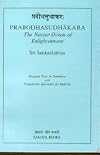
Prabodhasudhakara (The Nectar-ocean of Enlightenment) is one of the lesser-known works of Sri Sankaracarya, the greatest exponent of monistic Vedanta. It consists of 257 verses divided into 19 sections, which present a lucid exposition of the philosophy of monistic Vedanta and the way leading to the realisation of Ultimate Reality
In the clarity and directness of its treatment of the subject and in the numerous homely analogies that are employed to expound the principles of Vedanta, it is show more perhaps unequalled even by the other popular works of the great author. But what makes it outstanding is the fact that it completely reconciles knowledge (jnana) and Devotion (bhakti) as equally valid methods for the direct experience of Ultimate Reality. The devotional fervour of the author shines through the last four sections of the work containing some exquisite and unforgettable verses. Further, the author consistently recognises the need for the cessation of the thought-waves of the mind and its absorption into the Source which is pure Being-Consciousness, for the attainment of jnana or Intuitive Knowledge.
This work does not appear to have been translated into English before, though a number of translations in the vernacular are available. The translator has attempted a literal translation, without sacrificing the sense and spirit of the original. This attempt had many constraints because of the profound nature of the subject and the radical differences in idiom between Samskrta and English. It was found necessary to take some liberties with English idiom at places, so that the import and spirit of the original could be faithfully presented. In the opinion of the translator, this would be a better course than compromising with the sense of the original, in order to present an English version which is meticulously idiomatic and possesses literary excellence. We should not forget that we are trying to understand the sublime thoughts of the great author and the philosophy and practice of Vedanta as expounded by him. Notes have been added to many verses to achieve this end. In the translation, implied words and alternative meanings are given within brackets.
The translator hopes that this presentation of this great work of Sri Sankaracarya, will help many spiritual seekers to understand and practise the most essential disciplines for Perfection and Liberation, viz., contemplation on the Self and God-love. show less
In the clarity and directness of its treatment of the subject and in the numerous homely analogies that are employed to expound the principles of Vedanta, it is show more perhaps unequalled even by the other popular works of the great author. But what makes it outstanding is the fact that it completely reconciles knowledge (jnana) and Devotion (bhakti) as equally valid methods for the direct experience of Ultimate Reality. The devotional fervour of the author shines through the last four sections of the work containing some exquisite and unforgettable verses. Further, the author consistently recognises the need for the cessation of the thought-waves of the mind and its absorption into the Source which is pure Being-Consciousness, for the attainment of jnana or Intuitive Knowledge.
This work does not appear to have been translated into English before, though a number of translations in the vernacular are available. The translator has attempted a literal translation, without sacrificing the sense and spirit of the original. This attempt had many constraints because of the profound nature of the subject and the radical differences in idiom between Samskrta and English. It was found necessary to take some liberties with English idiom at places, so that the import and spirit of the original could be faithfully presented. In the opinion of the translator, this would be a better course than compromising with the sense of the original, in order to present an English version which is meticulously idiomatic and possesses literary excellence. We should not forget that we are trying to understand the sublime thoughts of the great author and the philosophy and practice of Vedanta as expounded by him. Notes have been added to many verses to achieve this end. In the translation, implied words and alternative meanings are given within brackets.
The translator hopes that this presentation of this great work of Sri Sankaracarya, will help many spiritual seekers to understand and practise the most essential disciplines for Perfection and Liberation, viz., contemplation on the Self and God-love. show less

Tattva Bodha means 'Knowledge of the Truth'. This small introductory text of Vedanta reveals the fundamentals of the various aspects of the topic of knowledge of truth. What is the essence of myself and this world? What is the nature of the knowledge of truth? Who is the right student for this specialized knowledge? What is the process of the dawn of this understanding? and, What are the indications of a man of such knowledge? The author of this lovely text is Sri Adi Sankara.
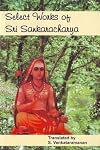
Non-dualistic vedanta
Contents
Publishers' Note
Preface
Foreword
Hymn to hari
The ten versed hymn
Hymn to Dakshinamurti
Direct realsiation
The century of verses
Knowledge of self
Comentary on the text
Definition of one's own self
Miscellaneous stotras
You May Also Like


Associated Authors
Statistics
- Works
- 159
- Also by
- 1
- Members
- 875
- Popularity
- #29,265
- Rating
- 4.3
- Reviews
- 25
- ISBNs
- 112
- Languages
- 10
- Favorited
- 3