
Matthew Iden
Author of The Winter Over
About the Author
Image credit: Crime fiction author Matthew Iden on his back porch. There's a Bloody Mary in his right hand, but you'll never see it in the picture.
Series
Works by Matthew Iden
Associated Works
Thriller Thirteen: 13 Bestselling Thriller Novellas Packed With Mystery, Action, & Adventure! (2016) — Contributor — 3 copies
Tagged
Common Knowledge
- Gender
- male
- Short biography
- Matthew Iden is the author of the psychological suspense novel The Winter Over, a half-dozen books in the Marty Singer detective series, and several acclaimed stand-alone novels. His eclectic work resume includes jobs with the US Postal Service, an international nonprofit, the Forest Service in Sitka, Alaska, and the globe-spanning Semester at Sea program. His latest, Birthday Girl, is a suspense novel featuring Elliott Nash, a former forensic psychologist who is now homeless but is recruited to save a young girl from a serial kidnapper (March 2018).
- Nationality
- USA
- Associated Place (for map)
- USA
Members
Reviews
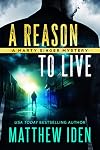
Earlier this year, I read the eighth book in this series, Chasing the Pain , and enjoyed it enough that I had to go back to the first book and read the whole series.
“What’s your first move?”
“We’ve narrowed it down to Michael Wheeler or the rest of humanity,” I said. “So let’s start with Wheeler.”
WHAT'S A REASON TO LIVE ABOUT?
Twelve years ago, Detective Marty Singer investigated a murder. A police officer was in the home of a woman he'd been harassing and shot her. Singer show more didn't believe his story and arrested him, and worked as hard as he could to put the cop away. It didn't work, he was acquitted and then disappeared. In the ensuing years, this has haunted Marty.
Now, that woman's daughter, Amanda, has tracked him down—she's being stalked, harassed by someone—and all the evidence points to it being the man who killed her mom.
So she comes to the detective she learned to trust all those years ago—she needs his help to keep her alive. The downside is that Marty recently retired from the force so that he could focus on cancer treatment. But there's no reason to tell Amanda that—Marty feels he owes her (and her mother) a debt he can't repay, so he'll do the next best thing—keep her alive.
THE BIG C
I'd been treating cancer like it was the flu, an inconvenience that I’d have to put up with temporarily. Except cancer wasn’t just a sore throat and a fever, and chemo wasn’t just a shot in the arm. Cancer wasn’t a bump in the road—it was the road, and I’d better make plans to treat it that way. My life, as I knew it, had changed for good.
Sure, there's a murdering stalker out there, but the "Big Bad" of this novel is Marty's cancer. It casts a looming shadow over everything, it affects the way that Marty can work—how he can investigate, protect, and defend.
I don't know how many books will feature this struggle—I hope we get a couple more. I do know, thanks to starting the series where I did, that it's not a constant presence in the series. I just hope that it sticks around for a bit—it's refreshing seeing someone have to deal with things like this.
AMANDA
Amanda’s face was animated, happy. I realized I wanted it to stay that way. Why? Was it feelings of guilt from a job poorly done more than a decade ago? I’d probably done worse things to more people over the years and I wasn’t hustling to make amends with them. Was it paternal? Misplaced feelings for a kid I’d never had? Maybe. But the real reason was closer at hand. It didn’t take much imagination to wonder what I’d be doing right now, how I would feel, if she hadn’t had the guts to walk up to me
It almost feels like a creepy thing for Marty to find a reason to live in Amanda, but it's not. As he says in the quotation—it's like he found the daughter he never had—and he gets to do something for her that he couldn't do twelve years earlier—identify and then stop her mother's killer.
Add in the fact that Iden made her sweet and supportive, a nice person with a good heart, and obviously, readers will get invested in her quickly and will frequently be on the edge of their seats to see if Marty can keep her safe.
SO, WHAT DID I THINK ABOUT A REASON TO LIVE?
And what became clear to me in that infinite moment is that, ironically, a man with cancer has more options than one that doesn’t. Having already stared my own mortality in the face, I couldn’t really be threatened with death.
When you have a thriller where the protagonist really can't be threatened? That adds a little something
Of course, Marty's lying to himself—there are threats that would make him stop everything—but as long as he believes he can't be threatened, it does give him more options and adds a little something to the novel. Throw in the complications of his varying amounts of energy and stamina with the added complication of learning how to act without a badge to back him up.
Sure, some of the tension was eased because I knew the outcome for most of the characters, I knew the relationships that were being created here—just knowing that the series goes at least eight books tells you a lot right there.
Still, it was a gripping read, and a good introduction to Marty and Amanda and Marty's retired life. A fast, enjoyable novel—it's easy to see why the series has been going as long as it has been. You should check it out. show less
“What’s your first move?”
“We’ve narrowed it down to Michael Wheeler or the rest of humanity,” I said. “So let’s start with Wheeler.”
WHAT'S A REASON TO LIVE ABOUT?
Twelve years ago, Detective Marty Singer investigated a murder. A police officer was in the home of a woman he'd been harassing and shot her. Singer show more didn't believe his story and arrested him, and worked as hard as he could to put the cop away. It didn't work, he was acquitted and then disappeared. In the ensuing years, this has haunted Marty.
Now, that woman's daughter, Amanda, has tracked him down—she's being stalked, harassed by someone—and all the evidence points to it being the man who killed her mom.
So she comes to the detective she learned to trust all those years ago—she needs his help to keep her alive. The downside is that Marty recently retired from the force so that he could focus on cancer treatment. But there's no reason to tell Amanda that—Marty feels he owes her (and her mother) a debt he can't repay, so he'll do the next best thing—keep her alive.
THE BIG C
I'd been treating cancer like it was the flu, an inconvenience that I’d have to put up with temporarily. Except cancer wasn’t just a sore throat and a fever, and chemo wasn’t just a shot in the arm. Cancer wasn’t a bump in the road—it was the road, and I’d better make plans to treat it that way. My life, as I knew it, had changed for good.
Sure, there's a murdering stalker out there, but the "Big Bad" of this novel is Marty's cancer. It casts a looming shadow over everything, it affects the way that Marty can work—how he can investigate, protect, and defend.
I don't know how many books will feature this struggle—I hope we get a couple more. I do know, thanks to starting the series where I did, that it's not a constant presence in the series. I just hope that it sticks around for a bit—it's refreshing seeing someone have to deal with things like this.
AMANDA
Amanda’s face was animated, happy. I realized I wanted it to stay that way. Why? Was it feelings of guilt from a job poorly done more than a decade ago? I’d probably done worse things to more people over the years and I wasn’t hustling to make amends with them. Was it paternal? Misplaced feelings for a kid I’d never had? Maybe. But the real reason was closer at hand. It didn’t take much imagination to wonder what I’d be doing right now, how I would feel, if she hadn’t had the guts to walk up to me
It almost feels like a creepy thing for Marty to find a reason to live in Amanda, but it's not. As he says in the quotation—it's like he found the daughter he never had—and he gets to do something for her that he couldn't do twelve years earlier—identify and then stop her mother's killer.
Add in the fact that Iden made her sweet and supportive, a nice person with a good heart, and obviously, readers will get invested in her quickly and will frequently be on the edge of their seats to see if Marty can keep her safe.
SO, WHAT DID I THINK ABOUT A REASON TO LIVE?
And what became clear to me in that infinite moment is that, ironically, a man with cancer has more options than one that doesn’t. Having already stared my own mortality in the face, I couldn’t really be threatened with death.
When you have a thriller where the protagonist really can't be threatened? That adds a little something
Of course, Marty's lying to himself—there are threats that would make him stop everything—but as long as he believes he can't be threatened, it does give him more options and adds a little something to the novel. Throw in the complications of his varying amounts of energy and stamina with the added complication of learning how to act without a badge to back him up.
Sure, some of the tension was eased because I knew the outcome for most of the characters, I knew the relationships that were being created here—just knowing that the series goes at least eight books tells you a lot right there.
Still, it was a gripping read, and a good introduction to Marty and Amanda and Marty's retired life. A fast, enjoyable novel—it's easy to see why the series has been going as long as it has been. You should check it out. show less
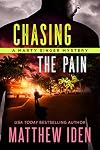
This originally appeared at The Irresponsible Reader.
---
THE SET-UP
Once upon a time, it seemed like at least 40% of the P.I. novels/TV shows I read started out with an old friend (usually that the reader/viewer had never heard of) coming to the P.I. for help—or getting word to him that they were in trouble. It was a quick and effective way for the P.I. to get involved in the case without all the bother of interviewing a prospective client and worrying about money and whatnot. Obviously, it show more was better if it was someone the reader/viewer knew so we'd be invested, too.
And that's what we have here, Marty Singer gets a visit from the ex-wife of a man he'd worked with not that long ago (Book 6, Once Was Lost, for the reader). He's gone missing, leaving a note for his ex that reads:
If you’re reading this, then you haven’t heard from me in three weeks, maybe more. If that’s the case, call Marty Singer. He’ll know what to do.
Marty, a former DC Homicide detective, really has no choice (not that he wants one). He needs to find the retired US Marshall, Karl Schovasa, and bring him home—and helping Karl out however he needs to in order to get him able to come home.
THE PROTAGONIST
So, I'm coming into this series late (this is Book 8), but here's what I picked up about Marty. He's a retired detective and a cancer survivor. He now does favors for people, acting like a P.I. without a license (for undoubtedly a good reason). Think Matthew Scudder without the alcoholism.* He's got a great girlfriend and there's a young woman in their life that might as well be an adoptive daughter**. Drawing on his experience and contacts, he seems to be fairly successful at what he does.
* This is just my impression at this point, I could be way off.
** Think Spenser and Paul Giacomin.
I didn't get to spend a lot of time with his girlfriend or daughter-figure, but they seemed like the kind of characters you'd want to spend more time with, and the interaction between the three of them served to make the reader like Marty.
THE VICTIM
Karl Schovasa ran into Marty when they were on opposite sides of a case a couple of years back—but at some point, they realized they weren't really on opposite sides and combined their efforts, forging a friendship. In the meantime, Karl's addictions became worse—although Marty sees signs of him sobering up (and signs that the sobering didn't last).
It looks like Karl befriended a young woman in a treatment group and decided she was in trouble. She'd ended up in a treatment center in Palm Beach, and it looks like Karl followed her there. Then he disappeared.
So, it's off to Palm Beach for Marty to look for Karl—and probably the girl, too—and then the trouble really starts. And I'm going to leave it there.
A REFRESHING TAKE ON VIOLENCE
Like any good P.I. (or P.I. adjacent) novel, there's a little violence—really 4 incidents of it. There's nothing all that dramatic or over-the-top with them, they're pretty straightforward. The biggest one—in terms of importance, and I think word count—is a fistfight. This is about as far as you can get from a Jack Reacher kind of fight. It's nasty, brutish, and short.
Usually, in fiction—even among the more "realistic" works—a fistfight is something that the protagonist/their allies can shake off pretty quickly. Not this one. It really wasn't that entertaining (the way that a Reacher or Spenser fistfight typically is), but it comes across as how things actually go down when someone is attacked from behind by someone swinging a piece of lumber against their head.
I loved that. I need to see more of that.
I DEMAND A SPIN-OFF!
Being a fish out of water as he is in Palm Beach, Marty needs to make some allies—and he does that with a little help from an old contact. I really liked all the allies we meet, Iden knows how to quickly get you to like a supporting character (he does it 3-4 times effortlessly). There are some characters that you encounter in various novels that basically steal every scene that they're in. In this book, that character is Madame Cormier. I can't say anything more than that without diminishing your experience in meeting Madame (but, boy howdy, I want to). All I can say is that I didn't get enough, and I'm certain the character is worth a novel—if not a series—without Singer or the rest around.
Iden talks a little about this in the Q&A I had with him. (which will post a little later today)
THE REAL-LIFE CRIME
Like so many Crime Writers do, Iden took the central idea for the crimes at the center of this novel from the news. I'd never heard of the way that these unscrupulous addiction treatment centers were gaming the system using the Internet and Insurance Payments to make a ridiculous kind of money. Iden provides links to his sources (at least some of them) at the end of the book—they made my blood boil and almost took away from the pleasant experience I had with the book.
I mention this just to say, while you read Chasing the Pain and you think, "this is preposterous, no one can get away with this..." Just know that it's not. John Rogers would frequently say they had to tone down the crimes they based Leverage's crooks on because no one would believe what had actually happened. Something tells me Iden did something similar.
Also, I mention this all to say: if you're someone who gets mad when they read news stories? Maybe skip the research at the end.
SO, WHAT DID I THINK ABOUT CHASING THE PAIN?
First off, this book has a nostalgic feel for me—this feels like the Crime Fiction that I cut my teeth on back in Junior High/High School (both in books and on TV). Both the way Iden tells the story and the character of Marty Singer just takes me back to that time. So I like it for that alone.
But the story he's telling isn't really the kind of thing that anyone was telling in the 1980s (and not just because of the technology involved). And that is just as appealing to me, if not more so.
There's something about this book that was just fun to read--I sat down to read about 10% on the first night, just to get the book started and get a feel for it. Before I knew what had happened, I was about one-third of the way in. I just didn't want to stop reading—I could've easily finished it in that sitting, if I didn't have a list of things to get to. It was still early in the book, so I hadn't got hooked by the story or anything yet. It was just a pleasant read—I'm not sure I can put it into words, but everyone reading this knows what I'm talking about. A book like that gets me to come back to the series.
I liked this enough that I've purchased the first Marty Singer book, A Reason to Live, and am looking forward to catching up with this series. I bet I'm not the only one who reacts that way to this book.
This is a fast, easy read with characters you'll like and believable conflicts for Marty to resolve. Marty himself has a strong, engaging voice that's a pleasure to read. I recommend this novel and expect I'll recommend the rest. show less
---
THE SET-UP
Once upon a time, it seemed like at least 40% of the P.I. novels/TV shows I read started out with an old friend (usually that the reader/viewer had never heard of) coming to the P.I. for help—or getting word to him that they were in trouble. It was a quick and effective way for the P.I. to get involved in the case without all the bother of interviewing a prospective client and worrying about money and whatnot. Obviously, it show more was better if it was someone the reader/viewer knew so we'd be invested, too.
And that's what we have here, Marty Singer gets a visit from the ex-wife of a man he'd worked with not that long ago (Book 6, Once Was Lost, for the reader). He's gone missing, leaving a note for his ex that reads:
If you’re reading this, then you haven’t heard from me in three weeks, maybe more. If that’s the case, call Marty Singer. He’ll know what to do.
Marty, a former DC Homicide detective, really has no choice (not that he wants one). He needs to find the retired US Marshall, Karl Schovasa, and bring him home—and helping Karl out however he needs to in order to get him able to come home.
THE PROTAGONIST
So, I'm coming into this series late (this is Book 8), but here's what I picked up about Marty. He's a retired detective and a cancer survivor. He now does favors for people, acting like a P.I. without a license (for undoubtedly a good reason). Think Matthew Scudder without the alcoholism.* He's got a great girlfriend and there's a young woman in their life that might as well be an adoptive daughter**. Drawing on his experience and contacts, he seems to be fairly successful at what he does.
* This is just my impression at this point, I could be way off.
** Think Spenser and Paul Giacomin.
I didn't get to spend a lot of time with his girlfriend or daughter-figure, but they seemed like the kind of characters you'd want to spend more time with, and the interaction between the three of them served to make the reader like Marty.
THE VICTIM
Karl Schovasa ran into Marty when they were on opposite sides of a case a couple of years back—but at some point, they realized they weren't really on opposite sides and combined their efforts, forging a friendship. In the meantime, Karl's addictions became worse—although Marty sees signs of him sobering up (and signs that the sobering didn't last).
It looks like Karl befriended a young woman in a treatment group and decided she was in trouble. She'd ended up in a treatment center in Palm Beach, and it looks like Karl followed her there. Then he disappeared.
So, it's off to Palm Beach for Marty to look for Karl—and probably the girl, too—and then the trouble really starts. And I'm going to leave it there.
A REFRESHING TAKE ON VIOLENCE
Like any good P.I. (or P.I. adjacent) novel, there's a little violence—really 4 incidents of it. There's nothing all that dramatic or over-the-top with them, they're pretty straightforward. The biggest one—in terms of importance, and I think word count—is a fistfight. This is about as far as you can get from a Jack Reacher kind of fight. It's nasty, brutish, and short.
Usually, in fiction—even among the more "realistic" works—a fistfight is something that the protagonist/their allies can shake off pretty quickly. Not this one. It really wasn't that entertaining (the way that a Reacher or Spenser fistfight typically is), but it comes across as how things actually go down when someone is attacked from behind by someone swinging a piece of lumber against their head.
I loved that. I need to see more of that.
I DEMAND A SPIN-OFF!
Being a fish out of water as he is in Palm Beach, Marty needs to make some allies—and he does that with a little help from an old contact. I really liked all the allies we meet, Iden knows how to quickly get you to like a supporting character (he does it 3-4 times effortlessly). There are some characters that you encounter in various novels that basically steal every scene that they're in. In this book, that character is Madame Cormier. I can't say anything more than that without diminishing your experience in meeting Madame (but, boy howdy, I want to). All I can say is that I didn't get enough, and I'm certain the character is worth a novel—if not a series—without Singer or the rest around.
Iden talks a little about this in the Q&A I had with him. (which will post a little later today)
THE REAL-LIFE CRIME
Like so many Crime Writers do, Iden took the central idea for the crimes at the center of this novel from the news. I'd never heard of the way that these unscrupulous addiction treatment centers were gaming the system using the Internet and Insurance Payments to make a ridiculous kind of money. Iden provides links to his sources (at least some of them) at the end of the book—they made my blood boil and almost took away from the pleasant experience I had with the book.
I mention this just to say, while you read Chasing the Pain and you think, "this is preposterous, no one can get away with this..." Just know that it's not. John Rogers would frequently say they had to tone down the crimes they based Leverage's crooks on because no one would believe what had actually happened. Something tells me Iden did something similar.
Also, I mention this all to say: if you're someone who gets mad when they read news stories? Maybe skip the research at the end.
SO, WHAT DID I THINK ABOUT CHASING THE PAIN?
First off, this book has a nostalgic feel for me—this feels like the Crime Fiction that I cut my teeth on back in Junior High/High School (both in books and on TV). Both the way Iden tells the story and the character of Marty Singer just takes me back to that time. So I like it for that alone.
But the story he's telling isn't really the kind of thing that anyone was telling in the 1980s (and not just because of the technology involved). And that is just as appealing to me, if not more so.
There's something about this book that was just fun to read--I sat down to read about 10% on the first night, just to get the book started and get a feel for it. Before I knew what had happened, I was about one-third of the way in. I just didn't want to stop reading—I could've easily finished it in that sitting, if I didn't have a list of things to get to. It was still early in the book, so I hadn't got hooked by the story or anything yet. It was just a pleasant read—I'm not sure I can put it into words, but everyone reading this knows what I'm talking about. A book like that gets me to come back to the series.
I liked this enough that I've purchased the first Marty Singer book, A Reason to Live, and am looking forward to catching up with this series. I bet I'm not the only one who reacts that way to this book.
This is a fast, easy read with characters you'll like and believable conflicts for Marty to resolve. Marty himself has a strong, engaging voice that's a pleasure to read. I recommend this novel and expect I'll recommend the rest. show less

"The Winter Over" is a thriller following the descent into chaos of the skeleton crew of forty or so scientsts and support staff who are covering the nine month "Winter Over" shift at the Shackleton research station at the South Pole during the continuous darkness of an Antarctic winter.
The strength of the novel comes from two things: a vivid evocation of the claustrophobia of the station and the murderous menace of the outdoors and from the originality of the idea the plot pivots on.
I felt show more I got to know the station and completely to believe that "Antarctica wants to kill you" so badly that a short walk following a guide rope from one building to the next is a deeply hazardous enterprise.
The plot unfolded at a pace that meant that my suspicions were confirmed quickly enough for me to feel smart but not so quickly that the plot felt dumb. There were lots of twists and turns and a wealth of possible and actual bad guys upon whom the whole thing going to hell could be blamed.
The weakness of the book came from the over-extension of the central idea and the limited character development.
Things stopped going to hell and started to implode like the evil villain's base in a James Bond movie. The body count was so high and the killing so remorseless that I felt I was in a rebooted version of "Resident Evil".
The main characters had tragic backstories that they dragged behind them like broken limbs but there was no sense of progress or prospect of redemption, so I ended up feeling like a voyeur iat a freak show.
"The Winter Over" struck me as a Twenty First Century version of Alistair Maclean's "Ice Station Zebra": with violent action wrapped around a puzzle but this time with many of the characters being women and with scary FFI/OCEAN psychometrics driving the action. show less
The strength of the novel comes from two things: a vivid evocation of the claustrophobia of the station and the murderous menace of the outdoors and from the originality of the idea the plot pivots on.
I felt show more I got to know the station and completely to believe that "Antarctica wants to kill you" so badly that a short walk following a guide rope from one building to the next is a deeply hazardous enterprise.
The plot unfolded at a pace that meant that my suspicions were confirmed quickly enough for me to feel smart but not so quickly that the plot felt dumb. There were lots of twists and turns and a wealth of possible and actual bad guys upon whom the whole thing going to hell could be blamed.
The weakness of the book came from the over-extension of the central idea and the limited character development.
Things stopped going to hell and started to implode like the evil villain's base in a James Bond movie. The body count was so high and the killing so remorseless that I felt I was in a rebooted version of "Resident Evil".
The main characters had tragic backstories that they dragged behind them like broken limbs but there was no sense of progress or prospect of redemption, so I ended up feeling like a voyeur iat a freak show.
"The Winter Over" struck me as a Twenty First Century version of Alistair Maclean's "Ice Station Zebra": with violent action wrapped around a puzzle but this time with many of the characters being women and with scary FFI/OCEAN psychometrics driving the action. show less

Note: While this is Book 2 in the series, it works just fine as a stand alone.
Marty Singer returns to more private investigation work. His last case was forced upon him and he’s reluctant to take on this new case. He’s still fighting cancer and wants to focus his time and energy on that and enjoying what he can of his early retirement. But an aging cop, Sam Bloch, asks for his help in looking into four seemingly unrelated murders scattered across a few precincts. Right away, Marty is show more intrigued. On the surface, nothing appears to link the cases. Yet as he digs into the details, he begins to wonder if he isn’t dealing with a serial cop killer.
Once again, Matthew Iden delivers a captivating murder mystery. I really enjoyed Book 1 (A Reason to Live) and this book continues the same quality entertainment. Marty is a bit of a history buff, a little bit of a wise ass, and a sometimes lonely man who has his heart in the right pace. Amanda Lane, who we met in Book 1, continues to be his surrogate daughter. She’s graduating and has started applying for jobs, some of which could take her out of the DC metro area. Poor Marty has a little heart ache over that but would never ask Amanda to take a job closer to home if it’s not what she wanted.
The murder mystery itself was fascinating. There are details in each case that fit the theory of a serial cop killer, but then there are also a few details in some of the cases that don’t fit. So it’s a bit of a jumble upon first inspection. I really enjoyed watching Marty dig into these cases. The cops were undercover, incorporating themselves into various gangs in the area. The author did a great job of showing how that undercover work affected the cops’ families.
There’s some nitty gritty goodness for this story and it gave this almost hard-boiled cop ambiance to the plot. I like that things are messy and that Marty has to keep reminding himself that not everyone (outside of certain professions like cops and medical personnel) can look at crime scene photos the way he does. While the gruesome violence is made crystal clear to the reader, the author doesn’t linger over it. This isn’t a horror flick; it’s a great PI crime story with a few horrific details.
The ending was satisfying. The murder mystery had me guessing at the details until the big reveal. Marty experiences some danger and putting the killer away is a little slice of bitter justice. All in all, an excellent read.
The Narration: Lloyd Sherr continues to be an excellent pick for Marty Singer. I like his voice for wise-ass Marty. He has distinctive voices for all the other characters, doing a very good job with the female character voices as well. He tossed in several regional accents which was great. show less
Marty Singer returns to more private investigation work. His last case was forced upon him and he’s reluctant to take on this new case. He’s still fighting cancer and wants to focus his time and energy on that and enjoying what he can of his early retirement. But an aging cop, Sam Bloch, asks for his help in looking into four seemingly unrelated murders scattered across a few precincts. Right away, Marty is show more intrigued. On the surface, nothing appears to link the cases. Yet as he digs into the details, he begins to wonder if he isn’t dealing with a serial cop killer.
Once again, Matthew Iden delivers a captivating murder mystery. I really enjoyed Book 1 (A Reason to Live) and this book continues the same quality entertainment. Marty is a bit of a history buff, a little bit of a wise ass, and a sometimes lonely man who has his heart in the right pace. Amanda Lane, who we met in Book 1, continues to be his surrogate daughter. She’s graduating and has started applying for jobs, some of which could take her out of the DC metro area. Poor Marty has a little heart ache over that but would never ask Amanda to take a job closer to home if it’s not what she wanted.
The murder mystery itself was fascinating. There are details in each case that fit the theory of a serial cop killer, but then there are also a few details in some of the cases that don’t fit. So it’s a bit of a jumble upon first inspection. I really enjoyed watching Marty dig into these cases. The cops were undercover, incorporating themselves into various gangs in the area. The author did a great job of showing how that undercover work affected the cops’ families.
There’s some nitty gritty goodness for this story and it gave this almost hard-boiled cop ambiance to the plot. I like that things are messy and that Marty has to keep reminding himself that not everyone (outside of certain professions like cops and medical personnel) can look at crime scene photos the way he does. While the gruesome violence is made crystal clear to the reader, the author doesn’t linger over it. This isn’t a horror flick; it’s a great PI crime story with a few horrific details.
The ending was satisfying. The murder mystery had me guessing at the details until the big reveal. Marty experiences some danger and putting the killer away is a little slice of bitter justice. All in all, an excellent read.
The Narration: Lloyd Sherr continues to be an excellent pick for Marty Singer. I like his voice for wise-ass Marty. He has distinctive voices for all the other characters, doing a very good job with the female character voices as well. He tossed in several regional accents which was great. show less
You May Also Like


Associated Authors
Statistics
- Works
- 22
- Also by
- 1
- Members
- 607
- Popularity
- #41,416
- Rating
- 3.7
- Reviews
- 63
- ISBNs
- 30
- Favorited
- 1
