
Jennifer Wilson (1)
Author of Running Away to Home: Our Family's Journey to Croatia in Search of Who We Are, Where We Came From, and What Really Matters
For other authors named Jennifer Wilson, see the disambiguation page.
Works by Jennifer Wilson
Tagged
Common Knowledge
- Gender
- female
- Places of residence
- Des Moines, Iowa, USA
- Associated Place (for map)
- Iowa, USA
Members
Reviews
Running Away to Home: Our Family's Journey to Croatia in Search of Who We Are, Where We Came From, and What Really Matters by Jennifer Wilson
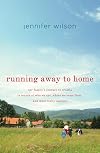
The other day, I received a message from the author of this book, saying she hoped I was enjoying it and that she forward to my review. Now, try as I might, my answer to her seems the place to start my review:
"There are some absolutely marvelous moments you've written, and I have had such obvious enjoyment reading that my husband is waiting to read it as soon as he can. I'm amazed you went with such little preparation about the history and genealogy, but think that perhaps that opened you up show more to the experience in a way that preparation might have prohibited. Will post a full review shortly. Thank you for letting me visit Croatia with you, Jim, and the kids."
I've read many books about travelling abroad, but few have captured me as much as this one did. Perhaps because the author was so candid about how little she knew before going, perhaps because though I know next to nothing about Croatia (horrible wars and beautiful beaches), perhaps because I somehow link it with Ukraine and my own heritage, I really felt right at home with Jenny, Jim, the two kids, and their journey into the small world of Mrkopalj. To go from anywhere in the U.S. to a village which mixes the old ways with a smattering of Nickelodeon would be culture shock enough, but to lack language abilities, and even minimal knowledge of heritage and history, and bring your kids along, takes courage. I think one of my favorite pieces of the book was how young Sam and Zadie adapted. It was no surprise that they mastered communications quickly. Sam's conversion to vegetarianism after seeing his meals on the hoof, then prepared on the spit, really endeared him to me. I also loved the discovery of language, and incorporation into the family canon of words: smecer (pronounced SMETCH-air; I can't type the c properly) for "the dump" reminded me of the inclusion of mit schlag into our family language after a trip to Switzerland/Austria/Germany one winter.
The people of Mrkopalj became my friends, too. Though the village is poor economically, it is rich in generosity of spirit and in strong hearts. Through their stories, I learned more of the land than I have in any history book or newspaper. Ms. Wilson brought them, and their world beautifully into mine. Thank you, for giving me the journey.
(My only complaint was that there were no pictures in the book, but in my conversation with the author, she clued me to her website http://www.jennifer-wilson.com/. Definitely worth a look, even if you haven't read the book. Some stunning photographs and a taste of the tales of the family.)
Many thanks to LibraryThing and the publishers for sending me this book via teh Early Review program on LibraryThing.
Initial post:
Wow! I won this from Early Reviewers back in July and thought for sure it was lost in the mail somewhere. But there was a knock on my door today (October 17) and there was the UPS guy with a package in hand! Will go to the top of my TBR pile. Thank you Library Thing and ST Martin's Press! show less
"There are some absolutely marvelous moments you've written, and I have had such obvious enjoyment reading that my husband is waiting to read it as soon as he can. I'm amazed you went with such little preparation about the history and genealogy, but think that perhaps that opened you up show more to the experience in a way that preparation might have prohibited. Will post a full review shortly. Thank you for letting me visit Croatia with you, Jim, and the kids."
I've read many books about travelling abroad, but few have captured me as much as this one did. Perhaps because the author was so candid about how little she knew before going, perhaps because though I know next to nothing about Croatia (horrible wars and beautiful beaches), perhaps because I somehow link it with Ukraine and my own heritage, I really felt right at home with Jenny, Jim, the two kids, and their journey into the small world of Mrkopalj. To go from anywhere in the U.S. to a village which mixes the old ways with a smattering of Nickelodeon would be culture shock enough, but to lack language abilities, and even minimal knowledge of heritage and history, and bring your kids along, takes courage. I think one of my favorite pieces of the book was how young Sam and Zadie adapted. It was no surprise that they mastered communications quickly. Sam's conversion to vegetarianism after seeing his meals on the hoof, then prepared on the spit, really endeared him to me. I also loved the discovery of language, and incorporation into the family canon of words: smecer (pronounced SMETCH-air; I can't type the c properly) for "the dump" reminded me of the inclusion of mit schlag into our family language after a trip to Switzerland/Austria/Germany one winter.
The people of Mrkopalj became my friends, too. Though the village is poor economically, it is rich in generosity of spirit and in strong hearts. Through their stories, I learned more of the land than I have in any history book or newspaper. Ms. Wilson brought them, and their world beautifully into mine. Thank you, for giving me the journey.
(My only complaint was that there were no pictures in the book, but in my conversation with the author, she clued me to her website http://www.jennifer-wilson.com/. Definitely worth a look, even if you haven't read the book. Some stunning photographs and a taste of the tales of the family.)
Many thanks to LibraryThing and the publishers for sending me this book via teh Early Review program on LibraryThing.
Initial post:
Wow! I won this from Early Reviewers back in July and thought for sure it was lost in the mail somewhere. But there was a knock on my door today (October 17) and there was the UPS guy with a package in hand! Will go to the top of my TBR pile. Thank you Library Thing and ST Martin's Press! show less
 This review was written for LibraryThing Early Reviewers.
Running Away to Home: Our Family's Journey to Croatia in Search of Who We Are, Where We Came From, and What Really Matters by Jennifer Wilson
I found this somewhat comic exercise in innocents abroad quite amusing and informative, but was probably helped in this by the small matter that I'm Croatian on my mother's side; I found many of the small details quite telling (my grandfather hailed from the region in question). Still, I do tend to find myself agreeing a bit with the genealogical folks that some more preparation would have been in order but one suspects that this was not Wilson's greatest concern; getting the emotional and show more philosophical life of her family in order was the main point of this endeavor. Not to mention turning the lemon that was the crash of 2008 into lemonade. Good for her that it seemed to work out as well as it did. That Wilson is as self-deprecating about her own mistakes as she is adds some acid to a tale that might have otherwise turned mawkish. show less
Running Away to Home: Our Family's Journey to Croatia in Search of Who We Are, Where We Came From, and What Really Matters by Jennifer Wilson
When trying to have it all—big house, travel writing career, children with an upscale mix of play-dates and extracurriculars—left her feeling trapped Jennifer Wilson and her architect husband decided to simplify their lives by spending part of a year exploring Wilson’s family roots in Mrkopalj, a tiny village in the mountains of Croatia. Nothing, of course, went as expected. The village life was more primitive, the Croatian dialect was more obscure and having endless free time to spend show more with her husband and young children left Wilson feeling more aimless and adrift than she anticipated. Though the trip was her idea, Wilson’s husband and children made friends and acclimated to their new life sooner than she did, but Wilson kept working at breaking through her own barriers. One smart move was making peach cobblers and delivering them to all the neighbors, which brought her thanks, new friendships and invitations to learn village recipes and crafts. The best part of the book for me was having the sensation that I was on a journey too. Wilson writes with clear-eyed, open honesty so it felt like I was experiencing her dizzy disorientation and eventual triumphs rather than just reading about them. show less
Running Away to Home: Our Family's Journey to Croatia in Search of Who We Are, Where We Came From, and What Really Matters by Jennifer Wilson
We all think about running away at times. We imagine leaving the stresses and obligations of daily life and embarking on a life enhancing adventure. It's doubtful, though, that Croatia tops the list of escapes for most people. Yet Jennifer Wilson, along with her husband and their two young children, left the comforts of home in Des Moines, Iowa, to take up temporary residence in Mrkopalj (MER-ko-pie), the mountain village in northwestern Croatia from which her maternal great-grandparents show more emigrated.
Wilson chronicles her family's sojourn in Running Away to Home: Our Family's Journey to Croatia in Search of Who We Are, Where We Came From, and What Really Matters. It is a journey of family discovery more meaningful than she envisioned and into a world far different from their lives in middle America. And although Wilson sets out to discover her past, she learns more about living in the present.
Running Away to Home takes readers inside Mrkopalj and its environs. Wilson gives firsthand accounts of her and her family's experiences. Although Wilson was the one in search of where she came from, her husband and children (six and almost four at the time) adapted more rapidly to village life and the cultural differences. One thing all of them learned is that life operates differently in a small mountain village. For example, the family agreed to rent the to-be-renovated second floor of the house of Robert Starcevic, who ran one of the town's "bistros." When they arrived, the remodeling had barely begun. Despite promises from Robert that it would be done in a day, a couple days, a week or two, the Wilsons never ended up living in the space they intended. Rather, they took over the smaller third floor of the house, which housed Robert's daughters' rooms. This was due in part to Robert often preferring to spend his days indulging in local libations and watching the world, a not uncommon activity in the village.
It may have been that approach that made a 21st Century American mother take the longest to acclimate. Rather than the constant motion of work and family activities back home, the 800 or so residents of Mrkopalj lived a slower pace. This doesn't mean no one worked hard. To the contrary, Wilson found that life in the village could be "bone-hard." There was no industry to speak of and many supported themselves by what they and their neighbors could grow, often on their own small plots. They would rise early to manually tend to their plots and livestock or to perform household chores. They would cut trees in the forest to gather firewood for the coming winter. Much of their work was done without the labor-saving conveniences most Americans would expect to use.
One major failing of the book, though, is that it contains no pictures, despite the fact Wilson's web site contains 128 photos in a gallery called "Life in the Village." Wilson says that was a conscious decision. She wants readers to come up with their own images of the village and its people in their minds. Yet virtually all readers have never taken such a step in location and daily life. Not sharing photographs in the book deprives them of actually seeing the people and sites that feature so prominently in it.
Although Wilson did not feel immediately accepted, she did catch up with her family in adjusting to and feeling the fabric of life in the village. Her search for her ancestors seemed less imperative and Wilson noted that she learned more about what their lives may have been like than about them personally. And, for her, that was perhaps the real lesson of their four months living in the village. Among other things, history and a sense of place seemed woven into the fabric of life. Croatia was far from immune from the political, nationalist and ethnic disputes that affected southeastern Europe and the Balkans. Yet while these fractures still lurked beneath the surface, they seemed far less important than the deep sense of community. This meant "they all lived together in messy harmony in Mrkopalj. In addition, for all our American advantages -- jobs, industry, good malls -- they felt sorry for me. No one in Mrkopalj could fathom what it must have been like to not even know my great-grandparents."
Graced by an ability to increasingly turn at humorous eye at their acclimation process, Running Away to Home shows how the Wilsons seem to find themselves amidst a world much different than they knew. "Mrkopalj showed us that it didn't matter what we had," Wilson says. Instead, experiencing the small things that contributed to the life and culture of Mrkopalj stood in sharp contrast to and often felt more congruous than life in America, "a place where people had everything and appreciated so little."
As Wilson and her family discover, even when you leave home it doesn't mean you can't find a niche and fellowship in other places, and in ways you might least expect.
(Originally posted at A Progressive on the Prairie.) show less
Wilson chronicles her family's sojourn in Running Away to Home: Our Family's Journey to Croatia in Search of Who We Are, Where We Came From, and What Really Matters. It is a journey of family discovery more meaningful than she envisioned and into a world far different from their lives in middle America. And although Wilson sets out to discover her past, she learns more about living in the present.
Running Away to Home takes readers inside Mrkopalj and its environs. Wilson gives firsthand accounts of her and her family's experiences. Although Wilson was the one in search of where she came from, her husband and children (six and almost four at the time) adapted more rapidly to village life and the cultural differences. One thing all of them learned is that life operates differently in a small mountain village. For example, the family agreed to rent the to-be-renovated second floor of the house of Robert Starcevic, who ran one of the town's "bistros." When they arrived, the remodeling had barely begun. Despite promises from Robert that it would be done in a day, a couple days, a week or two, the Wilsons never ended up living in the space they intended. Rather, they took over the smaller third floor of the house, which housed Robert's daughters' rooms. This was due in part to Robert often preferring to spend his days indulging in local libations and watching the world, a not uncommon activity in the village.
It may have been that approach that made a 21st Century American mother take the longest to acclimate. Rather than the constant motion of work and family activities back home, the 800 or so residents of Mrkopalj lived a slower pace. This doesn't mean no one worked hard. To the contrary, Wilson found that life in the village could be "bone-hard." There was no industry to speak of and many supported themselves by what they and their neighbors could grow, often on their own small plots. They would rise early to manually tend to their plots and livestock or to perform household chores. They would cut trees in the forest to gather firewood for the coming winter. Much of their work was done without the labor-saving conveniences most Americans would expect to use.
One major failing of the book, though, is that it contains no pictures, despite the fact Wilson's web site contains 128 photos in a gallery called "Life in the Village." Wilson says that was a conscious decision. She wants readers to come up with their own images of the village and its people in their minds. Yet virtually all readers have never taken such a step in location and daily life. Not sharing photographs in the book deprives them of actually seeing the people and sites that feature so prominently in it.
Although Wilson did not feel immediately accepted, she did catch up with her family in adjusting to and feeling the fabric of life in the village. Her search for her ancestors seemed less imperative and Wilson noted that she learned more about what their lives may have been like than about them personally. And, for her, that was perhaps the real lesson of their four months living in the village. Among other things, history and a sense of place seemed woven into the fabric of life. Croatia was far from immune from the political, nationalist and ethnic disputes that affected southeastern Europe and the Balkans. Yet while these fractures still lurked beneath the surface, they seemed far less important than the deep sense of community. This meant "they all lived together in messy harmony in Mrkopalj. In addition, for all our American advantages -- jobs, industry, good malls -- they felt sorry for me. No one in Mrkopalj could fathom what it must have been like to not even know my great-grandparents."
Graced by an ability to increasingly turn at humorous eye at their acclimation process, Running Away to Home shows how the Wilsons seem to find themselves amidst a world much different than they knew. "Mrkopalj showed us that it didn't matter what we had," Wilson says. Instead, experiencing the small things that contributed to the life and culture of Mrkopalj stood in sharp contrast to and often felt more congruous than life in America, "a place where people had everything and appreciated so little."
As Wilson and her family discover, even when you leave home it doesn't mean you can't find a niche and fellowship in other places, and in ways you might least expect.
(Originally posted at A Progressive on the Prairie.) show less
Statistics
- Works
- 2
- Members
- 108
- Popularity
- #179,296
- Rating
- 3.7
- Reviews
- 25
- ISBNs
- 41
