
Lorenzo Da Ponte (1749–1838)
Author of Don Giovanni [libretto]
About the Author
Works by Lorenzo Da Ponte
Black Dog Opera Library : Mozart : The marriage of Figaro {commentary + libretto + sound recording} (1999) — Librettist — 76 copies, 1 review
English National Opera Guide : Mozart : The Marriage of Figaro : Le nozze di Figaro (1983) — Librettist — 62 copies
Mozart : The marriage of Figaro [libretto : Italian/English] (1986) — Librettist — 36 copies, 1 review
Black Dog Opera Library : Mozart : Operas: The marriage of Figaro + The magic flute (2007) — Librettist — 9 copies
Opera Classics Library : Opera study guide and libretto : Mozart: The Marriage of Figaro (2001) — Librettist — 8 copies
Opera Classics Library : Opera study guide and libretto : Mozart : Così fan tutte (2017) — Librettist — 7 copies
Opera Classics Library : Mozart's Da Ponte operas : The marriage of Figaro + Don Giovanni + Così fan tutte (2007) — Librettist — 4 copies
Opern der Welt : Textbuch : Einführung und Kommentar : Mozart : Così fan tutte (1988) — Librettist — 4 copies
Opern der Welt : Textbuch : Einführung und Kommentar : Mozart : Don Giovanni (2000) — Librettiat — 4 copies
Opera Classics Library : Opera study guide and libretto : Mozart : Don Giovanni (2002) — Librettist — 3 copies
Cosi Fan Tutte: Zürich Opera House [2000 film] — Writer — 3 copies
AVENTURILE UNUI POET DE CURTE 2 copies
Mozart : Così fan tutte [libretto] [mismatched title/cover] — Librettist — 2 copies
Le memorie 1 copy
Dies Irae 1 copy
Don Giovanni [libretto] 1 copy
Los Clásicos de la Ópera 400 años : Mozart : Don Giovanni [sound recording + libretto] — Librettist — 1 copy
Mémoires (1749-1838) suivis de lettres inedites de Lorenzo Da Ponte à Jacques Casanova. (1931) 1 copy
Don Giovanni de Mozart 1 copy
Associated Works
Mozart : The marriage of Figaro {1994 television film} {Glyndebourne} (1994) — Librettist — 11 copies
Mozart : The marriage of Figaro {1973 television film} {Glyndebourne} (1973) — Librettist — 3 copies
Tagged
Common Knowledge
- Other names
- Ponte, Lorenzo da
Conegliano, Emanuele (birth name) - Birthdate
- 1749-03-10
- Date of death
- 1838-08-17
- Gender
- male
- Occupations
- librettist
priest
poet - Relationships
- Mozart, Wolfgang Amadeus (colleague)
- Short biography
- Lorenzo Da Ponte was born into a Venetian Jewish family that converted to Roman Catholicism. He emigrated to the USA and became a citizen in 1828. During his career, he wrote the librettos for 28 operas by 11 composers, including three of Mozart's greatest.
- Nationality
- Venice
USA (naturalized) - Birthplace
- Ceneda
- Places of residence
- Ceneda, Veneto (birth ∙ now Italy)
New York, New York, USA (death)
London, England, UK
Prague, Austrian Empire
Philadelphia, Pennsylvania, USA - Burial location
- Calvary Cemetery, Queens, New York, USA
Members
Reviews

The story in outline: randy husband with roving eye chases reluctant young woman while neglected wife schemes to rewin husband’s affections. Meanwhile, woman’s fiancé struggles with issues of trust as youthful neighbour comes to terms with coming of age.
Mozart's "The Marriage of Figaro" embodied the spirit of the French Revolution when it premiered in 1786, portraying the comic triumph of skilled and quick-witted middle-class servants over their pompous and decadent royal masters. The show more Beaumarchais play from which this opera drew inspiration had been banned in Paris for its volatile political content: finding dark humour in class power struggles was dangerous business in pre-Revolutionary France. For the many fans of the effervescent masterpiece today, its revolutionary overtones are all but lost. Yet it endures because Mozart went beyond the class struggles of his day to weave many of life's timeless themes into the opera: love and betrothal, betrayal and justice, greed and vengence, innocent youth and jaded old age. Characters who Beaumarchais sketched as ideologically shaded silhouettes gain through Mozart’s music the hearts and souls of persons one might embrace. A youth trembling with new passions. A young man confident of his cleverness. A loving wife, forlorn, her husband estranged. Couples that, like real couples, can both quarrel and forgive. show less
Mozart's "The Marriage of Figaro" embodied the spirit of the French Revolution when it premiered in 1786, portraying the comic triumph of skilled and quick-witted middle-class servants over their pompous and decadent royal masters. The show more Beaumarchais play from which this opera drew inspiration had been banned in Paris for its volatile political content: finding dark humour in class power struggles was dangerous business in pre-Revolutionary France. For the many fans of the effervescent masterpiece today, its revolutionary overtones are all but lost. Yet it endures because Mozart went beyond the class struggles of his day to weave many of life's timeless themes into the opera: love and betrothal, betrayal and justice, greed and vengence, innocent youth and jaded old age. Characters who Beaumarchais sketched as ideologically shaded silhouettes gain through Mozart’s music the hearts and souls of persons one might embrace. A youth trembling with new passions. A young man confident of his cleverness. A loving wife, forlorn, her husband estranged. Couples that, like real couples, can both quarrel and forgive. show less
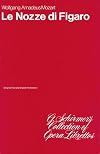
This libretto, a comedy, is a little complex- but I still found it to be appealing. There are many twists and turns to it and, for a modern reader, it offers a glimpse into the aristocratic intrigues that revolved around the heights of the time that this was composed. I read an edition that had the original Italian libretto next to it, so it was also useful in teaching me a few Italian words at the same time.
Worth it! 3.5 stars.
Worth it! 3.5 stars.
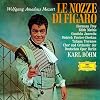
Not sure if it's my familiarity with the material or that Tatiana Troyanos can enunciate the hell out of her part. Her tone is just a bit too mellow for a very young man, but ee-by-gum you can understand everything she says. Fischer-Dieskaw as the Conte comes off dark throughout. Surely there's room for some lightness. Delightful recording that includes some arias often left out of staged productions.

This is a very poor quality recording of a live performance in 1963. The strings sound squonky, but the singers are singing their respective asses off. Leontyne Price is especially good, as you can tell by the mushy and prolonged ovations, especially after her last aria. It got two stars because the singing is pretty darn good and I hadn't listened to any of my other "Don Giovanni" recordings so I couldn't make the comparison with the better quality. There are some of us who aren't show more audiophiles that can tolerate a certain amount of background noise on poor recordings on vinyl or the squeaking of cassettes being played, but there's no excuse for this. It seems absolutely no effort was made to improve the sound quality while digitizing. Might have been something originally pirated off the radio.
Contains a libretto in English and Italian - with no notes or any other information. I hope I didn't pay a lot for it. Probably just wanted the Leontyne Price singing. show less
Contains a libretto in English and Italian - with no notes or any other information. I hope I didn't pay a lot for it. Probably just wanted the Leontyne Price singing. show less
Lists
Awards

You May Also Like


Associated Authors
Statistics
- Works
- 79
- Also by
- 5
- Members
- 1,936
- Popularity
- #13,302
- Rating
- 4.1
- Reviews
- 19
- ISBNs
- 188
- Languages
- 11
- Favorited
- 1