
Timothy Rodwell
Author of The Elephant Scientist (Scientists in the Field Series)
Works by Timothy Rodwell
The Elephant Scientist (Scientists in the Field Series) (2011) — Photographer — 289 copies, 23 reviews
Tagged
Common Knowledge
There is no Common Knowledge data for this author yet. You can help.
Members
Reviews

children's nonfiction - elephants, life as an elephant scientist
Lovely large pictures balance out the informative text; reading this book was a breezy experience (learning was interesting and even exciting, and never felt like a chore) and I can easily see why this series is so well acclaimed. The brief summary of how Caitlin became an elephant researcher also made science careers seem very accessible (maybe I myself can become an elephant scientist!)
Lovely large pictures balance out the informative text; reading this book was a breezy experience (learning was interesting and even exciting, and never felt like a chore) and I can easily see why this series is so well acclaimed. The brief summary of how Caitlin became an elephant researcher also made science careers seem very accessible (maybe I myself can become an elephant scientist!)
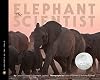
As I was walking down the non-fiction aisles at my local library, I noticed this book's binding and design. I quickly realized it was a "Scientist in the Field," book and I was immediately excited about the topic. I recently read another "Scientist" book entitled "Emi and The Rhino Scientist," and I wanted to see how the two books compared and contrasted. I loved everything about "Emi." The author did an amazing job retelling the emotionally-charged story, and the information presented in show more the book could easily be transferred to many subject areas (particularly my subject area of social studies). "Emi" focused on reproductive biology and the special relationship between Emi and her female scientist. The title of this book hints at the work of another singular scientist, and I wanted to see what type of scientist the book focused on and what branch of science would be described. Also, who doesn't think elephants are cool?
Both book's titles are very vague. The reader will know what animals are going to be studied, but they don't know anything about who these scientists are and what aspects of these animals they study. I was pleased to see that this book also focuses on the work of a female scientist. Both books introduce the scientists by looking at their childhoods and displaying how their love of science and animals began at an early age. However, Caitlin O'Connell's research involves understanding if and how elephants can communicate through vibrations intercepted by their feet.
In the chapters focusing on the general descriptions of these animals, both books give the readers an excellent introduction into the anatomy, development, and dynamics of the animals. The beautiful images in both books characterize them as photographic essays, and each image features an informational caption. At the end of each book, there are sections devoted to how readers can help these animals and learn more about them. There are also great chapter titles, an extensive index, glossary, and further readings in each, and I feel that readers would come away from each book with a working knowledge of both of these animals. Also, each book features their female scientists using the latest technologies in their fields to record and observe their experiments. It is great that students can see these admirable women working hard in their respective fields, but I feel this is where their similarities end.
Since "Emi" focuses on the reproductive biology of rhinos and the story of one rhino in particular, "Emi" had a chronological organization. In contrast, "The Elephant Scientist" has a topical organization allowing readers to understand specific elements of elephants and specific elements of O'Connell's experiment. O'Connell also had a specific reason to study these animals. She needed a way to get these animals away from farms since they were routinely destroying crops. Her experiments were driven by both human and scientific needs, and through O'Connell's previous work with insects and their vibrating mating calls, she saw some very interesting parallels between insects and elephants. These giant animals are also able to harness seismic vibrations through their highly sensitive feet to alert their herd of danger or cause for celebration. That is how elephants are able to tell if it is raining many kilometers away, and O'Connell is still in the process of researching how far elephants can transmit these messages. This book's focus is therefore very different. "The Elephant Scientist" looks at African elephants as a whole, and O'Connell's research stemmed from a need to protect African farmers. This book also differs from "Emi" because the scientist analyzed co-authored this book. This gives "The Elephant Scientist" a distinct advantage because O'Connell can give her personal accounts and thoughts on her experiments. There is no questioning the accuracy of this book because the woman behind these theories is the same woman who authored this book. The author of "Emi" had a great personal relationship with the scientist and her research, but "The Elephant Scientist" has exclusive access to the experiments conducted and the research gathered. Also, O'Connell and her husband Timothy Rodwell's amazing personal images add to the books rich detail.
With "The Elephant Scientist," I was very happy to discover that this book also features a female scientists who made amazing breakthroughs in her field. I did not get the emotional connection to the material and the animals in the way that I did with "Emi," but I would still suggest this book to anyone interested in this subject matter. This book covers biology, geophysics, geography, climate change, and African politics. It is obviously far-reaching in its scope, which I believe makes it a book worth incorporating in many classrooms. I could see myself using this book in my secondary social studies classes in a similar fashion to "Emi." These animals need our protection, and advocacy and world politics are topics I hope to incorporate in my classes. show less
Both book's titles are very vague. The reader will know what animals are going to be studied, but they don't know anything about who these scientists are and what aspects of these animals they study. I was pleased to see that this book also focuses on the work of a female scientist. Both books introduce the scientists by looking at their childhoods and displaying how their love of science and animals began at an early age. However, Caitlin O'Connell's research involves understanding if and how elephants can communicate through vibrations intercepted by their feet.
In the chapters focusing on the general descriptions of these animals, both books give the readers an excellent introduction into the anatomy, development, and dynamics of the animals. The beautiful images in both books characterize them as photographic essays, and each image features an informational caption. At the end of each book, there are sections devoted to how readers can help these animals and learn more about them. There are also great chapter titles, an extensive index, glossary, and further readings in each, and I feel that readers would come away from each book with a working knowledge of both of these animals. Also, each book features their female scientists using the latest technologies in their fields to record and observe their experiments. It is great that students can see these admirable women working hard in their respective fields, but I feel this is where their similarities end.
Since "Emi" focuses on the reproductive biology of rhinos and the story of one rhino in particular, "Emi" had a chronological organization. In contrast, "The Elephant Scientist" has a topical organization allowing readers to understand specific elements of elephants and specific elements of O'Connell's experiment. O'Connell also had a specific reason to study these animals. She needed a way to get these animals away from farms since they were routinely destroying crops. Her experiments were driven by both human and scientific needs, and through O'Connell's previous work with insects and their vibrating mating calls, she saw some very interesting parallels between insects and elephants. These giant animals are also able to harness seismic vibrations through their highly sensitive feet to alert their herd of danger or cause for celebration. That is how elephants are able to tell if it is raining many kilometers away, and O'Connell is still in the process of researching how far elephants can transmit these messages. This book's focus is therefore very different. "The Elephant Scientist" looks at African elephants as a whole, and O'Connell's research stemmed from a need to protect African farmers. This book also differs from "Emi" because the scientist analyzed co-authored this book. This gives "The Elephant Scientist" a distinct advantage because O'Connell can give her personal accounts and thoughts on her experiments. There is no questioning the accuracy of this book because the woman behind these theories is the same woman who authored this book. The author of "Emi" had a great personal relationship with the scientist and her research, but "The Elephant Scientist" has exclusive access to the experiments conducted and the research gathered. Also, O'Connell and her husband Timothy Rodwell's amazing personal images add to the books rich detail.
With "The Elephant Scientist," I was very happy to discover that this book also features a female scientists who made amazing breakthroughs in her field. I did not get the emotional connection to the material and the animals in the way that I did with "Emi," but I would still suggest this book to anyone interested in this subject matter. This book covers biology, geophysics, geography, climate change, and African politics. It is obviously far-reaching in its scope, which I believe makes it a book worth incorporating in many classrooms. I could see myself using this book in my secondary social studies classes in a similar fashion to "Emi." These animals need our protection, and advocacy and world politics are topics I hope to incorporate in my classes. show less
Caitlin O'Connell had set out to Namibia to study the communications between elephants. She had a fascinating theory about how elephants detect vibrations through their feet, in addition to their trunks. This book provided the journey that she went on and the experiences she had as she proved her theory. Many astonishing facts are provided about the elephants. For example, an elephant's foot print is similar to our fingerprint. They also identify items by their images, rather than how a dog show more uses scent. In addition to communicating via vocal calls, they can communicate through vibrations felt in their feet, which sends messages to their inner ear from their feet.
I found this book very captivating with the amount of detail used in describing the amazing facts and experimental features when dealing with the elephants. Also, the beautiful photos, by O'Connell herself are very breathtaking. In the story we earn how elephants are affect by another fellow elephants death, and that they are more likely to become depressed. Also, they often attempt to cover the elephant's body once it has died. I also appreciate the mention of the illegal killing of elephants to harvest their trunks for ivory, and how it has severely impacted the species numbers, leading them to become endangered. The back includes a short glossary in order to help the book to be as clear as possible, which I found helpful. show less
I found this book very captivating with the amount of detail used in describing the amazing facts and experimental features when dealing with the elephants. Also, the beautiful photos, by O'Connell herself are very breathtaking. In the story we earn how elephants are affect by another fellow elephants death, and that they are more likely to become depressed. Also, they often attempt to cover the elephant's body once it has died. I also appreciate the mention of the illegal killing of elephants to harvest their trunks for ivory, and how it has severely impacted the species numbers, leading them to become endangered. The back includes a short glossary in order to help the book to be as clear as possible, which I found helpful. show less
I was thrilled to find this book in my library's collection as it focuses on studying elephants in Namibia, particularly in Etosha National Park. This summer I'll be going there on safari. The book is full of amazing photographs and explores the scientific work of Caitlin O'Connell in regards to looking at elephant behavior and communication. Fascinating stuff, and it gets me ready to see these amazing creatures first hand!
Lists
Awards


You May Also Like
Associated Authors
Statistics
- Works
- 1
- Members
- 289
- Popularity
- #80,897
- Rating
- 4.0
- Reviews
- 23
- ISBNs
- 6