
Joshua Green (1) (1972–)
Author of Devil's Bargain: Steve Bannon, Donald Trump, and the Nationalist Uprising
For other authors named Joshua Green, see the disambiguation page.
About the Author
Joshua Green is an American journalist, born in 1972. He previously worked as an editor for The Onion, The American Prospect, and The Washington Monthly, and senior editor of The Atlantic. He has written for The New Yorker, Esquire, and Rolling Stone. Currently, he is a senior correspondent for show more Bloomberg Businessweek, covering politics for the magazine and Bloomberg Politics. His writings have been published in anthologies such as The Best Political Writing, and The Bob Marley Reader. He is the author of the New York Times bestseller, Devil's Bargain: Steve Bannon, and Donald Trump, and the Storming of the Presidency. (Bowker Author Biography) show less
Works by Joshua Green
Devil's Bargain: Steve Bannon, Donald Trump, and the Nationalist Uprising (2017) 337 copies, 16 reviews
Associated Works
Tagged
Common Knowledge
- Canonical name
- Green, Joshua
- Birthdate
- 1972
- Gender
- male
- Occupations
- journalist
Members
Reviews
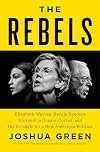
The Rebels: Elizabeth Warren, Bernie Sanders, Alexandria Ocasio-Cortez, and the Struggle fora New American Politics by Joshua Green
ANGER OR GRIEF?
You may have heard of Joshua Green before. In 2017, he published THE DEVIL’S BARGAIN: STEVE BANNON, DONALD TRUMP, AND THE STORMING OF THE PRESIDENCY. By 2024, he decided he needed to tell the other half of the story, and published this book.
Although the slide began with Lyndon Johnson, by Obama’s pro-oligarchy handling of the 2008 financial crisis, a majority of the US public had determined that mainstream Democrats and Republicans alike had failed them. The pain of a show more “recovery” that accrued entirely to the 1% left most people feeling like the government—supposedly their protector—had turned on them. In this pain and anguish, people tend to travel two roads: anger or grief.
The left-hemisphere response is anger. This is what Bannon and Trump encouraged, giving kindling to the nascent MAGA movement. From anger, people move into an attitude of destruction: “tear down the government.”
The right-hemisphere response is grief. From grief, people move into creativity, generativity, direct democracy. This is what Warren, Bernie, and AOC have channeled (although each candidate does slip into anger as well at various moments).
NEWTON’S 3RD LAW OF POLITICS
“For each action, there is an opposite reaction.” This is Newton’s Third Law of Politics. You may notice a deletion when comparing it with his Third Law of Physics—the term “equal.”
Although each movement in politics has a countermovement, which one will be more powerful depends on a combination of strategy, power, and luck.
In the 1970s, Jimmy Carter started poking the hornet’s nest of Wall Street by campaigning on the idea that Wall Street executives shouldn’t pay less in taxes than blue-collar workers. His first mistake: growing up in Georgia, a region without manufacturing, and hence without organized labor, Carter treated unions as just another special interest group, and made hard and fast enemies of them.
So Carter’s out there, pushing to raise taxes on capital gains. Wall Street hears about this and starts organizing. They’re so good at it that by 1978, they get a bill through both the House and the Senate that doesn’t raise taxes on Wall Street, but actually lowers them! Carter, unable to face two more years as a “lame duck,” caves and signs the bill into law, ushering in the era of financialization: the 1980s.
The lesson? If you’re going to advocate for something, do your homework and do your organizing before you bring it out into the open—otherwise, you might end up worse off than where you started.
DEMOCRATS: THE WORKERS PARTY?
Green erroneously claims that, up until Carter’s blunder, the Democrats were the party of the working class. This argument seems willfully ignorant. The Democrats are the slavery party; it’s hard to imagine how much more “anti-worker” you can get than that. Although there have been moments when Democrats have championed workers’ causes, both major parties are essentially aristocracies—that was true at the founding of the country, and has more or less been true ever since.
Green also says something along the lines of, “Wall Street had no master plan to further their interests in the 1970s.” Obviously, Green hasn’t listened to The Lever’s investigative journalism series, THE MASTER PLAN, about Chief Justice Powell’s 1971 memo that laid the groundwork for the legalization of corruption—all in the interests of corporations and Wall Street. Powell’s army had seven years to prepare for the 1978 showdown, and they made the most of it.
It seems like Green, like many people, fell into the trap of thinking that because earlier times don’t look like our times, they were “simpler” and “less complex,” maybe even “more bucolic.” You only have to look as far as Robert Caro’s THE YEARS OF LYNDON JOHNSON to realize that there was nothing innocent about the Democratic Party of the 1940s, the 1950s, or the 1960s. Although Green’s choice to start with Carter does work well for his narrative, please do not conclude that the 1970s were somehow more complicated or fraught than the periods that came before them.
COMMON FOLK
As I note, Democratic and Republican representatives are generally part of the bourgeoisie. As an aside, this is by design; many Americans fail to realize that when the Founding Fathers spoke of “minority rights,” and the importance of their defense, they were referring to protecting the gentry at the expense of the commoners.
Elizabeth Warren, Bernie Sanders, and Alexandria Ocasio-Cortez are not drawn from this elite class. They all had working-class or middle-class upbringings, and uncertain periods in their twenties. Warren had kids in her twenties and worked as a schoolteacher. Bernie worked as a carpenter. AOC had to wait tables. But they also all had moments of opportunity.
WARREN: DISPELLING PATRONIZING STEREOTYPES
Somehow, as a mother of two, Warren managed to go to law school. Eventually, she was able to secure a professorship, and her research focused on consumer bankruptcies. At the time, the prevailing narrative was that people filing for bankruptcy were profligate and irresponsible. Warren dug a little deeper and quickly realized this was a misconception. In actuality, most people filing for bankruptcy are “doing everything right.” In many cases, they’re even two-income households. Their most frequent crime? Trying to raise a family in a patho-capitalist society.
Harvard took note and brought her on as a professor. By 2005, she was testifying in front of Congress. By the time 2008 rolled around, Warren was brought in to chair a committee investigating the financial crisis. And she did not go easy on the bankers. Especially with the backing of Jon Stewart, Warren became a national sensation.
BERNIE: DEMOCRATIC SOCIALIST FOR LIFE
Bernie grew up in Brooklyn, the son of a Polish paint salesman and a stay-at-home mom. He moved to Vermont, became a carpenter, started producing people’s histories of important Vermonters, and became a Democratic Socialist. He ran for governor twice, ran for the Senate twice, and lost badly every time. A sympathetic friend suggested, “why not lower your sights and run for mayor of Burlington?” Bernie did, and won by ten votes! The Vermont of my mom’s childhood was Republican and conservative. With Bernie’s election, Vermonters’ sense of what it meant to be a Vermonter changed.
AOC: FIERY SOCIAL MEDIA SENSATION
AOC grew up in the Bronx. Her family lost her dad to cancer in 2008, and almost lost their home as well. She went to college at BU and had an internship with Senator Ted Kennedy. After this, she moved back home. Unable to find a job related to her degree in international relations and economics, she ended up needing to get a job waitressing.
During Standing Rock, she went on a road trip and started live-streaming her conversations with Americans. During this period, she developed a substantial and dedicated social media following. A group from Bernie’s campaign had recently founded an organization called Brand New Congress, focused on replacing every single congressperson with working-class candidates. In the end, they only found thirty-one people to run, but nominated by her younger brother, AOC was one of them.
AOC led a fourteen-month-long campaign for her House seat against the indolent incumbent, Joe Crowley. Crowley was exposed: his district was half Latino and only one-quarter white. Even so, AOC had an uphill battle. Her team did innovative things, such as developing their own campaigning app and targeting constituents directly with social media ads before knocking on their doors.
In the end, only 5% of the electorate turned out, and AOC received just 17,000 votes—but it was enough to win.
PRAGMATISM OVER IDENTITY POLITICS
Green tells some compelling stories about what is possible when leftists put pragmatism ahead of identity politics. One story he tells is that of Danica Roem, a transgender candidate who ran in the 2018 midterm elections. Roem didn’t see herself as eligible to run, not only because she was trans, but because of other eccentricities about her identity as well, such as being in a heavy metal band. But when Trump won the presidency, Roem realized—you can be weird in a lot of ways and still win.
Luckily for Roem, her challenger was incumbent Bob Marshall, self-described “chief homophobe” of Virginia. While Roem was out talking with constituents about how to solve pressing issues like traffic congestion, Marshall was making bigoted remarks.
Roem won. Interviewers spoke to various MAGA voters who backed Roem, and they said, “sure, we don’t love that she’s trans, but at least she cares about improving our lives, which can’t be said for Marshall.” Pragmatic policies win out over identity politics.
HYPERNORMALISATION
Maybe you’ve heard of Adam Curtis’ 2016 documentary, HYPERNORMALISATION? The concept refers to the idea that when the world gets too complex to control, dictatorial rulers create a fake world that they can pretend to control. Put another way, when given the choice between honoring the internal rules of the game they’re playing versus honoring external rules like natural law, they choose the former.
It could be said that up until 2015, both the Republican and Democratic parties had moved into a hypernormalized world, where they would rather respect their internal party rules of decorum than address more pressing matters, such as developing coherent responses to the polycrisis/metacrisis. Trump changed this; he placed the Republican Party under his thrall. That said, it would be hard to argue that his set of rules works better within natural law than those that came before him. On the Democratic side, however, loss after loss suggests that decorum still outranks success. The hope is that, someday, Warren, Bernie, and AOC will change this.
In conclusion, if you’re interested in the possibility of candidates who can beat Trump and revolutionize the Democratic Party, you’ll want to read this book. show less
You may have heard of Joshua Green before. In 2017, he published THE DEVIL’S BARGAIN: STEVE BANNON, DONALD TRUMP, AND THE STORMING OF THE PRESIDENCY. By 2024, he decided he needed to tell the other half of the story, and published this book.
Although the slide began with Lyndon Johnson, by Obama’s pro-oligarchy handling of the 2008 financial crisis, a majority of the US public had determined that mainstream Democrats and Republicans alike had failed them. The pain of a show more “recovery” that accrued entirely to the 1% left most people feeling like the government—supposedly their protector—had turned on them. In this pain and anguish, people tend to travel two roads: anger or grief.
The left-hemisphere response is anger. This is what Bannon and Trump encouraged, giving kindling to the nascent MAGA movement. From anger, people move into an attitude of destruction: “tear down the government.”
The right-hemisphere response is grief. From grief, people move into creativity, generativity, direct democracy. This is what Warren, Bernie, and AOC have channeled (although each candidate does slip into anger as well at various moments).
NEWTON’S 3RD LAW OF POLITICS
“For each action, there is an opposite reaction.” This is Newton’s Third Law of Politics. You may notice a deletion when comparing it with his Third Law of Physics—the term “equal.”
Although each movement in politics has a countermovement, which one will be more powerful depends on a combination of strategy, power, and luck.
In the 1970s, Jimmy Carter started poking the hornet’s nest of Wall Street by campaigning on the idea that Wall Street executives shouldn’t pay less in taxes than blue-collar workers. His first mistake: growing up in Georgia, a region without manufacturing, and hence without organized labor, Carter treated unions as just another special interest group, and made hard and fast enemies of them.
So Carter’s out there, pushing to raise taxes on capital gains. Wall Street hears about this and starts organizing. They’re so good at it that by 1978, they get a bill through both the House and the Senate that doesn’t raise taxes on Wall Street, but actually lowers them! Carter, unable to face two more years as a “lame duck,” caves and signs the bill into law, ushering in the era of financialization: the 1980s.
The lesson? If you’re going to advocate for something, do your homework and do your organizing before you bring it out into the open—otherwise, you might end up worse off than where you started.
DEMOCRATS: THE WORKERS PARTY?
Green erroneously claims that, up until Carter’s blunder, the Democrats were the party of the working class. This argument seems willfully ignorant. The Democrats are the slavery party; it’s hard to imagine how much more “anti-worker” you can get than that. Although there have been moments when Democrats have championed workers’ causes, both major parties are essentially aristocracies—that was true at the founding of the country, and has more or less been true ever since.
Green also says something along the lines of, “Wall Street had no master plan to further their interests in the 1970s.” Obviously, Green hasn’t listened to The Lever’s investigative journalism series, THE MASTER PLAN, about Chief Justice Powell’s 1971 memo that laid the groundwork for the legalization of corruption—all in the interests of corporations and Wall Street. Powell’s army had seven years to prepare for the 1978 showdown, and they made the most of it.
It seems like Green, like many people, fell into the trap of thinking that because earlier times don’t look like our times, they were “simpler” and “less complex,” maybe even “more bucolic.” You only have to look as far as Robert Caro’s THE YEARS OF LYNDON JOHNSON to realize that there was nothing innocent about the Democratic Party of the 1940s, the 1950s, or the 1960s. Although Green’s choice to start with Carter does work well for his narrative, please do not conclude that the 1970s were somehow more complicated or fraught than the periods that came before them.
COMMON FOLK
As I note, Democratic and Republican representatives are generally part of the bourgeoisie. As an aside, this is by design; many Americans fail to realize that when the Founding Fathers spoke of “minority rights,” and the importance of their defense, they were referring to protecting the gentry at the expense of the commoners.
Elizabeth Warren, Bernie Sanders, and Alexandria Ocasio-Cortez are not drawn from this elite class. They all had working-class or middle-class upbringings, and uncertain periods in their twenties. Warren had kids in her twenties and worked as a schoolteacher. Bernie worked as a carpenter. AOC had to wait tables. But they also all had moments of opportunity.
WARREN: DISPELLING PATRONIZING STEREOTYPES
Somehow, as a mother of two, Warren managed to go to law school. Eventually, she was able to secure a professorship, and her research focused on consumer bankruptcies. At the time, the prevailing narrative was that people filing for bankruptcy were profligate and irresponsible. Warren dug a little deeper and quickly realized this was a misconception. In actuality, most people filing for bankruptcy are “doing everything right.” In many cases, they’re even two-income households. Their most frequent crime? Trying to raise a family in a patho-capitalist society.
Harvard took note and brought her on as a professor. By 2005, she was testifying in front of Congress. By the time 2008 rolled around, Warren was brought in to chair a committee investigating the financial crisis. And she did not go easy on the bankers. Especially with the backing of Jon Stewart, Warren became a national sensation.
BERNIE: DEMOCRATIC SOCIALIST FOR LIFE
Bernie grew up in Brooklyn, the son of a Polish paint salesman and a stay-at-home mom. He moved to Vermont, became a carpenter, started producing people’s histories of important Vermonters, and became a Democratic Socialist. He ran for governor twice, ran for the Senate twice, and lost badly every time. A sympathetic friend suggested, “why not lower your sights and run for mayor of Burlington?” Bernie did, and won by ten votes! The Vermont of my mom’s childhood was Republican and conservative. With Bernie’s election, Vermonters’ sense of what it meant to be a Vermonter changed.
AOC: FIERY SOCIAL MEDIA SENSATION
AOC grew up in the Bronx. Her family lost her dad to cancer in 2008, and almost lost their home as well. She went to college at BU and had an internship with Senator Ted Kennedy. After this, she moved back home. Unable to find a job related to her degree in international relations and economics, she ended up needing to get a job waitressing.
During Standing Rock, she went on a road trip and started live-streaming her conversations with Americans. During this period, she developed a substantial and dedicated social media following. A group from Bernie’s campaign had recently founded an organization called Brand New Congress, focused on replacing every single congressperson with working-class candidates. In the end, they only found thirty-one people to run, but nominated by her younger brother, AOC was one of them.
AOC led a fourteen-month-long campaign for her House seat against the indolent incumbent, Joe Crowley. Crowley was exposed: his district was half Latino and only one-quarter white. Even so, AOC had an uphill battle. Her team did innovative things, such as developing their own campaigning app and targeting constituents directly with social media ads before knocking on their doors.
In the end, only 5% of the electorate turned out, and AOC received just 17,000 votes—but it was enough to win.
PRAGMATISM OVER IDENTITY POLITICS
Green tells some compelling stories about what is possible when leftists put pragmatism ahead of identity politics. One story he tells is that of Danica Roem, a transgender candidate who ran in the 2018 midterm elections. Roem didn’t see herself as eligible to run, not only because she was trans, but because of other eccentricities about her identity as well, such as being in a heavy metal band. But when Trump won the presidency, Roem realized—you can be weird in a lot of ways and still win.
Luckily for Roem, her challenger was incumbent Bob Marshall, self-described “chief homophobe” of Virginia. While Roem was out talking with constituents about how to solve pressing issues like traffic congestion, Marshall was making bigoted remarks.
Roem won. Interviewers spoke to various MAGA voters who backed Roem, and they said, “sure, we don’t love that she’s trans, but at least she cares about improving our lives, which can’t be said for Marshall.” Pragmatic policies win out over identity politics.
HYPERNORMALISATION
Maybe you’ve heard of Adam Curtis’ 2016 documentary, HYPERNORMALISATION? The concept refers to the idea that when the world gets too complex to control, dictatorial rulers create a fake world that they can pretend to control. Put another way, when given the choice between honoring the internal rules of the game they’re playing versus honoring external rules like natural law, they choose the former.
It could be said that up until 2015, both the Republican and Democratic parties had moved into a hypernormalized world, where they would rather respect their internal party rules of decorum than address more pressing matters, such as developing coherent responses to the polycrisis/metacrisis. Trump changed this; he placed the Republican Party under his thrall. That said, it would be hard to argue that his set of rules works better within natural law than those that came before him. On the Democratic side, however, loss after loss suggests that decorum still outranks success. The hope is that, someday, Warren, Bernie, and AOC will change this.
In conclusion, if you’re interested in the possibility of candidates who can beat Trump and revolutionize the Democratic Party, you’ll want to read this book. show less

Not a bad book. Usually I don't read these but my wife bought it and there it was. Unusually rigorous for a quickie campaign book, the main theme is that Trump is an egomaniac and Bannon and he see the same things. Great on the Democrats sleepwalking through this. In this writer's view, Trump had wanted to be President for many years and chose the white
lower class members of the Republicans to identify with. These people have been screwed over by everybody and are angry.; too bad. These are show more the same idiots who did nothing in school while I worked hard, got good grades and an ivy MBA.
Bannon, the main topic here, is an idiot,but smart as a whip and well-trained (Harvard MBA,Goldman) . He is nuts but
has made all the money he needs and can goof off, or attack Hillary. The author is silent on the sins of the Clintons, but I think that Trump and Bannon (and Comey) managed to persuade enough people of her evil to win. show less
lower class members of the Republicans to identify with. These people have been screwed over by everybody and are angry.; too bad. These are show more the same idiots who did nothing in school while I worked hard, got good grades and an ivy MBA.
Bannon, the main topic here, is an idiot,but smart as a whip and well-trained (Harvard MBA,Goldman) . He is nuts but
has made all the money he needs and can goof off, or attack Hillary. The author is silent on the sins of the Clintons, but I think that Trump and Bannon (and Comey) managed to persuade enough people of her evil to win. show less
If you care about politics and the future of this country, you may find this book distressing. Green provides a behind the scenes look into the Trump campaign and the influence of Steve Bannon on it. What's scary to this reader was the gullibility to the crazy ideas from the alt right and Bannon. Trump bought into these ideas and was a willing spokesman for a wall to be built in and paid by Mexico, Muslim bans etc. This book describes all the craziness in Trump's campaign...the fake news, show more Breitbart's influence...
One hopes that people running the country possess a high intellect, great judgment and high moral character. Devil's Bargain makes clear that this did not happen in the 2016 campaign. show less
One hopes that people running the country possess a high intellect, great judgment and high moral character. Devil's Bargain makes clear that this did not happen in the 2016 campaign. show less
Interesting and horrifying, though, given the outcome, “horrifying” predominates. The opening and some bits toward the end that rehashed familiar stories of the surprise and delight of Trump and his minions at winning the election almost made me set this aside, but after wading through those painful scenes the examination of Bannon's background and how he developed his ideology, skill sets, and influence was rather fascinating. Green's evaluation of Trump's “principles,” or, rather, show more lack of them, seems spot-on to me. In his “Afterword,” he offers what he thinks are the three main reasons for Trump's ineffectiveness once in the office he had won:
– “Trump thought being president was about asserting dominance.”
– “Trump ran against the Republican Party, Wall Street, and Paul Ryan, but then took up their agenda.”
– “Trump doesn't believe in nationalism or any other political philosophy – he's fundamentally a creature of his own ego.”
Once Bannon was pushed out of the White House for taking too much of Trump's limelight I briefly hoped Trump might moderate a bit, but that's clearly not happening. Bannon, back at Breitbart, has again proved with the Alabama senatorial primary race that his instincts (and data analysis tools) for sensing and directing voter sentiment are better than those of the GOP leaders in Congress. I expect this will only strengthen his influence with Trump, though it does seem that Bannon, like Ryan, is rather better at attacking and tearing down the work of others than he is at building the consensus needed to accomplish his own goals. show less
– “Trump thought being president was about asserting dominance.”
– “Trump ran against the Republican Party, Wall Street, and Paul Ryan, but then took up their agenda.”
– “Trump doesn't believe in nationalism or any other political philosophy – he's fundamentally a creature of his own ego.”
Once Bannon was pushed out of the White House for taking too much of Trump's limelight I briefly hoped Trump might moderate a bit, but that's clearly not happening. Bannon, back at Breitbart, has again proved with the Alabama senatorial primary race that his instincts (and data analysis tools) for sensing and directing voter sentiment are better than those of the GOP leaders in Congress. I expect this will only strengthen his influence with Trump, though it does seem that Bannon, like Ryan, is rather better at attacking and tearing down the work of others than he is at building the consensus needed to accomplish his own goals. show less
Awards


You May Also Like


Associated Authors
Statistics
- Works
- 2
- Also by
- 4
- Members
- 365
- Popularity
- #65,882
- Rating
- 3.7
- Reviews
- 17
- ISBNs
- 24
- Languages
- 3