
Andy Warner
Author of Brief Histories of Everyday Objects
About the Author
Image credit: Photo by Teemu J. Luoma
Works by Andy Warner
This Land is My Land: A Graphic History of Big Dreams, Micronations, and Other Self-Made States (2019) 66 copies, 14 reviews
Andy Warner's Oddball Histories: Spices and Spuds: How Plants Made Our World (Andy Warner's Oddball Histories, 2) (2024) 8 copies, 1 review
Two Stories 1 copy
Home Brew 1 copy
When We Were Kids 1 copy
Irene No.1 1 copy
The Nib, 15: Future 1 copy
Associated Works
Be Gay, Do Comics: Queer History, Memoir, and Satire from the Nib (2020) — Contributing editor — 201 copies, 7 reviews
Tagged
Common Knowledge
- Canonical name
- Warner, Andy
- Birthdate
- 20th century
- Gender
- male
- Nationality
- USA
- Associated Place (for map)
- USA
Members
Reviews
Andy Warner's Oddball Histories: Spices and Spuds: How Plants Made Our World (Andy Warner's Oddball Histories, 2) by Andy Warner
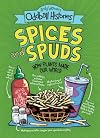
Through wood, wheat, corn, rice, peppers, sugar, potatoes, tea, tulips, and cotton, Warner manages to tell a nearly comprehensive history of the world, from the development of agriculture to trade routes, colonialism and revolution, disease, the danger of monocultures, and gene editing. Through each tale, themes repeat: theft and profit, a failure to think about sustainability, and the way foods and other plant products travel and transform.
Quotes
"It's wild how profitable it is to just take show more stuff from people." (193)
But every colony is a liberation story waiting to be told. (217) show less
Quotes
"It's wild how profitable it is to just take show more stuff from people." (193)
But every colony is a liberation story waiting to be told. (217) show less
This Land is My Land: A Graphic History of Big Dreams, Micronations, and Other Self-Made States by Andy Warner
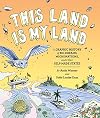
I want to go where the vegan lesbians are.
(Full disclosure: I received a free e-ARC for review through NetGalley. Trigger warning for sexual violence against women and children.)
"A community founded in upstate New York in 1848 and based on a radical reimagining of society, marriage and child rearing...ended up being one of the world's largest purveyors of cutlery and tableware."
Written by Andy Warner and illustrated by Sofie Louise Dam, This Land is My Land highlights thirty self-made or show more experimental communities, loosely falling into one of the following categories:
1 - Intentional communities: "Groups of people who chose to radically remake their social structures."
2 - Micronations: "Brief histories of the tiny, unrecognized nations of the world."
3 - Failed utopias: "The bigger the experiment, the harder it falls."
4 - Visionary environments: "Stories of wonderful and bizarre places where individuals make their visions reality."
5 - Strange dreams: "Proposals, plans, and schemes, never brought to pass."
Before visions of radical utopias start swimming through your head (they sure did mine), know that the places featured here range from large-scale art projects created by a single individual (Nek Chand's Rock Garden in India; Ra Paulette's Caves in New Mexico; Nevada's Thunder Mountain Monument); to large, sprawling - if unusual - homes, again built for a single person or family (Freedom Cove, off the coast of Vancouver; Arizona Mystery Castle); to honest-to-goodness intentional communities and communes - one of them even traveling (The Van Dykes).
Among my favorites are the communities and nations created by people seeking to escape oppression and persecution. Chief among these is Libertatia, a city-state established in a bay in Madagascar by a French pirate and a Dominican priest in the 1600s. The crew of the Victoire made a habit of attacking slaving ships, freeing the kidnapped human cargo, and then splitting the bounty equally between all. Newly freed slaves were welcome to join the crew if they desired. Libertatia became their permanent, democratic, anti-authoritarian settlement. At least, if you believe the 1724 book A General History of the Pyrates; there is no physical evidence of the colony's existence today. (I want to believe.)
Sadly, many of these larger communities were either established as tax havens (libertarians seem to be especially egregious offenders here) or as a means for the founders (men, always) to rape and traffic women and children. (You'll never look at Oneida flatware the same way again. And I was rooting for you up until the child rape, Noyes.) I really would have loved to have seen more positive examples, but there you go. People suck more than they don't.
One cool thing: of those sites still in existence, many are open to tourists. The Arizona Mystery Castle seems like a pretty rad vacation destination (but not in the summer, obvs).
http://www.easyvegan.info/2019/05/14/this-land-is-my-land-by-andy-warner/ show less
(Full disclosure: I received a free e-ARC for review through NetGalley. Trigger warning for sexual violence against women and children.)
"A community founded in upstate New York in 1848 and based on a radical reimagining of society, marriage and child rearing...ended up being one of the world's largest purveyors of cutlery and tableware."
Written by Andy Warner and illustrated by Sofie Louise Dam, This Land is My Land highlights thirty self-made or show more experimental communities, loosely falling into one of the following categories:
1 - Intentional communities: "Groups of people who chose to radically remake their social structures."
2 - Micronations: "Brief histories of the tiny, unrecognized nations of the world."
3 - Failed utopias: "The bigger the experiment, the harder it falls."
4 - Visionary environments: "Stories of wonderful and bizarre places where individuals make their visions reality."
5 - Strange dreams: "Proposals, plans, and schemes, never brought to pass."
Before visions of radical utopias start swimming through your head (they sure did mine), know that the places featured here range from large-scale art projects created by a single individual (Nek Chand's Rock Garden in India; Ra Paulette's Caves in New Mexico; Nevada's Thunder Mountain Monument); to large, sprawling - if unusual - homes, again built for a single person or family (Freedom Cove, off the coast of Vancouver; Arizona Mystery Castle); to honest-to-goodness intentional communities and communes - one of them even traveling (The Van Dykes).
Among my favorites are the communities and nations created by people seeking to escape oppression and persecution. Chief among these is Libertatia, a city-state established in a bay in Madagascar by a French pirate and a Dominican priest in the 1600s. The crew of the Victoire made a habit of attacking slaving ships, freeing the kidnapped human cargo, and then splitting the bounty equally between all. Newly freed slaves were welcome to join the crew if they desired. Libertatia became their permanent, democratic, anti-authoritarian settlement. At least, if you believe the 1724 book A General History of the Pyrates; there is no physical evidence of the colony's existence today. (I want to believe.)
Sadly, many of these larger communities were either established as tax havens (libertarians seem to be especially egregious offenders here) or as a means for the founders (men, always) to rape and traffic women and children. (You'll never look at Oneida flatware the same way again. And I was rooting for you up until the child rape, Noyes.) I really would have loved to have seen more positive examples, but there you go. People suck more than they don't.
One cool thing: of those sites still in existence, many are open to tourists. The Arizona Mystery Castle seems like a pretty rad vacation destination (but not in the summer, obvs).
http://www.easyvegan.info/2019/05/14/this-land-is-my-land-by-andy-warner/ show less
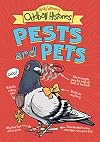
Inventively organized into three sections (Creatures We Find Cute, Creatures WE Find Useful, and Creatures That Find Us Useful), this is a lively, quick trip through the animal kingdom with a focus on animals most closely entwined - for better or worse - with humans. From the domestication of dogs, cats, horses, and sheep to the purposeful introduction of invasive species to the unintended introduction and spread of creatures like rats and cockroaches, Pests and Pets is a swift and show more fascinating read. A visual table of contents allows readers to skip directly to specific animals if they wish; there's also a timeline of domestication (from 30,000 years ago to present day), a map of (likely) wild origins, and an index. A series of running jokes ("oh, shiny!") emphasize the themes and patterns.
See also: Yummy by Victoria Grace Elliott; The Real Poop on Pigeons by Kevin McCloskey
Quotes/notes
In 1847, the Kennel Club was founded in London and dogs got weird. (14)
Humans are astonishingly good at hunting things....Almost every appearance of humans was followed by a mass extinction of large mammals. (26)
"I bet nobody expected Nazi zoologists!" (43)
"Hmm, causing ecological collapse with animals intended to remind us of home does seem like poor planning." (re: introducing rabbits to Australia, 69)
"Well, have you ever tried to get a Visigoth to eat an omelet?" (re: popularity of chickens in the Roman Empire; fall of the Roman empire, 117)
In the Han dynasty, mouse breeders created the "waltzing mouse," which stumbled around because of an inner-ear defect. (128)
Sparrows arrived in the Americas via deliberate introductions in the 1850s, often by various weirdos nostalgic for the sparrows of the Old World. (152)
...the ability to not annoy humans enough to provoke destruction or interest them enough to be domesticated has made sparrows the wild bird with the most widespread range on earth. (153) show less
See also: Yummy by Victoria Grace Elliott; The Real Poop on Pigeons by Kevin McCloskey
Quotes/notes
In 1847, the Kennel Club was founded in London and dogs got weird. (14)
Humans are astonishingly good at hunting things....Almost every appearance of humans was followed by a mass extinction of large mammals. (26)
"I bet nobody expected Nazi zoologists!" (43)
"Hmm, causing ecological collapse with animals intended to remind us of home does seem like poor planning." (re: introducing rabbits to Australia, 69)
"Well, have you ever tried to get a Visigoth to eat an omelet?" (re: popularity of chickens in the Roman Empire; fall of the Roman empire, 117)
In the Han dynasty, mouse breeders created the "waltzing mouse," which stumbled around because of an inner-ear defect. (128)
Sparrows arrived in the Americas via deliberate introductions in the 1850s, often by various weirdos nostalgic for the sparrows of the Old World. (152)
...the ability to not annoy humans enough to provoke destruction or interest them enough to be domesticated has made sparrows the wild bird with the most widespread range on earth. (153) show less
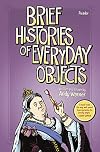
I've had this book for years and finally got around to reading it. Loved it! It's hilarious and extremely informative. Very funny comics about the origin of commonplace items like traffic lights, bicycles, barbed wire, stamps, toothbrushes, and so forth. How they were discovered or invented, including the *uncredited* people (often women or POC) who originally did the work and have gone unsung. The book is divided into sections (The Office, The Bathroom, The Kitchen, etc) to organize the show more objects. I was chuckling all throughout at the author/illlustrator's humor--a lot of breaking of the fourth wall to have a character comment on a product ("Have you noticed how we all go bonkers for anything our royal family does?" about TEA being adopted after the king started drinking it), or a bunch of people forming a Failed Inventors Club for failing to patent and profit from their own inventions. They also often acknowledge the racism or misogyny that prevented an inventor's success. (The book is very progressive in admitting the bitter truths of history.) Also funny is when the author is a character in his own comics, drawing himself hard at work ("because everybody wants more paperclip stories", or, "Probably needs more vacuum cleaner jokes") and also slipping in a comment about what a raw deal women of the time got, etc. The bibliography is extensive, showing his research; he indicates when he directly quotes someone instead of the fictionalized (and funny) dialogue. I also appreciated that it has numbered pages and an index, so you can refer to particular topics when you want to refresh your knowledge, as I've already done a couple of times since reading it...I'm such a nerd... Did I mention that the artwork is phenomenal? I love this style of ink drawings, super realistic but comical. *Chef's kiss.* show less
Awards


You May Also Like


Associated Authors
Statistics
- Works
- 12
- Also by
- 1
- Members
- 214
- Popularity
- #104,032
- Rating
- 3.9
- Reviews
- 26
- ISBNs
- 17
- Languages
- 1
