
Napoleón Bonaparte (1769–1821)
Author of The Military Maxims of Napoleon
About the Author
Image credit: Portrait by Ingres
Series
Works by Napoleón Bonaparte
Sobre a Guerra. A Arte da Batalha e da Estratégia. Obra Completa, Organizada e Comentada por Bruno Colson (Em Portuguese do Brasil) (2015) 11 copies
Correspondance générale de Napoléon, tome 2: La campagne d'Égypte et l'avènement (1798-1799) (2005) 8 copies
Aan mijn soldaten 4 copies
A Selection from the Letters and Despatches of the First Napoleon: With Explanatory Notes (2010) 4 copies
NAPOLEON QUOTES ON VICTORY, LEADERSHIP AND THE ART OF WAR: Selected and Edited by Mete Aksoy (2018) 3 copies
History of Julius Caesar 2 copies
Correspondance générale : Tome 8, Expansions méridionales et résistances 1808-janvier 1809 (2004) 2 copies
Commentaires de napoléon premier. tome 3 : campagnes d'egypte et de syrie, l'egypte sous kléber, l'egypte sous menou, politique du directoire,… (1866) 2 copies
Napoleon's memoirs 2 copies
Oeuvres de Napoléon Bonaparte 2 copies
Ecrits militaires 2 copies
Briefe Napoleons des Ersten Auswahl aus der gesamten Korrespondenz des Kaisers (Dritter Band) 1 copy
La cena en Beaucaire 1 copy
Briefe Napoleons des Ersten Auswahl aus der gesamten Korrespondenz des Kaisers (Zweiter Band) 1 copy
汉译世界学术名著丛书 政治法律社会 - 拿破仑文选 下卷 1 copy
Napoléon par Napoléon -Tome 1 - Dictionnaire- ou recueil alphabetique des opinions et jugements de l'empereur. - A à J (1854) 1 copy
Tagebuch von St. Helena 1 copy
The Home University Library 1 copy
The maxims of Napoleon 1 copy
Sayings of Napoleon 1 copy
Handbook of Caesar's Wars 1 copy
Maximes de Napoléon 1 copy
Mein Leben und Werk 1 copy
Mémoires Pour Servir À L'histoire De France Sous Napoléon: Écrits À Sainte-Hélène, Volume 7 (French Edition) (2010) 1 copy
Napoleon Bonaparte 1 copy
Pensieri 1 copy
Napoleon I. Mein Leben, Gesamtausgabe der Autobiographie. BAND 5: Ich der Kaier II, Niederlage und Verbannung (1999) 1 copy
Napoleon's Maxims of war 1 copy
Choix de pensées de Napoleon 1 copy
Associated Works
MHQ: The Quarterly Journal of Military History — Spring 2000 (2000) — Author "Napoleon on Generalship" — 10 copies
Tagged
Common Knowledge
- Canonical name
- Bonaparte, Napoleón
- Legal name
- Buonaparte, Napoleone
- Other names
- Napoleón
Emperador de Francia, Napoleón
Napoleón I - Birthdate
- 1769-08-15
- Date of death
- 1821-05-05
- Gender
- male
- Cause of death
- Afección hepática / cáncer de estómago
- Nationality
- France
- Birthplace
- Ajaccio, Córcega, Francia
- Place of death
- Isla de Santa Elena
- Burial location
- París, Francia
- Associated Place (for map)
- France
Members
Reviews

"Dear Lt. Buonaparte,
I note that you do have a great love of our beautiful tongue, especially for one raised in an area where a proper education in writing French must have been hard to come by. You efforts to create pleasing tales, I hope, brought to a greater understanding and respect for the giants of our literary past. However, I regret that the material submitted to our press do not meet with our present projected line of books for the Christmas season of 1787. Perhaps another printer show more will find your stories more to their tastes.
Regretfully, Etienne Laroche."
After reading Mr. Frayling's work my mind came up with the above possible rejection letter from a fictitious printer. It's the least I could do, since it must have taken a great deal of work on Mr. Frayling's part to come up with Napoleon's juvenilia, and get a publisher to go for it. C.S. Forester remarked that the average publisher has to have at least one book on Napoleon for the Christmas line every year. This could well have been one of them. Still, it was fun to read. I wonder if anyone ever quotes from these when doing interior dialogue for Napoleon in a novel? show less
I note that you do have a great love of our beautiful tongue, especially for one raised in an area where a proper education in writing French must have been hard to come by. You efforts to create pleasing tales, I hope, brought to a greater understanding and respect for the giants of our literary past. However, I regret that the material submitted to our press do not meet with our present projected line of books for the Christmas season of 1787. Perhaps another printer show more will find your stories more to their tastes.
Regretfully, Etienne Laroche."
After reading Mr. Frayling's work my mind came up with the above possible rejection letter from a fictitious printer. It's the least I could do, since it must have taken a great deal of work on Mr. Frayling's part to come up with Napoleon's juvenilia, and get a publisher to go for it. C.S. Forester remarked that the average publisher has to have at least one book on Napoleon for the Christmas line every year. This could well have been one of them. Still, it was fun to read. I wonder if anyone ever quotes from these when doing interior dialogue for Napoleon in a novel? show less
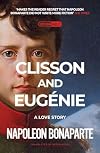
During a hard-fought game of Trivial Pursuit the other day, I discovered that Napoleon Bonaparte had written a romantic novel. Obviously, I decided that I had to get my hands on this as soon as possible. I had visions of balls and the language of fans, of brooding heroes, comic misunderstandings and smart-tongued heroines. This was foolish, I admit. In fact, this isn’t a novel so much as a short story, barely more than twenty pages long. It’s also very clearly Romantic rather than show more romantic. And Napoleon may have been a great general, but he wasn’t all that good as a novelist. Personally, I don’t believe this would have received any critical attention whatsoever were it not for the identity of its author; but that is interesting enough to warrant a bit of discussion...
For the rest of the review, please see my blog:
https://theidlewoman.net/2018/02/21/clisson-and-eugenie-napoleon-bonaparte/ show less
For the rest of the review, please see my blog:
https://theidlewoman.net/2018/02/21/clisson-and-eugenie-napoleon-bonaparte/ show less
Not only did this book have the writings of Napoleon, it also contained excellent introductions to each chapter that set the tone & explained the circumstances that influenced Napoleon to write what he did during the specified periods. Several times I have read the musings of Napoleon on the subject of suicide, which were written after his having read Goethe’s The Sorrows of Young Werther. Several times I have read of Napoleon’s encounter with the prostitute, but I had never been aware show more that he had written the actual dialogue [for a Meeting at the Palais Royal.]
The Mask of the Prophet was a most interesting tale.
Clisson & Eugenie was a sublime piece, although I preferred the original draft (again written a la Goethe & Rousseau), which Napoleon spurned himself in his later years. It also had the distinction of not “falling apart at the end”; a flaw noted by Frayling himself at the very beginning of the text. It is a problem I have myself when writing. Perhaps because one can easily write of events past because we know from experience what to expect, but to write of what is going to happen… but our own fate we have little control over, thus how can we guess the fate of others?
Napoleon must have been very self-obsessed to write this story as there is no question at all that he was writing about himself [as Clisson], though I have my doubts of whom he was thinking of when he created Eugenie. If it had been Desiree Clary, why did he make Eugenie come to love another, when in reality it was he who had broken off with her? Per Frayling, it is possible that he had based the character on her sister Julie, instead. show less
The Mask of the Prophet was a most interesting tale.
Clisson & Eugenie was a sublime piece, although I preferred the original draft (again written a la Goethe & Rousseau), which Napoleon spurned himself in his later years. It also had the distinction of not “falling apart at the end”; a flaw noted by Frayling himself at the very beginning of the text. It is a problem I have myself when writing. Perhaps because one can easily write of events past because we know from experience what to expect, but to write of what is going to happen… but our own fate we have little control over, thus how can we guess the fate of others?
Napoleon must have been very self-obsessed to write this story as there is no question at all that he was writing about himself [as Clisson], though I have my doubts of whom he was thinking of when he created Eugenie. If it had been Desiree Clary, why did he make Eugenie come to love another, when in reality it was he who had broken off with her? Per Frayling, it is possible that he had based the character on her sister Julie, instead. show less
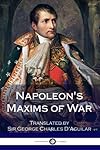
This collection of dictations has been translated anew about once a decade from the 1820's until now. The advice, well spiced with hindsight is good. there is some value in the various introductions.
Awards

You May Also Like
Associated Authors
Statistics
- Works
- 155
- Also by
- 8
- Members
- 1,015
- Popularity
- #25,389
- Rating
- 3.7
- Reviews
- 13
- ISBNs
- 148
- Languages
- 10
