
Pamela Pollack
Author of Who Is J. K. Rowling?
About the Author
Series
Works by Pamela Pollack
The Funnie Mysteries: The Curse of Beetenkaumun (Disney's Doug: The Funnie Mysteries #4) (2000) 11 copies
Extreme Sports: Ski 2 copies
The Funnie Mysteries: The Curse of Beetenkaumun, Funkytown, LA Judiata, a Hard Beet's Night (Disney's Doug) (2000) 1 copy
UC Big Book of Horse Stories 1 copy
Frankentaz 1 copy
Associated Works
Tagged
Common Knowledge
Members
Reviews
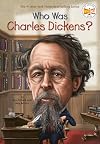
I really liked this book, as well as the rest of the books in this collection. The “Who Was…” books make biographies much more enjoyable and less threatening for students. One reason I enjoyed this book is because of the timeline it includes in the back of the book. The timeline not only includes Charles Dickens’ life, but also everything that was going on around the world during his time period related to writing and war. For example, in Charles Dickens’ timeline for 1865 it show more mentions that Charles was in a train wreck, and in the other timeline of the world it mentions that the first commercially sold typewrite was invented during that same year. The timeline helps with summing up important events in Charles Dickens’ life, and is easy to read. Another reason I enjoyed reading this book is because the language is very clear and gets straight to the point. For example, “He wrote stories and started his own newspaper. Other boys paid for copies with marbles. He made the boys laugh by pretending to speak in a foreign language he had made up himself.” With these short, yet concise sentences, a lot of information is provided, which I thought was very beneficial. Finally, I liked this book due to its illustrations and how it enhances the story. For example, when mentioning the death of his father and baby Dora, the illustration on that page is of Charles’ family standing in front of the grave with distinct frowning faces, as if they were crying. The illustrations allow the reader to visualize the emotions felt at this time. The main idea of this book is emphasizing the life of Charles Dickens and all that he accomplished to get to his position. show less
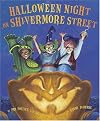
A cute and festive way to celebrate a spooky holiday with small children this book has really great illustrations. This picture book I chose was to help with children at a volunteer center for new immigrated children. I used this as a tool to show one part of the holiday we celebrate in the U.S. The book is a fictional story about three children who are invited to a Halloween masquerade party with some interesting guest. The reason I used this book is due to the easy level of reading and the show more colorful pictures. There is a theme in the book where each page has a number of items on it which worked well with the children because they could exercise their counting skills. An example is in the book there are werewolves bobbing for apples. The apples fly out of the bucket and are displayed across the pages. I asked my student to count all that she saw and eventually it became a game. I think the moral of this story is to have fun and not take things too seriously. The book is very light-hearted and up beat on an otherwise “scary” holiday. show less
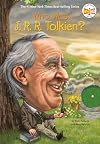
This book tells the life of J.R.R. Tolkien in a fun way that will engage students. You learn fun facts about him, like that he could read by the age of four, loved languages, and roaming the British countryside, and how these and other details ended up influencing his writing. I enjoy the Who Was series as they engage all students, especially reluctant readers. The biographies also range from modern celebrities to influential historical people.
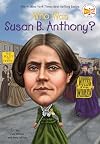
While factually informative, this book does not quite live up to the standards of the Who Was... series. As I read the book, the flow seemed off and something rang a bell, "something's not right here." After this point, I specifically noted that Elizabeth (Stanton) and Susan's names are swapped at least twice. As the book progressed, I noted typos and word placement/ tense errors more frequently.
Any Who Was book provides a much more in-depth lesson than standard public school history, but show more it's a shame that this one was so sloppy. show less
Any Who Was book provides a much more in-depth lesson than standard public school history, but show more it's a shame that this one was so sloppy. show less
Lists
Awards


You May Also Like


Associated Authors
Statistics
- Works
- 60
- Also by
- 1
- Members
- 7,560
- Popularity
- #3,229
- Rating
- 3.9
- Reviews
- 54
- ISBNs
- 264
- Languages
- 3
- Favorited
- 1