
Ronald Wimberly
Author of Prince of Cats
About the Author
Works by Ronald Wimberly
Ray Bradbury's Something Wicked This Way Comes: The Authorized Adaptation (2011) — Illustrator — 107 copies, 4 reviews
Strange Sports Stories (2015) #2 — Illustrator — 1 copy
Associated Works
Femme Magnifique: 50 Magnificent Women who Changed the World (2018) — Contributor — 61 copies, 2 reviews
It's Life as I See it: Black Cartoonists in Chicago, 1940 - 1980 (2021) — Afterword — 29 copies, 1 review
Tagged
Common Knowledge
- Canonical name
- Wimberly, Ronald
- Other names
- Wimberly, Ron
- Birthdate
- 1979-04-28
- Gender
- male
- Education
- Pratt Institute
- Nationality
- USA
- Birthplace
- Washington, D.C., USA
- Places of residence
- Brooklyn, New York, USA
Washington, D.C., USA - Associated Place (for map)
- USA
Members
Reviews

Romeo and Juliet in 1980s New York City, from the perspective of Tybalt. Rival sword gangs, kickass fashion, street artists, macho bullshit, all of which was there in the original play but is cleverly heightened here by the setting and the perspective. It's more emotionally affecting than the original Romeo & Juliet was for me, but like all Romeo & Juliet retellings maybe, kind of gimmicky. But every time the incongruity of the stilted, Shakespearean language and the setting and show more subjects—not just the incongruity but the wit, the knowing wink of the juxtaposition—made me laugh out loud, I couldn't help but add to my star rating. show less
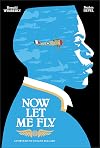
One of those graphic biographies where the subject -- the adventurous and heroic Eugene Bullard, in this case -- carries you past the shortcomings of the book's writer and artist.
Bullard fled the racism of his childhood home of Columbus, Georgia, and made his way to Europe where he could live without fear of lynch mobs. He had settled in France by the outbreak of World War I and quickly volunteered for the French Foreign Legion to defend his new country, first on the ground with the infantry show more and then in the air as the first African American fighter pilot. His story is by turns sad, scary, thrilling, and improbable.
Unfortunately, this book chooses to tell his story with a tired framing device of Bullard -- an elevator operator in 1950s New York City -- telling his life story to a television executive when they become stuck in a malfunctioning elevator. The narration lacks dates and broader context for much of the book. Without the cover copy, readers without much historical knowledge might not be able to tell what war is being depicted in the back half of the book.
The book gets bogged down a bit in the trenches of World War I for a little too long with some extended action sequences that feel like they could be stock footage from any number of war movies. The repeated wounds Bullard sustains are rather glossed over to get back to the action. It's not until page 265 -- 82% of the way through the book -- that the possibility of becoming a pilot is mentioned in the flashbacks. The book then zips through his aerial career and ends before the war's armistice and decades before the 1950s elevator sequence, teasing that they've only told half of Bullard's story. What?!?!?
If they ever do a sequel, I'd gladly pick it up. But there may be some better sources out there to find out about this extraordinary man. show less
Bullard fled the racism of his childhood home of Columbus, Georgia, and made his way to Europe where he could live without fear of lynch mobs. He had settled in France by the outbreak of World War I and quickly volunteered for the French Foreign Legion to defend his new country, first on the ground with the infantry show more and then in the air as the first African American fighter pilot. His story is by turns sad, scary, thrilling, and improbable.
Unfortunately, this book chooses to tell his story with a tired framing device of Bullard -- an elevator operator in 1950s New York City -- telling his life story to a television executive when they become stuck in a malfunctioning elevator. The narration lacks dates and broader context for much of the book. Without the cover copy, readers without much historical knowledge might not be able to tell what war is being depicted in the back half of the book.
The book gets bogged down a bit in the trenches of World War I for a little too long with some extended action sequences that feel like they could be stock footage from any number of war movies. The repeated wounds Bullard sustains are rather glossed over to get back to the action. It's not until page 265 -- 82% of the way through the book -- that the possibility of becoming a pilot is mentioned in the flashbacks. The book then zips through his aerial career and ends before the war's armistice and decades before the 1950s elevator sequence, teasing that they've only told half of Bullard's story. What?!?!?
If they ever do a sequel, I'd gladly pick it up. But there may be some better sources out there to find out about this extraordinary man. show less
Ray Bradbury's Something Wicked This Way Comes: The Authorized Adaptation (Ray Bradbury Graphic Novels) by Ronald Wimberly
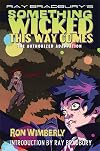
Midsummer wasn't really the best time to start reading a book which is clearly set in October and has an emotional quality that is pretty dependent on the season, but I needed work on reading my graphic novel collection so I read it anyways. In comparison to the novel, I felt like the adaptation was missing something. The brevity that is required of graphic novels (and this was a particularly short volume) doesn't really do enough to capture Bradbury's eloquence, so I felt like I couldn't show more really get into the characters and that the strangeness of the circus was barely developed. The scenarios that were needed to bring the story to it's climax were so shortened by the adaptor that unless the reader has already gotten the whole story from the novel it's not really possible to understand the importance of the Dust Witch, the House of Mirrors, or the dynamic between the Jim and Willy. The one aspect of the story which they thankfully retained in most of its entirety was the role that the Will's father played; the boys are protagonists of the story, but it is their continual reliance on adults (who still understand childhood) that helps them defeat the danger of the circus for the time being. I think I'm going to have to go and read the actual novel again, so that the best parts of the story are refreshed in my memory. show less
I'm not really a fan of quotes, especially in the modern era of social media. I always start to wonder about the context in which they first appeared, whether they are being properly presented and attributed, and the motives of the person presenting the text. There just isn't enough time to properly investigate each one.
That being said this book had immediate appeal with its strong unifying theme and a citations page.
A thin book of the gift variety, it's a quick read, with each spread having show more a very short biography on the left and an illustrated quote on the right. It's very easy though to get sucked into randomly flipping back through the book and dwelling on different pages.
The images are well-done and quite striking, hand drawn (I'm guessing) from photo references that can usually be found pretty easily near the top of a simple Google Images search for each of the subjects. show less
That being said this book had immediate appeal with its strong unifying theme and a citations page.
A thin book of the gift variety, it's a quick read, with each spread having show more a very short biography on the left and an illustrated quote on the right. It's very easy though to get sucked into randomly flipping back through the book and dwelling on different pages.
The images are well-done and quite striking, hand drawn (I'm guessing) from photo references that can usually be found pretty easily near the top of a simple Google Images search for each of the subjects. show less
Lists
Awards


You May Also Like


Associated Authors
Statistics
- Works
- 12
- Also by
- 13
- Members
- 449
- Popularity
- #54,621
- Rating
- 4.0
- Reviews
- 13
- ISBNs
- 18