
Carol Spier
Author of House Beautiful the Home Book
About the Author
Works by Carol Spier
Threads: For People Who Love to Sew (Slipcovers: Making a Pattern, October/November 2002, Number 103) (2002) 6 copies
Associated Works
Tagged
Common Knowledge
- Gender
- female
Members
Reviews
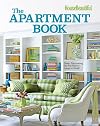
Some interesting ideas in here. I especially liked the rooms that showed how to incorporate storage space and create partitions in a more loft-style apartment. I also liked the suggestions on what to do with long hallways. I would have liked more pictures of galley kitchens, though, as these are a real challenge to decorate or do much with; most of the kitchens seemed to be ones with room for an eating area. This book is certainly worth borrowing from the library, at the very least.

Things I Learned: I'm afraid none of it really took.
Comments: I'm really perplexed by this book's representation of interior decorating styles. The places didn't look like real apartments, where actual people lived. Also the design styles, even though they varied from vintage and antique to mid-century modern and beyond, looked remarkably similar, as if they'd all been designed by the same person or team. A lot of the styles represented seemed to echo an 80's sensibility - there were vivid show more Memphis-style mixes of color and pattern, Mario Buatta touches of majolica and chintz, collections of blue and white ware, and lean contemporary furnishings. So it seemed to me to be a little stuck in the past. That said, however, there were some really wonderful and creative solutions to problems represented in some of the apartments. There was a very cute (as in old and cozy-tiny) Parisian apartment that featured ingenious solutions to the small space challenge. There was a loft apartment with brick walls with solutions that either softened the roughness or the brick look or exploited it. There was another loft that had a brick floor, with furnishings and decor that made the ambiance of the apartment less forbidding (still, I wouldn't want to fall in such a place!).
The author showed how light was let in to dark and cramped spaces.. She also gives a list of questions in the introduction to help the reader decide important issues before beginning a potentially expensive and time-consuming change to their dwelling.
The book also features helpful tips about color, storage solutions, textiles and white-on-white decorating schemes. Overall, I found it informative and will probably use it as a resource. show less
Comments: I'm really perplexed by this book's representation of interior decorating styles. The places didn't look like real apartments, where actual people lived. Also the design styles, even though they varied from vintage and antique to mid-century modern and beyond, looked remarkably similar, as if they'd all been designed by the same person or team. A lot of the styles represented seemed to echo an 80's sensibility - there were vivid show more Memphis-style mixes of color and pattern, Mario Buatta touches of majolica and chintz, collections of blue and white ware, and lean contemporary furnishings. So it seemed to me to be a little stuck in the past. That said, however, there were some really wonderful and creative solutions to problems represented in some of the apartments. There was a very cute (as in old and cozy-tiny) Parisian apartment that featured ingenious solutions to the small space challenge. There was a loft apartment with brick walls with solutions that either softened the roughness or the brick look or exploited it. There was another loft that had a brick floor, with furnishings and decor that made the ambiance of the apartment less forbidding (still, I wouldn't want to fall in such a place!).
The author showed how light was let in to dark and cramped spaces.. She also gives a list of questions in the introduction to help the reader decide important issues before beginning a potentially expensive and time-consuming change to their dwelling.
The book also features helpful tips about color, storage solutions, textiles and white-on-white decorating schemes. Overall, I found it informative and will probably use it as a resource. show less
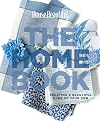
This is a massive book, physically. Borderline awkward. The actual content is not as substantial. There are many large lovely photos and some very useful advice, but within a fairly narrow (and fairly WASPy) taste range. Perhaps the magazine is equally targeted. The one source of variety is a really nice range of color schemes.
Universally useful bits are the detailed discussions on space -- how many inches you need to leave for getting through a room or pushing out your dining chair or show more anything else that's so easy to forget or to guess at -- and the repeated paint swatch layouts where various designers discuss their favorite color for a particular purpose. Some rooms do include advice on more economical ways to achieve a similar effect. show less
Universally useful bits are the detailed discussions on space -- how many inches you need to leave for getting through a room or pushing out your dining chair or show more anything else that's so easy to forget or to guess at -- and the repeated paint swatch layouts where various designers discuss their favorite color for a particular purpose. Some rooms do include advice on more economical ways to achieve a similar effect. show less

More than 1,000 ways to dress up your windown
You May Also Like


Associated Authors
Statistics
- Works
- 30
- Also by
- 2
- Members
- 381
- Popularity
- #63,386
- Rating
- 3.5
- Reviews
- 6
- ISBNs
- 31
- Languages
- 1