
Michelle Ray (1) (1972–)
Author of Falling for Hamlet
For other authors named Michelle Ray, see the disambiguation page.
Works by Michelle Ray
Tagged
Common Knowledge
- Canonical name
- Ray, Michelle
- Legal name
- Ray, Michelle Gerson
- Birthdate
- 1972-08-18
- Gender
- female
Members
Reviews

I have never read, nor seen the play, Hamlet. I know I probably should, and I want to, but I've been holding off because I know it is required reading next school year. But that's irrelevant. The point is, this review is not going to be me dissecting the novel and comparing Michelle Ray's words to Shakespeare's. Not only would that be ridiculous, but I have no grounds to do that. I will say that from what I know of the basic plot of Hamlet, Falling for Hamlet was pretty spot-on in some show more points, and different in others. As the author points out in her Author's note, the play isn't called Ophelia, and since she is the main character in Falling for Hamlet, of course things were changed. Now that I'm done ranting (which I hope didn't turn you off from this review), I'll actually get to how wonderful this modern-day retelling of Hamlet is.
I really enjoyed this book. Unlike the play, Falling for Hamlet takes place before things start getting all crazy. I found myself so immersed in the characters and their lives and their stories right from the opening page that I completely forgot what was about to come. When tragedy hits and the madness begins, I was just as shocked as all of the characters. I was really that interested by the words. As the story progresses into the horrible events that make up a Shakespearian tragedy, even though I was emotional enough to scare anyone away, I kept reading. I kept flipping the pages because Ms. Ray's words made me care.
In Michelle Ray's author's note, she says this, "My purpose in writing Falling for Hamlet, besides entertaining myself in asking the many 'what if' questions, was the hope that readers would become more interested in Hamlet". I can honestly say, that in my opinion, she succeeded in reaching that goal. The writing was not only at a simple level of understanding, but it was also captivating. Because of this, I found myself crushed in the end. Why? Because I cared. I really cared about the characters. More so than any Shakespearian play has made me feel before. I know that this is a retelling, and not the original, but the point is that going forward, when I do finally read/see Hamlet, I will care. I will already relate to the characters, and I have Michelle Ray to thank for that.
I know this review is on the longer side and has been filled with words bordering on ranting, but I really do hope that I encouraged you to pick up this book. As Ms. Elizabeth Eulberg (author of The Lonely Hearts Club and Prom & Prejudice) so cleverly says in her blurb, "To read or not to read will never be the question for Falling for Hamlet". I totally agree. show less
I really enjoyed this book. Unlike the play, Falling for Hamlet takes place before things start getting all crazy. I found myself so immersed in the characters and their lives and their stories right from the opening page that I completely forgot what was about to come. When tragedy hits and the madness begins, I was just as shocked as all of the characters. I was really that interested by the words. As the story progresses into the horrible events that make up a Shakespearian tragedy, even though I was emotional enough to scare anyone away, I kept reading. I kept flipping the pages because Ms. Ray's words made me care.
In Michelle Ray's author's note, she says this, "My purpose in writing Falling for Hamlet, besides entertaining myself in asking the many 'what if' questions, was the hope that readers would become more interested in Hamlet". I can honestly say, that in my opinion, she succeeded in reaching that goal. The writing was not only at a simple level of understanding, but it was also captivating. Because of this, I found myself crushed in the end. Why? Because I cared. I really cared about the characters. More so than any Shakespearian play has made me feel before. I know that this is a retelling, and not the original, but the point is that going forward, when I do finally read/see Hamlet, I will care. I will already relate to the characters, and I have Michelle Ray to thank for that.
I know this review is on the longer side and has been filled with words bordering on ranting, but I really do hope that I encouraged you to pick up this book. As Ms. Elizabeth Eulberg (author of The Lonely Hearts Club and Prom & Prejudice) so cleverly says in her blurb, "To read or not to read will never be the question for Falling for Hamlet". I totally agree. show less
Let me start by saying that you should not judge this book by its cover. Or by its opening lines:
"Frailty, thy name is woman." - William Shakespeare
"Willy, thy name is sexism." - Ophelia
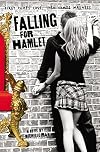
Don't get me wrong, both have very much to do with the story (other than Hamlet's hair color on the cover), but they really make this look like a much lighter, funnier, beach read kind of book than it really is. I mean, really, how would one make an adaption of Hamlet light? Instead, this book is everything show more it should be; it's brooding and dark and, at times, intense. It's also narrated by a strong Ophelia who is understandably worried (and sometimes so tired/drunk she's a bit loopy - how else could one explain the flower scene?) about her boyfriend's apparent loss of sanity but who also does her best to be supportive and helpful to those around her, especially her aforementioned boyfriend and her widower father, all while trying to keep her own life together in the midst of circumstances no high school senior should have to deal with. She is so at odds with both the classic and modern versions of how we usually see the character of Ophelia. I loved it.
The story stays pretty true to the original, with one major difference that is given away on the jacket flap: Ophelia survives. The motivations behind people's actions, however, are different. The "truth," what Ophelia is telling us the readers, is book-ended by Ophelia's tell-all appearance on fake-Danish-Oprah in the beginning of each chapter and her interrogation by the Danish police at the end. These three concurrent tellings of the same story, illustrate the fabrication of what we take for "fact" from the media and the reach of a government cover-up more explicitly than that paparazzi pic on the cover ever could. On faux-prah, Ophelia is sweet, in love, heart-broken, and kind of ditzy. She's the almost princess. While being interrogated, she is bitingly sarcastic, angry, and fiercely loyal to Horatio and Marcellus, the only other people to survive the bloodbath that is this story. She's accused of being the master-mind of a plot to overthrow the Danish monarchy. In between, she's just a girl doing her best to do what's right for herself and those she loves.
Really and truly, I loved this book. It sucked me into the story and kept me on the edge of my seat even though I knew, more or less, what was going to happen. The characters were well-rounded and real in ways that Shakespeare characters usually are not. I cried when the king died. Have you ever cared about Hamlet's dad enough to even care that he's dead? I haven't. And Hamlet himself made a bit more sense, not a lot, but a bit. Giving him a happy background with Ophelia, at least in flashbacks, made their whole relationship much more believable which made it all the more crushing when he becomes cruel. Michelle Ray has managed to take a story that I already knew well and liked, and she made it into something new and original that I love. I can't wait to see what she comes up with next.
Book source: ARC provided by the publisher. show less
"Frailty, thy name is woman." - William Shakespeare
"Willy, thy name is sexism." - Ophelia
Don't get me wrong, both have very much to do with the story (other than Hamlet's hair color on the cover), but they really make this look like a much lighter, funnier, beach read kind of book than it really is. I mean, really, how would one make an adaption of Hamlet light? Instead, this book is everything show more it should be; it's brooding and dark and, at times, intense. It's also narrated by a strong Ophelia who is understandably worried (and sometimes so tired/drunk she's a bit loopy - how else could one explain the flower scene?) about her boyfriend's apparent loss of sanity but who also does her best to be supportive and helpful to those around her, especially her aforementioned boyfriend and her widower father, all while trying to keep her own life together in the midst of circumstances no high school senior should have to deal with. She is so at odds with both the classic and modern versions of how we usually see the character of Ophelia. I loved it.
The story stays pretty true to the original, with one major difference that is given away on the jacket flap: Ophelia survives. The motivations behind people's actions, however, are different. The "truth," what Ophelia is telling us the readers, is book-ended by Ophelia's tell-all appearance on fake-Danish-Oprah in the beginning of each chapter and her interrogation by the Danish police at the end. These three concurrent tellings of the same story, illustrate the fabrication of what we take for "fact" from the media and the reach of a government cover-up more explicitly than that paparazzi pic on the cover ever could. On faux-prah, Ophelia is sweet, in love, heart-broken, and kind of ditzy. She's the almost princess. While being interrogated, she is bitingly sarcastic, angry, and fiercely loyal to Horatio and Marcellus, the only other people to survive the bloodbath that is this story. She's accused of being the master-mind of a plot to overthrow the Danish monarchy. In between, she's just a girl doing her best to do what's right for herself and those she loves.
Really and truly, I loved this book. It sucked me into the story and kept me on the edge of my seat even though I knew, more or less, what was going to happen. The characters were well-rounded and real in ways that Shakespeare characters usually are not. I cried when the king died. Have you ever cared about Hamlet's dad enough to even care that he's dead? I haven't. And Hamlet himself made a bit more sense, not a lot, but a bit. Giving him a happy background with Ophelia, at least in flashbacks, made their whole relationship much more believable which made it all the more crushing when he becomes cruel. Michelle Ray has managed to take a story that I already knew well and liked, and she made it into something new and original that I love. I can't wait to see what she comes up with next.
Book source: ARC provided by the publisher. show less
I received an Advance Reader's Copy of this book from the publisher in exchange for an honest review.
I have always loved Shakespeare. Though I admit that is has probably been over 20 years since I last read the original Hamlet. I'm always a little skeptical of modern takes on classics. Just recently, I found my husband watching what we call a "Stupid ScyFy" movie based on Moby Dick, only with a dragon instead of a whale. I had to leave the room. Chances are pretty good that I would not have show more chosen to read this book if it had not been sent to me for review. That would have been a real shame, because I LOVED this book.
What I liked about the book: Everything! Ophelia is a very realistic and strong character. In fact, I think she is somewhat stronger in this version than Shakespeare's original. The story is very engaging and is certainly a page turner. I liked how there were three different stories being told. There was what Ophelia told the investigators, what she told the TV host and what she told the reader. It made the reader feel as though they were getting the inside scoop. I also liked how close Ray stays to the original story. Yes, it's told in modern terms, but even after not having read the original version in over 20 years, I would have still recognized the basic story even if the names were different. Even though the story is close to the original, it focuses more on Ophelia than Hamlet. I found that to be rather interesting.
What I didn't like about the book: It felt a tad long, but I think that was because I was anxious to see how Ray was going to wrap up everything.
Just like Jane by April Lindner, this book would make for an interesting literature lesson comparing the original version with the modern version.
If you like Shakespeare, romances, or thrillers then you should give this book a try. show less
I have always loved Shakespeare. Though I admit that is has probably been over 20 years since I last read the original Hamlet. I'm always a little skeptical of modern takes on classics. Just recently, I found my husband watching what we call a "Stupid ScyFy" movie based on Moby Dick, only with a dragon instead of a whale. I had to leave the room. Chances are pretty good that I would not have show more chosen to read this book if it had not been sent to me for review. That would have been a real shame, because I LOVED this book.
What I liked about the book: Everything! Ophelia is a very realistic and strong character. In fact, I think she is somewhat stronger in this version than Shakespeare's original. The story is very engaging and is certainly a page turner. I liked how there were three different stories being told. There was what Ophelia told the investigators, what she told the TV host and what she told the reader. It made the reader feel as though they were getting the inside scoop. I also liked how close Ray stays to the original story. Yes, it's told in modern terms, but even after not having read the original version in over 20 years, I would have still recognized the basic story even if the names were different. Even though the story is close to the original, it focuses more on Ophelia than Hamlet. I found that to be rather interesting.
What I didn't like about the book: It felt a tad long, but I think that was because I was anxious to see how Ray was going to wrap up everything.
Just like Jane by April Lindner, this book would make for an interesting literature lesson comparing the original version with the modern version.
If you like Shakespeare, romances, or thrillers then you should give this book a try. show less
I liked this and as re-imagined re-tellings go, it was pretty good. Hamlet's my favorite Shakespeare so I tend to expect a lot when I actually read a redo. I liked Ophelia's voice and thought it was neat to have an updated setting where everything played out. Media overload, paparazzo, cell phones and the consequences of having a life reduced down to soundbytes, voice mail messages and talk show gossip fodder was well done. I didn't very much like the chapters ending with the police show more investigation transcript (I didn't think they added a lot to the overall story) but they went by quickly enough. Oddly, I didn't feel terribly connected to Hamlet or his madness here but as Ophelia was the main character, I likely shouldn't have. The twist ending by which she lives and comes back to tell the tale was nice and I found that I even wanted her to go on and have happiness with Sebastian. Denmark seemed like a glittering backdrop but that may just have been the royal court swaying me. I'm glad I read this and it was a quick read so I'd definitely recommend it to fans of the original work who like re-imagined re-tellings. show less
Awards

You May Also Like


Statistics
- Works
- 1
- Members
- 217
- Popularity
- #102,845
- Rating
- 3.5
- Reviews
- 20
- ISBNs
- 14