

Dean Francis Alfar
Author of The Kite of Stars and Other Stories
About the Author
Image credit: by Dean Francis Alfar
Series
Works by Dean Francis Alfar
Philippine Speculative Fiction Volume 2 — Editor; Contributor — 6 copies
Siglo: Freedom 6 copies
The Kite of Stars 5 copies
The Farthest Shore: An Anthology of Fantasy Fiction from the Philippines (2014) — Editor; Contributor — 3 copies
Associated Works
The Year's Best Fantasy and Horror: Seventeenth Annual Collection (2004) — Contributor — 241 copies, 9 reviews
Alternative Alamat: An Anthology: Myths and Legends from the Philippines (2011) — Contributor — 32 copies, 1 review
How to Live on Other Planets: A Handbook for Aspiring Aliens (2015) — Contributor — 17 copies, 2 reviews
Diaspora Ad Astra: An Anthology of Science Fiction From the Philippines (2014) — Contributor — 8 copies
Rabid Transit: Menagerie — Contributor, some editions — 5 copies
Philippine Speculative Fiction 5 — Foreword; Contributor — 3 copies
Best of Philippine Speculative Fiction 2009 — Contributor — 2 copies
Tagged
Common Knowledge
- Birthdate
- 1969-01-02
- Gender
- male
- Occupations
- playwright
novelist
speculative fiction writer
entrepreneur - Relationships
- Alfar, Nikki (wife)
- Nationality
- Philippines
- Places of residence
- Manila, Philippines
- Associated Place (for map)
- Manila, Philippines
Members
Reviews
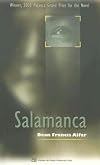
A fecund, oversexed imagination is on display in this first novel by Dean Francis Alfar, the main proponent of speculative fiction in the Philippines. The sorcery of the title refers to the fuel that powers an imaginary Spanish galleon to soar through the skies. The galleon is a fixture in certain fantastical short stories written by Gaudencio Rivera, the bisexual male lead of the novel. His fount of creativity is derived from his love affairs, betrayals, and promiscuity. Lovemaking fuels show more Gaudencio's haphazard literary activity.
Sometime in the 1950s, Gaudencio runs away from Manila to Palawan Island to escape a love affair gone wrong. There he encounters Jacinta Cordova, a young woman of peerless beauty. "Her beauty was of such purity and perfection that the walls of the house she lived in had turned transparent long ago, to allow both sunlight and moonlight to illuminate her incandescence." This is a love story.
At the moment that their eyes met through the see-through walls of the inconceivable house, Gaudencio dropped the cigarette in his hand as he was devastated by exposure to Jacinta’s luminous beauty. He felt an almost unbearable torrent of words rise up through his body: inarticulate syllables swiftly welled up from the soles of his feet; combining into nouns at his knees, verbs at his loins, adjectives and adverbs by the time they reached his heart; joined by prepositions and conjunctions from his hands and arms; becoming phrases, clauses, then whole sentences when they reached his head, threatening to erupt not only from his lips but also seeking immediate egress from his eyes, ears, and nose; before finally causing his hair to writhe as whole paragraphs, chapters, short stories, novellas, and novels recoiled backwards, suffusing his entire being with the terrible power of unspoken expression
The magical absurdity of that passage is consistent with the novel's use of lust and love as materials for fictional creation. It is a creative act that expands fictional boundaries, for we are in the territory of magical realism. It is easy to fall prey to the trappings and overused routines of magic. Alfar's beautiful sentences, however, are the building blocks of a luminous structure that is this very novel.
Salamanca manages to convey significant aspects of postwar Philippine history while telling an exuberant tale of love, identity, and exile. The way Alfar intertwined the landmarks and history of the Palawan Island setting into the novel's larger story is particularly awesome (at least to me, who is living in Palawan for almost decade now).
The novel deploys magic as more than an instrument of speculation. Magic is here a transgressive force. The early scene of a powerful storm for instance—wherein the characters, together with their freely flowing hormones, are carried aloft by an accelerating whirlwind—is an outrageous, comic set piece. Unlike the barren magic of popular novelists like Haruki Murakami, the magic in Salamanca is disabused of its false stupefaction.
The seemingly whimsical telling of the plot creates spontaneous magic. Gaudencio exploits his experiences, his loves, and his many betrayals of them—like his betrayal of Jacinta that resulted to their short-lived wedding—as materials for his writing career. Similarly, Alfar churns up new plot elements and characters with the spontaneous resolve of an aesthete. Part of his strength lies in the efficiency of his quick character sketches. Characters are added incrementally, and despite their brief appearances and the spare details about them, the readers feel invested in their stories.
There's a lot to unpack in this short novel which in its own way offers a synthesis of post-war Philippine history, not a magical slice of that history but the whole cake. At the start of the novel, Gaudencio is in the United States, homesick and planning to return to the Philippines to impregnate his estranged wife Jacinta.
Seven years after the complete destruction of Manilaville in Louisiana, the dissolute author Gaudencio Rivera decided to settle the matter of his incoherent sexuality and beget a child. His sudden announcement—made during a dinner party held in Los Angeles—was greeted first with laughter, then moments later with stupefaction, when a minor earthquake struck to seal the veracity of his declaration. As the small party sat under the shuddering table watching the room sway, Gaudencio told them that there came a time in every man’s life to part the gossamer curtain that separated childhood from the real world; that in his case, the moment had been too long in its postponement; that artists—especially gifted writers like himself—while often able to crystallize miraculous observations of mundane things, were sometimes blinded to more important matters; and that, ultimately, women were necessary to continue humanity’s existence, even if, occasionally, men proved to be better bedmates.
Manilaville is a settlement for Filipinos in Louisiana, later destroyed by a powerful hurricane. Gaudencio mirrors the experience of immigrant Filipino writers, those who continue to long for their country even as they seek to establish their literary careers abroad. The name has a correlate with Vietville which also figures in the novel. Vietville is a settlement community of Vietnamese, the first generation of which were Vietnamese refugees who fled their country during the Vietnam War. They arrived by boat to Palawan after a long sea journey. The plight of exiled citizens and writers, what defines their rootedness in a certain home country, is one of the novel's dramatic strands.
This novel is also notable for its bending not only of genre but of gender. "Men, Women and Other Fictions" is the title of the second of three chapters of the novel, indicating how gender is here (almost) ignored as a deterministic criterion in choosing the sexual orientation of characters. The bisexual Gaudencio fills a gender gap in the characterization of male lovers in Philippine literary novels, at least novels of "epic and sprawling" ambition like Salamanca, novels which consciously integrate historical details in their text.
Most significantly, Alfar makes a metaphoric case for sexual appetite as the "life force" of literary imagination.
"Do you still write?" Gaudencio asked him.
"No," Antonio replied with a mischievous smile. "I make babies."
"You really are an artist," Gaudencio said, blinking his eyes ... "Possessed by an imperative to create."
The imagined leap from the promiscuity of procreation to the promiscuity of creativity is one way of looking at art as perpetual giving birth to artworks, the progeny of the imagination. Sexual reproduction as the mode of literary production. The prolific outputs of Gaudencio are direct products of his sexual proclivity. "His muse was the instant of passion", that instant when he "experienced his body's familiar transubstantiation of carnal lust to sublime vocabularies, and he would mentally partition texts as they were composed in his mind". Alfar seems to be hinting that, in the continuing process of national imagining and becoming, the liberal attitudes toward sexuality is the liberating force that makes us aware of the mystery of love and existence.
Self-awareness is a modernist quality of Salamanca. It is a highly aware novel, aware of its opportunistic "exploitation" of human experience as fictional material, of magical elements as a creative force, of the politics of literary creation, of the national literary tradition it seeks to be an essential part of, and of the debilitating histories of colonialism and dictatorship. The witty self-references and historical asides, along with transgressive magic and emotional subtlety, make for a novel of verbal and sensual riches.
One character in the novel describes salamanca as the thing that makes one see what is being described. This is the power of imagery to reveal images from words alone. This is also the power of fiction to portray ideas that reflect the sheen of reality. Through some hitherto unheard of black magic sourced from some enchanted cave, Alfar shows that the novel is a magical thing too—salamanca itself.
Salamanca is 2005 grand prize winner of the Palanca Awards in the category of Novel in English.
show less
Sometime in the 1950s, Gaudencio runs away from Manila to Palawan Island to escape a love affair gone wrong. There he encounters Jacinta Cordova, a young woman of peerless beauty. "Her beauty was of such purity and perfection that the walls of the house she lived in had turned transparent long ago, to allow both sunlight and moonlight to illuminate her incandescence." This is a love story.
At the moment that their eyes met through the see-through walls of the inconceivable house, Gaudencio dropped the cigarette in his hand as he was devastated by exposure to Jacinta’s luminous beauty. He felt an almost unbearable torrent of words rise up through his body: inarticulate syllables swiftly welled up from the soles of his feet; combining into nouns at his knees, verbs at his loins, adjectives and adverbs by the time they reached his heart; joined by prepositions and conjunctions from his hands and arms; becoming phrases, clauses, then whole sentences when they reached his head, threatening to erupt not only from his lips but also seeking immediate egress from his eyes, ears, and nose; before finally causing his hair to writhe as whole paragraphs, chapters, short stories, novellas, and novels recoiled backwards, suffusing his entire being with the terrible power of unspoken expression
The magical absurdity of that passage is consistent with the novel's use of lust and love as materials for fictional creation. It is a creative act that expands fictional boundaries, for we are in the territory of magical realism. It is easy to fall prey to the trappings and overused routines of magic. Alfar's beautiful sentences, however, are the building blocks of a luminous structure that is this very novel.
Salamanca manages to convey significant aspects of postwar Philippine history while telling an exuberant tale of love, identity, and exile. The way Alfar intertwined the landmarks and history of the Palawan Island setting into the novel's larger story is particularly awesome (at least to me, who is living in Palawan for almost decade now).
The novel deploys magic as more than an instrument of speculation. Magic is here a transgressive force. The early scene of a powerful storm for instance—wherein the characters, together with their freely flowing hormones, are carried aloft by an accelerating whirlwind—is an outrageous, comic set piece. Unlike the barren magic of popular novelists like Haruki Murakami, the magic in Salamanca is disabused of its false stupefaction.
The seemingly whimsical telling of the plot creates spontaneous magic. Gaudencio exploits his experiences, his loves, and his many betrayals of them—like his betrayal of Jacinta that resulted to their short-lived wedding—as materials for his writing career. Similarly, Alfar churns up new plot elements and characters with the spontaneous resolve of an aesthete. Part of his strength lies in the efficiency of his quick character sketches. Characters are added incrementally, and despite their brief appearances and the spare details about them, the readers feel invested in their stories.
There's a lot to unpack in this short novel which in its own way offers a synthesis of post-war Philippine history, not a magical slice of that history but the whole cake. At the start of the novel, Gaudencio is in the United States, homesick and planning to return to the Philippines to impregnate his estranged wife Jacinta.
Seven years after the complete destruction of Manilaville in Louisiana, the dissolute author Gaudencio Rivera decided to settle the matter of his incoherent sexuality and beget a child. His sudden announcement—made during a dinner party held in Los Angeles—was greeted first with laughter, then moments later with stupefaction, when a minor earthquake struck to seal the veracity of his declaration. As the small party sat under the shuddering table watching the room sway, Gaudencio told them that there came a time in every man’s life to part the gossamer curtain that separated childhood from the real world; that in his case, the moment had been too long in its postponement; that artists—especially gifted writers like himself—while often able to crystallize miraculous observations of mundane things, were sometimes blinded to more important matters; and that, ultimately, women were necessary to continue humanity’s existence, even if, occasionally, men proved to be better bedmates.
Manilaville is a settlement for Filipinos in Louisiana, later destroyed by a powerful hurricane. Gaudencio mirrors the experience of immigrant Filipino writers, those who continue to long for their country even as they seek to establish their literary careers abroad. The name has a correlate with Vietville which also figures in the novel. Vietville is a settlement community of Vietnamese, the first generation of which were Vietnamese refugees who fled their country during the Vietnam War. They arrived by boat to Palawan after a long sea journey. The plight of exiled citizens and writers, what defines their rootedness in a certain home country, is one of the novel's dramatic strands.
This novel is also notable for its bending not only of genre but of gender. "Men, Women and Other Fictions" is the title of the second of three chapters of the novel, indicating how gender is here (almost) ignored as a deterministic criterion in choosing the sexual orientation of characters. The bisexual Gaudencio fills a gender gap in the characterization of male lovers in Philippine literary novels, at least novels of "epic and sprawling" ambition like Salamanca, novels which consciously integrate historical details in their text.
Most significantly, Alfar makes a metaphoric case for sexual appetite as the "life force" of literary imagination.
"Do you still write?" Gaudencio asked him.
"No," Antonio replied with a mischievous smile. "I make babies."
"You really are an artist," Gaudencio said, blinking his eyes ... "Possessed by an imperative to create."
The imagined leap from the promiscuity of procreation to the promiscuity of creativity is one way of looking at art as perpetual giving birth to artworks, the progeny of the imagination. Sexual reproduction as the mode of literary production. The prolific outputs of Gaudencio are direct products of his sexual proclivity. "His muse was the instant of passion", that instant when he "experienced his body's familiar transubstantiation of carnal lust to sublime vocabularies, and he would mentally partition texts as they were composed in his mind". Alfar seems to be hinting that, in the continuing process of national imagining and becoming, the liberal attitudes toward sexuality is the liberating force that makes us aware of the mystery of love and existence.
Self-awareness is a modernist quality of Salamanca. It is a highly aware novel, aware of its opportunistic "exploitation" of human experience as fictional material, of magical elements as a creative force, of the politics of literary creation, of the national literary tradition it seeks to be an essential part of, and of the debilitating histories of colonialism and dictatorship. The witty self-references and historical asides, along with transgressive magic and emotional subtlety, make for a novel of verbal and sensual riches.
One character in the novel describes salamanca as the thing that makes one see what is being described. This is the power of imagery to reveal images from words alone. This is also the power of fiction to portray ideas that reflect the sheen of reality. Through some hitherto unheard of black magic sourced from some enchanted cave, Alfar shows that the novel is a magical thing too—salamanca itself.
Salamanca is 2005 grand prize winner of the Palanca Awards in the category of Novel in English.
show less
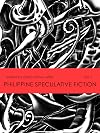
I am overwhelmed with Pinoy's talent and imagiantion. Here is evidence that we can make it internationally. Each story is different and it feels like teaser trailers. They leave me wanting more. I do hope they release full-length stories/novels. My top three stories are:
3. Villanoiguing by Joseph Anthony Montecillo - humorous!
2. Prisoner 2501 by John Philip Corpuz - this one is sad and really cool concept.
1. Carpaccio (or, Repentance as a Meat Recipe) - scary! creepy! but really good and show more full of emotions.
I just noticed that Pinoy writers love to use BIG words and weird story formats. Impressive but chooses audiences/ readers. show less
3. Villanoiguing by Joseph Anthony Montecillo - humorous!
2. Prisoner 2501 by John Philip Corpuz - this one is sad and really cool concept.
1. Carpaccio (or, Repentance as a Meat Recipe) - scary! creepy! but really good and show more full of emotions.
I just noticed that Pinoy writers love to use BIG words and weird story formats. Impressive but chooses audiences/ readers. show less
Dean Francis Alfar's novel Salamanca (2006) is a (quite short) piece of magic realism that stretches across much of the life of its central protagonist and through several decades of the Philippines' history. I've been slightly imprecise in that sentence because, while one spends perhaps as much as the first three-quarters of the book believing that, even during some longish periods when he is off-stage, the central protagonist is the oversexed writer Gaudencio Rivera, towards the end of the show more book, in a feat of tricksterism that made at least this reader grin appreciatively, one discovers this assumption was misplaced.
The book is full of plots, but the one that holds the others together concerns Gaudencio Rivera's discovery in Tagbaoran, a remote small town in the Philippines' island province of Palawan, of Jacinta, a young woman of such incandescent beauty that she has turned all the walls of her house to glass; of his desertion of her eleven days after their as-yet unconsummated marriage; of his decision years later to have children of whom he determines she must be the mother; of her initial reluctance to countenance the prospect; and of her eventual rediscovery of happiness through this unorthodox relationship so that, finally, she rediscovers also the beauty of her youth. There's a very, very great deal more to the book than these bare bones; indeed, it's astonishing how much Alfar manages to stuff into 160 pages or so.
It's a very writerly novel, too, despite that brevity, and I can't imagine any writer reading it without at least sneakily identifying with Rivera on occasion -- as when, in his youth, his lust (or could it possibly be love?) for Jacinta causes words and phrases and imagery to erupt orgasmically from every part of his body. Yet, as I say, at the end of the novel you realize the story isn't really about him at all.
Another discovery is the meaning of the book's title. I'd assumed it was a placename, and was slightly bemused by the fact that no reference to the Spanish city ever turned up, or even seemed remotely likely to do so. It was only on page 126 that I came across this passage:
He [Rivera:] created powerful fantasies set in a reimagined Philippines, circa the time of Spanish rule, imbuing the land he called Hinirang, the Land Longed For, with tikbalang half-breeds that warred against their greedy oppressors; natives who went on impossible quests in the name of unattainable love and other abstract ideals; and wondrous galleons that soared through the skies fueled by salamanca, the mysterious magic of the gods of sky, field, and sea.
So in a way the title is yet another of Alfar's conjuring tricks. show less
The book is full of plots, but the one that holds the others together concerns Gaudencio Rivera's discovery in Tagbaoran, a remote small town in the Philippines' island province of Palawan, of Jacinta, a young woman of such incandescent beauty that she has turned all the walls of her house to glass; of his desertion of her eleven days after their as-yet unconsummated marriage; of his decision years later to have children of whom he determines she must be the mother; of her initial reluctance to countenance the prospect; and of her eventual rediscovery of happiness through this unorthodox relationship so that, finally, she rediscovers also the beauty of her youth. There's a very, very great deal more to the book than these bare bones; indeed, it's astonishing how much Alfar manages to stuff into 160 pages or so.
It's a very writerly novel, too, despite that brevity, and I can't imagine any writer reading it without at least sneakily identifying with Rivera on occasion -- as when, in his youth, his lust (or could it possibly be love?) for Jacinta causes words and phrases and imagery to erupt orgasmically from every part of his body. Yet, as I say, at the end of the novel you realize the story isn't really about him at all.
Another discovery is the meaning of the book's title. I'd assumed it was a placename, and was slightly bemused by the fact that no reference to the Spanish city ever turned up, or even seemed remotely likely to do so. It was only on page 126 that I came across this passage:
He [Rivera:] created powerful fantasies set in a reimagined Philippines, circa the time of Spanish rule, imbuing the land he called Hinirang, the Land Longed For, with tikbalang half-breeds that warred against their greedy oppressors; natives who went on impossible quests in the name of unattainable love and other abstract ideals; and wondrous galleons that soared through the skies fueled by salamanca, the mysterious magic of the gods of sky, field, and sea.
So in a way the title is yet another of Alfar's conjuring tricks. show less

A varied anthology, with some stories deeply embedded in their Philippine settings and others with only tenuous signs.
You May Also Like
Associated Authors
Statistics
- Works
- 23
- Also by
- 14
- Members
- 147
- Popularity
- #140,981
- Rating
- 3.7
- Reviews
- 4
- ISBNs
- 24
