
Caren Stelson
Author of Sachiko: A Nagasaki Bomb Survivor's Story
About the Author
Works by Caren Stelson
Stars of the Night: The Courageous Children of the Czech Kindertransport (2023) 64 copies, 7 reviews
Tagged
Common Knowledge
- Agent
- Rubin Pfeffer
Members
Reviews

This book is narrated in the voice of the Jewish children of Czechoslovakia in 1938 who were rescued from the Nazi invasion intent on destroying them. Their parents sent them on trains called “Kindertransport” out of occupied areas and into England. Most of them would never see their parents again.
“When we were seven or eight or nine or ten, our home was the old city of Prague.”
The children start by describing life before the war, a normal existence filled with walks, trips to the show more parks, games, schools and hot cocoa.
Then in November of 1938, everything changed:
“In Germany, Jewish storefronts had been smashed. Synagogues had been burned. . . . As we walked home from school, older boys glared at us, their fists raised…”
Their parents were scared, especially for their children. In March, 1939, German soldiers led by Hitler himself entered Czechoslovakia.
Soon their parents packed their children’s things and told them they were going to England for a “holiday.”:
“Then our mothers whispered words we would never forget: ‘There will be times when you’ll feel lonely and homesick. Let the stars of the night and the sun of the day be the messenger of our thoughts and love.”
At the train station in Prague, their parents hung strings around their necks with numbers on them, saying “Dear ones, this is your ticket to life.” But they never told the children why they were sending them away, or who gave them the “ticket to life.”
Once the children reached London, strangers came and matched their faces with the numbers around their necks. Their new foster families took good care of them, but they were homesick. Months passed, and they learned war had broken out. Then years passed. They had no word of their families:
“And then, the war ended. When we were seventeen or eighteen or older, we traveled back to Prague. We searched long lists looking for our parents names. . . . Most of us never found them, our mothers and fathers.”
Fifty years passed, and still the former children did not know the name of the man who had arranged for them to be saved - until one day. The author describes how the secret came out about this ordinary man “with kind eyes through ordinary glasses.”
His name was Nicholas Winton. He saved 669 children.
The book ends the story there, but the author adds a detailed appendix with a timeline and more background about Nicholas Winton. Another notable children’s book by Peter Sís, “Nicky & Vera: A Quiet Hero of the Holocaust an the Children He Rescued” tells what happened from Nicholas’s point of view, and also conveys the touching story of when, 50 years later, he finally met some of the grateful people he rescued.
The author’s appendix also mentions that these 669 children rescued with Winton’s help were not the only children saved by the “Kindertransport” movement; some ten thousand survived because of it. In spite of these efforts, however, as the author observes, “of the six million Jews murdered during the Holocaust, one and a half million were children.”
She ends by stating:
“Nicholas Winton’s Kindertransport story is not only a story of history but also one that can inspire us to action today. In many parts of the world, children are refugees caught in dangerous situations or immigrants struggling to make a home in a new country. May Nicholas Winton’s courage and forethought inspire all of us to make a difference in children’s lives. To save one life can help save the world.”
Illustrator Selina Alko adds a note as well, explaining that she grew up in Canada as a child of Jewish immigrants, making Winton’s story personal for her. Her artwork, created from acrylic paint, pencil sketches, and collages, is vivid and packed with details. The simplicity of the work has the effect of highlighting the impact of the trauma, tempered by hope, love, and kindness, that Stelson and Alko want to convey.
Evaluation: Hope is probably the key message of this book. Most children are probably aware there is cruelty in the world, even if on the scale of schoolroom bullies. But there are kind and generous people as well, and this book offers historical lessons about both of them. Older readers may also pick up on the enormous sacrifices that people can make for love. show less
“When we were seven or eight or nine or ten, our home was the old city of Prague.”
The children start by describing life before the war, a normal existence filled with walks, trips to the show more parks, games, schools and hot cocoa.
Then in November of 1938, everything changed:
“In Germany, Jewish storefronts had been smashed. Synagogues had been burned. . . . As we walked home from school, older boys glared at us, their fists raised…”
Their parents were scared, especially for their children. In March, 1939, German soldiers led by Hitler himself entered Czechoslovakia.
Soon their parents packed their children’s things and told them they were going to England for a “holiday.”:
“Then our mothers whispered words we would never forget: ‘There will be times when you’ll feel lonely and homesick. Let the stars of the night and the sun of the day be the messenger of our thoughts and love.”
At the train station in Prague, their parents hung strings around their necks with numbers on them, saying “Dear ones, this is your ticket to life.” But they never told the children why they were sending them away, or who gave them the “ticket to life.”
Once the children reached London, strangers came and matched their faces with the numbers around their necks. Their new foster families took good care of them, but they were homesick. Months passed, and they learned war had broken out. Then years passed. They had no word of their families:
“And then, the war ended. When we were seventeen or eighteen or older, we traveled back to Prague. We searched long lists looking for our parents names. . . . Most of us never found them, our mothers and fathers.”
Fifty years passed, and still the former children did not know the name of the man who had arranged for them to be saved - until one day. The author describes how the secret came out about this ordinary man “with kind eyes through ordinary glasses.”
His name was Nicholas Winton. He saved 669 children.
The book ends the story there, but the author adds a detailed appendix with a timeline and more background about Nicholas Winton. Another notable children’s book by Peter Sís, “Nicky & Vera: A Quiet Hero of the Holocaust an the Children He Rescued” tells what happened from Nicholas’s point of view, and also conveys the touching story of when, 50 years later, he finally met some of the grateful people he rescued.
The author’s appendix also mentions that these 669 children rescued with Winton’s help were not the only children saved by the “Kindertransport” movement; some ten thousand survived because of it. In spite of these efforts, however, as the author observes, “of the six million Jews murdered during the Holocaust, one and a half million were children.”
She ends by stating:
“Nicholas Winton’s Kindertransport story is not only a story of history but also one that can inspire us to action today. In many parts of the world, children are refugees caught in dangerous situations or immigrants struggling to make a home in a new country. May Nicholas Winton’s courage and forethought inspire all of us to make a difference in children’s lives. To save one life can help save the world.”
Illustrator Selina Alko adds a note as well, explaining that she grew up in Canada as a child of Jewish immigrants, making Winton’s story personal for her. Her artwork, created from acrylic paint, pencil sketches, and collages, is vivid and packed with details. The simplicity of the work has the effect of highlighting the impact of the trauma, tempered by hope, love, and kindness, that Stelson and Alko want to convey.
Evaluation: Hope is probably the key message of this book. Most children are probably aware there is cruelty in the world, even if on the scale of schoolroom bullies. But there are kind and generous people as well, and this book offers historical lessons about both of them. Older readers may also pick up on the enormous sacrifices that people can make for love. show less
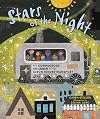
First sentence: When we were seven or eight or nine or ten, our home was the old city of Prague. In the summer when the sun lit up the sky, our mothers brought us to the city parks. We counted the boats on the river and had picnics of dark bread with cheese and slices of our mothers' sweet honey cake.
Premise/plot: Nonfiction picture book for older readers. (Mid-to-upper elementary grades). Narrative nonfiction--history--set around the Second World War. This picture book is unusual/unique in show more that it is told in first person plural; it is a collective story; it uses we and our pronouns. The book tells of the kindertransport--a mission to rescue Jewish kids and get them OUT of Nazi-occupied countries. (In this case, Czechoslovakia).
My thoughts: I'd read a book for an adult audience on this subject matter. I'd watched a documentary as well. I was fairly familiar with the subject. This is such an emotional story. But I don't mean that it has added melodrama or theatrics to history. The plain, bare facts are enough to break your heart as you read. I think the collective "we/our" works with this one. I don't want to say it "makes" it personal or more personal. But I think it helps with empathy.
There are not that many picture books about the Holocaust and the Second World War. There are a handful for sure. But not hundreds. (I can think of several starring Anne Frank. It is always refreshing to see a book that doesn't limit the story to being just Anne's story.) There are so many voices, so many stories--each one deserving of being heard. show less
Premise/plot: Nonfiction picture book for older readers. (Mid-to-upper elementary grades). Narrative nonfiction--history--set around the Second World War. This picture book is unusual/unique in show more that it is told in first person plural; it is a collective story; it uses we and our pronouns. The book tells of the kindertransport--a mission to rescue Jewish kids and get them OUT of Nazi-occupied countries. (In this case, Czechoslovakia).
My thoughts: I'd read a book for an adult audience on this subject matter. I'd watched a documentary as well. I was fairly familiar with the subject. This is such an emotional story. But I don't mean that it has added melodrama or theatrics to history. The plain, bare facts are enough to break your heart as you read. I think the collective "we/our" works with this one. I don't want to say it "makes" it personal or more personal. But I think it helps with empathy.
There are not that many picture books about the Holocaust and the Second World War. There are a handful for sure. But not hundreds. (I can think of several starring Anne Frank. It is always refreshing to see a book that doesn't limit the story to being just Anne's story.) There are so many voices, so many stories--each one deserving of being heard. show less
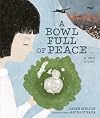
Despite being just half a mile from the ground zero of an atomic bomb going off, 6-year-old Sachiko manages to survive, as do some of her family members, and an antique passed down from generation to generation: a serving dish the family calls “grandmother’s bowl” that takes center place at every meal. Every year on the anniversary of the bombing, Sachiko and her family place chips of ice in the bowl to acknowledge those who died from the bomb and its aftereffects as well as to wish show more for peace. Eventually it is just Sachiko left and she decides to take her story to the larger world.
This is a very moving true story about a child who survived the unthinkable and her quest as a woman to ensure peace. The author wrote a longer book about Sachiko and her life, choosing to focus here on the story of the bowl alone. While it is simplified for younger readers, it is still rife with war, violence, and death so readers be cautioned.
The author’s note at the end provides more contextual details about the war and Sachiko’s life, although it is still brief and compact. There’s also a recommended reading list, which is more about peace efforts and Japanese culture than WWII history specifically.
I didn’t really love the illustrations in this book. The only information provided is that they are painted digitally; they look almost like sponge paintings to me. I didn’t feel they fit the tone of the book well or added much to the story, with the exception of the one wordless page spread of the bomb exploding depicted by a nearly all black painting. That was very poweful.
All in all, this is a simple enough but touching introduction for young readers to this important and devastating moment in history. show less
This is a very moving true story about a child who survived the unthinkable and her quest as a woman to ensure peace. The author wrote a longer book about Sachiko and her life, choosing to focus here on the story of the bowl alone. While it is simplified for younger readers, it is still rife with war, violence, and death so readers be cautioned.
The author’s note at the end provides more contextual details about the war and Sachiko’s life, although it is still brief and compact. There’s also a recommended reading list, which is more about peace efforts and Japanese culture than WWII history specifically.
I didn’t really love the illustrations in this book. The only information provided is that they are painted digitally; they look almost like sponge paintings to me. I didn’t feel they fit the tone of the book well or added much to the story, with the exception of the one wordless page spread of the bomb exploding depicted by a nearly all black painting. That was very poweful.
All in all, this is a simple enough but touching introduction for young readers to this important and devastating moment in history. show less
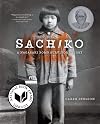
A biography of Sachiko Yasui, a girl who was five and living in Nagasaki when the atomic bomb was dropped. Between chapters there are short articles about things relating to the war and nucelar prolifieration and atomic bomb. This interspersed with one girl's story is a powerful way to consider the impact of the atomic bomb both personally and on a more global scale.
Lists
Awards


You May Also Like


Associated Authors
Statistics
- Works
- 26
- Members
- 1,135
- Popularity
- #22,615
- Rating
- 4.5
- Reviews
- 30
- ISBNs
- 60
- Languages
- 3